








Arbitrum Foundation Proposal Sparks Community Controversy: How Should We View the Role of Foundations in DAOs?
TechFlow Selected TechFlow Selected
Arbitrum Foundation Proposal Sparks Community Controversy: How Should We View the Role of Foundations in DAOs?
This article will explore the background of the AIP-1 proposal, the arguments for and against it, and its potential implications for the future of DAO governance.
 Navigating Web3 tides with focused insights
Author: olimpio
Compiled by: TechFlow
Recently, the Arbitrum community has been discussing a proposal known as AIP-1, which involves allocating a significant portion of ARB tokens to the Arbitrum Foundation. This has sparked debate over the role of foundations within decentralized autonomous organizations (DAOs) and the importance of clear communication in decision-making processes. In this article, analyst olimpio explores the background of the AIP-1 proposal, the arguments for and against it, and its potential implications for the future of DAO governance.
The Arbitrum team has released a statement regarding AIP-1. Key points include:
• It is an approval of a decision already made, not a new proposal;
• The 7.5% of ARB controlled by the foundation is comparable to allocations held by other chains;
• They acknowledge a failure in communication.
According to the statement:
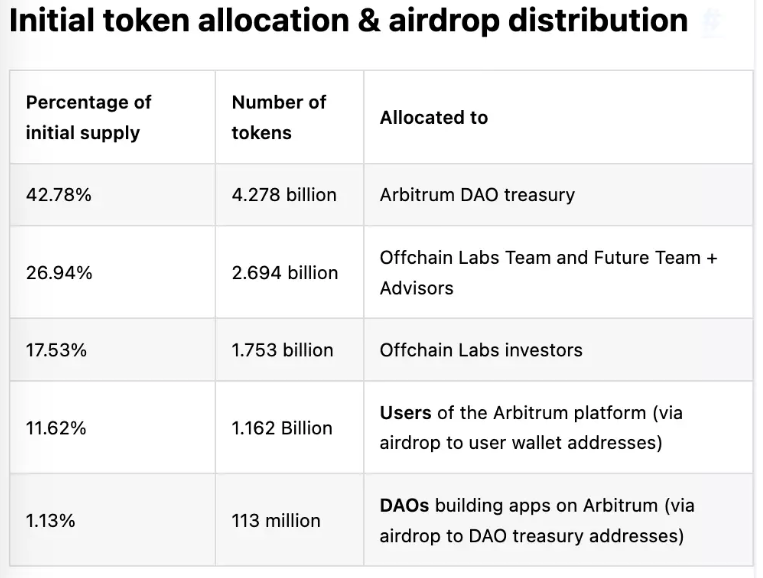
• Arbitrum initially allocated 4.27 billion ARB to the DAO Treasury in its documentation.
• AIP-1 proposes allocating 750 million of those tokens to the Foundation.
• Updated figures: ARB DAO Treasury: 3.52 billion, ARB Foundation: 750 million.
The issue lies in the fact that they have already transferred 750 million ARB. Some community members argue that if Arbitrum decided and executed the allocation before the vote, then the vote itself becomes meaningless.
Arbitrum's response is that AIP-1 is merely an approval—not a proposal—and serves to inform the community about a decision already embedded in the tokenomics. An interesting point raised is that the 7.5% controlled by the foundation is similar to allocations seen on other chains/L2s:
• Starknet Foundation: controls 10%;
• Optimism Foundation: controls 5.4%;
• Polygon Foundation: controls 10% (unverified).
The key difference between Starknet and Optimism Foundations versus the Arbitrum Foundation is that the former clearly defined their foundation allocations in their tokenomics prior to token launch.
Arbitrum did not do this. Instead, AIP-1 was created afterward, rather than being predefined in the initial token distribution model.
Just because users and communities of STRK and OP did not raise strong objections to their respective foundation allocations does not automatically justify giving 7% of ARB to the Arbitrum Foundation.
There has been criticism over Arbitrum’s wording in AIP-1, which led many to believe the transfer was still pending when in fact it had already occurred.
The team stated: "[The Foundation] has already begun using these tokens, including converting portions into stablecoins for operational expenses."
Some forum participants harshly criticized Arbitrum, accusing them of having "already started dumping."
All blockchains and protocols sell tokens for operational purposes—this is normal. In my view, the real issue is not the sale of tokens but the lack of clarity and transparent communication.
One might ask: If Arbitrum had simply included this 7.5% allocation in their original token distribution or airdrop plan, would we have seen the same backlash? When Optimism and Starknet launched with similar structures, there was far less opposition.
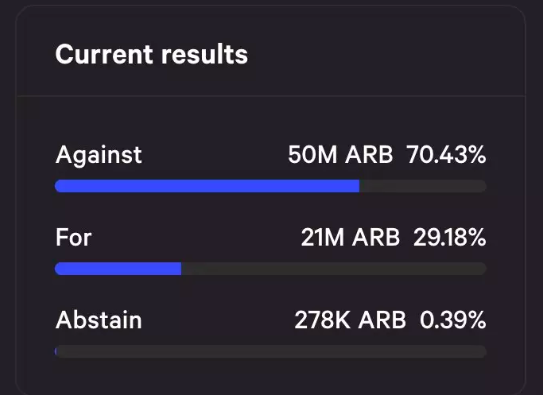
Although the current outcome of the AIP-1 vote has left many in the Arbitrum community disappointed and frustrated, this does not mean we should give up. We can continue to discuss and propose better solutions within the community.
Additionally, we should pay attention to other important issues highlighted in AIP-1—for example, the necessity of making foundational decisions during the creation of a DAO. Not every decision should be subject to token-holder voting.
Therefore, certain key elements must be established at inception—such as security council members, foundation board members, Tally voting parameters, and charter provisions. While these can later be modified via proposals, there must be a starting point.
Finally, the community should place greater emphasis on communication and transparency. The Arbitrum team should have clearly documented the foundation's allocation in the initial token and airdrop distribution documents from the beginning to avoid unnecessary disputes and misunderstandings.
Arbitrum has placed itself in a difficult position. It has done the same with its delegates. The first and third delegates, Treasure and Plutus, have not yet voted. The fourth delegate, ChainLinkGod, has voted against.
Personally, I believe the existence of the ARB Foundation is important, and that it should have a budget and autonomy in allocation. They built the L2. The core issues are clarity, appropriate amounts, communication, and a gradual path toward decentralization.
I advocate for discussion rather than blindly following trends. I cast my vote as “opposed,” reflecting the sentiment expressed by my community.
Join TechFlow official community to stay tuned
Telegram:https://t.me/TechFlowDaily
X (Twitter):https://x.com/TechFlowPost
X (Twitter) EN:https://x.com/BlockFlow_News
 Olimpio






