Folius Ventures: The "taxation" business model is better suited for Web3 games
TechFlow Selected TechFlow Selected
Folius Ventures: The "taxation" business model is better suited for Web3 games
By providing ten recommendations for this new business model and designing a virtual Web3 game to demonstrate its feasibility.
 Navigating Web3 tides with focused insights
Original authors: Aiko, Jason (MLC), Folius Ventures
Following up on the reflections and discussions sparked by our previous report, @MapleLeafCap and I would like to further summarize and share the new insights we’ve gained over the past year exploring "Web3 + gaming"—specifically, that a taxation-based model is a more suitable business model for Web3 games. We offer ten key recommendations for this novel business model and have designed a conceptual Web3 game to demonstrate its feasibility.
Over the past six months, we’ve scrapped multiple designs, repeatedly refined details, and consulted seasoned veterans in the gaming industry—all in pursuit of delivering a compelling answer to fellow explorers.
We are also open-sourcing our design framework, hoping to learn from and engage with more talented developers. Here, we sincerely present: English version, Chinese version.
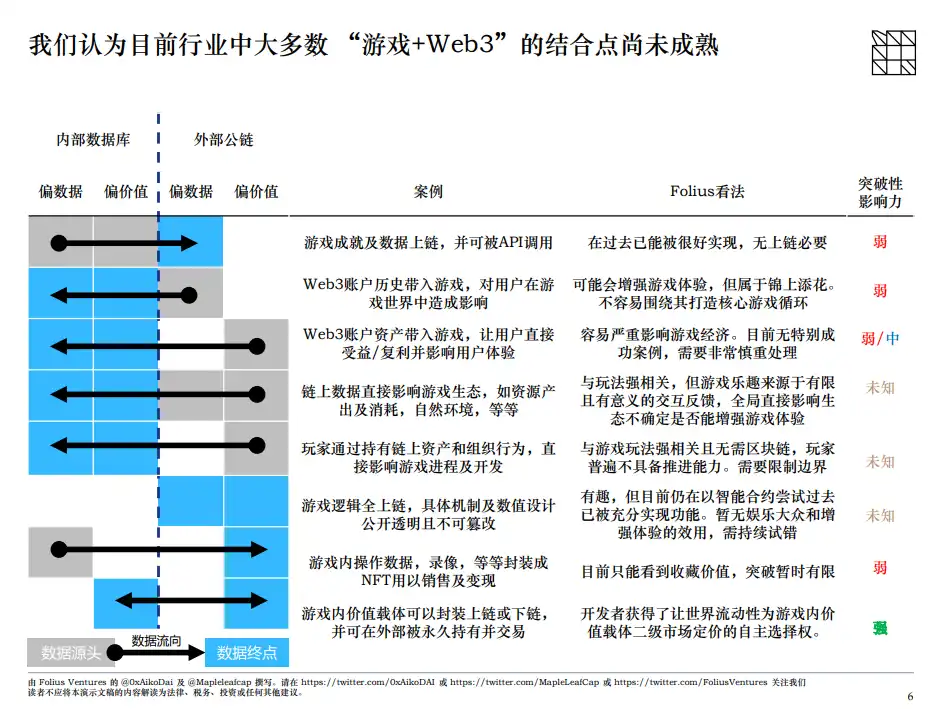
We believe most current attempts to integrate Web3 and gaming remain immature. The only significant breakthrough so far lies in the fact that game value carriers can now exist and circulate freely beyond national borders, giving developers autonomous control over how global liquidity prices these assets.
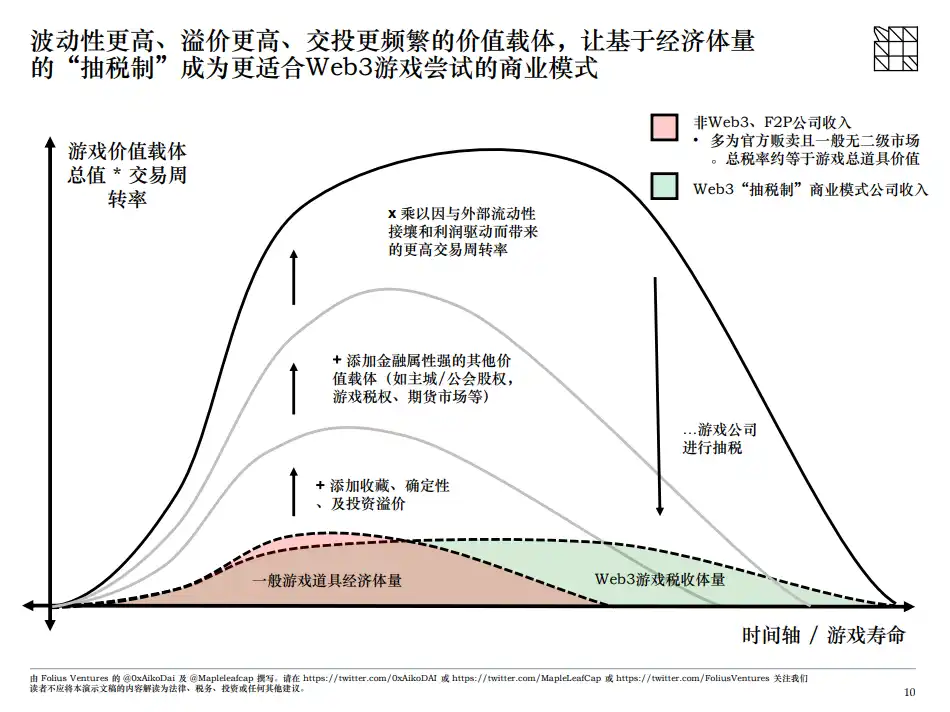
The benefits of connecting games with Web3’s 24/7 global financial markets are clear—previously, valuable in-game items in Web2 could only be priced based on in-game utility; now they can be more fully valued and traded much more frequently.

This also means game value carriers are more volatile, carry higher premiums, and trade more frequently—making a taxation-based model, scaled to economic volume, better suited for Web3 games, while rendering traditional "in-app purchase" models obsolete.

However, traditional design paradigms inherently conflict with taxation-based models: developer-controlled direct sales, lack of player-to-player economic collaboration, absence of marginal cost design, and rapid redundancy of durable goods all hinder economic activity and overall tax revenue.
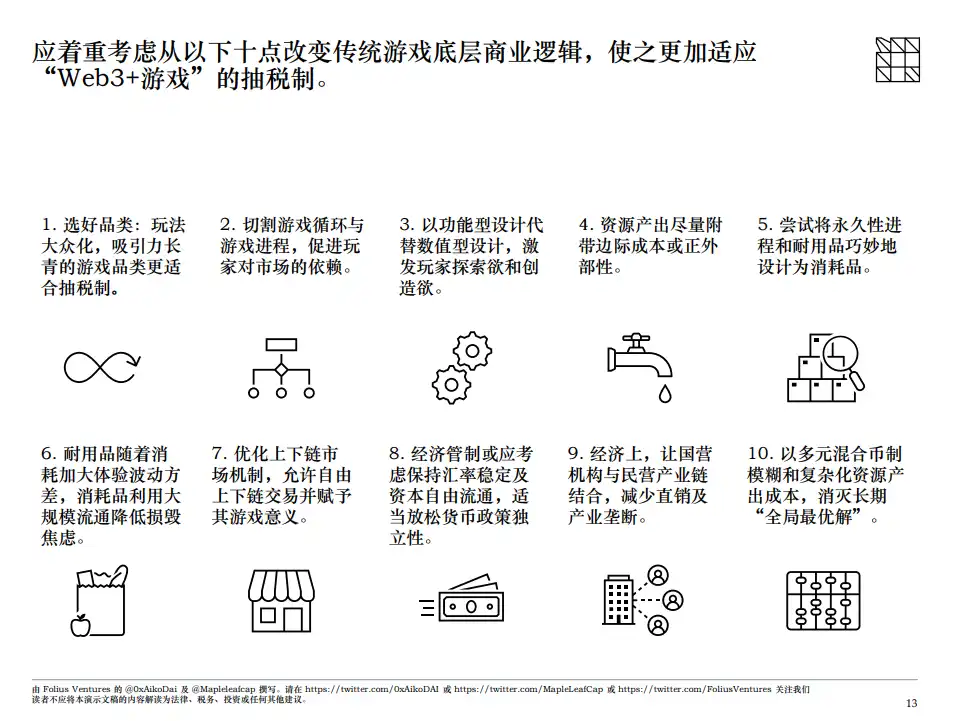
As mentioned, while we don’t claim to have a perfect solution, here are ten guiding principles for teams embracing the taxation-based game framework:
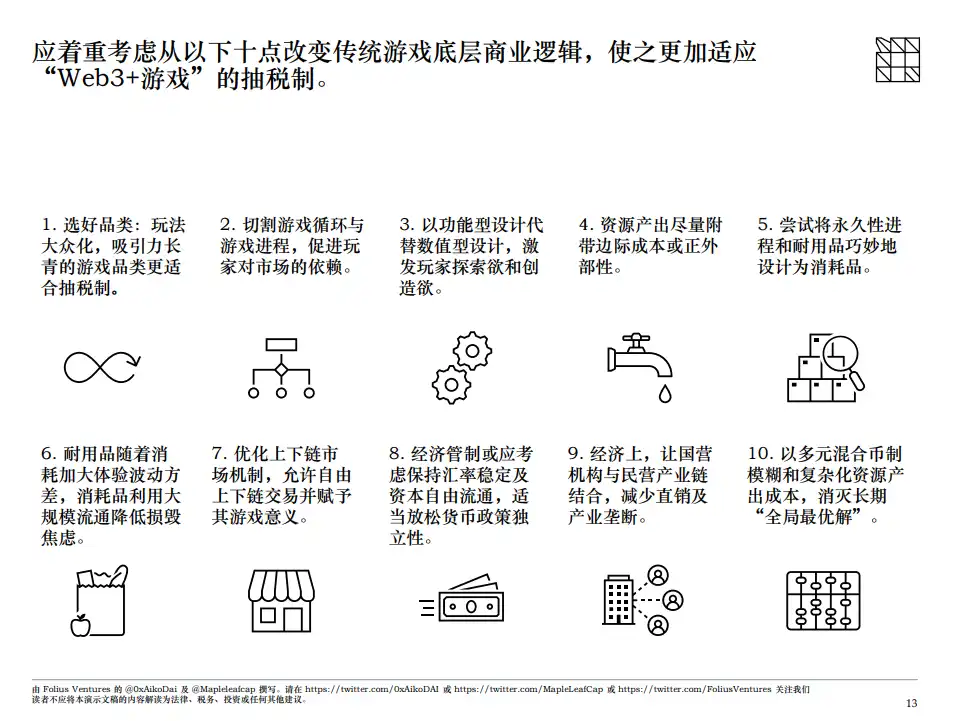
Most current games suffer from strong Matthew effects, repetitive and shallow content, and high barriers to entry and learning—but taxation-based business models require gameplay that sustains broad, long-term player engagement and supports long-horizon operations.
Most existing game loops serve individual progression, encouraging self-sufficiency and often leading to inflation of low-tier resources.
We advocate decoupling game loops from individual progression at the base layer, creating essential scenarios and economic relationships, while introducing meta-progression at the top layer to absorb and process outputs from individual play.
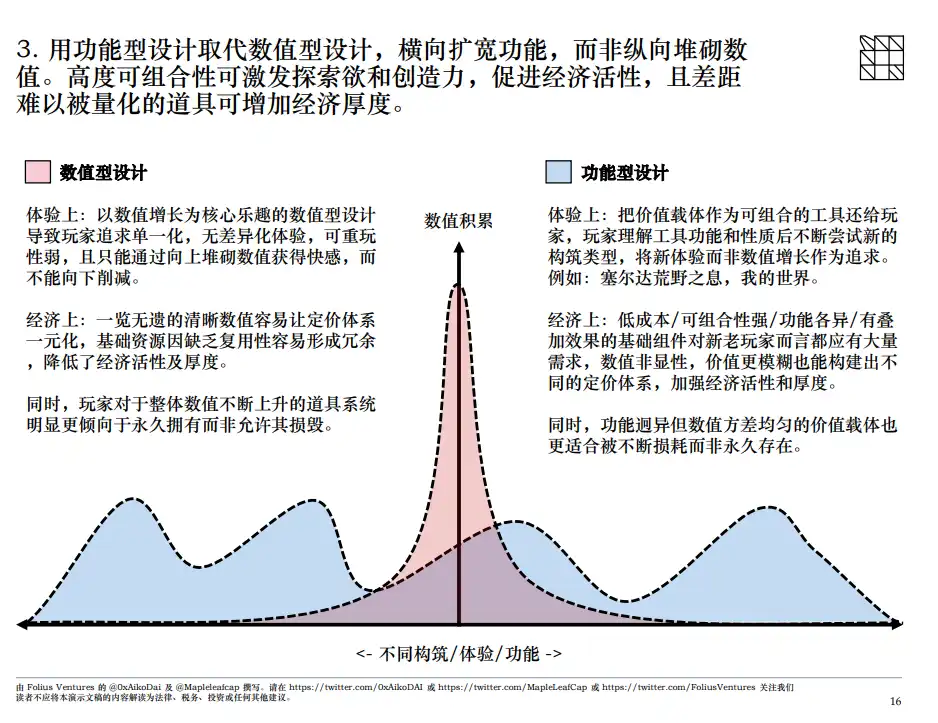
Mainstream games typically rely on numeric progression as the core source of fun, but this easily leads to monolithic pricing systems and resource redundancy, reducing economic vitality.
We prefer functional design over numeric design—expanding horizontally across functions to create low-cost, composable, and highly differentiated functional components that enhance both economic activity and gameplay experience.
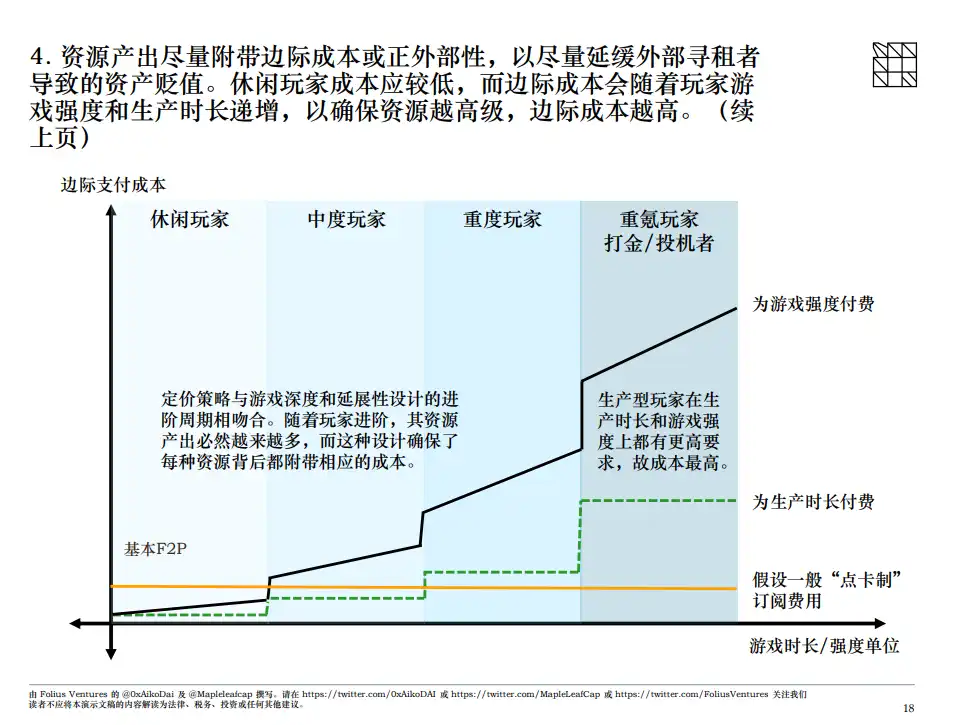
Traditional games employ blunt monetization tactics, often pushing players to endlessly pay for stats or efficiency. In contrast, Web3 taxation-based games should implement tiered pricing based on player intensity and production time—ensuring low barriers for casual players, paid intensity for hardcore players, and highest complexity and cost for producers—to minimize rent-seeking behaviors that devalue resources.
For durable goods in games, we prefer creatively transforming them into consumables, or differentiating their feel and experience after aging. Layered mechanisms can sustain broad market demand over time, allowing durable goods to retain value rather than becoming redundant.
In traditional closed economies, secondary markets are restricted by official policies or limited to auction houses, resulting in simplistic market designs.
Instead, we favor gamifying the cross-chain process—for example, assets randomly mutate when traded on-chain, and upon returning to the game, a “cleansing” service fee replaces royalties. Players can also participate in providing related items and services.
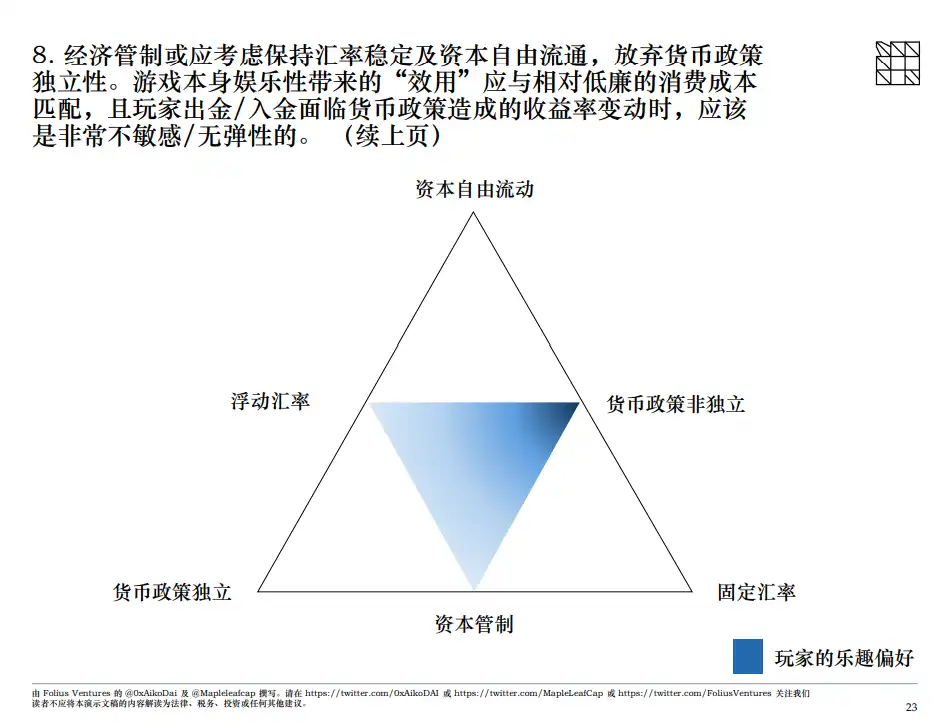
Economic regulation should prioritize exchange rate stability and free capital flow, sacrificing monetary policy independence.
Since games are entertainment, their costs should remain relatively low, and loose capital controls combined with stable currency rates better align with player preferences.
Games should allow integration between state-run institutions and private-sector supply chains, reducing direct developer sales and industrial monopolies. Gradually expanding private-sector rights will stimulate market vitality, incorporating value carriers into the game through gamified mechanics and returning real-value supply chains to players.
Employ mixed tokenomics to obscure and complicate resource production costs, increasing non-linear and mandatory consumption. While temporary excess profit margins may be allowed, continuous tuning of overall game probabilities, minting/disassembly equations, and balance adjustments should eliminate long-term "global optimal strategies."
To deeply analyze asset design in taxation-based Web3 games and put the above theories into practice, we are building a conceptual Web3 game framework under the Folius brand—let’s call it Foliseum! Inspired by excellent roguelike games such as Risk of Rain, Dead Cells, and The Binding of Isaac, as well as shooters like Borderlands.

For more design details, please visit Notion
Of course, many aspects of our design remain unfinished, and we look forward to deep discussions with fellow designers and entrepreneurs. Feel free to leave comments on our open-source documents or enrich the design of Foliseum via our survey.

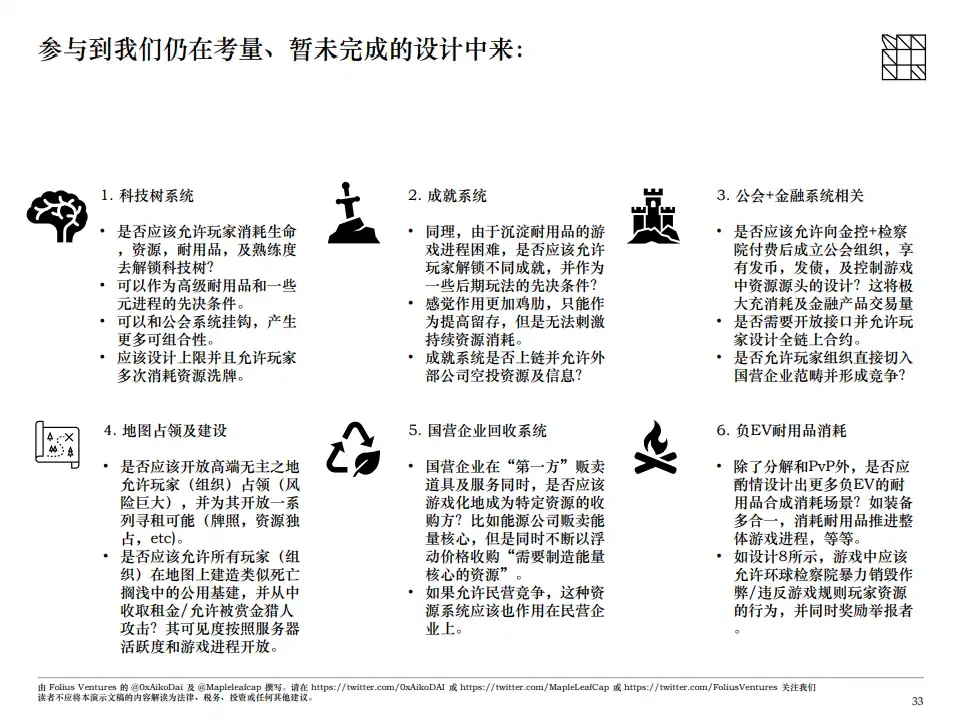
Throughout this writing process, we’ve come to deeply appreciate the immense complexity of game design. We hereby extend our sincere respect to all Web3 game creators who continue to push boundaries amid uncertainty.
Finally, thank you to @MapleLeafCap for your patient mentorship, and to all industry veterans who provided valuable feedback on this piece. If you have different opinions, better ideas, or wish to contribute to Web3 game economic design, please don’t hesitate to reach out!
Join TechFlow official community to stay tuned
Telegram:https://t.me/TechFlowDaily
X (Twitter):https://x.com/TechFlowPost
X (Twitter) EN:https://x.com/BlockFlow_News
 Folius Ventures