Annual Public Chain Series Review | How Many Directions for Innovation in Public Chains
TechFlow Selected TechFlow Selected
Annual Public Chain Series Review | How Many Directions for Innovation in Public Chains
As a developer community focused on the major ecosystems and public chains in Web3, TinTinLand published multiple articles in 2022 from the perspective of public chains, aiming to help developers study the existing market landscape of public chains and the characteristics of different ones.
 Navigating Web3 tides with focused insights
Image
Public blockchains serve as the infrastructure and foundational technology of the Web3 world—they are the bedrock of DApps and the gathering place for ecosystems and communities. From Layer1 to Layer3, public chain projects continue to emerge. How did Ethereum grow into a blockchain giant? Why do new public chains keep challenging it? What does the rise of non-EVM chains signify? Application-specific chains, Move-based chains, modular architectures, DeFi-native chains—how many directions can public chain innovation take?
As a developer community focused on major Web3 ecosystems and public chains, TinTinLand has published numerous articles in 2022 from the perspective of public chains, aiming to help developers study the current market landscape and characteristics of different public chains, thus collectively defining and building the future of Web3. With the Lunar New Year approaching, a time for bidding farewell to the old and welcoming the new, let’s look back together at the dozens of public chains covered by TinTinLand in 2022.
Public Chain Landscape: Ethereum vs. New Public Chains
In 2022, we observed that Ethereum still leads the public chain landscape, but the narrative of a single new chain overtaking Ethereum or becoming “the next Ethereum” has faded. With technological advancements, the public chain space is trending from “one chain dominating” to “a multichain ecosystem.” Within this diversified landscape, emerging or developing new public chains still have room and potential to innovate and grow.
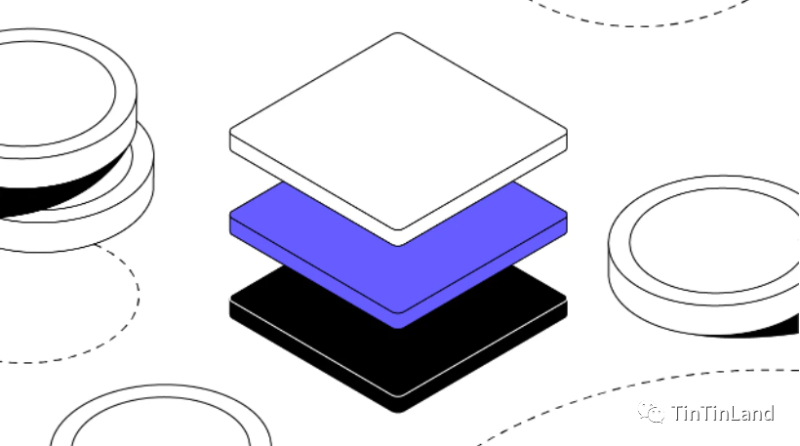
Emerging new public chains are pursuing diverse strategies: some build on Ethereum's ecosystem to solve its scalability issues and grow alongside it; others leverage groundbreaking or disruptive technical advantages to resolve the “blockchain trilemma,” attracting users and traffic away from Ethereum; others focus on specific application ecosystems to draw mainstream user participation. These innovations have sparked renewed vitality in the public chain space, where new chains will grow through the mutual empowerment of technological development and ecosystem prosperity.
Featured Articles:
"Understanding the Public Chain Landscape: A Multichain Future Is Inevitable"
Public Chain Layers: Layer1, Layer2, Layer3
Layer1 blockchains form the base layer of blockchain architecture, handling core consensus mechanisms and serving as the foundational infrastructure for blockchain applications, while also paving the way for blockchain’s future. Layer1 blockchains introduced the concept of "blockchain" to developers and users alike.
The fundamental optimization logic of Layer2 involves functional decomposition and layering—keeping security and consensus on Layer1 while offloading computation and execution to Layer2, turning the main chain into a settlement layer. Compared to cross-chain solutions or sharding, this approach is easier to implement. Layer2 has driven a transformative industry shift, enabling specialized, customizable services via Layer3 and opening up a new frontier for blockchain.

Whether it’s the evolution from Layer1 to Layer3, privacy innovations in Layer2, or the emergence of new Layer1s—TinTinLand looks forward with developers to a vibrant multichain future.
Featured Articles:
"Top 5 Layer1 Blockchains to Watch in 2022""Getting Started with Privacy-Focused Layer1 Blockchains""Privacy on Layer2: Current State and Future Prospects""What Is Layer3? Unraveling the Evolution from Layer1 to Layer3"
Move-Based Public Chains
Move-based public chains emerged prominently in 2022, capturing industry attention with rapid fundraising, strong technical backgrounds, and the unique Move programming language. Although Sui faced community controversy after revealing its economic model and token distribution in the final quarter, Move-based chains were undoubtedly dark horses throughout the year, drawing immense interest.
The Move language was designed for assets, enabling precise, understandable, and verifiable expression of Libra’s currency and governance rules. In the long term, Move must be capable of encoding various financial infrastructure assets and their corresponding business logic. However, despite the appeal of this new narrative, real-world implementation remains to be seen. We will continue monitoring the technical innovations and ecosystem development of Move-based chains.
Featured Articles:
"Aptos vs. Sui: Comparing Innovations in Two Major Move-Based Public Chains"
"Developer Hourly Rates Up to $1,200? Discover the Programming Power of the Move Language!"
Modular Blockchains
"Modular blockchains will define the next decade of Web3 innovation." Designed to specialize in one or more functions, modular blockchains avoid the limitations of handling execution, data availability, consensus, and settlement all within a single layer. By achieving the same capabilities without existing constraints.
Modular blockchains offer sovereignty and scalability, and more importantly, their modular design enables developers to launch new blockchains efficiently and cost-effectively, allowing rapid blockchain creation. They foster a collaborative environment of interconnected chains, accelerating the growth of the entire modular ecosystem. In the foreseeable future, developers will no longer be limited to serving a single chain ecosystem but will seamlessly access the full value of a modular, multichain ecosystem.
Featured Articles:
"Will Modular Blockchains Shape the Future of Web3 Users?"
DeFi-Native Chains
The concept and realization of DeFi-native chains mean that the thriving DeFi sector will now have its own dedicated and customized blockchains. Sei and Berachain, two new Layer1 blockchains gaining attention in 2022, exemplify the purpose and vision behind DeFi-native chains—bridging the gap between general-purpose chains (like Solana and Ethereum) and application-specific chains (like dYdX and Osmosis). DeFi-native chains open up an entirely new design space—not general-purpose, nor app-specific, but industry-specific.
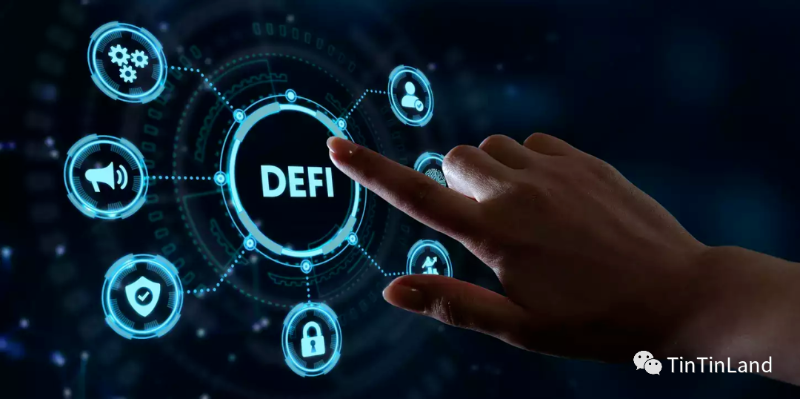
With features such as industry specialization, liquidity enhancement, and developer-friendliness, DeFi-native chains—built for specific use cases—may become the next frontier for developer innovation and value discovery.
Featured Articles:
"Why Does Web3 Need DeFi-Native Chains?"
Public Chain Projects
For several standout public chain projects, in 2022 we invited core developers and team members to co-launch a series of courses, offering beginner developers more pathways and resources to enter Web3; alongside online events that provided platforms for developer interaction and learning. These initiatives helped developers take their first step with one chain, paving the way toward freely choosing and creating across multiple chains.
Ethereum
In September 2022, Ethereum successfully completed The Merge, concluding eight years of development by transitioning from PoW to PoS—a landmark event in the crypto world. While The Merge did not resolve Ethereum’s high transaction costs or network speed issues, its adoption of PoS for issuing and validating transactions reduced energy consumption by approximately 99%, sparking a sweeping "green blockchain" movement across the industry.
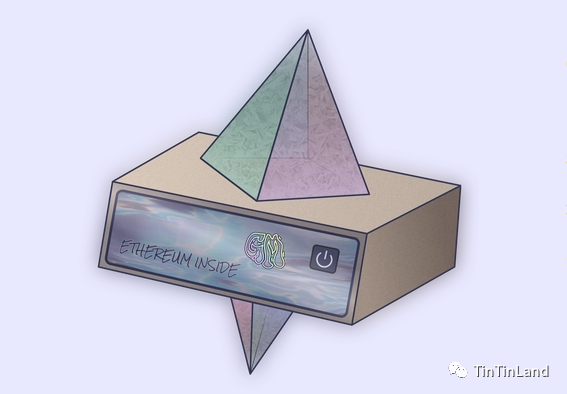
Meanwhile, TinTinLand successfully launched two editions of the "Blockchain Fundamentals Course—Create an Ethereum Smart Contract from Scratch." With Ethereum’s ecosystem flourishing, learning smart contract development on Ethereum is a necessary entry point for developers. Partnering with Ethereum experts, TinTinLand’s free course covers not only smart contract programming basics but also critical security topics, giving developers comprehensive insights into the latest technical advances, security concerns, and market trends. The latest session is currently recruiting—interested developers can click the link below for details.
Link: https://hkr.xet.tech/s/Pe8p8
Featured Articles:
"The Era of Ethereum Staking Has Arrived—Where Are the Opportunities for Developers?""Ethereum’s Merge Upgrade Is Imminent—What Opportunities Will It Bring?""Why Should You Learn Smart Contracts to Enter Blockchain Development?"
DFINITY
Looking at the history and current progress of blockchain development, BTC ushered in the era of decentralized money, ETH represents the domain of operating systems, while DFINITY represents innovation in computing and the practical realization of Web3. As a Layer1 protocol, the Internet Computer aims to build a decentralized public network, extending the Ethereum ecosystem into broad commercial applications through open virtual blockchain computer technology.
Image
Featured Articles:
Arbitrum
Ethereum scaling solutions flourished this year, with Arbitrum standing out as the leading L2 project of 2022. Leveraging low costs, high speed, trustless security, and full EVM compatibility, Arbitrum quickly won favor among users and developers. Its ecosystem is highly comprehensive, including protocols for trading, lending, derivatives, NFTs, and staking, with TVL (total value locked) peaking near $3 billion.
Image
Featured Articles:
"Ethereum Upgrade Approaches—Arbitrum Leads the L2 Summer Wave""Arbitrum Nitro Upgrade Brings More Compatible and Efficient Developer Experience""Exploring Arbitrum’s Developer Ecosystem"
FLOW
Having pioneered numerous NFT projects that gained massive popularity and mainstream consumer attention, Flow rightfully earns the title “the NFT chain.” CTO Dieter Shirley authored the ERC-721 standard, which became the gold standard for NFTs. The first mainstream consumer-grade blockchain application, *NBA Top Shot*, was built on Flow. By introducing Cadence—the first resource-oriented, developer-friendly smart contract programming language—Flow gains a technical edge in storing, transferring, and displaying digital assets.
Featured Articles:
"Join Flow and Become a Builder of Web3""Leading the NFT Race, Flow’s Ambition Is the Web3.0 Consumer Market"
NEO
Neo is a community-driven, open-source platform that leverages blockchain technology and digital identity to automate digital asset management through smart contracts, with the ultimate goal of building an intelligent economic system on a decentralized network. To realize this vision, Neo embraces a developer-first philosophy, offering powerful tools to attract more developers into blockchain development.
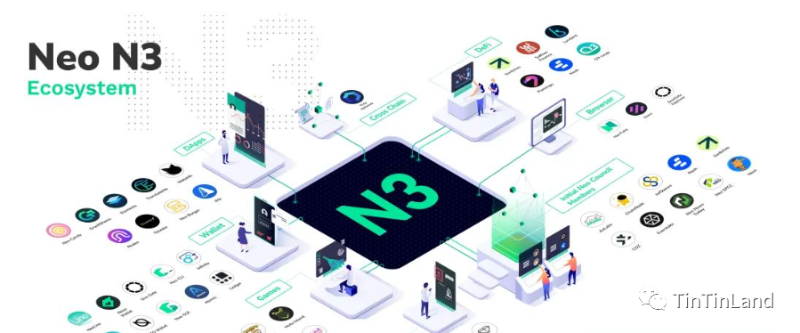
Neo supports programming in all major languages—including C#, Java, Go, Python, and TypeScript—allowing developers to enter Web3 and start blockchain development quickly without learning a new chain-specific language.
Featured Articles:
"Neo: The Best Choice for Developer-Friendly Public Chains""Developer-Friendly Neo Helps Builders Easily Master Blockchain Smart Contracts"
Outlook for 2023: 60 Public Chains
Even amid a crypto winter, the development of new public chains signals fresh hope for the industry. At year-end, TinTinLand summarized the progress of new L1, L2, and L3 chains in 2022. Based on extensive analysis, it’s clear that standout projects leveraging technological innovation to build value networks have emerged. Among them may lie the next generation of public chain stars—poised to accumulate strength during bear markets and surge ten- or hundredfold when bull markets return.
Featured Articles:
"Reviewing 60 New Public Chains in 2022: The Next Bull Market Lies Within (Part 1)""Reviewing 60 New Public Chains in 2022: The Next Bull Market Lies Within (Part 2)"
Conclusion
Blockchain technology has advanced rapidly in recent years, and accumulated innovation has given rise to mature, real-world applications. From science fiction just years ago, Web3 public chains now span social, economic, cultural, and social domains. Powered by blockchain, Web3 aims to build a decentralized world—not just a vision for Web3, but a return to the original dream of an interconnected network.
Indeed, Web3 public chain projects still face many challenges—high user entry barriers, difficult development, insufficient throughput, gas fees, and so on. The influx of inconsistent-quality startups in early stages has exacerbated these issues. Undeniably, many public chains will face consolidation soon; only those grounded in technology and committed to realizing network value will endure. The strong momentum of Move-based chains this year underscores the importance of technological innovation in the early stages of Web3. Additionally, the emergence of modular chains, DeFi-native chains, and metaverse-native chains reflects developers’ ongoing efforts toward sustainable ecosystem growth.
Finally, thank you all for growing with TinTinLand in 2022. In the new year, TinTinLand will continue to track technological advancements and ecosystem developments in public chains, providing Web3 users, developers, and investors with cutting-edge insights, technical analysis, and free developer courses, helping more individuals enter the Web3 industry, build Web3 projects, and witness the realization of the next-generation internet.
Join TechFlow official community to stay tuned
Telegram:https://t.me/TechFlowDaily
X (Twitter):https://x.com/TechFlowPost
X (Twitter) EN:https://x.com/BlockFlow_News
 @OurTinTinLand