








Singapore Travelogue: "Losers" Win by Lying Low, Feng Shui and Web3
TechFlow Selected TechFlow Selected
Singapore Travelogue: "Losers" Win by Lying Low, Feng Shui and Web3
People come and go in Singapore, but it's never truly a crypto homeland.
 Navigating Web3 tides with focused insights
By 0xmin
During the Spring Festival, I traveled to Southeast Asia and visited Singapore, where I exchanged views with local internet entrepreneurs and Web3 practitioners. Here are some observations and reflections to share.
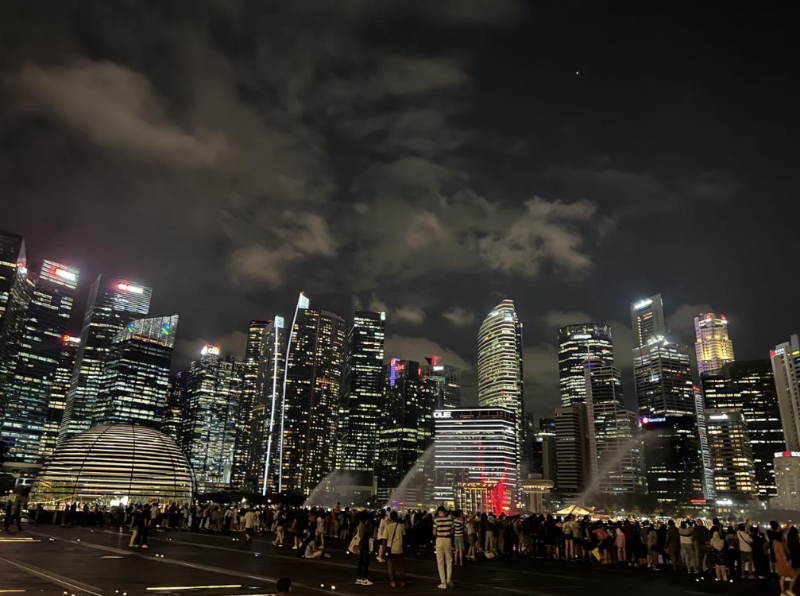
Singapore: Winning by Lying Flat
Chatting with an internet entrepreneur who has lived in Singapore for three years, we marveled at how rapidly prices have risen, especially rents—studio apartments now routinely cost SGD 3,000–5,000 and are extremely scarce.
I presumptuously suggested that this is mainly due to wealthy individuals from the Web3 space relocating to Singapore. But in his view, crypto people represent only a small fraction; most capital comes from new internet elites and Hong Kong investors.
Today’s Singapore is surreal—a veteran internet professional might bump into an old colleague from ten years ago on the street, or run into Luo Yonghao and founders of major tech companies, along with partners from dollar-denominated funds.
The reason? It's widely understood: when security vanishes, capital votes with its feet.
There’s a strange phenomenon: Singapore has gathered Chinese internet entrepreneurs who cashed out during the golden era, as well as those defeated in internet wars—the so-called "losers" forced to retreat. Ironically, these people have become the biggest winners.
For example, after Ctrip acquired Qunar, many Qunar executives were forced to exit early and became “failed” figures who took their money and left. Now, however, several Ctrip executives envy them.
Zhang Tao, founder of Dianping, once left the scene in tears, but today he enjoys Bordeaux wine every day at a private bar on Scotts Road, living a more comfortable life than Wang Xing.
There’s a joke about someone who sold his house for 15 million yuan, lay flat for a year, then discovered it had been resold for only 10 million—so he bought it back, pocketing 4 million yuan profit.
Nowadays, former Chinese internet entrepreneurs lying flat in Singapore have become prized LPs sought after by U.S.-dollar funds and crypto funds alike.
Faced with historical tides, individual effort means little.
What did Singapore do right? Not much—it simply stuck to its existing policies. As external conditions shifted dramatically, Singapore passively emerged as a big winner.
This is the paradox of the world’s rules: sometimes choosing not to act is more important than choosing to act.
Government and People
In Singapore, the government is unavoidable—its presence is overwhelming, like an overbearing parent who controls nearly everything, yet consistently follows two principles: pragmatism and elitism, or meritocracy.
Friends long settled in Singapore often praise the government: first, because it dares to admit mistakes. When something goes wrong, it acknowledges errors, accepts accountability, and makes corrections. For instance, after FTX collapsed, causing losses among Singaporean citizens and Temasek (the sovereign wealth fund), both the government and Temasek faced parliamentary inquiries.
Second, the government provides strong social protections for its citizens, especially lower-income groups.
I once wondered: with such high living costs, aren’t ordinary people suffering?
But I later realized Singapore operates under a clear principle: differentiation between citizens and non-citizens, offering preferential treatment to nationals across housing, education, healthcare, and even public facility rentals. This raises the floor for ordinary citizens’ quality of life.
As a foreigner, you face steep costs—from housing to education and medical care. For example, Singaporean homebuyers pay a 4% stamp duty, while foreigners pay 34%, and can only purchase expensive private condos. Even renting public sports facilities favors citizens and permanent residents, both in pricing and access priority.
To address housing, Singaporean citizens can apply for government-built HDB flats—around 90 sqm for just over SGD 400,000, with a minimum 10% down payment, 30-year mortgage, and preferential interest rates around 2%. This ensures nearly all citizens can afford their own homes.
Overall, Singapore effectively taxes foreigners heavily to subsidize and protect its own people.
Feng Shui
As a Chinese-majority society, Singapore retains many traditional Chinese cultural practices—and has amplified some, such as feng shui.
Longtime residents tell me that feng shui holds immense sway in Singaporean society.
For example, Singaporeans typically consult a feng shui master before buying a home. Many Chinese families hire masters to name their children, and there are numerous feng shui legends surrounding everyday objects like the one-dollar coin and subway construction. All this has turned feng shui into a thriving business.
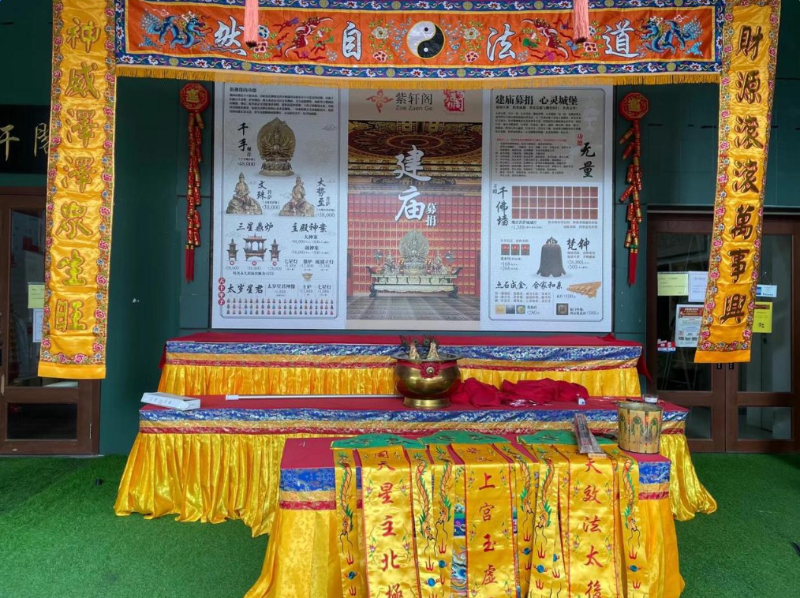
On June 28, 2012, Xin Tiandi Group, a Singapore-based feng shui company, listed on the London Stock Exchange—the world’s first publicly traded feng shui firm. Known in Chinese-speaking circles as Yuan Zhong Xiu, it sells feng shui products and offers consultancy services.
As early as 2011, it reported a net profit of £1.6 million (about RMB 14.38 million), serving elite clients including Standard Chartered Bank, Citibank, and Far East Organization.
Today, many Web3 project teams visit Yuan Zhong Xiu’s headquarters in Kaki Bukit to have their tokens or NFTs blessed by a master.
Birth Rate
If there’s one persistent issue in Singapore, it’s low birth rate—an enduring pain point, reflective of broader East Asian societal pressures.
In China, low fertility is often blamed on inadequate housing, healthcare, and education support. Yet both Singapore and Japan have addressed these concerns with generous subsidies—Singapore offers over RMB 100,000 in total benefits per child.
Still, birth rates continue to decline. Among ethnic groups, Chinese Singaporeans have the lowest fertility, followed by Indians—only Malays sustain a relatively higher rate.
Thus, as seen in Singapore and Japan, throwing money at the problem won’t fix low birth rates.
Where lies the root cause? Several Singaporean friends suggest two factors: women are more independent, better educated, economically self-reliant, and increasingly assertive about gender rights; meanwhile, East Asian culture emphasizes competition and intense pressure. The mindset “If I can’t give my child a better future, why bring them into this struggle?” is widespread among youth.
Singapore has a unique term: “Kiasu,” derived from Hokkien for “fear of losing,” which captures the mentality of Chinese Singaporeans—and arguably overseas Chinese worldwide.
If you’re going to raise a child, you must give them every advantage—start them ahead. Even with free public schools and affordable HDB flats, many insist their kids attend international schools and live in luxury condos. The cost of raising an “elite child” is inevitably high.
For East Asia and Singapore, the fertility crisis remains unsolved.
Immigration
In a country where 70% of citizens are ethnically Chinese, immigration is a frequent topic among Chinese communities.
Many Chinese who’ve naturalized in Singapore trace their roots to the China-Singapore scholarship programs (SM Scholarships), having come as early as middle or high school, graduating locally, obtaining PR status, then citizenship.
Back then, many SM graduates declined citizenship, believing “Singapore is too small”—they preferred returning to China or heading to the U.S. for greater opportunities.
Today, Singapore is vastly different. Many who once rejected citizenship now pursue the EP → PR route. After all, Singapore’s passport, granting visa-free access to 192 countries and regions, is highly attractive. More importantly, people increasingly recognize Singapore’s dual identity—as both a global city and a nation-state.
For Singaporean citizens, there’s a natural sense of being Global Citizens—an identity particularly valuable for Web3 professionals. Most crypto practitioners I know in Singapore are actively pursuing PR or citizenship.
However, as more Chinese arrive, obtaining PR has become exponentially harder. Singapore has shifted from “begging people to come” to “selectively choosing who gets in.”
In 2022, the EP salary threshold rose from SGD 4,500 to SGD 5,000. In 2023, the top-tier ONE Pass visa targets senior professionals earning over SGD 30,000 monthly (about RMB 150,000).
Moreover, starting September 2023, EP applications will be scored—SGD 5,000 is merely the baseline. Higher salaries and better qualifications are now essential to stand out.
True to its pragmatism, Singapore selects only those who contribute—pay more taxes, hire more locals, have more children—and does so ruthlessly.
In the coming years—or even decades—Singapore will remain one of the top destination cities for Chinese, especially ultra-high-net-worth individuals. Immigration will only grow more difficult.
Not a Crypto Paradise
In nearly every popular article about Singapore, mentions of crypto and Web3 abound. To many, Singapore appears to be a crypto haven. But in my view, this is a myth.
Singapore may be a paradise for crypto millionaires, but it is not fertile ground for crypto innovation.
The pragmatic Singaporean government is clear: it welcomes crypto millionaires and their dollars—but not local crypto operations.
MAS has never issued a license for cryptocurrency exchanges; the 11 licenses granted are strictly for payment-related services.
Heng Swee Keat, Deputy Prime Minister and Finance Minister (and likely next PM), stated clearly in late 2022 that digital assets could transform financial markets, cross-border payments, clearing, and capital markets—but reiterated Singapore’s firm stance: despite external criticism, it must maintain a tough posture against crypto speculation and trading, especially among retail investors.
After the FTX collapse, Heng declared firmly in Parliament: Singapore does not intend to become a hub for crypto activities.
Ideologically, crypto represents a deconstructive force—one that thrives where order breaks down. In Singapore’s tightly regulated, orderly environment, crypto has little room to grow. Most activity uses Singapore as a base to target Southeast Asia and beyond.
Of course, a more practical reason is Singapore’s high talent and living costs—many want to stay but simply can’t afford to. Ultimately, Singapore belongs to crypto bosses and executives.
People come and go—Singapore will never be a true home for crypto.
Join TechFlow official community to stay tuned
Telegram:https://t.me/TechFlowDaily
X (Twitter):https://x.com/TechFlowPost
X (Twitter) EN:https://x.com/BlockFlow_News






