Recapping 2022's 60 New Public Blockchains: ZK, Customizability, Sidechains, and Privacy... (Part 2)
TechFlow Selected TechFlow Selected
Recapping 2022's 60 New Public Blockchains: ZK, Customizability, Sidechains, and Privacy... (Part 2)
What will be the biggest trend in Web3 in 2023?
 Navigating Web3 tides with focused insights
What will be the biggest trend in Web3 in 2023?
Throughout the cyclical bull and bear markets in the crypto space, amid chaos and explosive growth, wave after wave of emerging projects continue to uncover new opportunities. Among the various sectors within Web3, public blockchains—through comprehensive technological development and robust application ecosystems—often achieve outsized returns and superior risk-reward ratios, becoming the "vanguard" driving crypto market momentum. Mastering the trajectory of public blockchain development may well be the key to emerging from the current crypto winter.
In the first part of our series, "Reviewing 60 New Public Blockchains in 2022: The Next Bull Market Lies Here (Part 1)", TinTinLand focused on new L0 and L1 layer blockchains. Through an extensive overview, we observed breakthroughs in cross-chain interoperability security at the L0 level and innovations in modularity and dedicated chains at the L1 level. This article shifts focus to the development of new L2 layer public blockchains in 2022.
The emergence of L2 blockchains is closely tied to persistent issues of network congestion and high gas fees in existing blockchain networks. First-generation blockchains like Bitcoin and Ethereum, when confronted with the "unsolvable blockchain trilemma," chose to prioritize decentralization at the expense of scalability. However, as the crypto ecosystem expands—with growing numbers of applications and users—increasing transaction volume has made throughput and scalability major bottlenecks for Web3 advancement.
To address these challenges, many new blockchains are exploring solutions. One approach is on-chain scaling, which directly tackles scalability on the base L1 layer using innovative techniques such as sharding. Examples include Subspace and Quai, highlighted in the previous article. The other is off-chain scaling, which inherits security from the main chain while moving operations off-chain to an L2 layer, thereby indirectly resolving scalability. In 2022, new L2 blockchain projects achieved remarkable progress. Given the large number of L2 projects covered here, readers seeking a summary can scroll to the end.
L2 Blockchain Overview
Current L2 blockchain technical approaches include sidechains, state channels, rollups, and Plasma. Rollups, in particular, have gained strong support from the Ethereum community. They fall into two main categories: Zero-Knowledge Rollups (ZK-Rollups, or ZK for short) and Optimistic Rollups (OP-Rollups, or OP). For detailed explanations of these technologies, refer to "Revisiting Vitalik’s Rollups Masterpiece: Why Ethereum Needs Layer 2 Scaling" and "Basic Guide: What Are zkEVM, EVM Compatibility, and Rollups?". Below, we categorize and introduce new L2 blockchains based on their underlying technology.
OP Series: Early Movers
OP-based L2 blockchains store all data on the L1 chain, inheriting its security and decentralization. Transactions operate under an optimistic assumption—i.e., they are assumed valid unless challenged—and require a long challenge period before finality. Additionally, OP chains run parallel to Ethereum and maintain compatibility with EVM and Solidity, making them highly developer- and user-friendly. As a result, they lead the Rollups-based L2 scaling race in terms of development speed.
Arbitrum – The L2 Leader
Arbitrum, developed by Offchain Labs, is an L2 scaling solution built atop Ethereum's security model to address high gas fees and network congestion. With full EVM compatibility, it offers a highly accessible environment for both users and developers. To date, over 400 projects have been deployed on Arbitrum, with steady technical upgrades solidifying its position as the leading L2 platform in 2022. Funding: Over $123 million.
Website: https://arbitrum.io/
AltLayer – Custom Application Chains
AltLayer is a highly scalable system for application-specific execution layers. Its key feature is enabling application-dedicated blockchains—custom-built chains tailored to individual apps. Instead of building on general-purpose blockchains like Ethereum, developers use platforms like AltLayer to create their own chains from scratch. AltLayer functions as an independent Optimism-based system, drawing security from a base L1 (e.g., Ethereum) or L2 network (e.g., Arbitrum or Optimism), and is customized for specific applications. Funding: Over $7 million.
Website: https://altlayer.io/
Nitro Labs – Cross-Chain Scalability
Nitro is the first modular, scalable chain based on Cosmos featuring Solana VM (SVM) compatibility. As an SVM-compatible Optimistic Rollup, it enables developers to easily launch Solana DApps on Cosmos and access IBC assets. Applications built on Nitro leverage the powerful Solana VM while gaining native IBC interoperability.
Website: https://www.nitro.technology/
Fuel Labs – Modular Pioneer
Fuel was one of the earliest Optimistic Rollups deployed on Ethereum Mainnet, launching its V1 version at the end of 2020 primarily for payment-focused applications. Fuel is now advancing its V2 plan—a high-speed modular execution layer—designed for maximum security, flexible throughput, and an exceptional developer experience. However, Fuel is not EVM-compatible, which may hinder its short-term adoption. Funding: Over $81.5 million.
Website: https://www.fuel.network/
Eclipse – Customizable Modularity
Eclipse is the first customizable modular Rollup, powered by Solana VM. Supported by Polychain, Tribe Capital, Solana Foundation, Celestia, and others. Funding: Over $15 million.
Website: https://www.eclipse.builders/
ZK Series: Rising Stars
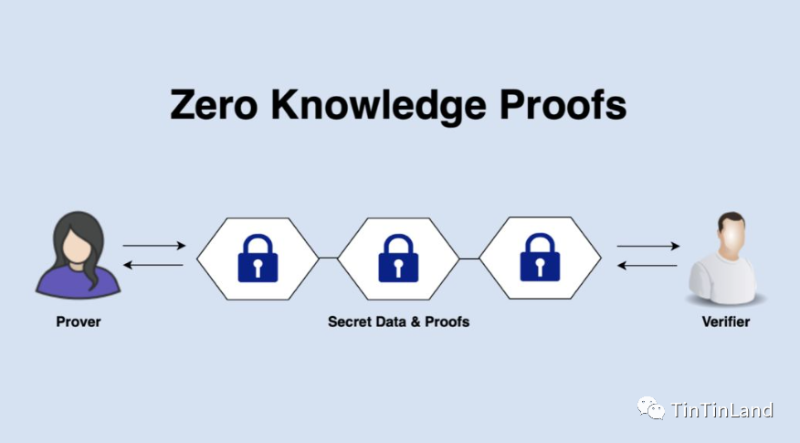
The key distinction between the two Rollup types lies in verification. ZK-Rollups submit all transaction data to the main chain and use zero-knowledge succinct non-interactive arguments of knowledge (zk-SNARKs) to validate transactions. Once verified and posted to the main chain, all transactions are finalized immediately—without a challenge period—enabling higher and faster transaction processing on ZK-based L2 chains. However, generating validity proofs is complex and time-consuming. Due to the difficulty of ZK technology, most related projects have progressed relatively slowly in product development.
ZkSync – The Ultimate Scaling Solution
ZkSync is a ZK-Rollup that uses validity proofs to provide a trustless protocol for scalable and low-cost transactions on Ethereum. Computation occurs off-chain, and most data is stored off-chain. ZkSync supports EVM compatibility and has already launched its mainnet. It is widely regarded as the ultimate solution to Ethereum's scalability problem. Funding: $458 million.
Website: https://zksync.io/
StarkNet – ZK Maximalist
StarkNet is considered ZkSync’s biggest competitor, aiming to enable unlimited computational scale for any DApp. Among ZK projects, StarkNet stands out as a "maximalist" in zero-knowledge proofs. It has developed its own virtual machine and Cairo programming language optimized for validity proofs, and leverages advanced STARK algorithms with recursive proof capabilities—proofs of proofs. StarkNet boasts nearly limitless computational potential. Funding: $270 million.
Website: https://starknet.io/

Scroll – Pioneer in zkEVM Compatibility
Scroll aims to build a ZK-Rollup with strong proof infrastructure and full EVM compatibility. Its zkEVM has the potential to fundamentally reshape the L2 and broader blockchain scalability landscape—allowing Ethereum smart contracts to be ported to Scroll with minimal code changes, greatly easing migration for projects. The team has announced plans to launch a pre-alpha testnet where users can transact and experiment with standalone applications. Funding: Over $30 million.
Website: https://scroll.io/

Aztec Network – Privacy Pioneer on L2
Aztec Network is the first privacy-focused ZK-Rollup on Ethereum. It provides user privacy through a unique transaction architecture similar to the UTXO model, using ZK proofs to transfer asset ownership while protecting identities. Funding: Over $17 million.
Website: https://aztec.network/
Zecrey – Innovative Private Transactions
Zecrey is an L2 scaling protocol based on ZK-Rollups, focused on addressing critical and growing privacy needs in blockchain, including transaction and account privacy. All funds are held by smart contracts on the main chain, while computation and storage occur on L2. While ensuring transaction privacy, ZK-Rollups significantly reduce fees and improve performance. The protocol introduces a novel private transaction model supporting one-to-many transfers without increasing costs. Funding: Over $10 million.
Website: https://www.zecrey.com/
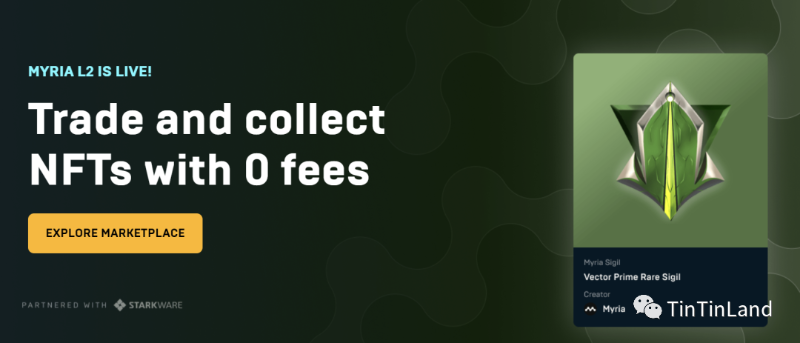
Myria – Gaming-Focused Platform
Myria is an L2 blockchain gaming ecosystem comprising a blockchain game center and Myriaverse metaverse, built on a full suite of Myria infrastructure. Myria also offers B2B services, enabling third-party studios and developers to integrate with Myria Chain. The ecosystem supports multiple games, offering instant transaction confirmation, zero gas fees for minting and trading NFTs—all without compromising user asset security. Funding: Over $5.9 million.
Website: https://myria.com/
Tusima – Privacy Financial Infrastructure
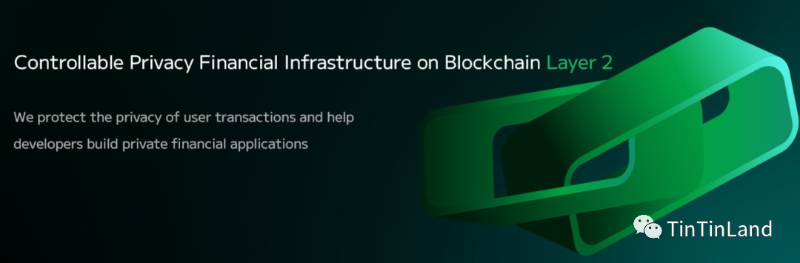
Tusima is a multi-chain privacy financial network based on ZK-Rollups, integrating zero-knowledge proofs, recursive proofs, and homomorphic encryption. It aims to enable controllable on-chain data privacy, supports cross-chain interoperability, protects sensitive DeFi user data, and delivers a high-TPS, scalable financial network—positioned as foundational Web3 privacy financial infrastructure.
Website: https://tusima.network/
Sidechains: Steady Progress
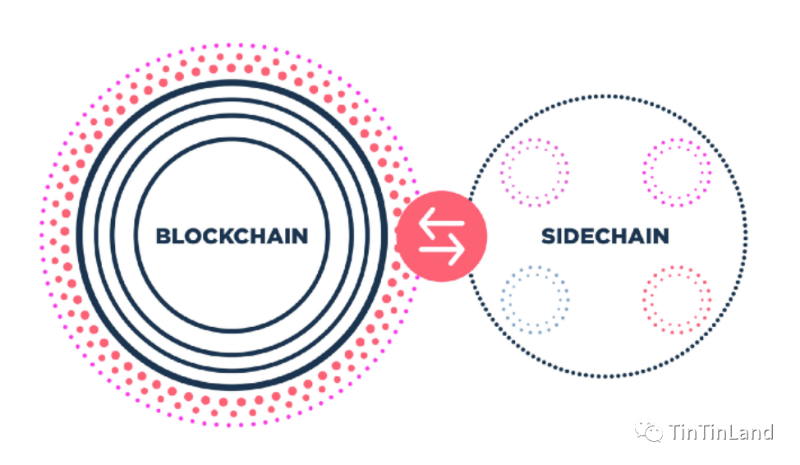
Sidechains are independent blockchains that run parallel to and independently of the main chain, rather than being built on top of it. They use separate consensus mechanisms, meaning they do not inherit the security of the base chain—a clear difference from Rollups. However, sidechains offer tremendous scalability potential. Their utility extends beyond solving throughput and scalability—they can also serve as bridges between different chains, integrating the broader crypto ecosystem.
Liquid – Bitcoin’s First Sidechain
The Liquid Network is a BTC sidechain solution enabling fast, confidential settlement and issuance of digital assets, such as tokenized securities and other financial instruments. Its primary goals are accelerating settlement, enhancing transaction confidentiality, and enabling asset tokenization. Funding: Over $250 million.
Website: https://liquid.net/
Mintlayer – Decentralized Finance
Mintlayer empowers Bitcoin via a sidechain. It is a future-oriented blockchain designed to enhance direct interoperability and support transaction value, systems, features, and truly trustless financial participation. Key use cases include asset digitization and decentralized exchanges. It provides a stronger blockchain foundation for DeFi protocols through its scaling design. Funding: Over $18 million.
Website: https://www.mintlayer.org/en/
L2 Blockchains on the Brink of Breakout
While Web3 industry development often begins with conceptual innovation, the technological advancements across numerous Web3 projects are steadily turning the vision of a next-generation internet into reality. Overall, today’s L2 network ecosystems not only host diverse projects from L1—such as DeFi, NFTs, and GameFi—but have also fostered rich and vibrant L2-native ecosystems. Moreover, leveraging the enhanced performance of L2 blockchains, a wave of native projects has emerged, particularly in high-demand areas like gaming, social, and DeFi. From this review of L2 blockchains, several key insights emerge:
Rollups dominate the development of new L2 blockchains
Judging from 2022’s L2 developments, Rollup-based blockchains have pulled far ahead of other scaling solutions in terms of project count, funding, and maturity. Since Ethereum co-founder Vitalik Buterin published his "Rollup-Centric Ethereum Roadmap" in October 2020—clearly positioning Rollups as central to Ethereum’s long-term evolution—both OP and ZK Rollup projects have lived up to expectations, becoming pillars of the Web3 ecosystem.
The Narrative of “Short-Term OP, Long-Term ZK” Continues
Both OP and ZK Rollup projects achieved notable results in 2022, but ZK-related projects lag significantly behind OP counterparts in development pace. For instance, ZK projects like StarkNet and Scroll remain in Alpha or even Pre-Alpha stages. In contrast, OP projects like Arbitrum have launched their mainnets and dominate the L2 TVL landscape—Arbitrum holds 51.6% and Optimism 30.56%. Clearly, OP remains the near-term mainstream for L2 development. ZK must overcome hurdles in cryptography, hardware acceleration, and compatibility to close the gap with OP-based chains.
Beyond Scalability: L2 Blockchains Enable the Realization of Web3 Value Networks
Originally conceived to solve scalability, L2 blockchains are known for high throughput and low fees, with some pushing scalability to extremes. However, new L2 projects go further—projects like Fuel and Eclipse explore modularity, while Aztec and Zecrey leverage cryptography to advance privacy. These innovations not only address the "blockchain trilemma" but also provide foundational support for more developers and users to enter Web3, accelerating the realization of Web3’s value network.
The L2 ecosystem continues rapid expansion. According to Footprint Analytics, total value locked (TVL) in L2 exceeds $4.36 billion—up 1194% year-on-year—highlighting the pivotal role of new L2 blockchains in Web3’s evolution. In the coming years, the battle for blockchain dominance may no longer be between old and new L1s, but between new and legacy L2s.
Join TechFlow official community to stay tuned
Telegram:https://t.me/TechFlowDaily
X (Twitter):https://x.com/TechFlowPost
X (Twitter) EN:https://x.com/BlockFlow_News
 @OurTinTinLand