A Brief Analysis of the Current Application of NFT Rentals in Web3 Games
TechFlow Selected TechFlow Selected
A Brief Analysis of the Current Application of NFT Rentals in Web3 Games
Among the top 100 games, only 7% have supported NFT rentals.
 Navigating Web3 tides with focused insights
Authors: Double Protocol, Winkrypto
Translation: Frank, Foresight News
Key Takeaways:
-
Most users in the Web3 gaming space come from a few top games;
-
Among the top 100 games, 7% support NFT rentals and 18% plan to adopt this model;
-
The primary reasons gamers use rentals are to reduce costs and increase winning chances in NFT games by using or combining NFTs;
-
Barriers for game developers adopting their own rental markets include technical hurdles, lack of priority, or counterintuitive design;
The mission of Web3 gaming is to enable players to truly own and sell in-game assets without barriers, but it doesn’t stop there. As digital assets become increasingly similar to real-world assets, players will be able to conduct various other financial transactions with them—starting first with rentals.

In this article, we explore the following questions:
-
How many games have already adopted, want to adopt, or plan to adopt NFT rental features?
-
What are the motivations behind renting these game assets?
-
What are the barriers for game developers adopting their own rental markets?
Users Concentrated in a Few Top Games
We selected metadata.io's ranking as our data source, which lists games by average daily unique active users over a 30-day period as of June 12, 2022. Before examining rental data across these games, let’s first understand their characteristics.
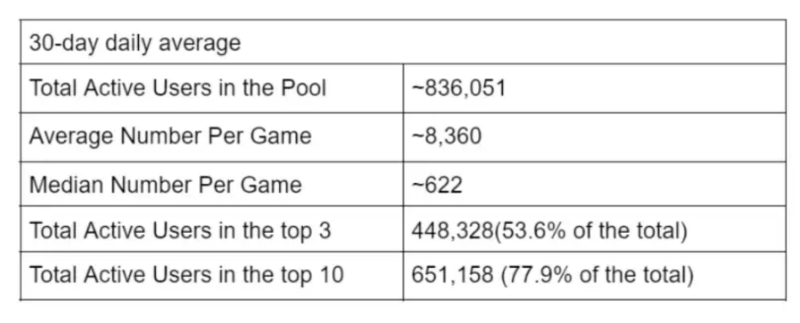
From the chart above, it is clear that GameFi projects follow a winner-takes-all pattern in terms of users—the top three games account for more than half of all users. The difference between median and average values shows that most users come from a small number of leading games.
Blockchain Network Distribution
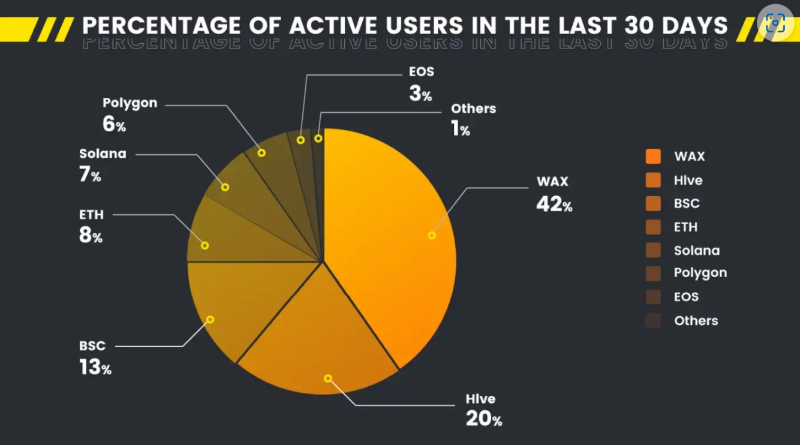
In terms of ecosystem performance, no single player dominates, but WAX, BNB Chain, Polygon, and ETH appear to be the leading GameFi blockchain networks.
25% of Games Have Adopted or Will Adopt NFT Rentals
We then investigated whether the games in our dataset currently offer NFT rental functionality, or if they haven't implemented it yet, whether they've publicly stated plans or commitments to do so in roadmaps, whitepapers, etc.
Thus, they can be categorized into three groups:
-
Have their own NFT rental market/functionality: 7%
-
Have not implemented NFT rentals but have publicly expressed interest or commitment to doing so in the future: 18%
-
Have not implemented NFT rentals and have not publicly expressed interest or made any commitments: 75%
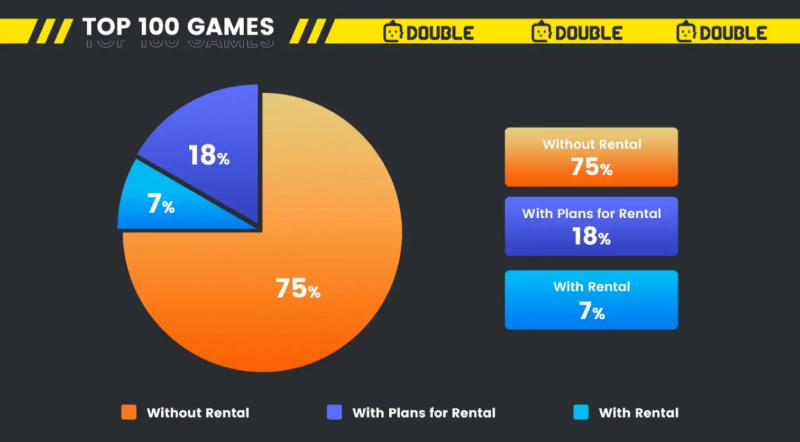
While rental-enabled games remain a minority, we also analyzed the user share within each category. Relative to the number of existing games, rental games disproportionately capture user engagement (20.4%).
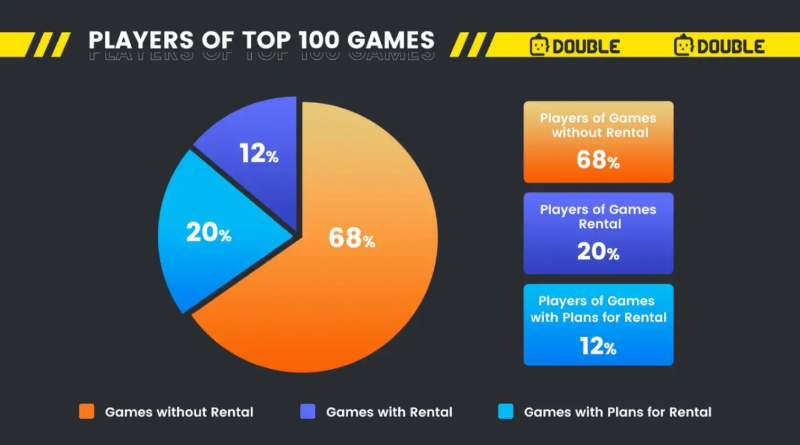
One possible explanation is that rentals may make in-game NFT assets more accessible to new players who might otherwise hesitate to directly purchase an NFT just to play.
Another possibility is that once a game reaches a certain player base size, developers may feel more motivated or capable of building an NFT rental market.
Gamers primarily use rentals to lower costs and increase their chances of winning in NFT games through the use or combination of NFTs.
Reasons for NFT Rentals: Lower Costs or Increase Winning Chances
1. Splinterlands

Overview
Splinterlands is a blockchain-based online collectible card game where each card exists as a tradable NFT. Players earn income through tournaments, ranked matches, and quests. Card NFTs can be bought and rented via third-party marketplaces.
Advantages of Renting vs. Buying/Trading in Game
-
Daily Quests: Players need to play different factions (water, fire, earth, etc.), but don’t need to own enough cards for every faction—they can rent cards to complete tasks;
-
Brawl Rentals – Guild Brawls: These events may require niche cards that players are unwilling to buy outright; renting allows participation;
-
Experimentation: Players can test new deck builds and combinations with cards they don’t own before committing to a purchase.
2. DeFi Kingdoms
Overview
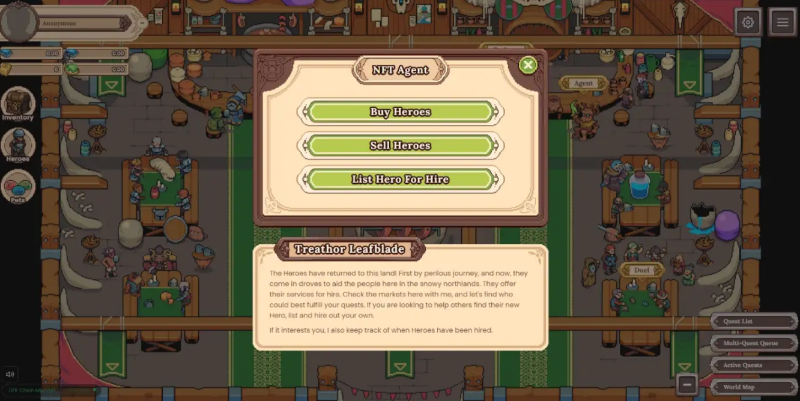
DeFi Kingdoms (DFK) is a browser-based pixel-art game built on the Harmony network, combining DeFi functions with gameplay elements. Its DEX uses Uniswap V2 protocol, allowing users to swap tokens and provide liquidity to earn fees.
Advantages of Renting vs. Buying/Trading in Game
-
Summoning: Summoning a new hero requires two heroes. Players can either own them or rent one;
-
Reduced summoning cost: Summoning cost is tied to generation. By pairing a high-generation hero with a rented low-generation one, players can significantly reduce costs. Even after paying JEWEL to the owner, renting a low-gen hero is often cheaper than using a high-gen one (e.g., Gen 5);
-
Maximize chances of obtaining rare heroes: Players can rent high-tier heroes to pair with their own, increasing odds of summoning higher-quality offspring.
3. MOBOX: NFT Farmer

Overview
MOBOX: NFT Farmer launched on BNB Chain in early April 2021. It describes itself as a unique infrastructure built atop the DeFi ecosystem, integrating NFTs with gaming. Its GameFi infrastructure leverages liquidity pools, yield farming, and NFTs to help users find optimal yield strategies and generate unique NFTs usable across multiple games, enabling MOBOX users to play games for free and earn while doing so.
Additionally, MOBOX is a gaming dApp where players stake LP tokens or stablecoins to earn KEY tokens through yield farming. KEY can unlock MoMo NFTs, which serve as characters or collateral assets within the MOBOX platform.
NFTs play a crucial role in the MOBOX ecosystem, as users require MoMo NFTs to become active participants.
Advantages of Renting vs. Buying/Trading in Game
-
Players earn gold coins by placing MOMO in the MOMO Vault. Common MOMOs produce less, while rare ones can generate over 100 coins per minute. When short on gold, renting a MOMO is the fastest and most reliable solution;
-
Players can participate in raid mechanics similar to Clash of Clans. Rented MOMOs typically have strong stats, making them ideal for new players seeking consistent wins in raids.
4. Thetan Arena

Overview
Launched in December 2021 by Vietnamese game developer Wolffun, Thetan Arena received investments from venture firms like Animoca Brands and is supported by gaming guild YGG.
It is one of the largest MOBA (multiplayer online battle arena) games on BNB Chain, combining free-to-play and play-to-earn models. It features two tokens—Thetan Coin (THC) and The Gem (THG)—which players earn by battling or completing tasks.
Advantages of Renting vs. Buying/Trading in Game
-
Earn gTHC from daily battle loot;
-
Earn Power Points to level up player NFTs;
-
Gain eligibility to participate in upcoming special events.
5. Aavegotchi

Overview
Aavegotchi is a DeFi-integrated crypto collectibles game developed by Singapore-based Pixelcraft Studio. It allows players to stake NFT avatars with interest-bearing tokens and interact with the Aavegotchi metaverse—a unique fusion of DeFi and NFTs.
Aavegotchis are pixelated ghosts living on the Ethereum network, powered by ERC-721 standards. Their value is determined by rarity, calculated from factors like base traits, staked collateral / aTokens, and equipped wearables.
To level up Aavegotchis, players engage in mini-games, governance, and social events. They can also enhance rarity through wearable gear and upgrades.
Advantages of Renting vs. Buying/Trading in Game
-
Players can collect in-game tokens to craft golden altars. Those without Ghost NFTs can rent them from the marketplace to start playing;
-
Purchasing an Aavegotchi typically costs around 400 GHST, while renting costs less than 1 GHST (see Aavegotchi rental data).
6. DracooMaster

Overview
Dracoo Master is a strategic roguelike deck-building game on BNB Chain. Dracoo cards enable infinite possibilities in real-time PvP battles in Sacred Peak. The game features utility token BAS and governance token DRA. Players use BAS to breed Dracoos and forge summoner gear.
Dracoo Master players earn DRA tokens through in-game adventures and battles. They can collect and evolve various Dracoos, earning DRA through combat. Dracoo NFTs are tradable on NFT marketplaces.
Advantages of Renting vs. Buying/Trading in Game
-
Non-blockchain users can rent Dracoo NFTs using fiat currency within the app to begin playing;
-
Renting NFTs with fiat lowers the barrier to entry for blockchain gaming and offers a more affordable option for users unable to purchase NFTs in certain regions.
7. Pegaxy

Overview
Pegaxy is a P2E PvP horse racing game where players compete against 14 others for top-three finishes. Each race includes random variables such as wind, water, fire, speed, etc.
Using strategic upgrades, food, and skills, players must finish in the top three to earn VIS (Vigorus), the platform’s utility token. Within the game, players can breed, merge, rent, sell, and race their Pegas to earn VIS. This system enables teams to form large guilds and scholarship programs, while also offering solo players opportunities to earn in-game tokens through daily races.
Advantages of Renting vs. Buying/Trading in Game
Pegaxy offers three types of in-game rentals: fixed rental, profit-sharing, and direct rental.
-
In fixed rental, once the lessee accepts the agreement and the Pega is held in escrow, the owner receives a fixed amount of PGX and cannot reclaim the Pega during the fixed term, ensuring uninterrupted access for the lessee;
-
Profit-sharing incentivizes hard work while reducing manager/owner workload. Scholars/lessees access NFTs at lower upfront cost but share a portion of earnings with the manager/owner;
-
Direct rental is designed specifically for guilds, allowing managers to create rental contracts and send them directly to scholars for acceptance.
Pegaxy enables large-scale rental programs and guild growth through its in-game economic model, creating broad access opportunities for those wanting to play for free.
What Are the Barriers for Game Developers Adopting Their Own Rental Markets?
Although the benefits of allowing players to rent NFTs instead of buying them are clear, our observations show that games with this feature remain a minority.
Here are several possible explanations for why more games haven’t launched their own rental markets:
Technical Barriers
NFTs based on ERC-721 and ERC-1155 standards are typically transfer-only by default. While they can be rented without transferring ownership, doing so securely and efficiently requires complex development efforts.
For this reason, new token standards such as ERC-4907 and ERC-5006 were introduced as extensions of ERC-721 and ERC-1155, respectively, simplifying the rental process.
Lack of Priority
Nearly all NFT-based games are relatively new projects launching new features monthly. With countless priorities—new gameplay mechanics, server maintenance, bug fixes—implementing a rental market may fall lower on the list.
For some games, developers must address more urgent matters before considering rentals, especially when the benefits aren’t fully understood.
Counterintuitive
The role of NFTs and cryptocurrencies in gaming is often framed as “enabling true ownership of in-game assets.” However, rentals involve no transfer of ownership. While blockchain-based ownership may represent a leap forward for mainstream gamers and developers, NFT rentals represent another cognitive leap built on top of that concept, potentially slowing adoption.
Conclusion
Games that adopt rentals tend to have higher user engagement and capture a disproportionate share of active users. Rentals make NFTs more accessible and affordable for new users who aren’t ready to invest heavily in digital assets before playing.
Experienced users may choose to rent specific cards or components for events, or to experiment with different gameplay builds before committing to a purchase.
Regardless, we expect NFT rental adoption to grow steadily alongside the rise of NFT-based gaming.
Join TechFlow official community to stay tuned
Telegram:https://t.me/TechFlowDaily
X (Twitter):https://x.com/TechFlowPost
X (Twitter) EN:https://x.com/BlockFlow_News