








Are Gen Z students flooding into Web3? Here are their four reasons
TechFlow Selected TechFlow Selected
Are Gen Z students flooding into Web3? Here are their four reasons
Native Web3er | Passion and sincerity, planning and practice
 Navigating Web3 tides with focused insights
Gen-Z is growing at an astonishing pace within the Web3 world.
With the rapid rise of the digital economy, Gen-Z—digital natives since birth—have lived immersed in a digital environment encompassing entertainment, education, and social interaction. A recent survey shows that 76.4% of Gen-Z aspire to become "digital nomads."
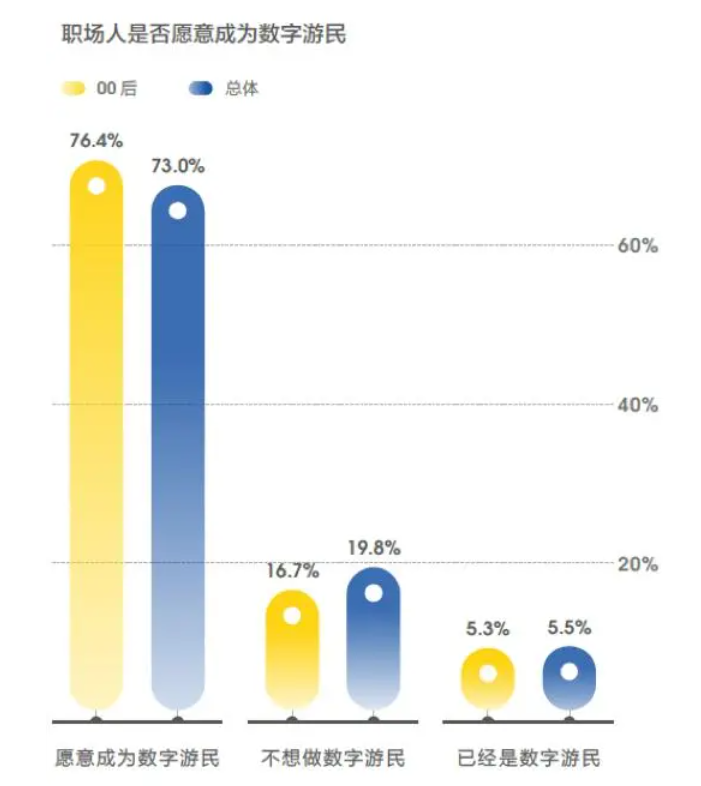
As native inhabitants of the digital world, Gen-Z shares a natural affinity with Web3—uncertainty, possibility, and vitality are their shared traits. "Youth is the morning of life, the dawn of day, full of purity, imagination, and harmony." This cohort of Native Web3ers is abandoning traditional internet paradigms and rapidly entering the Web3 space, injecting fresh energy and momentum into the industry’s development.
"Success early, success fast," bold, imaginative, and unafraid of failure, Gen-Z individuals are making their mark in the Web3 world with vigor and enthusiasm. Many are still university students, skillfully balancing academic pursuits with entrepreneurial ambitions, actively contributing to innovation in the Web3 sector. As pioneers riding the tide of change, what motivates them to enter Web3?
Driven by curiosity about this new generation of Native Web3ers, TinTinLand visited blockchain associations at renowned universities such as Northeastern University, Shenzhen University, Central University of Finance and Economics, and Zhejiang University, engaging in deep conversations with key members to explore the motivations behind these young pioneers venturing into the Web3 frontier. Below are their stories.
Interest: Always the Best Teacher
"I've loved computers since high school and wanted to become a programmer. Coding and how programs work kept me glued to my computer around the clock without feeling tired." This passion for software development propelled Yuanxun, head of the blockchain association at Northeastern University, from traditional internet to Web3. Similarly, Dai Ze, leader of Zhejiang University's blockchain association, sees technical passion as the core driving force: "I really enjoy diving into technology and have a natural affinity for all kinds of code. Exploring various project developments is inherently exciting—not driven by motives like trading tokens or profit-seeking."
If enthusiasm for programming represents a technical passion toward Web3, then collaborative project development offers university students a new form of hands-on excitement.
Wu, a marketing team member at the blockchain association of the Central University of Finance and Economics, exemplifies strong enthusiasm for Web3 project development. When asked about her motivation, she emphasized the desire to join a team capable of incubating real Web3 projects: "Sectors like DeFi and NFTs are incredibly promising. I’ve been closely tracking internet trends and constantly envisioning practical applications of Web3 technology. The idea of joining a mature organization to build something meaningful fills me with anticipation."
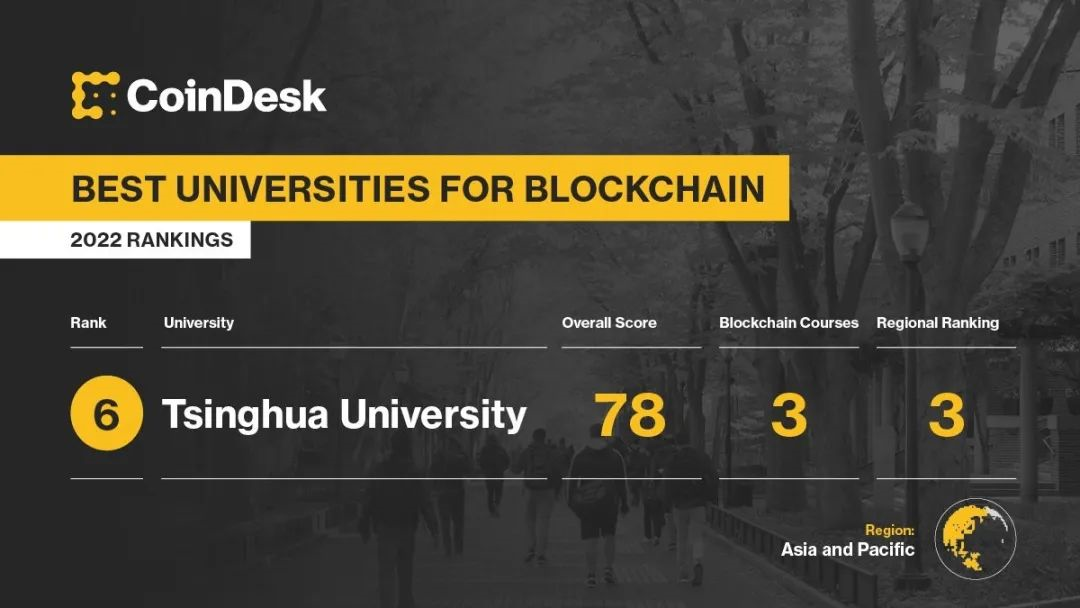
In reality, what Wu desires has already taken root across many campuses. Top Chinese institutions such as Tsinghua University, Shanghai Jiao Tong University, and the University of Science and Technology of China have established campus-level "micro blockchain associations," contributing to the next-generation internet ecosystem amid the Web3 wave. Take Tsinghua University’s THUBA, for example—it recently co-hosted AMAs with StepN and Uniswap and organized a hackathon attracting over 60 teams. These student-led platforms bring together those passionate about blockchain and Web3 to explore and develop projects collaboratively—uniting like-minded individuals to pursue shared interests.
Strengths: Advantages of Quantitative Thinking
Looking at enrollment data from blockchain-related courses worldwide, most participants come from STEM fields—especially information engineering and computer science—alongside interdisciplinary majors such as international trade, mathematics, and geography.
When Native Web3ers discuss their reasons for choosing Web3, their academic background often plays a significant role. While some may feel intimidated by perceived technical barriers, many students with backgrounds in economics, information systems, and other interdisciplinary fields possess unique strengths. They leverage their expertise alongside computer science peers to strengthen campus blockchain associations.

Three members of the Central University of Finance and Economics’ blockchain association come from different disciplines but each contributes distinct professional advantages to their Web3 journey. Yuan, majoring in financial engineering, finds understanding decentralized ledgers helps her grasp the application of digital assets in the Web3 era; Wu, studying information security, focuses on foundational infrastructure supporting Web3 operations such as on-chain freedom and privacy protection; Hu, specializing in international economics and trade, loves market research and possesses sharp sensitivity to Web3 market dynamics.
Leveraging their respective strengths, the association maintains a clear organizational structure with stable operations across three core departments: marketing, R&D, and communications. Each semester, they host multiple technical seminars and promote blockchain exchange events on campus, achieving consistent growth in membership and technical team expansion.
Moreover, given its strong ties to quantitative knowledge, Web3 provides fertile ground for students skilled in logical analysis. P.Z., a student at Shenzhen University who started learning Olympiad math in elementary school and excels in data statistics, says: "The efficient collaboration system in Web3 allows me to apply my strengths in mathematics and statistical logic. People naturally enjoy doing what they're good at—Web3 lets me shine, giving me greater sense of value and belonging."
Practice: Opportunities for Project Development
If self-directed learning is a key tool for mastering Web3 skills, real-world development opportunities serve as powerful incentives for students to climb the Web3 ladder. For Yuanxun’s Northeastern University blockchain association, it's more than just a student interest group—it's a "backyard incubator" for innovative projects. "We have two core teams: technology and investment research. We regularly collaborate with faculty on tech competition projects. Our experience in traditional internet development gives us a strong advantage when transitioning to Web3. Shortly after joining the club as a freshman, I had the chance to participate in a hackathon (IC) project and successfully incubated a promising prototype."
The project, called Meta Box, is an on-chain storage protocol for IC designed for developers and users, featuring efficient privacy protection.
Meta Box aims to create a series of independent spaces with full ownership, offering services tailored to specific scenarios such as SocialFi, data management, DeFi, and NFTs. Users can manage their data assets via MetaBox, enabling data accumulation and self-sovereignty in Web3, building personalized DID tools.
Similarly passionate about project development, Wu from CUFE’s blockchain association envisions bridging Web3 projects with real-world companies: "Many student startup projects don’t win awards—it feels like a waste. If Web3 projects could evolve from academic exercises into market-viable products, that would be my ultimate goal." To this end, Wu interns at IT firms and investment organizations during her free time, interacting with professionals to identify more Web3 project opportunities, break down the gap between decentralized concepts and practical implementation, and seize optimal development timing.
While many student blockchain groups are gradually exploring practical development, Zhejiang University’s Blockchain Association is already leading the way. As Dai Ze puts it: "Project development has become a routine part of our members' lives."
Since its founding, ZJUBCA has hosted or co-organized numerous blockchain enthusiast events including Vitalik’s Hangzhou visit, IPFS Meetups, Ethfans Meetups, and Ultrain conferences, facilitating face-to-face discussions and live demonstrations with experts and industry leaders. The association has repeatedly won championships and runner-up titles in competitions such as the 2021 "Byzantine Cup" Blockchain Digital Economy Business Analysis Competition, 2019 Quchain Blockchain Development Contest, and 2018 EOS Hackathon.
Beyond academics, members are either "on their way to a competition or preparing for the next one." The bridge connecting them to the future is being built through continuous cycles of planning, refining, practicing, competing, and overcoming challenges.
Freedom: The Infinite Imagination of Web3
Web3 resembles a utopia, guiding people toward ideal futures—visions that may seem fantastical, yet reflect the sincere aspirations of Native Web3ers. The Athenian agora—the ancient public assembly—is P.Z.’s vision of the Web3 world. Unlike Web2 communities, which function mainly as discussion forums, Web3 acts more as a decision-making hub, representing a futuristic narrative. This idealized model of public engagement also resonates deeply with Yuanxun from Northeastern University.
With advancements in metaverse and AI technologies, the interactivity and vast potential of Web3 are widely recognized among Native Web3ers. Yuan from CUFE says: "I channel my passion for investing into Web3 because it fulfills human desires for high freedom, decentralization, and strong autonomy. I’m especially eager to build products and projects that better meet user needs."
Wu shares a similar view: "The biggest shift in user behavior with Web3 is the emergence of community culture, requiring people who can communicate—and want to communicate—with users. Cultivating human-centered projects is key to fulfilling advanced social needs in Web3. That’s where the future lies, and I hope to contribute to it."

Conclusion
These genuine passions continue to drive more and more university students interested in blockchain and Web3 to explore their own versions of an "ideal utopia." They aim to harness the immense growth potential of China’s unique Web3 ecosystem,投身 into the era of metaverse-powered real economies and creator-driven innovation. We look forward to witnessing their future contributions.
This feature marks the first article in TinTinLand’s Web3er Interview & Portrait Series. The enthusiasm and creativity of Gen-Z students on campus serve as endless inspiration for us to track the evolution of the next-generation internet. We will continue spotlighting emerging forces exploring Web3 within academia, offering fresh ideas and innovations to advance the broader Web3 industry.
Join TechFlow official community to stay tuned
Telegram:https://t.me/TechFlowDaily
X (Twitter):https://x.com/TechFlowPost
X (Twitter) EN:https://x.com/BlockFlow_News
 @OurTinTinLand






