








6 Key Reasons Why Web3 Hasn't Been Mainstream Adopted Yet
TechFlow Selected TechFlow Selected
6 Key Reasons Why Web3 Hasn't Been Mainstream Adopted Yet
Various barriers must first be overcome before achieving global adoption.
 Navigating Web3 tides with focused insights
Author: ChainLinkGod
Translated by: DeFi 之道

Image source: Generated by Wujie Edition AI
Web3 represents a fundamental evolution of the internet as we know it today, replacing centralized gatekeepers and intermediaries with decentralized protocols and community-owned ecosystems. These inherent characteristics of Web3 are highly appealing to those who live within the crypto-native environment. However, we must also acknowledge one truth: Web3 remains a niche industry yet to achieve mainstream adoption.
While limitations around blockchain scalability are most frequently cited as the reason for Web3's lack of adoption—often serving as a reminder that we're still in the early stages—I believe this is only one of many reasons why average consumers do not consider Web3.
This article will analyze six key reasons why Web3 has not yet achieved mainstream adoption, and what can be done to unlock the true societal benefits of this technology.
01 Esoteric Techno-Babble
Web3 can be a difficult concept to explain to newcomers, especially because there is no universally accepted definition. Everyone has their own interpretation of its most valuable features. This inevitably leads to questions such as: "Why should I care about Web3?" and "How does Web3 benefit me in daily life?"
Various attributes of Web3 are often highlighted—decentralization, censorship resistance, immutability, transparency, etc. These explanations often include overly technical breakdowns of Web3 infrastructure, filled with jargon and techno-babble—technical terms incomprehensible to the average person.
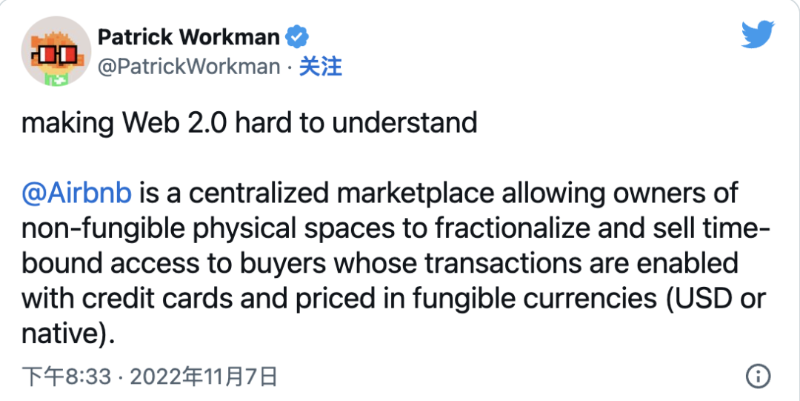
While such explanations help understand the core value of Web3 and its underlying technical implementation, they are merely a means to an end.
The real question that must be answered is: How do these abstract concepts and intangible values ultimately translate into Web3 applications that ordinary consumers can understand and want to engage with?
Of course, answering this requires pointing to clear real-world use cases.
02 Speculative-Driven Circular Economy
The first major Web3 application was the creation of digital tokens with predefined monetary policies and built-in peer-to-peer payment functionality—all without centralized intermediaries (e.g., Bitcoin).
While digital tokens appeal to many, their utility purely as transferable assets between individuals is quite limited compared to traditional currencies, involving clear trade-offs in volatility and limited merchant acceptance.
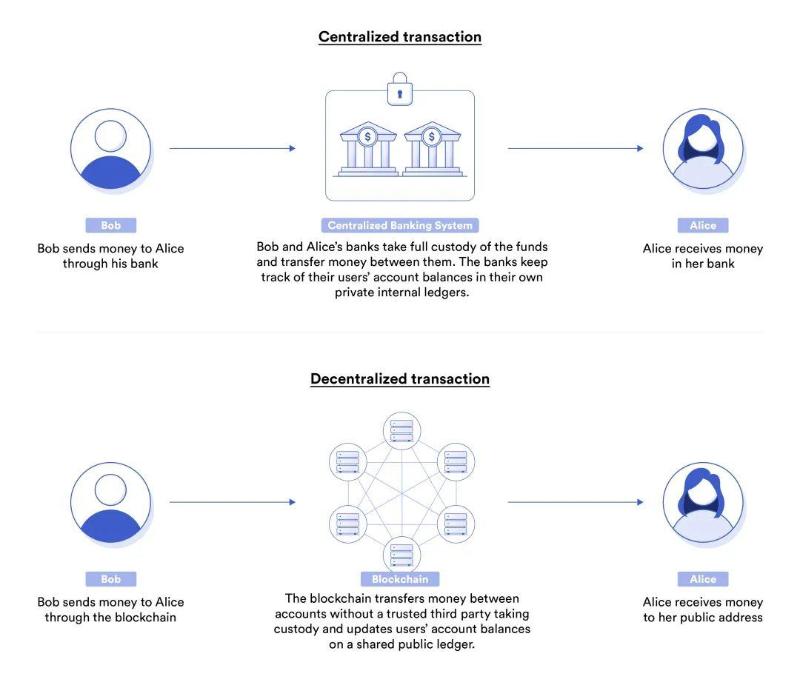
DeFi vs TradFi: DeFi removes intermediaries from value transfer
If traditional financial systems weren’t clearly broken, the mere ability to mint and transfer tokens wouldn’t be enough. This realization led to the next obvious Web3 use case: Decentralized Finance (DeFi). DeFi extends the utility of digital tokens beyond simple value transfers to financial primitives familiar to consumers—lending, borrowing, trading, and hedging.
However, given that many DeFi applications still primarily revolve around tokens, a speculative circular economy has emerged, where value is partially derived from token monetization itself. This isn’t surprising—crypto-native users already holding tokens were naturally the initial product-market fit for DeFi. But for non-token holders, DeFi often feels more like a casino than an alternative financial system.
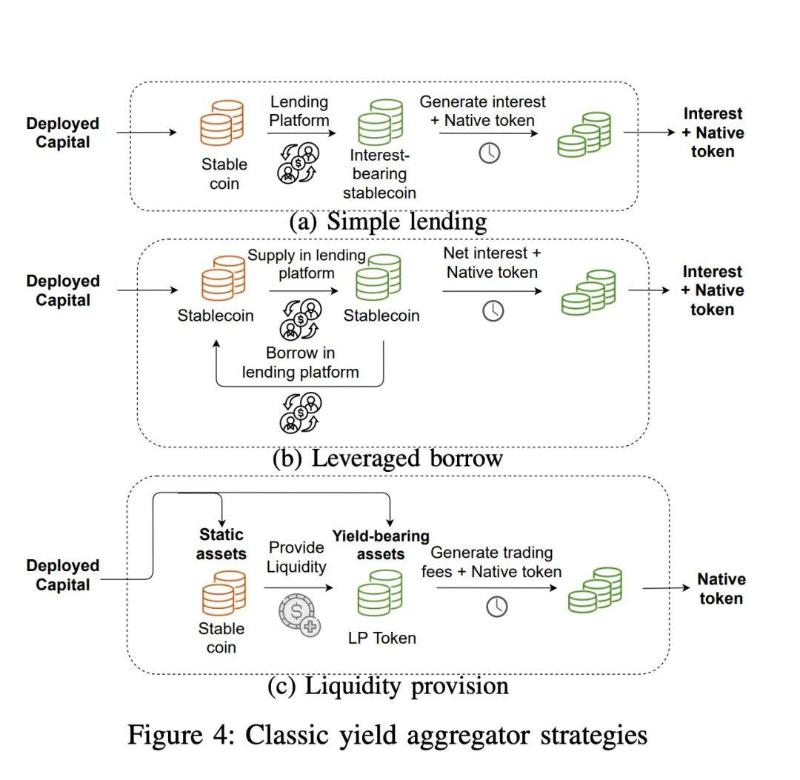
Example of speculation-driven “yield farming” in the DeFi circular economy (source)
Can tokenized assets save the day?
This is not to say all DeFi today is purely circular.
Stablecoins—tokens whose value is pegged to another asset like fiat currency—create what’s known as “programmable dollars,” tradable globally and settled in seconds. Today, digital currencies are much closer to the everyday lives of consumers, whose lives already revolve around earning, saving, and spending money.
Currently, $140 billion worth of stablecoins are usable across DeFi applications, making the ecosystem far more useful and relevant—for example, enabling on-chain savings accounts. When Web3’s value propositions are applied to assets people already use, the “why” behind Web3 becomes self-evident.
Beyond stablecoins, I believe this general approach of on-chain financial mimicking—recreating existing real-world financial primitives on-chain—provides a clear path to introduce Web3 applications to the general public in ways that directly relate to everyday life.
In particular, tokenized real-world assets (RWAs)—of which stablecoins are a subset—offer opportunities to reduce the speculative loops prevalent in DeFi. These could include real estate, corporate/government bonds, revenue-sharing agreements, commodities, or any other traditional financial assets. That said, tokenized RWAs come at a cost—particularly in terms of decentralization and trust minimization.
Nevertheless, Web3 applications backed by RWAs could scale Web3’s value proposition by an order of magnitude.
03 Hyper-Financialization
Despite the massive potential of DeFi, stablecoins, and RWAs in expanding Web3 to the mainstream, it's important to recognize that the average consumer doesn’t actually care much about finance. They may not use many financial services and certainly don’t care about the technical details of how financial products settle in the backend. Ultimately, they just want to conduct commerce—like buying groceries with a credit card. If Web3’s primary narrative is rooted in hyper-financialization, a huge portion of the potential market will be entirely missed.
This is where much of the confusion around Web3 comes from. If Web3 is a “decentralized version of the existing internet,” then where are all the typical internet use cases we’re used to? Messaging, social media, video streaming, e-commerce, or even the blog you’re reading right now?
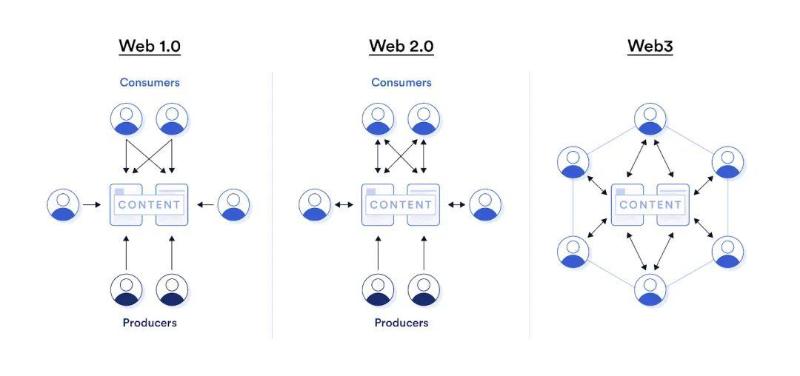
Web1 vs Web2 vs Web3
If Web3 is about redefining how content creators and consumers interact, then where are the Web3 content platforms?
Non-financial use cases for Web3 are still in their infancy, but some clear examples are emerging. For instance, a Web3 implementation of social media could take the form of a decentralized protocol where users truly own their online profiles—including all their created content and their follower/social graph. These profiles could then be ported across various front-end interfaces with different content moderation policies.
Aave’s Lens Protocol is an example of such a decentralized social graph protocol aiming to achieve this. By storing interactions on the Polygon PoS blockchain, users’ social graphs become portable across applications. The ability to own one’s social identity is a powerful Web3 primitive that directly addresses concerns with existing platforms.
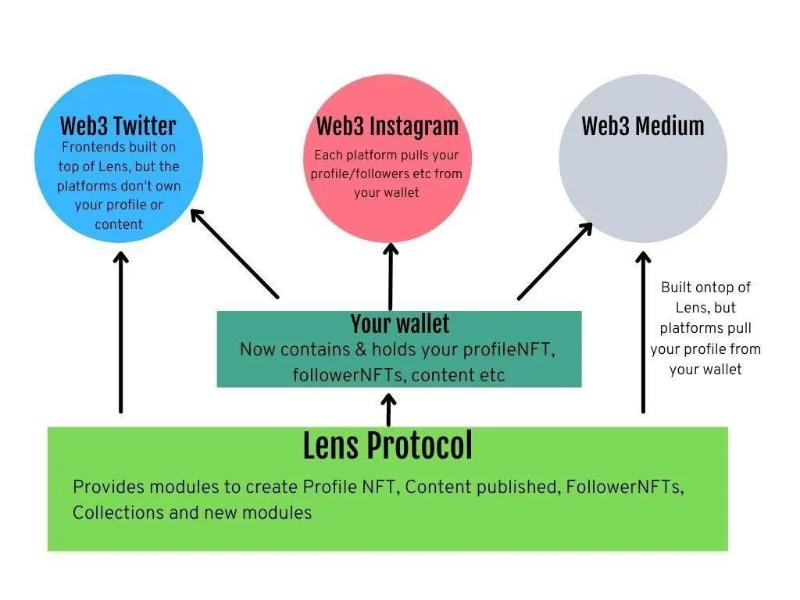
Decentralized social graph protocols allow independent interfaces to be built on top (source)
Decentralized social media might—or might not—be the ultimate killer non-financial Web3 application. It could instead be the creator economy, gaming, the metaverse, DAOs, or something else entirely. But one thing is clear: we must expand our industry beyond pure hyper-financialization.
04 UX Minefield
In theory, Web3 offers a user experience (UX) far superior to today’s internet. Instead of managing numerous unique usernames and passwords for each website or delegating to a centralized service provider, Web3 allows users to authenticate themselves via a single private key, universally usable across any Web3-enabled application. This not only greatly simplifies the user experience but also enables users to truly own their data and access applications directly—without needing approval from centralized intermediaries.
When it works, it works exceptionally well.
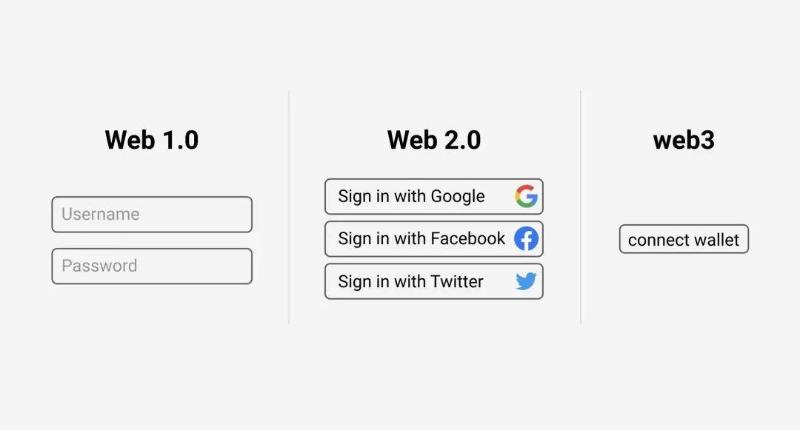
Differences in login experiences across web versions (source)
But again, that’s only “when it works.” In practice, users must navigate incompatible authentication standards, manually handle private keys and seed phrases, download and learn how to use new browser extensions or mobile wallets, and adapt to varying blockchain standards. The result is often frustration and confusion.
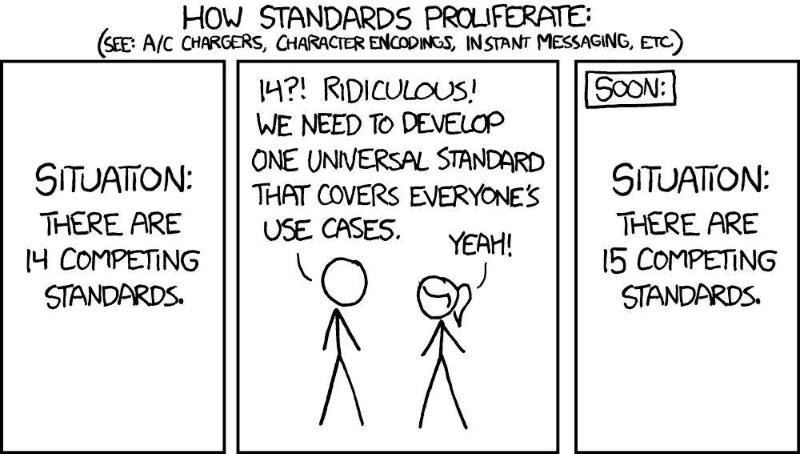
Another standard will solve Web3 authentication issues (source)
Seed phrases? Chain IDs? Gas prices? Token approvals? Transaction reversals? Finality? These are deeply esoteric and highly technical concepts that native Web3 users today must understand to interact with on-chain Web3 applications.
Even with a solid understanding, interacting with Web3 apps often feels like walking on eggshells—hoping that nothing breaks along the chain: hardware wallet → Web3 extension → frontend website → RPC node → blockchain.
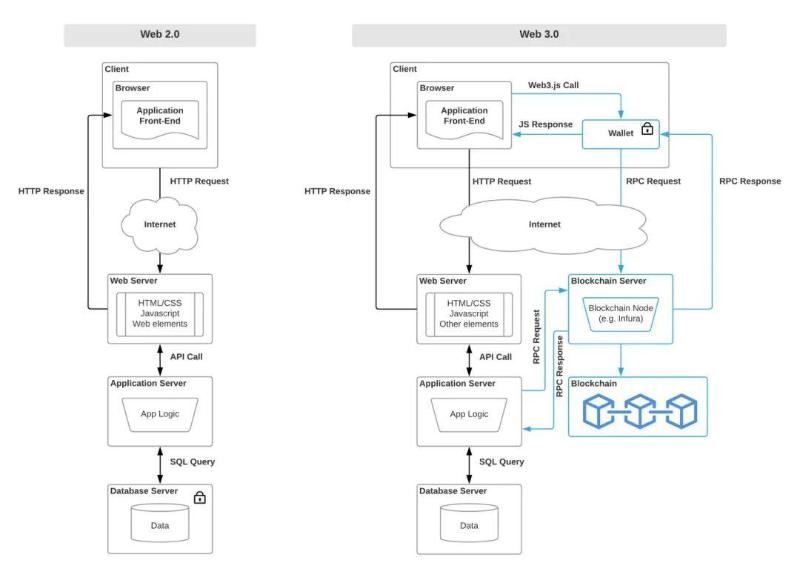
Just as users don’t need to understand Web2’s underlying architecture, they shouldn’t need to grasp the technical nuances of Web3’s infrastructure
Today’s poor Web3 UX isn’t the fault of any single project or protocol. Many efforts are underway to unify the experience. Yet, it’s undeniable that Web3 UX today is suboptimal. Secure private key management is also a serious responsibility—with little equivalent in the Web2 world. Unfortunately, if you lose your seed phrase, there’s no “reset password” option.
Given how common interfaces like the one below are in Web3, it’s no wonder new user drop-off rates are so high.
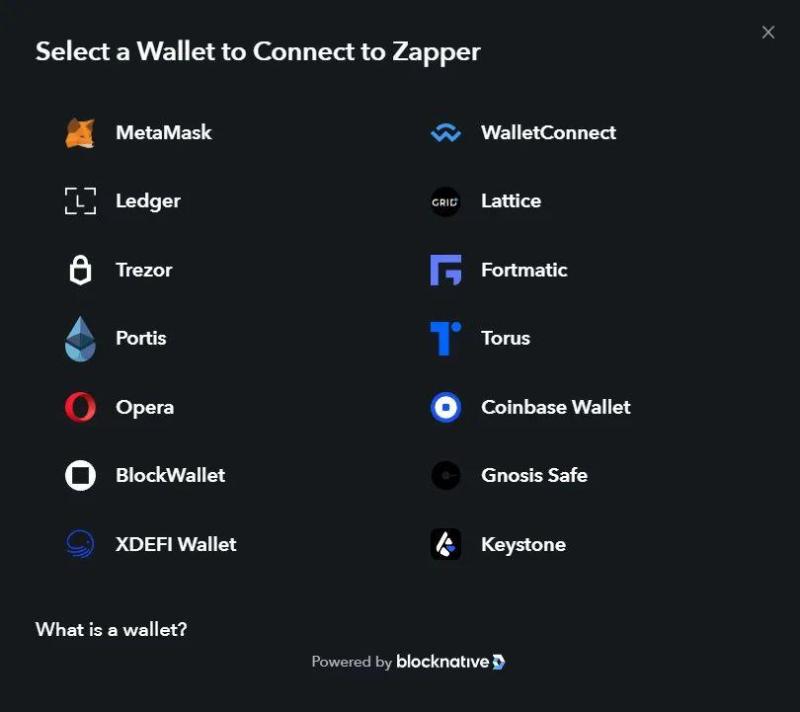
“Connect wallet” itself is a rabbit hole—good luck
Overcoming this UX barrier requires a first-principles approach to minimize technical complexity and risk for users. I believe this will eventually lead to the emergence of Web3 “super apps”—applications that abstract away the inherent complexities of Web3 infrastructure and only expose users to what they need to see in order to interact within the Web3 world. Coinbase and Robinhood are two examples of consumer-facing companies leveraging their expertise to create frictionless Web3 wallets.
Notably, Coinbase has integrated a Web3 browser directly into its main mobile app. The browser uses secure multi-party computation (MPC) to generate private keys in a distributed manner. The result is a “semi-custodial” wallet system where the user’s private key is split among three entities, requiring any two parts to sign transactions. The user and Coinbase each hold one part, while the third can be stored cold or with a trusted third party. If a user loses access to their device (and thus their key share), a recovery mechanism can restore wallet access.
While less trust-minimized than pure self-custody solutions, this compromise significantly improves UX and may actually be safer for users prone to accidentally losing keys. Other solutions like social recovery also offer viable paths toward creating the kind of UX users already expect in the Web2 world.
05 Web3’s Dial-Up Era
One of the most commonly cited limitations of Web3 today is the limited scalability and high latency of widely adopted public blockchains. As discussed in my previous article on blockchain trust models, scalability is often equated with increasing transaction throughput. However, a more comprehensive definition includes increasing throughput while maintaining low verification costs for the blockchain ledger. Higher-throughput blockchains do exist, but they still face upper limits and often require trade-offs in decentralization, security, or reliability.
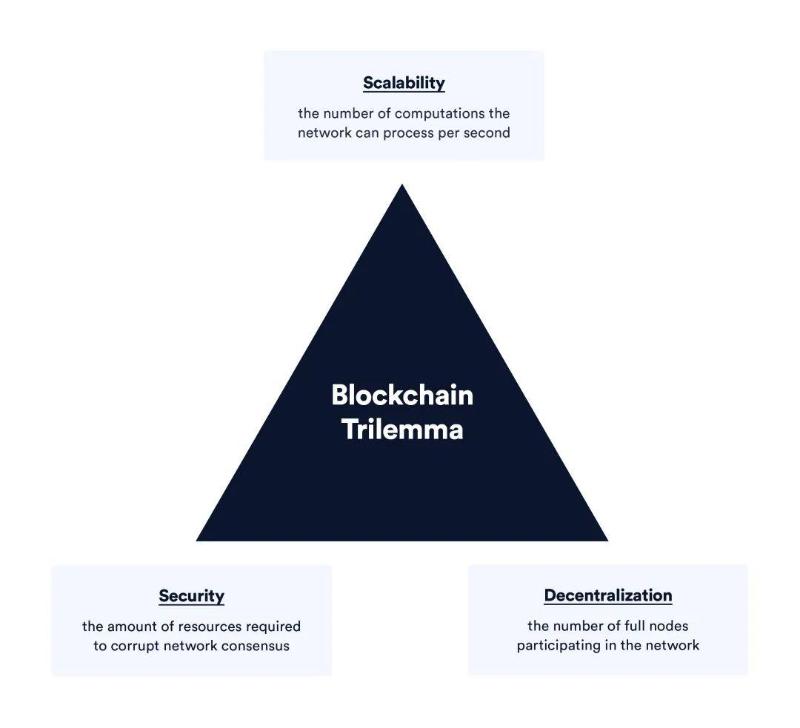
The blockchain trilemma illustrates the trade-offs inherent in traditional blockchain design
As Vitalik Buterin once said, “The internet of money shouldn’t make every transaction cost five cents.” Given Ethereum’s gas fees over the past few years, this is somewhat ironic—but most agree it’s a valid point. Even with clear use cases and improved UX, the next billion users cannot join Web3 if transactions take too long and cost too much.
Because this is one of the most apparent barriers to mass adoption, many blockchains are intensely focused on improving scalability—via parallel computing, modular rollups, sidechain clusters, or other methods. Many of these solutions are still in early stages, but I firmly believe scalability is a technical challenge that can—and will—be largely overcome in the coming years. What remains unclear is what a highly scalable Web3 ecosystem might look like: a multichain world of independent L1s/sidechains, a multi-rollup world powered by Layer 2s, or a high-throughput server-farm-style L1? Perhaps all three will coexist?

Comparison of different scaling technologies by Matter Labs from ZkSync
06 The Obvious One
When discussing obstacles facing Web3, we must also address the elephant in the room: the lack of clear legal frameworks and regulatory guidance around crypto assets, decentralized applications, and decentralized organizations—which limits Web3’s ability to achieve global scale. Like any transformative new technology, growing pains are inevitable, but not everything can be solved through technology alone.
Without clear legal frameworks or policy guidelines, traditional institutions and organizations lack the clarity they’re accustomed to and require to confidently participate in and allocate resources to the Web3 ecosystem. Once such frameworks are established—ideally through industry collaboration to avoid stifling innovation—these institutions will be far more likely to enter Web3, either as service providers for their existing customer base or as Web3 gateways.
To be clear, I’m not advocating for any specific legal framework or policy guideline. Rather, I acknowledge the reality that widespread Web3 adoption heavily depends on clear and reasonable guidance. The exact form this takes will depend on numerous variables. Stifling innovation is neither feasible nor desirable for the Web3 ecosystem, but viewing Web3 as a “Wild West” environment is equally detrimental to its long-term growth.

Institutions may feel uneasy in an ecosystem where fraud is perceived as uncontrolled
Looking Ahead
Web3 represents a paradigm shift in application trust—transferring power from centralized intermediaries to deterministic and transparent software.
But like any innovative new technology, various hurdles must first be overcome before achieving global adoption.
While the bottlenecks to mass Web3 adoption are far more numerous than outlined here, directly addressing the above challenges positions Web3 better than ever to extend its benefits across all facets of society.
Join TechFlow official community to stay tuned
Telegram:https://t.me/TechFlowDaily
X (Twitter):https://x.com/TechFlowPost
X (Twitter) EN:https://x.com/BlockFlow_News






