








Understanding the Web3 Infrastructure Services Landscape: Industry Models and Ecosystem Infrastructure
TechFlow Selected TechFlow Selected
Understanding the Web3 Infrastructure Services Landscape: Industry Models and Ecosystem Infrastructure
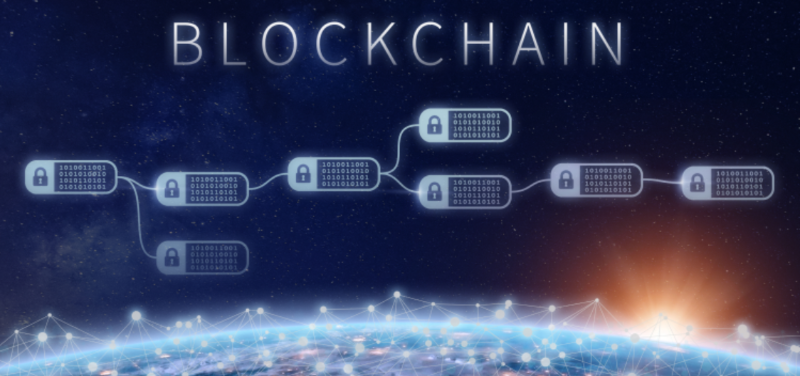
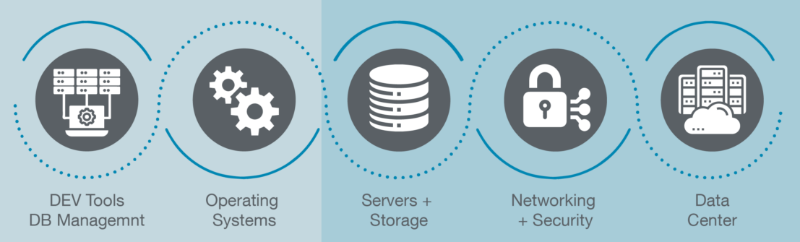
Blockchain infrastructure includes physical devices, software, and all other layers of the current blockchain technology stack.
 Navigating Web3 tides with focused insights
Author: moralis
Compiled by: TechFlow
The development of various blockchain infrastructures is impressive. Countless companies, organizations, projects, and communities are now elevating blockchain development to a new level, bringing Web3 closer than ever to the mainstream.
Moreover, proper blockchain infrastructure services enable developers to access core advantages in the crypto space and use Web3 effortlessly. If you want to bring your business or project into Web3 using blockchain infrastructure as a service, this article is perfect for you.
What Is Blockchain Infrastructure?
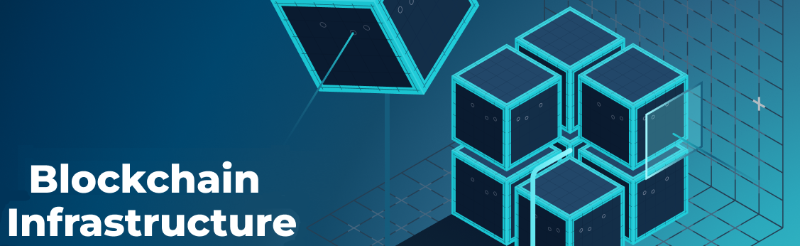
Blockchain infrastructure consists of many different components, such as blockchains, dApps, smart contract platforms, node providers, API providers, and hardware components.
Let’s go back to the beginning and see how it all started.
In 2009, Bitcoin was born, introducing the first blockchain. However, while this blockchain network had many advantages, it limited developers.
Therefore, blockchain developer teams created Ethereum—the first fully programmable blockchain.
Today, we can see the emergence of several other well-known developer-focused blockchains (also known as "infrastructure blockchains"), with new ones continuously being developed.
These networks serve as the foundational layer for all blockchain applications.
Without these networks, there would be no dApps (decentralized applications).
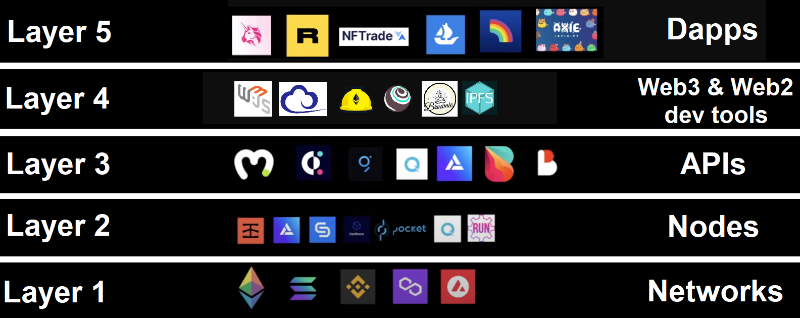
Furthermore, blockchain infrastructure includes physical devices, software, and all other layers of the current blockchain technology stack (see image below).
However, in this article, we can focus on the technologies, tools, and solutions that dApp developers need to pay attention to.
After all, when creating a dApp, you definitely don’t want to interact directly with the blockchain.
A Clearer Classification—Sectors and Industries
In addition to the blockchain technology stack mentioned above, CoinDesk's “Digital Asset Classification Standard” (DACS) should be a good tool for understanding blockchain infrastructure services.
This classification of digital assets brings a degree of clarity and consistency to the relatively "volatile" blockchain industry:
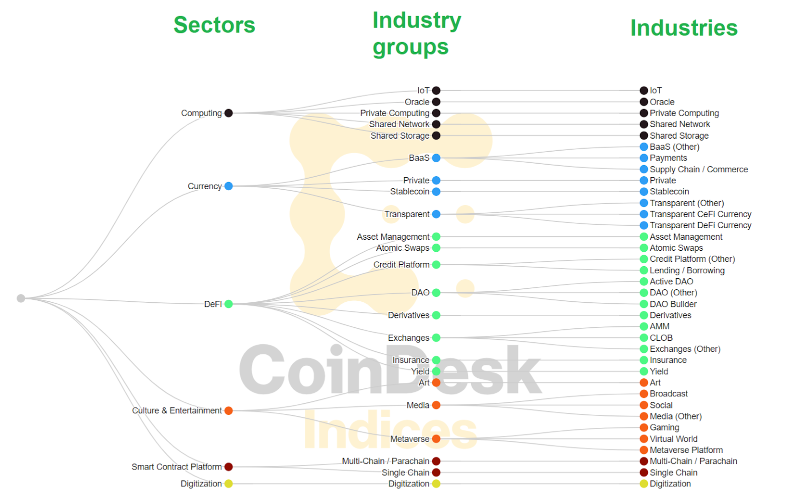
As seen in the image above, DACS defines six major sectors: Computing, Currency, DeFi, Culture & Entertainment, Smart Contract Platforms, and Digitization.
While each of these six areas has its own blockchain infrastructure services, in terms of blockchain infrastructure-as-a-service, “Computing” and “Smart Contract Platforms” dominate.
Blockchain Infrastructure as a Service—What It Is and How It Works
Blockchain infrastructure as a service is a hosted blockchain development platform or tool that allows users to build on top of existing blockchain networks.
Additionally, this means blockchain infrastructure services cover a broad range: on one hand, they can focus on helping developers build Layer-2 blockchains and solve underlying infrastructure issues.
On the other hand, blockchain infrastructure services can help developers build and deploy dApps, thereby reaching end users directly.
Moreover, blockchain infrastructure services also include all backend tools such as data storage, making dApp creation possible.
A suitable Web3 provider offers both infrastructure and blockchain development tools. You may know that early blockchain applications were solely focused on cryptocurrencies.
-
Thus, the term “Blockchain as a Service” (BaaS) was constructed for the currency sector (as you can see in the DACS chart).
-
Therefore, BaaS is typically defined as more centralized protocols that use permissioned blockchains for narrowly defined purposes.
-
Hence, we avoid using BaaS interchangeably with “blockchain infrastructure as a service.” After all, most leading blockchain infrastructure services have nothing to do with cryptocurrency and are not blockchain protocols themselves.
Nonetheless, it’s helpful to view blockchain infrastructure as the “software-as-a-service” offering for Web3. Ultimately, reliable blockchain infrastructure services allow businesses to launch and run applications with minimal effort. The latter ensures greater agility and faster blockchain adoption. After all, if enterprises were to develop blockchain-related backends themselves, they would waste significant amounts of money and time.

Blockchain Infrastructure Services
By examining some blockchain infrastructure services, you’ll gain a better understanding of the concept of blockchain infrastructure as a service. So let’s look at five industry groups within the computing sector (which are also emerging as independent industries).
We will also introduce other important technologies that are already playing a significant role in shaping blockchain infrastructure:

Computing Sector
According to the DACS document, the computing sector includes protocols focused on decentralizing and removing intermediaries from services such as computing, cloud storage, databases, and networking.
Additionally, DACS divides the computing sector into five segments, all providing essential blockchain infrastructure services:
IoT — The Internet of Things segment focuses on advancing the integration of "IoT" and Web3 by incorporating blockchain networks into the real world. Essentially, this type of protocol facilitates interoperability between IoT networks and blockchains.
Oracle Protocols — Oracle protocols focus on collecting, organizing, and transmitting data. They achieve this by supporting real-time “on-chain to on-chain” and “off-chain to on-chain” data flows. Typically, oracles use their native tokens to pay for transaction costs and governance rights.
Privacy Computing — This category of protocols centers on building a free, decentralized, secure-as-a-service computing power market.
Shared Networks — Decentralized cloud computing open networks allow participants to offer energy and computing resources to buyers at varying costs.
Shared Storage — Shared storage protocols exist to revolutionize traditional centralized storage servers. They achieve this by distributing storage responsibilities across an open-source network of miners/stakeholders and building an economic incentive system.
Other Key Blockchain Infrastructure Service Technologies and Tools
In the next section, you’ll learn more about the best blockchain infrastructure services for building dApps. However, even such solutions only cover part of what’s available.
Therefore, you should explore the previously listed protocols along with the following technologies and tools to ultimately find your ideal Web3 tech stack.
Below is a list of leading blockchain infrastructure service technologies and tools:
Node Providers — All communication with blockchains (decentralized digital ledgers) happens through nodes. But as a dApp developer, you certainly don’t want to run nodes yourself, as it is a full-time job with many challenges. Instead, you can use node providers who operate these nodes for you.
Web3 API Providers — This is arguably the most important “blockchain infrastructure as a service” tool/technology. After all, Web3 APIs enable consistent coding in stable environments. Moreover, various Web3 API providers offer different APIs. In most cases, these providers connect to nodes and create their own blockchain backend infrastructure, which you can leverage.
Smart Contract Programming Languages — These languages allow developers to write smart contracts, and they vary depending on the chain.
Smart Contract Development Frameworks and IDEs — Frameworks and IDEs support smart contract coding, compilation, deployment, verification, and testing.
Web3 Wallets — Primarily used for managing, sending, receiving, and storing cryptocurrencies. They also play a crucial role in Web3 authentication, executing on-chain transactions, testing dApps, and more.
Blockchain Explorers — These special types of dApps allow users and developers to explore on-chain data and even interact with smart contracts.

Leading Infrastructure Service Projects in Blockchain
Below is a list of technical solutions and tools for each of the categories mentioned above:
Computing Sector:
- Helium (IoT);
- Chainlink (Oracles);
- Filecoin (Shared Storage);
- IPFS (Decentralized storage solution, but not blockchain-based);
Node Providers:
- Alchemy;
- Infura;
- QuickNode;
- GetBlock;
- Chainstack;
- RunNode;
- Pocket Network;
Web3 API Providers:
- The Graph;
- Covalent;
- Alchemy;
- QuickNode;
- Biconomy;
- Bitquery;
- Moralis;
Projects/Tools Focused on Smart Contract Development:
- Solidity (smart contract programming language for Ethereum and EVM-compatible chains);
- Truffle (development environment, testing framework, and asset pipeline for EVM-compatible chains);
- Hardhat (Ethereum development environment);
- Ganache (testing environment);
- OpenZeppelin (provider of Solidity smart contract templates);
- Metaplex (smart contract templates and tool solutions for Solana);
- Remix Online IDE (compiles, deploys, and verifies smart contracts for EVM-compatible chains);
Web3 Wallets:
- MetaMask (Ethereum and EVM-compatible chains);
- Rainbow;
- Trust Wallet;
- Coinbase Wallet;
- Argent;
- Phantom (for Solana);
- Ledger;
Blockchain Explorers:
- Etherscan (Ethereum);
- BscScan (BNB Chain);
- PolygonScan (Polygon);
- SnowTrace (Avalanche);

Conclusion
If you’ve spent some valuable time studying the sections above, you now understand everything you need to know about blockchain infrastructure services.
This disruptive new technology has many facets, and you’ve now learned that these tools appear either as on-chain protocols or off-chain projects.
Indeed, you even had the chance to explore the leading computing protocols and blockchain infrastructure service projects.
Finally, with these excellent blockchain infrastructure-as-a-service solutions, you can join the Web3 revolution using your traditional development skills.
Join TechFlow official community to stay tuned
Telegram:https://t.me/TechFlowDaily
X (Twitter):https://x.com/TechFlowPost
X (Twitter) EN:https://x.com/BlockFlow_News


![Axe Compute [NASDAQ: AGPU] completes corporate restructuring (formerly POAI), enterprise-grade decentralized GPU computing power Aethir officially enters the mainstream market](https://upload.techflowpost.com/upload/images/20251212/2025121221124297058230.png?x-oss-process=image/resize,p_50/quality,q_80)






