








An analysis of GMX and GNS's advantages and potential from four aspects: protocol, adoption, profitability, and potential
TechFlow Selected TechFlow Selected
An analysis of GMX and GNS's advantages and potential from four aspects: protocol, adoption, profitability, and potential
With numerous protocols and forks emerging on-chain, how can one identify which is the most innovative and promising?
 Navigating Web3 tides with focused insights
Author: DAOtopia
Translation: TechFlow
The narratives around real yield and DEX trading have recently attracted significant attention.
Numerous protocols and forks have emerged on-chain ($MVX, $OPX...), but how can we distinguish which ones are the most innovative and which hold the greatest potential?
In this series, we've introduced GMX and GainsNetwork—now it's time to compare these two heavyweight products.
We will focus here on:
- Protocol;
- Adoption;
- Profitability;
- Potential;
First, what is $GMX?
$GMX is a spot and perpetual DEX with $66 billion in trading volume, redistributing its fees ($87 million) to token holders.
Then, what is $GNS?
Gains Network is a synthetic asset trading DEX that allows leveraged trading (up to 1000x) of stocks, cryptocurrencies, and forex.
Protocol
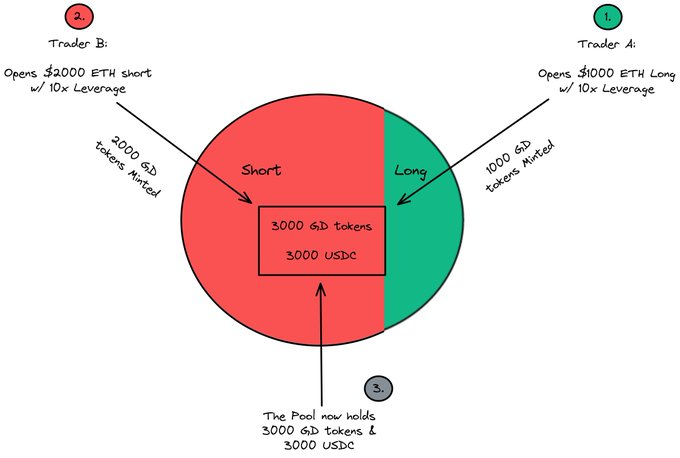
Their main difference lies in their product offerings: $GMX relies on perpetual and spot trading, while $GNS focuses on synthetic asset trading. Perpetual and spot trading require liquidity pools for trades, which is why $GLP exists (and exposes LPs to impermanent loss).
However, this limits the number of tradable assets due to the need for liquidity.
In contrast, $GNS opts for synthetic assets that do not require liquidity pools. This enables them to list as many tokens as they want, significantly improving capital efficiency.

Synthetic assets, along with forex and stock trading, open new opportunities for traders by eliminating the need for tokenization, liquidity pools, or third-party interactions.
The limitation of synthetic assets is the reliance on data providers, since prices aren't determined by bid/ask dynamics on the platform itself.
$GNS has integrated robust data feed strategies enabling them to resist fraud or price manipulation.
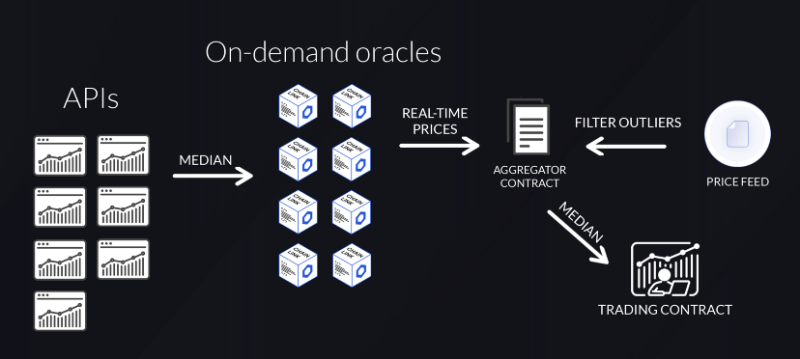
A few weeks ago, $GMX faced and resolved a similar issue.
Adoption
Now let’s discuss user adoption for both platforms.
-
$GMX currently leads in user adoption, claiming over 140,000 total users.
-
GNS, by comparison, has over 8,000 unique users, with approximately 300 daily active users.
$GMX holds a considerable advantage over $GNS, being one of the earliest projects to pioneer the DEX perpetual trading narrative and also the largest project on Arbitrum, which is currently thriving.
Profitability
Both protocols are breaking records in TVL, daily trading volume, and yields—let’s break it down.
$GMX has reached a staggering $66 billion in total trading volume, collecting $87 million in fees (0.1% of position value), redistributed to $GMX (30%) and $GLP (70%) holders.
$GMX’s current market cap stands at $328 million, while the $GLP pool holds $382 million.
Its P/E ratio (circulating market cap to annualized revenue) is 4x, but since 70% of fees go to $GLP, the P/E ratio for GMX token stakers (staking market cap divided by stakeholder income) rises to 11.8x.

$GNS has achieved $20 billion in trading volume, collecting $14 million in fees (0.08% of position value), with 32.5% redistributed to $GNS stakers/LPs.
GNS currently has a market cap of $113 million. Its P/E ratio stands at 18.1x.
Both protocols boast solid P/E ratios, making them quite attractive.
GMX charges higher fees to traders but redistributes more to holders, whereas GNS charges lower fees but only redistributes 32% (to LPs and stakers).
Potential
Now that we’ve covered the key metrics, it’s time to assess which project holds greater potential.
Both projects show strong potential, as neither has received venture capital funding, placing them firmly in the true real yield category, which enhances their long-term sustainability.
Both are DEXs that allow leveraged trading without KYC or reliance on third parties. The recent FTX incident has drawn many users concerned about misconduct in centralized institutions.
Although $GNS is more centralized, the team is highly engaged and community-oriented.
$GNS offers over 70 trading pairs, including forex and stock trading, with leverage up to 1000x, while $GMX only offers 8 trading pairs and a maximum leverage of 30x.
To stay competitive, $GMX plans to introduce synthetic assets and options trading in the future.
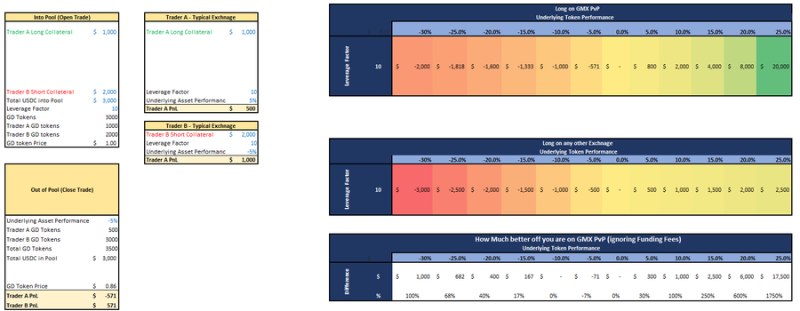
$GMX is built on Arbitrum, but $GNS isn’t far behind and plans to launch on the chain soon to capture market share.
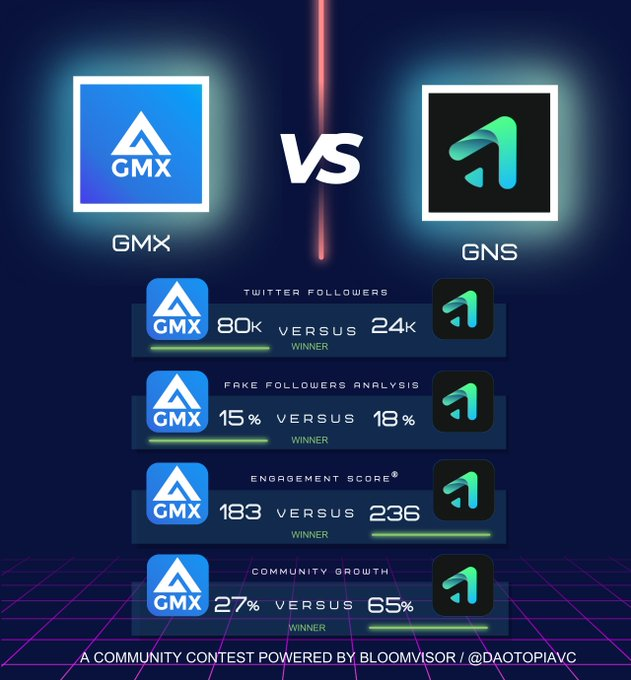
Now you essentially have all the essential information about both protocols to judge which one holds greater potential, whether in fundamentals, financials, or communication strategy.
However, this article is not financial advice. Both protocols have their pros and cons, so remember to always DYOR before investing.
Join TechFlow official community to stay tuned
Telegram:https://t.me/TechFlowDaily
X (Twitter):https://x.com/TechFlowPost
X (Twitter) EN:https://x.com/BlockFlow_News






