How to acquire Web3 users and build your brand's reputation and user loyalty?
TechFlow Selected TechFlow Selected
How to acquire Web3 users and build your brand's reputation and user loyalty?
Nike had to enter the Web3 space by acquiring RTFKT, whereas Smart Token Labs can be imagined as an RTFKT applicable to all brands.
 Navigating Web3 tides with focused insights
Web3 is a new narrative for the internet, encompassing concepts such as decentralization, blockchain technology, and token economics. One of the most compelling aspects of Web3 is the rising awareness of data ownership. In recent events, users have directly experienced and felt the consequences when centralized exchanges caused a series of problems due to their mismanagement.
Each user has their own Web3 wallet, enabling them to customize how they interact with brands—what services they access, how they share data, and how that data is collected and used. This new form of ownership means brands must discover new ways to connect with consumers.
For example, brands can engage with users more directly. Engagement, community building, and customer loyalty programs can be built around tokens from the very beginning of product and service design. By designing various types of tokens, brands can serve users across different platforms with services that are easier, more efficient, and more direct than traditional methods.
One of the biggest challenges for brands exploring Web3 is understanding the nature of this new audience. Current Web3 users are still early adopters who believe in decentralization and ownership.
Moreover, the way consumers connect with brands differs significantly from traditional markets. Attempting to reach this target market while ensuring existing customer bases aren’t lost presents a challenge, especially given the lack of technical expertise in foundational technologies. Brands may hesitate to fully commit to Web3, as results might fall short of expectations and require significant time to understand the Web3 landscape and its capacity.
Brands designing campaigns or strategies around Web3 may face several challenges:
Understanding how to get existing users to embrace a new ecosystem (Web3).
Finding and retaining new target audiences.
Complex Web3 infrastructure and steep learning curves.
Lack of internal resources and technical capabilities needed to build and run such initiatives.
Web3 strategies require long-term data collection and in-depth content to establish a solid foundation—an intricate task requiring innovation and costly expert teams.
Nike had to acquire RTFKT to enter the Web3 space, whereas Smart Token Labs can be imagined as an RTFKT for all brands, allowing each brand to choose whether to start small or go big from the outset.
For instance, Brand Extender is a product designed to enable brands to run their own time-boxed campaigns independently. This product allows brands to create customized derivatives under their brand and personalize combinations. Moreover, existing blue-chip NFTs with established IP rights can serve as base NFTs for secondary derivations. Best of all, brands don’t need to launch their own (and therefore uncertain) NFT collections. Brand Extender enables companies to bypass the need to first acquire essential infrastructure, technical expertise, or Web3 knowledge. The NFT derivatives created can function as loyalty tokens within the brand’s community, incentivizing users to hold and actively participate.
The second product under Smart Token Labs, Brand Connector—a token-centric solution focused on user loyalty—helps brands deepen interactions and strengthen bonds with users through NFT derivatives, offering holders various benefits and rewards. These perks can include exclusive merchandise, unique experiences, product discounts, priority ticket access, and more privileges.
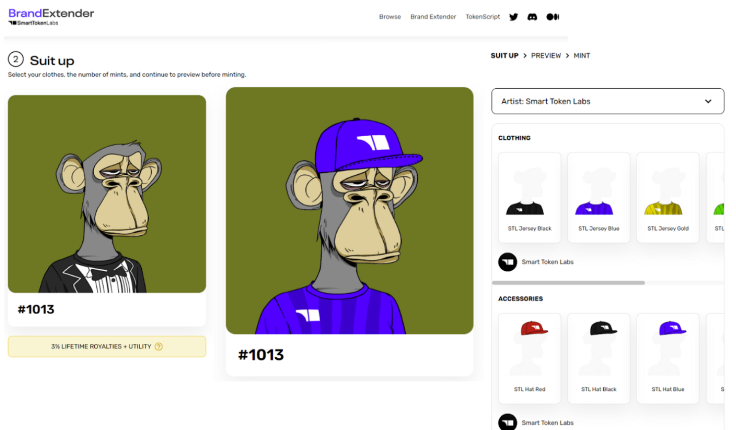
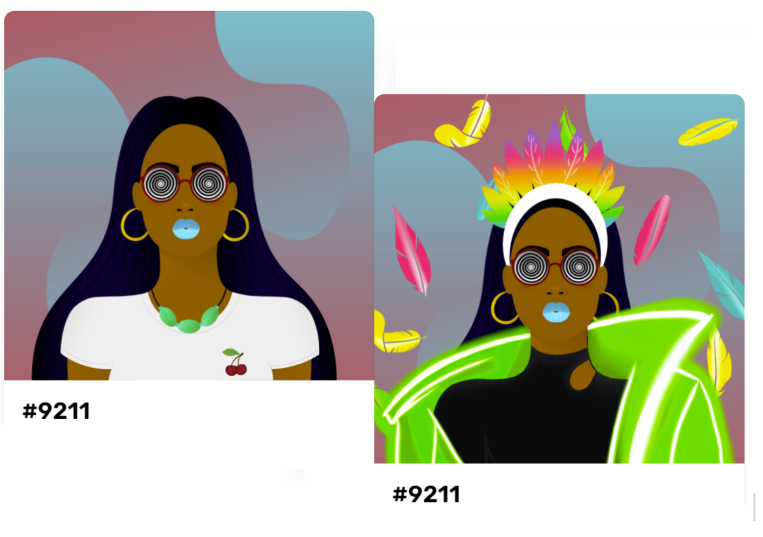
The images above show derivative collections created using https://brandextender.io/.
Join TechFlow official community to stay tuned
Telegram:https://t.me/TechFlowDaily
X (Twitter):https://x.com/TechFlowPost
X (Twitter) EN:https://x.com/BlockFlow_News
 Smart Token Labs 中文爱好者