Interview with Wang Feng: The Most Exciting Thing About Web3 is Uncertainty, An Internet OG's Crypto Journey
TechFlow Selected TechFlow Selected
Interview with Wang Feng: The Most Exciting Thing About Web3 is Uncertainty, An Internet OG's Crypto Journey
Believe in the future of Chinese people.
 Navigating Web3 tides with focused insights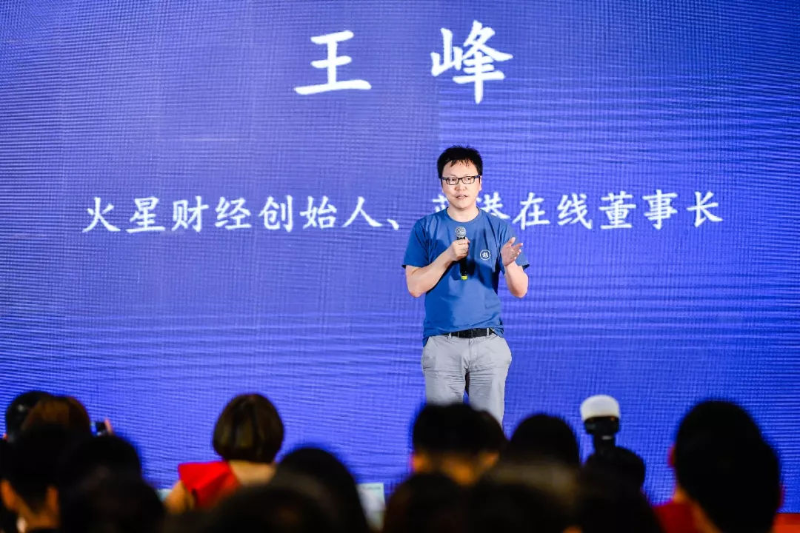
Interview & Writing: Claudia
Wang Feng—a name that spans the eras of Web2 and Web3. Having journeyed from the early days of the internet (Web1.0) to the forefront of Web3.0, he is the founder of Mars Finance, co-founder of Consensus Lab, founder of NFT marketplace Element, and an angel investor in FTX… Wearing multiple hats as both entrepreneur and investor, Wang Feng has become an OG in the Web3 industry.
Driven by curiosity and a thirst for knowledge, TechFlow sat down with Wang Feng—starting from his personal growth story, exploring his past interactions with SBF, discussing the future of Chinese entrepreneurs in Web3, and touching on the niche markets and NFT trends he believes in. Conversing with him feels like reading a timeless book—ever-relevant and essential for every builder eager to explore and build in the Web3 world.
The Growth Story of an Internet OG
TechFlow: Could you introduce yourself? From being a classical internet entrepreneur/investor to a crypto entrepreneur, how did you enter the crypto space?
Wang Feng: I joined Kingsoft in 1997, starting as a product manager. I led the development of金山词霸from its second to fourth generation—though the first version was personally overseen by Lei Jun. Later, Li Wanqiang took over and transitioned it to the web, where we once achieved 100% market share. Two years after joining, I was promoted to Vice President and held that role for ten years.
With the rise of the web, traditional desktop software declined. Kingsoft experimented with cybersecurity and gaming to transition into the internet era. I was appointed as the initial lead for both divisions, managing teams of around 100 people each. R&D, operations, and marketing were centralized under one department. Our tech teams were scattered across various tools—translation apps, game modding tools, media players, antivirus software, and online games—and sometimes developed over ten applications a year.
WPS was originally written by Qiu Bojun in assembly language under DOS—a story that inspired many colleagues.
I have academic backgrounds in mathematics and business management. Transitioning into the computer industry, I gradually absorbed foundational knowledge of system software through exposure.
In 2007, the same year Kingsoft went public, I founded Bluehole Interactive. At the time, Shanda and The9 were dominant, having built their success on distributing Korean games—Shanda with Legend 2, and The9 with Miracles and later World of Warcraft. Only NetEase, Tencent, Kingsoft, and Perfect World had succeeded through in-house game development. So when we launched, fundraising was relatively easy. Most of Bluehole’s employees came from these four companies, and later we hired fresh graduates—all highly qualified.
In 2008, we already had 100 million RMB in our bank account. Over eight years, we developed more than 20 games. Notable hits included “King's Blade,” “Sword of the Azure Sky,” and “Blade of God,” all ranking among the top ten games on major app stores at the time—collectively known as “Bluehole’s Three Swords.” By the end of 2014, we went public in Hong Kong with 200 million USD on the balance sheet and a market cap nearing 1 billion USD. That marked my first full entrepreneurial cycle.
Today, my technical co-founder at Element used to be my colleague—he joined Bluehole from Tencent as a game developer and eventually became our Group CTO. We worked together for many years. Back then, we often analyzed new products and felt a strong desire to build a platform ourselves, but couldn’t muster the energy—the company was fully consumed by game development. I personally tried ventures in social apps, game consoles, and smart hardware, all of which failed. But I always hoped for the right moment to launch a platform product.
As an investor, I’ve always enjoyed meeting interesting and intelligent people. I started investing my own money early on, and later co-founded GeeksHub, a tech-focused angel fund, with蒋涛, founder of CSDN. We ran three funds, with SoftBank SAIF and Innovation Works as our LPs.
We backed over 100 startups with more than 200 million RMB, primarily supporting technical or product-driven founders, including game developers. I angel-invested in《Seven Kingdoms》(a webgame) and the developer of WeChat’s first game《All-Star Hero》, both later acquired by Tencent. When《My Time at Portia》was valued at 600 million USD, our initial investment of 1 million RMB yielded a 150x return. In 2012, I invested in Xu Mingxing’s OKEx—that was my earliest link to the crypto world.
Consensus Lab was co-founded with Ren Zheng in 2018. We've since invested in over 100 crypto projects. When SBF from FTX visited my Beijing office, we met and decided to invest immediately—it turned into a return of dozens of times.
People say entrepreneurship takes a lifetime. Sometimes, I don't even know how many lives I've lived. “Not building, or on the path to building”—that’s me, happily so.
I haven’t made a massive fortune, but I’ve never lacked money either. Most of my work has been driven by passion and interest. I’m short-term pessimistic but long-term optimistic. All four of my startups began with Series A rounds of around $10 million—I consider myself quite lucky. I may not be a successful entrepreneur in the traditional sense, but I’ve always been a builder at heart, walking the path of technology and product innovation. Perhaps my story resonates with others transitioning from Web2.
TechFlow: You mentioned earlier that you were among the first in China to meet and invest in SBF of FTX. Can you share your experience with him and what kind of person he is?
Wang Feng: I never thought SBF would fall so hard. In 2018, when he came to Mars Finance’s Beijing office seeking funding, I actually made him wait three hours. In autumn 2020, when I hosted the POWER conference in Guangzhou, he was the first to support me with a live video call. I remember we discussed decentralization, DeFi, and NFTs. He showed me his Hong Kong office—seemed like up to 90% of his team were Chinese.
At first glance, he seemed brilliant but not cunning. We bought FTT at 0.1U and sold out completely at 40x. One of our internal colleagues kept warning me—FTT’s token weight was too high, the price was artificially inflated, and we shouldn’t believe everything they said. Just like today’s collapse, I never imagined they could grow so big.
TechFlow: What’s the biggest lesson you’ve learned from the FTX collapse?
Wang Feng: An entrepreneur’s self-discipline ultimately determines a company’s longevity.
TechFlow: As a serial crypto entrepreneur—you’ve done media, mining, exchanges—now focusing deeply on NFTs. What do you think you’ve done right? What mistakes have you made, and any lessons to share?
Wang Feng: Five years ago, I resigned as CEO of Bluehole Interactive to fully focus on studying blockchain. Influenced by the “Three Amigos” crypto chat group craze, I received support from Yu Hong, Chen Weixing, and Cai Wensheng. At the time, the “Three Amigos” group was hottest, but soon our Mars group grew rapidly. I invited outstanding people to rotate as group admins—I recall Vitalik even joined once. I initiated dialogues with top tech experts and investors in the blockchain space, compiled the discussions, published them on Mars Finance, and other tech media quickly picked them up. Later, CITIC Press approached my assistant to help publish a book titled *Peak Dialogues on Blockchain*, featuring Ethereum’s Vitalik, Polkadot’s Gavin Wood, Binance’s CZ, MakerDAO’s Rune, and Bitmain’s Wu Jihan. From them, I sensed a completely different way of thinking compared to the internet era—many ideas astonished me. I realized I needed to dig deeper into this field.
During bear markets, many newcomers from Web2 retreated, but I chose to stay.
In 2020, during the DeFi Summer, our internal tech team split—part focused on Mars Cloud Mining, the other researched trading. Initially, we launched “Mars Trading Master,” but paused to dive into DeFi. After encountering products like Uniswap and AAVE, I thought—they’re truly great. I sensed blockchain applications might finally be taking off.
I encouraged the team not to fear—go learn DeFi protocols and trade DeFi assets. That year, I transformed from a passive HODLer into an active trader who truly followed market movements. I spoke with nearly ten DeFi project leads, even reached out to their engineers to understand AMM and lending protocol designs and operational philosophies. After getting hands-on with popular protocols, I gained confidence.
In the crypto space, Mars Finance rose quickly, securing investments from OKX, Huobi, Binance, and Matrixport. I also invested in tech media like PingWest and Leifeng.com. For content, the founder’s vision, network, and writing ability are crucial—but ultimately, it comes down to cognition and communication skills, making it much simpler than managing a team. But I wanted crypto media to serve as a real gateway—integrating asset data and dApp navigation.
Media must evolve into a commercial revenue stream, so in 2020 we launched Mars Cloud Mining. It was going well—we offered full-machine computing power, hosting, and wallet services. By May last year, the team hit 90 million RMB in monthly sales. But policy changes forced us to shut down—an outcome we never anticipated. Before closure, Mars Cloud Mining and BitDeer were leading in this space.
Mars incubated Coco Exchange as an independent project—I wasn’t involved in its operations. By then, I was already drawn to DeFi. Coco’s ops team relied on third-party cloud trading services, making agile collaboration difficult, and domestic compliance was tough. Eventually, all funds from Mars and several crypto investors were returned. The core Mars Finance team refocused on a more Web3-native direction called Marsbit—aiming to integrate Web3 news, market data, apps, NFTs, and wallets. This effort is now being led by another ecosystem partner based in Singapore.
Last May, I approached Feng Bo from Dragonfly Capital. I told him I was determined to build an NFT marketplace. Since launching Mars Finance, I’d often had drinks and chats with him—those conversations were inspiring. Within three days, Dragonfly invested in our seed round. A month later, we secured $11.5 million in Pre-A funding from Sequoia, SIG, and others.
My past startups were somewhat rushed, but running Mars Finance gave me time to observe and reflect. PC software, online games, and blockchain media each provided deep insights into software engineering, internet UX, and the emerging crypto landscape.
Advice for Web2-to-Web3 Entrepreneurs
TechFlow: You’ve founded companies in both Web2 and Web3. Do you see fundamental differences between the two? Any advice for Web2 professionals entering Web3 entrepreneurship?
Wang Feng: What makes Web3 more exciting than Web2 is precisely its uncertainty. And because of that, Web3 applications represent a blue ocean. That’s why I never expected STEPN to blow up. Honestly, no matter how hard you try, you can’t predict what’ll be next. Sometimes, I even feel that whatever Web3 touches turns gold—as long as there’s imagination and execution. Web3 likely won’t follow the rigid business models seen in early internet days.
The definition of Web3 has always been a bit fuzzy. In fact, “Web2” isn’t a term people used much until recently—revived mostly by so-called Web3 evangelists as a rhetorical device. It’s a historical materialist metaphor. Web3 wants to be a citizen society, so Web2 becomes the fallen Qing dynasty. Much like how history textbooks label Sun Yat-sen’s organization as an “advanced bourgeois party”—it’s just a narrative tool.
The best technical analogy from Web1 to Web3 is the three leaps in internet applications: from read-only, to read-write, to ownership.
From an architecture standpoint, Web2 was essentially about applying classic B/S model use cases one by one. Today’s frontends are simpler—fewer flashy designs—but backends are richer than ever, enabling AI and cloud computing. Still, it all relies on foundational software—whether mobile or desktop, relational or non-relational databases. Years ago, big tech hyped “middle platforms,” but those were software-driven too. Early software providers were Microsoft, Oracle, SAP—covering OS, databases, middleware. Now, open-source solutions like Linux and MySQL dominate. This foundation is mature. Many equate the internet with TCP/IP, but the entire computer software industry built the infrastructure.
But blockchain hasn’t reached that stage yet. So today, blockchain still starts from the bottom—POS vs. POW consensus mechanisms, and ever-evolving protocols. Protocol layers go even deeper: elegant ERC20, decent ERC721—these are already low-level standardized protocols. But I see more application-facing protocols, like Uniswap’s AMM or OpenSea’s Seaport. I believe, just like the explosion of open-source tools in Web2, new protocols will keep emerging.
Therefore, in crypto, learning starts with consensus and protocols—not with actual apps or user experience. This alone creates discomfort for nearly all internet veterans.
So for Web2 teams looking for opportunities, my advice is: beyond trading tokens, you need to catch up on fundamentals.
Are there opportunities for application builders?
Absolutely. DeFi and NFT marketplaces clearly have sustainable business models. GameFi hasn’t taken off yet, but its potential is huge.
How can entrepreneurs cross from Web2 to Web3? Many emphasize storytelling, and I recognize its value—but we need more practical substance.
First: Build a solid team. People from top Web2 companies have advantages—I believe that. But they must drop the pride of P-level or T-level titles from big tech and directly engage with current Web3 teams. Coming from a major tech firm, your biggest advantage is access to organized talent.
Teams that haven’t fought side-by-side can’t even establish trust. If I were to invest today, I’d prefer either a few bright college grads collaborating, or a team that’s worked together for over four years at a great company. I wouldn’t touch ad-hoc teams thrown together overnight—even if each member is exceptional.
Second: Hands-on practice. We talk too much about first principles. But entrepreneurship starts with action. Start early, make mistakes early, pay tuition early. The earlier you fail, the cheaper it is. The biggest cost in startups isn’t headcount—it’s the cost of mistakes. Methodology comes from practice, or repeated failures. Practice, practice, and more practice.
At Element, most of our team are frontline engineers writing code.
Why does blockchain trust code so much? Is code justice?
Not really. But code is asset. An NFT asset is just a few lines of definition, description, JSON-formatted metadata. Protocols embed business logic—and sometimes risks and pitfalls. If many in the team are willing to read new contract code and embrace this different crypto world while shedding bias, that’s ideal.
Also, because we run an NFT trading service, UX is easily overlooked. This shows clearly in community engagement. I remember using some foreign DeFi products two years ago—deliberately designed with a geeky, DOS-like console interface, hard to use.
Back then I said, in blockchain, creating asset value matters far more than user experience. But not anymore. I believe Web3 must include UX—especially for application-level products, user responsiveness is critical. That’s why we didn’t choose a 0x-style model or direct third-party integration. Instead, we packaged everything into a usable product because we believe in direct user contact.
Our core users are often community volunteers—over 100 people. Some are deeply involved, others chip in casually. Many are exceptionally talented. In the past, I’d actively recruit them as staff. But in Web3, the most passionate contributors aren’t necessarily your employees—they’re engaged users. Once fully Web3, users become a hybrid of investors, product managers, and customer service reps.
Believing in the Future of Chinese Innovators
TechFlow: Recently, there's been heated discussion about 'Jewish dominance' in Web3. You wrote a rebuttal expressing anger. As a Chinese entrepreneur, what triggered your outrage? What do you see as the strengths and weaknesses of Chinese entrepreneurs in this space?
Wang Feng: My anger was an immediate reaction—those outside the game don’t understand the struggle. But such reactions are naive. I felt this way back in 2000, when all funded startups were led by returnees. Even NetEase founder Ding Lei had to bring in overseas executives as CEO and COO before IPO—I recall he was only 29, had to step back to chairman.
From 2000 to 2005, China’s internet faced extreme hardship—nothing like the euphoria in crypto today. I recall the early days weren’t glamorous. I remember IDG desperately begging Ma Huateng to accept investment for QQ. Ding Lei tried selling NetEase everywhere. Jack Ma was labeled a scammer for years. Kingsoft’s internet pivot—no matter how hard Lei Jun argued—investors simply didn’t believe he understood the internet. Yet Chen Tianqiao, with zero internet experience, became China’s richest man overnight with just one game—Legend 2.
Looking back, since we believe in crypto’s future, we must look further and stay optimistic. STEP N and Axie Infinity have many Asian users. Bored Apes and Azuki—Chinese holders make up 1/3 to 1/2. Recently, with new domain launches, many trades happen on Element rather than OpenSea. In the next two years, gaming could reshape the NFT market.
How long can OpenSea dominate the NFT market?
These are valid questions. Don’t say Chinese can only be lambs—too negative, almost like believing in the Japanese army before 1945. Calling us ‘local dogs’ all day. Let me joke—don’t worry, no matter how much some belittle Chinese crypto developers, we still won’t be worse than Chinese soccer—no need to despair.
Wherever the market soil exists, entrepreneurial and investment opportunities follow. Even considering only Asia and emerging markets, the future will belong to Asian dev teams and crypto funds. No matter how high-profile a project is—even if priced by a16z—it must face market validation. Low valuations now mean nothing.
You’ll often see projects get revalued by secondary markets after listing. Don’t assume Western dominance means Eastern weakness. I’m not that pessimistic. This is just the beginning—has the battle even started? Are foreigners truly unbeatable? More Chinese projects will emerge, Chinese funds will rise, and pricing power will shift. So regarding Chinese Web3 entrepreneurship, though this may be the toughest period—with many VCs refusing to back non-overseas teams—such rigid investors will miss golden opportunities.
TechFlow: Many believe Chinese entrepreneurs struggle at the protocol layer—like public chains—and excel instead at the application layer. What’s your take?
Wang Feng: Broadly speaking, yes. Look at China’s entire IT industry—from desktop to mobile internet—we’ve contributed little to operating systems, databases, or programming languages. We lack original thinking, rooted in risk aversion. We define success too narrowly, preferring to adopt proven innovations—this mindset carried into blockchain, explaining our weakness in public chains and protocols.
But public chains aren’t destined to be monopolized like operating systems, and protocols aren’t confined to formal languages like Solidity or Move. I still see opportunities. The issue lies in our habitual thinking and market organization. We need to break free from Web2-era mental models. Silicon Valley firms have advantages, though often powered by Chinese tech teams.
Let me compare our own design in protocol vs. application layers. We’ve encapsulated our trading protocol within a suite of NFT marketplace apps. Our self-developed protocol includes ElementEx and ElementSwap—ElementEx is the trading protocol, while ElementSwap aggregates third-party orders to boost liquidity across markets. If a decentralized exchange were a smartphone, the trading protocol is its heart.
Our Element tech team ensures gas consumption remains significantly lower than OpenSea and other platforms. This is achieved by rewriting transfer and storage logic in Assembly (low-level language) instead of Solidity at the smart contract layer. There’s still vast room for optimization at the contract level. With a high-performance protocol, we can build numerous applications, upgrades, and open ecosystems atop it. Above the protocol layer—and in blockchain NFT data processing—lie expanded application and data services. In reality, much of a good NFT marketplace happens at the protocol layer.
If Chinese teams can dominate exchanges, NFT markets, data platforms, and GameFi in the next five years, that’d be impressive. But none of these will be thin apps or fat protocols—they require continuous iteration of products and services. I believe this is our home turf. Haven’t you noticed that today’s NFT market is already dominated by several Chinese teams competing fiercely? We’re not afraid of competition—we grew up in it. The winners will be world-class.
Games: The Arena of Web3’s Uncertain Battles
TechFlow: You’ve spent over a decade in online gaming, spanning client, web, and mobile eras—called ‘the most storied game maker.’ How do you view the relationship between traditional games and GameFi today? Many doubt GameFi’s potential, seeing it as finance disguised as games. What’s your outlook?
Wang Feng: Many know I might be the only person who’s built games across PC, web, and mobile eras. Most have done one or two. I’ve experienced two IPOs, both tied to gaming. I was involved in launching West Shadow Studio’s Jianwang 1 to Jianwang 3, witnessed the peak popularity of “Bluehole’s Three Swords,” and games directly tied to me once had 5 million concurrent players. I’ve also experienced failures in console game development. You could say my life has been gifted by games.
But compared to GameFi teams, I’m already a traditional game developer. My game career started in 2003 and likely ended in 2018.
I believe GameFi = Game + Fi. Even if the goal is Fi, it’s still more crypto-native than making games without Fi. Like how, back then, we prioritized economic systems, PK mechanics, and guild structures in ARPGs over storylines.
For example, if a team has strong credentials and creative vision, they could release an NFT with a CG teaser, invite players into alpha testing, then gradually roll out content—using Fi’s futures model to push Game development forward. That’s viable.
“Gameplay” itself is highly subjective—players have vastly different tastes. Evaluations vary widely even for the same product. Online games have nearly 20 years of methodology: exploration, collection, character progression, competition, teamwork, economic models like dual-currency systems in turn-based games—similar to Axie’s dual-token setup. I believe these remain core elements applicable to GameFi. Paired with a bullish crypto market, these can thrive. Otherwise, GameFi cools quickly in bear markets.
That said, current GameFi struggles to win player认同—fundamentally, they’re unappealing at first glance. After years in gaming, I care deeply about gameplay feel and rhythm. Many games haven’t reached that basic level—they’re just skeletons. Gameplay is experiential, not just visual. Even a card game from a pro studio can deliver emotional resonance—like Hearthstone, where flipping each card gives that spark. Psychology calls this sensation “flow.” No matter the era, game-making is about inducing flow. It’s hard, but professional teams will solve it. Creative ability matters more than game experience. In a way, games are the arena for Web3’s uncertain battles.
I’m waiting for such a GameFi. It doesn’t need a $10 million budget to succeed. My instinct says games will propel Web3 forward by a giant leap.
Killer Apps and NFTs as the Web3 Gateway
TechFlow: Web3 is still niche and needs real users. Where do you see the next killer app emerging?
Wang Feng: Hard to say, but I’m waiting for a Web3 social product to surface. The right one might still be deep underwater.
Too few people build real apps—too many just trade tokens, which accumulates wealth faster. Also, many so-called app builders just want to launch a token quickly—that rarely leads to great products. I estimate fewer than 5% of token holders actually use dApps. The killer app might not be social, but social gaming.
TechFlow: Why did you choose to build the NFT marketplace Element?
Wang Feng: Mainly because I wanted a long-term platform opportunity. Platforms aren’t built overnight—they require scale and long-term vision.
Internet innovation is mass-driven, but the main battlefield has always been platform competition. From 1.0 to 2.0—portals, search, social, e-commerce—it was a chain of leaps. Each platform started at $100M valuation and grew to $1B or even $100B+. It was an era of heroes, but also one filled with regrets from missed opportunities. That window lasted long—the 10-year internet dream train extended by smartphones, accelerating into the glorious decade of mobile internet.
NFTs represent the most significant native crypto application after Bitcoin, Ethereum (EVM + smart contracts), and DeFi (DEX, stablecoins, derivatives). By registering copyright and ownership as on-chain metadata, NFTs become fully programmable assets born on-chain—essentially, anything in the physical world can be tokenized. I believe NFTs offer explosive potential comparable to the last internet wave, and NFT marketplaces are high-potential new platforms.
Back in 2003, during my master’s at Peking University, I studied the Boston Matrix—dividing markets by growth rate (horizontal) and market share (vertical) into four quadrants: Star, Dog, Question Mark, and Cash Cow. Everyone dreams of owning a cash cow, but that’s usually reserved for established giants. Founders chase stars—but missteps can leave you with a skinny dog or an uncertain question mark. We chose the NFT marketplace aiming to become a star—timing the entry correctly is key.
Now is the perfect timing. Tracing back to Bitcoin’s genesis block in 2009, it’s been thirteen years—dominated by public chains and centralized exchanges. But progress relied mostly on narratives, lacking real applications. Only after the DeFi boom did the market shift toward apps—what we now call Web3. With new chains prioritizing TPS and Ethereum’s 2.0 Merge ushering in PoS and L2 support, it’s clear application-layer protocols are gaining traction.
DeFi and NFT led this wave, with greater potential in Metaverse, DAO economies, and DID-based social. Among public chains, Ethereum is the biggest winner, while BSC, Solana, and new Move-based chains attract developer attention.
Every rise of a new chain reshuffles applications. NFT benefits from each upgrade, as it’s a foundational interface protocol for Web3 apps. The NFT marketplace is infrastructure for Web3 apps—making it potentially more valuable than traditional platform economics.
TechFlow: OpenSea dominates the NFT marketplace space, and individual chains have their own vertical platforms. Do you think OpenSea can be surpassed? What are its weaknesses?
Wang Feng: I see NFT markets as a marathon. One or two correct decisions can quickly boost your rank; one or two wrong calls can lose market share. But regardless, I believe this is a sustainable long-term play—as long as you stick to decentralization. Amazon started with a grand vision but initially operated just an online bookstore. Back then, I thought Bezos was already a retail titan—far ahead of today’s OpenSea. Who could’ve imagined online shopping would expand from electronics to groceries? We should view OpenSea the same way. Right now, most NFTs are PFPs (profile pictures). Many say OpenSea has a monopoly and leaves no
Join TechFlow official community to stay tuned
Telegram:https://t.me/TechFlowDaily
X (Twitter):https://x.com/TechFlowPost
X (Twitter) EN:https://x.com/BlockFlow_News