Wang Feng's New Year's Eve Conversation with Tim Gong: On Information Sorting, Entropy, and the Future of Web3
TechFlow Selected TechFlow Selected
Wang Feng's New Year's Eve Conversation with Tim Gong: On Information Sorting, Entropy, and the Future of Web3
Earth was able to evolve highly ordered advanced life forms, including us, because the Sun outputs energy and negative entropy to us.
 Navigating Web3 tides with focused insights
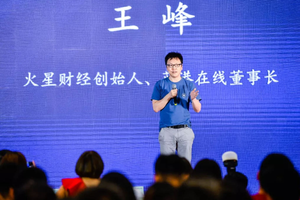
Feng Wang, Founder of Element
Tim Gong, China Partner at SIG
I’ve known Tim Gong for quite some time now. I’ve always thought of him as an unconventional figure in China’s VC industry.
I first heard of him back in 2007 during my first startup venture. At that time, SIG China and his name didn’t carry the same weight in the industry—nowhere near as prominent as Sequoia or IDG. But his way of speaking left a strong impression on me. We haven’t had many conversations, whether in SIG’s office or at gatherings within this circle, but whenever Tim talks to me, he rarely gets serious—jokes and anecdotes dominate instead.
People influence each other. If you're with someone very serious, it's hard to crack jokes. But when you’re with someone like Tim, who always seems a bit irreverent, it’s equally difficult to have a completely formal conversation.
One summer night in 2021, after SIG and Sequoia China co-led the investment in Element, Tim invited me to drinks with some of his VC friends—and waited for me until midnight. When I finally arrived, everyone else had already left. Only Tim remained, waiting. When I showed up, he greeted me with his usual lighthearted banter, never missing a chance to tease. That night, I first heard those now occasionally circulating online quotes of his about investing: “Being a good person matters more than getting things done; emotional intelligence matters more than IQ; exposure matters more than education; intuition matters more than rationality; courage matters more than brains; luck matters more than strategy,” and “Do business with time, befriend trends.” Reading these words, it’s hard to associate them with a Princeton University PhD candidate in engineering sciences.
On Tim’s WeChat Moments, you wouldn’t guess he’s one of China’s top VC partners—he rarely posts about investments or technology. Instead, he’s passionate about classical music, fine wine, and tea.
Yet this time, perhaps our most serious conversation yet—possibly even one that some might find obscure. In Tim’s own self-deprecating words: “Rarely using the less-important intellect, knowledge, and logic in investing to talk about Web3.” Undeniably, Tim has always held original, foundational insights into Web3, built upon deep underlying logic.
Our chat took place over WeChat—I’m sharing it here.
Wang Feng: As a successful VC investor from the Web2 era, discussing Web3 with me on the eve of Chinese New Year feels oddly fitting. Today, aside from AI, Web3 is among the most talked-about topics around us—regardless of whether ChatGPT is overhyped or how much marketing is behind the Web3 concept. A unique atmosphere is quietly emerging in the tech world, subtly signaling that the next information age may be upon us. From an investor’s perspective, can we abstract and summarize the DNA behind the success of leading internet companies over the past two decades? And will these insights still guide future development?
Tim Gong: Yes, let me take this opportunity to wish everyone a happy new year. Actually, since the dawn of the internet—from Yahoo onward—the fundamental logic behind its most valuable business models has always been information sorting. In Yahoo’s day, “experts” sorted information for everyone, and everyone consumed the same content. Google used search algorithms to sort information based on keywords. Facebook, Twitter, and WeChat sort information according to individual social relationships. ByteDance, however, uses algorithms to sort and recommend information based on your personal interests and history. This is what I often refer to as ByteDance’s leap from “people seeking information” to “information finding people”—“content finding people,” “products finding people,” and “services finding people” are all about sorting vast amounts of digital information according to certain logics (like interest) and distributing it. All of this relies on exponential growth in computing power, communication speed, and the full digitization of information (basic sorting).
In fact, today’s next-generation internet applications—such as ChatGPT, Web3, or Web5—are also innovations in information sorting.
Wang Feng: Elon Musk frequently cites first principles reasoning, which has become popular among tech entrepreneurs and investors in recent years. Yet your perspective—analyzing internet business value through the lens of information sorting—is particularly interesting. This deserves deep reflection and introspection across our industry. From this angle, an internet company’s strength in information sorting and innovation becomes a key indicator of its quality. Do you think this kind of value is unique to the internet industry?
Tim Gong: Musk picked up physics halfway through his journey. Before entering entrepreneurship and venture capital, I majored in physics too—I pursued a PhD in Electrical Engineering (Applied Physics) at Princeton University. At ByteTrade, where I serve as Chairman, six people—including the CEO and CIO—have physics backgrounds. So we tend to use physical principles to analyze the underlying logic of the world. The process of “sorting,” in physics, is essentially the creation of “negative entropy.”
The real universe and all living beings follow physical laws from origin to end. Even the human mind and the digital information world silently adhere to these physical principles.
In physics, entropy quantifies disorder using statistical mechanics. Simply put, the more disordered and random a configuration, the higher its entropy; the more ordered or highly sorted, the lower its entropy. In a closed system, the system naturally evolves toward maximum disorder—the state of highest entropy. Increasing orderliness, or reducing entropy, requires energy consumption. At the microscopic level, this means sorting particles, atoms, molecules, electrons, DNA, cells, proteins, etc. For example, Earth evolved highly ordered complex life forms—including us—because the Sun continuously outputs energy and negative entropy.
Let me give a few relatable examples illustrating entropy and sorting in human society.
First, gold. Gold was selected by human civilization as currency and the cornerstone of finance. This wasn’t accidental—it was the result of sorting. During supernova explosions, simpler elements with low atomic ordering form first. After iron nuclei form, gold nuclei emerge through high-energy neutron bombardment of iron nuclei. Since free neutrons don’t exist on Earth, gold can only be produced outside labs via massive energy input to recreate such neutron beams. Gold ranks high in the periodic table—high-level ordering requiring enormous energy to create. It’s chemically inert, mostly exists in elemental form, doesn’t oxidize, is malleable, has moderate melting point, high density—all ideal traits for a universally accepted currency. For thousands of years, humans have expended vast energy extracting gold from various parts of Earth, gradually forming today’s gold bars and ingots stored in national vaults—a further energy-consuming sorting process that established a stable foundation for global finance.
Second, diamonds. Over a century ago, Jewish communities chose diamonds as supplementary financial instruments. Diamonds possess the most stable crystalline structure—a highly ordered arrangement formed under extreme pressure and temperature inside Earth or during meteorite impacts, consuming immense energy. Humans then expend further energy mining, cutting, and polishing them—an additional sorting step. The 4Cs grading system reflects aesthetic sorting by humans.
Third, oil. Petroleum forms when organic matter deep underground undergoes molecular rearrangement under intense heat—consuming huge energy to re-sort atoms and molecules into hydrocarbon clusters. Its combustibility underpins modern industry. Burning oil generates electricity—electricity being an orderly arrangement of electrons. Electrical energy is the most ordered form of energy, elevating human civilization and serving as the foundational bedrock of today’s digital information age.
All these human-driven sorting processes are entropy-reducing. Nature or life consumes energy to generate new material orderings. Thus, in both the physical and digital worlds, my investment philosophy has always centered on generating (sorting) and distributing negative entropy (ordered information).
Wang Feng: After two decades of rapid growth, today’s Web2 platform companies in both China and the U.S. face similar societal challenges. People increasingly question them—data monopolies, excessive centralization of power, privacy violations—and even tech elites are reflecting: today’s Web2 giants may have strayed from the original technocratic ideals of the web, such as decentralization, freedom of speech, and personal data ownership. Do you agree?
Tim Gong: First, information itself is negative entropy—the more precise the information, the lower its entropy. Early traditional media, products, and services contained relatively high-entropy information. The ongoing digitization of information represents an evolutionary progression from low to high-level sorting—an entropy reduction process. Sorting information by search keywords or user interests aims to distribute precise information to individuals, thereby reducing entropy. Competition among internet companies is essentially a race to reduce more entropy per unit of energy. Thus, -dS/dU—the derivative—quantifies their rate of value creation.
But in the Web2 world, whether “people seeking information” or “information finding people,” this sorting is performed by centralized platforms. These platforms insert ads into sorting results, “polluting” the output and increasing the entropy of information users receive. Essentially, they transfer users’ negative entropy to themselves. This explains growing user dissatisfaction with Web2 platforms.
Competition among Web2 platforms is about efficiency in entropy reduction. The more efficient the service, the more ad “pollution” it can sustain. But their business model dictates that improved efficiency serves only to make users tolerate more ads. Users gain no benefit from technological progress or increased efficiency.
This issue is inherent to centralized platforms. For instance, we see ChatGPT refusing to answer certain questions based on platform policy, and in the future, it may likely inject commercial messages or ads into AI responses.
Information-theoretic entropy can be calculated via Shannon’s formula, which closely resembles entropy formulas in statistical mechanics. Translating these concepts into practical applications remains challenging—partly because information theory involves complex social and humanities knowledge, with far more variables than natural sciences. These are precisely the topics our ByteTrade Labs is currently researching.
Wang Feng: Do you believe Web3 will resolve the increasing centralization issues of Web2 platforms? Ideally, list them out.
Tim Gong: Web3’s ideal has always been “individual sovereignty,” especially personal data ownership. But based on my earlier analysis, I believe personal control over data *sorting* may be even more important—in other words, both storage and computation must be decentralized.
That’s why we invested in ByteTrade. ByteTrade builds “personal clouds”—edge servers controlled by individuals. They not only store personal data but also perform computations. For example:
Personalized search engines
Personal subscription services
Personal recommendation engines
Personal large language models
On that last point, personalized model prompts (Prompt) could be stored in personal cloud.
ByteTrade rearchitects today’s cloud computing. Each user’s node server replaces platform servers. Algorithm providers are no longer platforms—they submit code to run algorithms on user nodes, create value, and get paid directly by users.
Wang Feng: Going back—can your negative entropy theory further explain current Web3 ecosystem practices?
Tim Gong: Indeed, the entire Web3 and crypto industry is built upon negative entropy generated through information sorting. The core task of all blockchain nodes is to “produce blocks”—what does that mean? Precisely sorting information to be added to the chain!
Bitcoin is a software-implemented digital sorting mechanism. By measuring computational power digitally, using hash values and blocks to establish order, Bitcoin is “mined.” The massive computing power and energy spent on mining results in Bitcoin—a sorted outcome—just like humanity expending energy to extract and refine gold into bars. Hence, Bitcoin is called “digital gold,” serving the same foundational role in digital finance and information systems as gold does in traditional finance.
Ethereum represents another kind of sorting. Both POW and POS involve consensus nodes sorting the outcomes of smart contract executions. Ethereum is “digital oil,” analogous to real-world petroleum. The inefficiency of L1 and POW eras mirrors the low combustion efficiency of unrefined crude oil. Ethereum 2.0 and L2 solutions offer the chance to transform Ethereum from “digital crude” into “digital electricity.” Users pay ETH as Gas to network computing nodes—essentially exchanging ETH for sorting services. The circulation of ETH represents the flow of negative entropy.
I fully endorse the fundamental logic of crypto. However, the industry’s development so far has been disappointing. Because tokens are easily speculated upon and the sector lacks regulation, crypto became excessively financialized before meaningful applications emerged. This is unhealthy and explains the ongoing industry shakeout.
Wang Feng: Then, based on this negative entropy theory, how do you view the future of public chain ecosystems?
Tim Gong: As mentioned, ETH’s circulation represents the flow of negative entropy, and ETH’s design makes it primarily suited for financial applications. Thus, ETH quantifies negative entropy within financial information.
Yet financial information is just a small slice of the broader information world. Web3 aims to decentralize the entire information landscape. In blockchain, there’s always been a vision of multi-chain/application-specific chains—famous projects like Polkadot and Cosmos center on this idea. Even Ethereum 2.0 is moving toward a multi-chain architecture. In a multi-chain ecosystem, each chain has its native Gas token, which measures and exchanges the required flow of negative entropy. Nodes providing computation and sorting services earn tokens issued on that chain.
If the future digital world had only cross-chain interoperability, it would be like our world relying solely on oil. Just as humanity needs alternative energy sources, the digital world needs multichain diversity.
I believe public chains and their utility tokens have a bright, diversified future ahead.
Wang Feng: Yes, Web3’s future isn’t just about public chain technology itself, but also the controversial utility tokens. Many remain confused—could you elaborate your views?
Tim Gong: For example, our ByteTrade personal cloud nodes cooperate with public chains. Personal nodes belong to individuals—they don’t require consensus or even data synchronization. But these nodes may consume others’ data and services, paying for that external negative entropy via crypto. Even public chain nodes might run on these personal cloud devices. Specifically, crypto provides tremendous value in this scenario:
Crypto is machine money. Machine-to-machine payments require automated, programmable rules. I believe blockchain’s “Code is Law” refers precisely to laws and rules governing machines.
Fiat currencies are nation-bound, while multi-chain/application-specific cryptos are application-bound. Exchange rates between cryptos reflect not national strength, but the relative value of negative entropy in different application domains.
Each ByteTrade personal cloud node includes a crypto wallet, holding and frequently trading tokens across various application chains. That’s why we named the company ByteTrade!
Wang Feng: Centralized platforms have proven business models, validated over years. Web3 practitioners often view them as legacy industries. But commercially, how can decentralized networks sustain themselves long-term?
Tim Gong: Top-tier platforms like Google and ByteDance tightly align ads with user keywords and interests (sorting), delivering both precise information and targeted ads. But ads are entropy-increasing information driven by advertiser interests. Inserting ads into sorted results partially sacrifices user experience—obscurely disrupting the order and increasing user entropy. A more transparent, fair, and just business model should involve direct payment from users to service providers.
The development of the crypto industry proves that transparently charging Gas fees or transaction fees in asset trading is an excellent business model. Within the ByteTrade ecosystem, we’re building decentralized digital asset management tools, peer-to-peer RFQ markets, automated trading bots, and more. We firmly believe users will pay for products that generate genuine negative entropy and value.
Wang Feng: Decentralized compliance and regulation remain highly challenging. Today’s Web2 platforms face massive regulatory pressure—will Web3’s challenge be even greater?
Tim Gong: The digital world is built on software, and software implements contracts via programs. Therefore:
Code = Execution of Contract = Contract.
When we say Code is Law, we mean:
Code = Contract = Law.
But in the human world, Law enforces the execution of Contracts. In the true digital world, the role of Law has already been replaced by Code.
The current problem is that cryptocurrencies have been assigned traditional monetary prices, forming conventional asset values. Once unfair gains or losses occur, traditional financial law steps in to judge right and wrong. Thus, the issue lies in cryptocurrencies being prematurely financialized and monetized, engaging in traditional asset trading too early. These problems arise because all digital currencies and transaction networks are software. In fact, except for Bitcoin (which supports only basic arithmetic) and Ethereum (a relatively robust, community-maintained open-source smart contract execution platform), most existing software foundations cannot support or are unsuitable for transactions carrying traditional financial characteristics. To put it simply: 99% of past cryptocurrency projects resemble centuries-old alchemy or water-to-oil scams, where fake gold and fake oil-like assets began trading at scale before proving any real value.
Decentralized Web3 shifts compliance responsibility from platforms to individuals. With personal data and sorting sovereignty comes personal legal accountability. As the saying goes: With great power comes great responsibility. Companies like ByteTrade will provide compliance tools—similar to how TurboTax helps Americans file taxes legally.
For example, ByteTrade supports voluntary KYC at nodes. U.S.-based nodes that complete KYC can participate in DAOs or DEXs organized under U.S. regulations.
Wang Feng: I heard you’ve long supported and funded life science research, especially on cellular aging, death, and cancer. Can your internet investment methodology inform decisions in biotech?
Tim Gong: The emergence and demise of life—isn’t that also a sorting process? Highly ordered DNA, cells, and proteins form humans. Human growth after birth—acquiring energy through food and respiration to internally reorganize according to biological rules—is an entropy-reducing process. As organs, blood, and brains age, this ordering gradually breaks down, and death represents the ultimate state of maximum entropy—complete disorder. Last week, a Harvard lab proved after 13 years of effort in mice that sequencing (Sequence) possesses mechanisms that can accelerate or reverse this process.
Cliff Brangwynne, a bioengineering professor at my alma mater Princeton University, won last year’s Breakthrough Prize in Life Sciences for his research on “phase transitions in living cells.” One of biomedicine’s most prestigious awards, co-founded by creators of Google, Facebook, Alibaba, and others.
Dr. Brangwynne applies physical chemistry methods to study living cells. His work shows that physical entropy applies well to life sciences. Cellular aging is an entropy-increasing process. These physicochemical principles greatly guide treatments for ALS, cancer, Alzheimer’s, and other age-related diseases.
Of course, Web3 may directly impact human immortality—could immutable, eternal memories someday be stored on ByteTrade’s edge nodes, accessible by future programs of friends and descendants?
Harvard’s Professor George Church once said there may come a day when each year of scientific advancement extends human lifespan by two years. Essentially, the negative entropy input into our bodies exceeds the entropy increase caused by natural aging. This singularity of human immortality could arrive within the coming decades!
Join TechFlow official community to stay tuned
Telegram:https://t.me/TechFlowDaily
X (Twitter):https://x.com/TechFlowPost
X (Twitter) EN:https://x.com/BlockFlow_News