








What can blockchain do to extend human lifespan?
TechFlow Selected TechFlow Selected
What can blockchain do to extend human lifespan?
Cryptocurrency and longevity innovators have very similar mindsets, as both "work in an unorthodox field that requires advancement."
 Navigating Web3 tides with focused insights
Author: MARIA AVORY
Compiled by: TechFlow
The emerging field of longevity is attracting many crypto natives who can both benefit from it and contribute using blockchain tools.
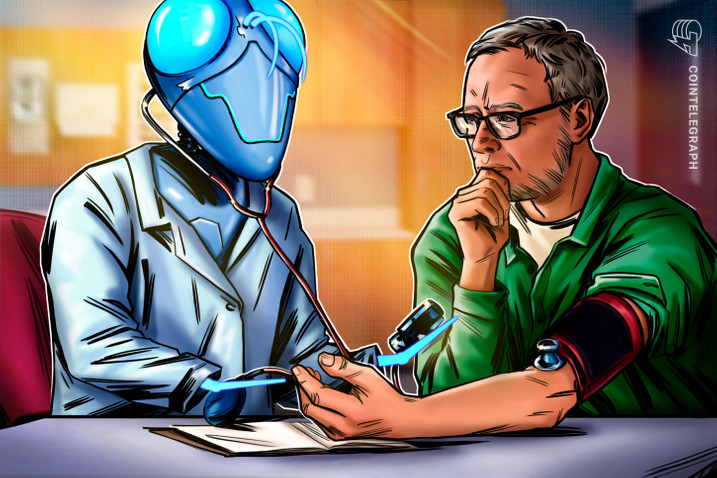
The nascent longevity industry focuses on researching and implementing solutions and technologies to extend human lifespan—enabling people to live healthier and longer lives.
Longevity has not yet been recognized as a formal medical term, nor is aging officially considered a disease, but rather a natural phenomenon in all living beings.
However, some biologists, researchers, and practicing physicians believe this perception should change, and they are working hard to uncover the mechanisms behind human aging. In this process, they are creating biological clocks by defining biomarkers that measure biological age, exploring optimal lifestyles and natural supplements, and inventing new drugs that could halt or reverse aging.
It's no surprise that longevity has become a focus for leaders in the cryptocurrency space, given the industry’s promise to improve humanity through innovation.
In fact, one key event in the longevity space is the Longevity Investors Conference, organized by Marc P. Bernegger and Tobias Reichmuth, who previously participated in Crypto Finance Group.
When Crypto Meets Longevity
At the most recent Longevity Investors Conference held in September 2022, speakers at the "Crypto and Longevity" panel noted that both industries—crypto and longevity—are disruptive fields challenging established norms.
“Everyone in this field is somewhat of a pioneer because we're really at a stage similar to the internet, Bitcoin, and other exciting industries,” said Bernegger, founding partner at Maximon, an accelerator focused on longevity.
British writer and biomedical gerontologist Aubrey de Grey emphasized that the mindsets of crypto and longevity innovators are very similar—both work “in an unorthodox field that needs advancement.”
Ryan Pyle, founding partner at Maine Investments—a Zug-based firm managing digital assets—said the longevity industry reminds him of crypto in 2013: while no one knows exactly what the landscape will look like in five to ten years, the potential is enormous:
"I think this ecosystem is incredibly exciting. What Maximon is doing at this longevity conference is truly early-stage—and that’s good. Better too early than too late. Many people from crypto are investing in this space simply because they’re fully comfortable with this level of risk."
Bernegger also shared that since the longevity industry is still so early, it currently presents a highly attractive entry point for investors: “Similar to Bitcoin back then, it doesn’t care much about price—it cares about the underlying technology and its potential.”
How Blockchain Can Be Applied to Longevity
Regarding the application of blockchain technology itself, Bernegger is less optimistic: “I think it’s difficult to combine blockchain technology with another exciting field like longevity. From my perspective, the biggest synergy isn’t in combining two technologies, but really in capital.” On the potential of investment and fundraising via crypto, Bernegger added:
"Personally, I’d rather focus on the funding aspect than the technological one, while acknowledging there are some exciting projects in DeSci (decentralized science) that certainly have great potential. But I think it will take several more years before we see tangible products solving real-world problems."
Bernegger also mentioned regulatory challenges facing both industries, noting that regulators may become a burden to research and adoption—not only because their role is to protect end users but also “to some extent, to protect the status quo.”
The longevity industry is still in its infancy and hasn’t seen many blockchain-related use cases yet. However, understanding what problems have already been solved with blockchain technology allows professionals to envision potential applications.
Claire Cui, a self-described longevity enthusiast and blockchain advisor, pointed out decentralized data as a potential use case:
“What crypto has essentially uncovered is the technological potential of blockchain to solve some issues people face today, such as data privacy and data ownership. That’s where people are particularly curious.
In healthcare, these concerns are even more sensitive. No one wants their DNA from health records leaked somewhere.”
Data ownership also enables users to earn revenue by sharing their data with companies for scientific research, allowing ordinary individuals to become part of the value chain.
Another application of blockchain in longevity is decentralized autonomous organizations (DAOs) and decentralized intellectual property. One existing example is VitaDAO, a DAO platform for community-governed drug development that collectively funds and digitizes research, issuing non-fungible tokens (NFTs) representing IP rights. Christian Angermayer, founder of Apeiron Investment Group, said:
"One interesting aspect of blockchain technology might be that it somehow ensures people can collaborate more effectively, while also guaranteeing everyone who contributes gets a fair share—whether reputational or financial—in any resulting outcomes."
The longevity industry appears to be an exciting frontier where the crypto community can explore investments and use cases, especially because, by nature, it resembles the early days of blockchain. At the same time, many existing blockchain technologies can be applied to address some of the challenges faced by the longevity sector.
Join TechFlow official community to stay tuned
Telegram:https://t.me/TechFlowDaily
X (Twitter):https://x.com/TechFlowPost
X (Twitter) EN:https://x.com/BlockFlow_News
 @Cointelegraph






