








Pain Points, Opportunities, and Latest Cases in the GameFi Sector: How Can Casual Breakthrough Games Go Web3?
TechFlow Selected TechFlow Selected
Pain Points, Opportunities, and Latest Cases in the GameFi Sector: How Can Casual Breakthrough Games Go Web3?
How to quickly break the ice in the Web3 world? Casual ice-breaking games might be a new direction for GameFi!
 Navigating Web3 tides with focused insights
Preface to This Series:
W Labs (Gua Tian Lab) began writing its first series, "Decoding the Economic Models of Blockchain Games," in April 2022. To date, we've published over thirty articles totaling more than 100,000 words. As seasoned “turnip” gamers—players who’ve weathered countless market cycles—we’re transforming our insights into arrows and sharpening our pens into spears, striving to voice our analysis and judgment on blockchain gaming amid an environment dominated by the chaotic “Turnip Rush” mentality. In this controversial landscape for blockchain games, we sometimes feel like Don Quixote, charging our lance at what appears to be a giant windmill.
Fortunately, some readers have found value in our work. However, they noted that many of the dozens of case studies we used were outdated, with most projects having faded into silence. Even those barely surviving, such as Starsharks, have lost all momentum. This new series will not only explore current pain points and opportunities within the blockchain gaming sector but also feature numerous fresh, cutting-edge cases—including projects still in closed beta—to showcase the latest directions in industry development.
Start of Article One:
Recently, a WeChat mini-game called "Sheep Game" went viral across China. At its peak, it reportedly earned 5 million RMB daily—not from players, but almost entirely from advertising revenue. It's worth noting that this hit game has a remarkably healthy economic model: In the early stages, paying players cannot buy power-ups that disrupt fairness or balance. All players start equal, giving you that late-night motivation lying in bed at 3 a.m.: “Damn it, just one more round—I’ll screenshot it and flex on WeChat Moments if I win.”
Speaking with OGs in the gaming industry, it’s clear that China leads globally in casual games, with an annual market size reaching 35 billion RMB. Take a look at the top downloads on iOS in September 2022—how many are casual games?

Yet so far, very few casual games have ventured into Web3. Some have attempted match-3 mechanics, but sadly all failed immediately—no signs of growth, let alone peak popularity. A few reasons:
- Web2 casual games are already highly entertaining—endless runners, tower defense, fishing games—they perfectly fill fragmented time;
- Web3 gamers are nearly all hardcore spenders. The entry barrier is typically hundreds of RMB, creating a mindset where users think: “Why would I pay for such a simple casual game? Only MMORPGs justify buying NFTs”;
- The essence of casual games is socialization. Take “Sheep Game”—from promotion strategy to player psychology, the entire experience is built and operated as a social product. Yet so far, Web3 casual games remain focused on earning, missing the point entirely.
Does this mean casual games aren’t suitable for Web3? No—there’s actually a niche category perfectly suited, even essential, for Web3 environments: casual icebreaker games. We’ve interacted with several metaverse projects that, while developing major core games, also need fun mini-games on their entry platforms (like CityHall) to break the ice. Everyone arrives online strangers—nobody knows each other. There’s an urgent need to fulfill initial social needs: My name is WILL, yours is JILL—can we chill together?
Think back to real-world team-building events—from formal self-introductions to playing “Dropping the Handkerchief,” then progressing to “Werewolf.” Icebreaking techniques evolve in sophistication. Through physical actions, verbal interaction, and teamwork, people achieve in 15 minutes what used to take hours of awkward small talk.
But how do you quickly break the ice in Web3? This challenge isn't easier than building a hardcore game. Many metaverse teams we've met are scratching their heads over it—and often end up organizing online Texas Hold’em poker nights as a fallback.
Discord communities can be seen as primitive versions of the metaverse. People come from everywhere, strangers to each other. Except for the ultra-social who instantly turn Discord into a wedding hosting gig, most users are shy. While some game bots run trivia quizzes, these are boring and lack interactivity—just racing to see who answers first.
One of our key missions is identifying viable casual icebreaker games that could transition into Web3. Imagine if such a game succeeded—if it became the go-to icebreaker across Discord servers, Sandbox-like metaverses, and NFT communities like BAYC, it would become a gateway to Web3 traffic, akin to MetaMask wallet. Consider the potential scale.
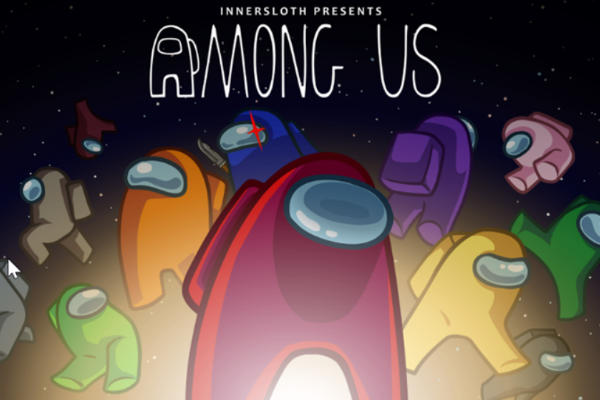
A recently launched Web3 game currently in closed beta, Spacekill, may be the only project we’ve seen so far that truly fits the casual icebreaker mold. Its gameplay closely mirrors the mobile/PC hit “Among Us,” making it a thorough clone in mechanics. Speaking of Among Us—it’s an incredible story. A three-person indie team released this cute version of Werewolf in 2018. It had barely a few hundred users until 2020 when, facing financial strain and planning to abandon ship for a new project, it suddenly exploded in popularity. Likely fueled by pandemic lockdowns and YouTubers streaming it with their communities, it peaked at $25 million monthly revenue. By 2022, total downloads neared 700 million.
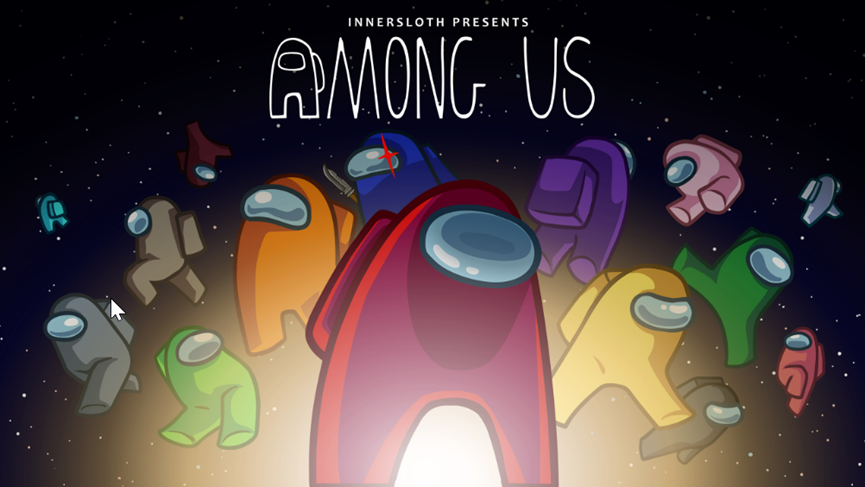
The success of Among Us reveals three truths:
First, the pandemic starting in 2020 propelled many online social products to stardom—Zoom, Among Us—but you must be ready beforehand; second, games eventually become social platforms—Honor of Kings proves this too—so why not start directly from social design? Third, social games require long-term preparation for the leap from quantity to quality, unless you have a behind-the-scenes super-promotion team like “Sheep Game.”
When our team first reviewed Spacekill during a meeting and opened the website, one female member couldn’t help exclaim: “I love this game! The characters are so cute!”
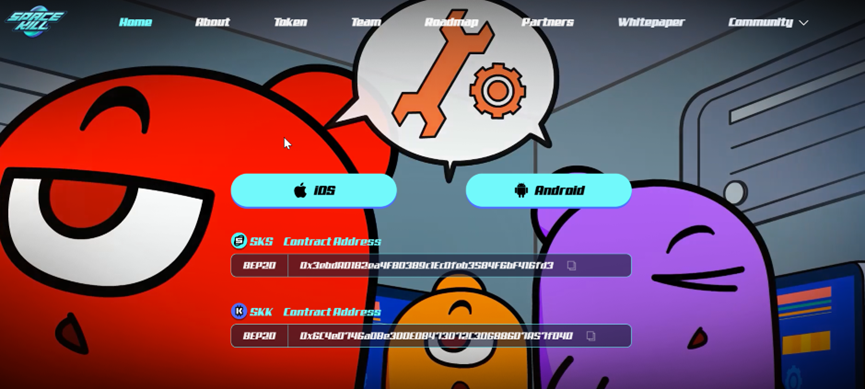
The dev team successfully preserved Among Us’ cartoon aesthetic while adding Minion-like character designs—an instant visual hook for younger audiences.
Gameplay is identical to Among Us: among six crewmates (Crew, the good guys), one is an imposter (Imposter, the wolf). Crewmates win by either completing all tasks or voting out the imposter in meetings. The imposter wins by stealthily knocking out three crewmates. Standard rules apply—cooldown after attacks, ability to check security cameras, etc.—all implemented well. Detailed strategies are available in the WGGDAO Gua Tian Community; won’t expand here. Overall, the game is highly polished even in beta—e.g., ghosts of wrongly killed players float around helplessly assisting teammates, which is hilarious.
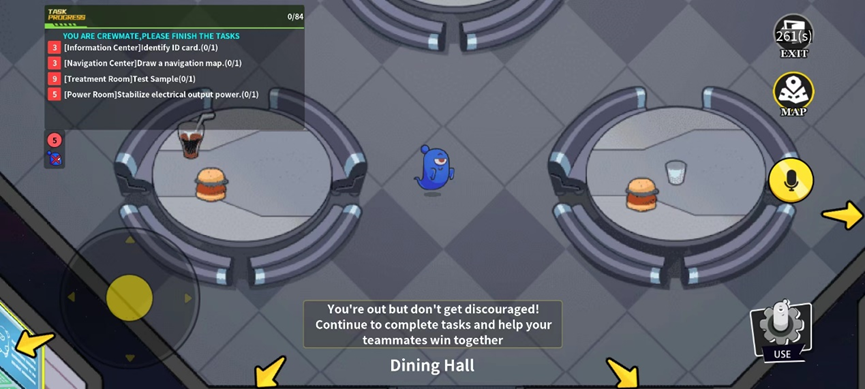
Building on Among Us, SpaceKill introduces Web3 elements:
A. Dual-token system + dual NFT types—the economic model isn’t novel, similar to StepN’s pressure-bearing dual tokens: sub-tokens for consumption and output, parent tokens unlockable once NFT levels up; main NFTs represent souls with attributes, rarity, star ratings, and breeding capabilities; auxiliary NFTs serve as consumable items.
B. Built-in marketplace;
C. Web2 users can enter freely but cannot earn rewards—only soul NFT holders can monetize. This aligns with W Labs’ long-standing view: the best way to attract Web2 gamers right now.
D. Integrated wallet (not yet experienced). This is rare—only high-budget, long-term blockchain games usually embed wallets internally, e.g., card-based blockchain game Skyweaver. After reading the whitepaper, this stood out the most—it instantly elevates the game’s perceived quality.
We’ll later publish a “One Page Summary” on Spacekill for readers wanting deeper insights. Now comes our favorite part—the critique session.
First: The overall gameplay flow is smooth, mechanically faithful to Among Us. **But why no private room creation for friends?! For an icebreaker/social game, the biggest selling point is team bonding and socializing—how could they launch without room creation?!** If I wanted random interactions, I’d use Momo or Tantan instead. (After publishing, we confirmed with the game’s MOD that the feature exists but hasn’t been rolled out—phew.)
Second: The mini-tasks for crewmates are too dumb. Can you make them more engaging? Even “Spot the Difference” would be better than current ones;
Third: The sub-token is already listed on DEX, and the chart looks bad. Honestly, it’s a pity—a promising Web3 social game choosing the play-to-earn grind path. Let me boldly say: The real monetization potential lies in becoming the default icebreaker tool across all communities and metaverse spaces. As a traffic gateway, future ad revenue and platform fees could dwarf today’s token emissions by multiples.
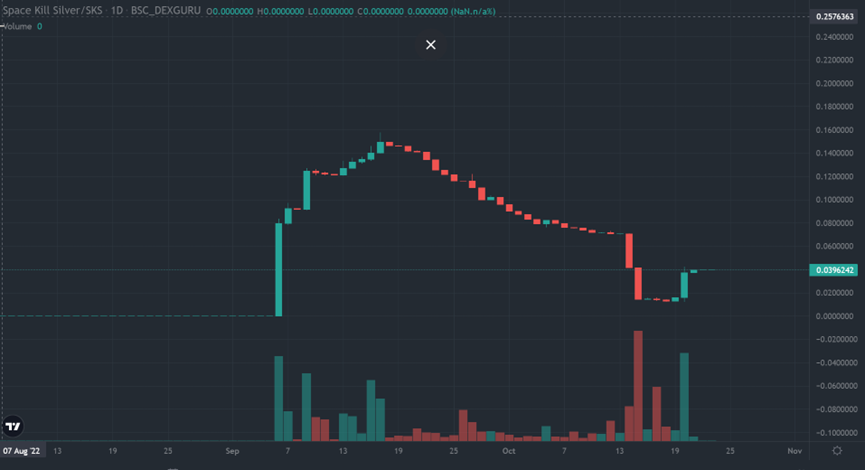
So we urge blockchain game teams to reflect before launching: GameFi (Play-to-Earn) is just one direction for blockchain games—not every game should adopt tokenized earning models. If it were a scammy social project rushing to launch a token, fine. But SpaceKill has an embedded wallet, polished gameplay, and feels like a long-term build—why list the sub-token so early?
Fourth: The most fun part of killer games is verbal communication. During beta testing, players mostly vote blindly, rarely using voice chat. Could future updates allow language-based matchmaking rooms?
Other critiques: bot behavior needs optimization—they slow down voting and ruin pacing; anti-collusion mechanisms needed to prevent teams from cheating for profit; support direct DID login via Discord accounts; increase player count flexibility (e.g., 4–9 players like Among Us)?
A few days ago, we hosted interested readers for a night of Spacekill in the Gua Tian community. Luckily, player numbers were low enough that everyone got matched into the same room. We voice-chatted loudly during votes while simultaneously holding an AMA on Discord—it was genuinely fun. That’s the magic of social icebreaker games.
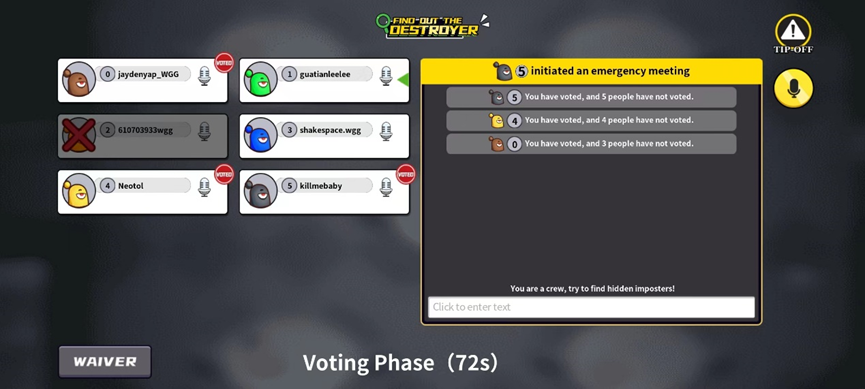
To sum up casual icebreaker blockchain games—especially in Web3 contexts—where users primarily face screens, these games address a real unmet need. That’s both the pain point and the opportunity. Who will seize it first? One final note: I firmly believe single- or dual-token P2E models are ill-suited for such projects. Economic models must be tailored to each game’s unique nature. Copy-pasting generic templates undermines excellent products and craftsmanship.
Reposting welcome. Original content is hard—please credit “Gua Tian Lab W Labs”
Gua Tian Lab website: http://www.wlabsdao.com/
Gua Tian Lab Discord: https://discord.gg/wggdao
Gua Tian Lab Twitter: https://twitter.com/GuaTianGuaTian
Gua Tian Lab long-form research on Mirror: https://mirror.xyz/iamwgg.eth
Gua Tian Lab on Medium: https://guatianwgg.medium.com/
Join TechFlow official community to stay tuned
Telegram:https://t.me/TechFlowDaily
X (Twitter):https://x.com/TechFlowPost
X (Twitter) EN:https://x.com/BlockFlow_News
 瓜田实验室W Labs






