








a16z: Virtual Societies, Blockchain, and the Metaverse
TechFlow Selected TechFlow Selected
a16z: Virtual Societies, Blockchain, and the Metaverse
When something happens in the metaverse, you should feel its resonance in the real world, and vice versa.
 Navigating Web3 tides with focused insights
Written by: Elena Burger
Translated by: TechFlow
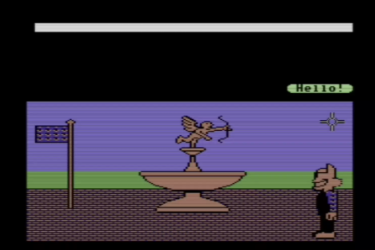
In 1986, early internet provider Quantum Link and entertainment company Lucasfilm Games launched what may have been the world’s first MMO game: a social, role-playing virtual world called Habitat, accessible via users’ Commodore 64 computers (priced at $595, or approximately $1,670 in today’s dollars) and a 300-baud modem ($0.08 per minute).
It’s important to note that Habitat differed from text-based MUD games (multi-user dungeons without graphics), which dominated early networked gaming, and USENET forums (also text-based but lacking formal gameplay).
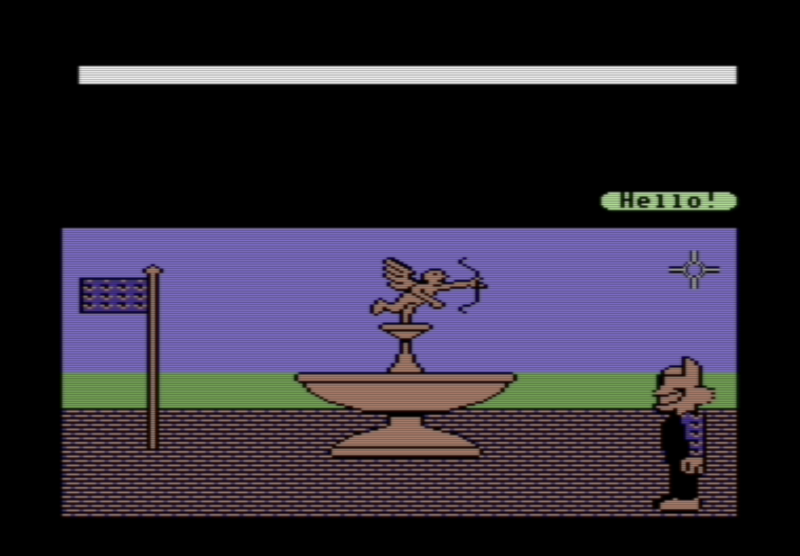
In short, Habitat was a virtual civilization enabling real-time chat, trading, and interaction among players. One could argue that Habitat also held the potential—contested both conceptually and territorially—to make possible what we now call the "metaverse."
Developers Chip Morningstar and F. Randall Farmer, reflecting years after Habitat’s launch, described an emergent world with its own politics, economy, and user-generated content.
Habitat looked and felt different: rich in content, featuring over 20,000 regions including player homes, shops, arenas, theaters, newspapers, workshops, and a “wilderness” where crimes like theft and murder could occur.
There were stories of currency arbitrage tied to a bug that allowed some players to buy low-priced in-game items from ATMs and resell them at higher prices across town—resulting in hundreds of thousands of game tokens being printed overnight.
The game featured developer-created treasure hunts as well as user-driven entrepreneurial ventures. Even though the internet standard on which Habitat was built was soon overtaken by simpler TCP/IP protocols, people at the time sensed something novel and lawless about it.
Chip Morningstar and F. Randall Farmer’s reflections on Habitat perhaps best summarize these early tensions: “Complete centralized control is impossible—and don’t even try.” Indeed, one lesson from Habitat is that top-down attempts to impose order are almost always subverted or undermined by organic, free-market phenomena.
I first learned about Habitat through an upcoming book on the metaverse by Herman Narula—co-founder and CEO of Improbable, a company that has spent the past decade building infrastructure for games, digital experiences, and now the metaverse. Narula’s central view on the metaverse may be one that Morningstar and Farmer would agree with: regardless of who builds it, how users access it, or what underlying infrastructure supports it, the metaverse should be designed to allow users freedom to interact.
Equally important (though not mentioned by Morningstar and Farmer), items and experiences across different virtual worlds should be interoperable. In Narula’s words:
"The metaverse is a collection of realities, including the physical world or 'home reality' and a range of other worlds imbued with social meaning. Events, objects, and identities can exist across multiple worlds within the metaverse and allow those worlds to modify them. The utility of the metaverse lies in its ability to facilitate meaningful, immersive experiences across its constituent worlds."
Much debate around the metaverse centers on its form: Should it be 2D or 3D? VR or AR? Or desktop and mobile platforms?
This focus on representation is actually a debate about standards: “What should it look like?” is shorthand for “What should developers expect?” How do you reconcile JSON and XML data types? If designing for 3D, how many polygons should your assets consist of? Should avatars be provided in glTF, USD, VRM, or another file format? Should an experience running on a Unity client interoperate with a game on Unreal Engine? What happens when you introduce NFTs into this mix?
I believe these questions are highly valuable because they reflect an attitude toward interoperability, which is crucial for any future version of the metaverse. But aesthetic and technical concerns appear to be conflated—perhaps at the expense of economic or political considerations.
As Narula puts it, "These other worlds aren't alternate realities we escape into: they are more realities."
How do we foster “more realities”? Is it actively engineered, or passively the result of unique cultural and economic factors across eras?
In the early chapters of Virtual Society, Narula traces the first instances of the “metaverse” back to the earliest civilizations—structures like Göbekli Tepe and the Egyptian pyramids, and ancient myths such as Iceland’s Huldufólk, which not only captured the imagination of past societies but actually influenced how they operated and continue to influence actions in the real world today.
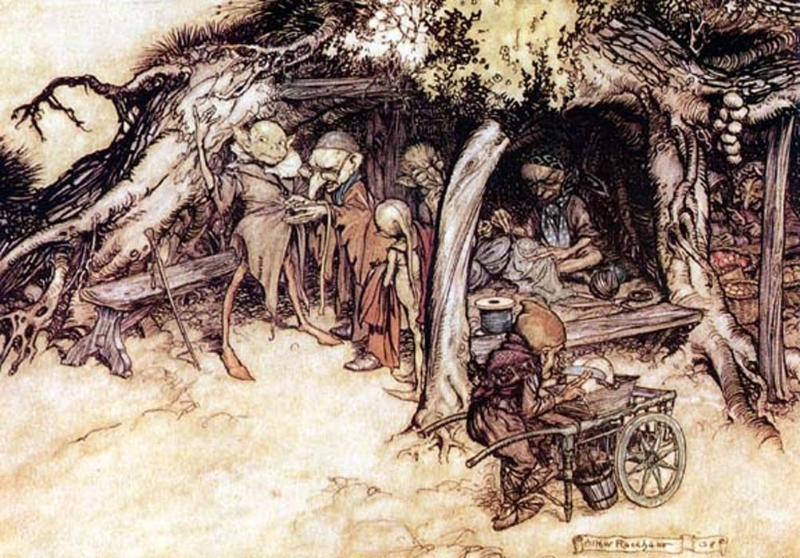
For example, Narula points out that the idea of Huldufólk has actually influenced modern conservation efforts in Iceland. As he says: "virtual worlds help catalyze real-world conservation efforts."
A key point Narula makes in the opening chapters of Virtual Society is that early metaverses had a reciprocal relationship between “imagined” worlds and the physical world. Extend this concept to today, and we should hold a similar ideal: no matter the form the metaverse takes, there should be a sense of permeability between virtual worlds and our real world.
When something happens in the metaverse, you should feel its resonance in the real world—and vice versa.
Narula spends considerable time in Virtual Society explaining how he defines meaningful interaction in virtual worlds, and the technological innovations Improbable has implemented to enable such interactions.
For Narula, meaning can be measured in “operations per second”:
"In a virtual world, how many independent, simultaneous events can occur is simulated by how many messages must be sent simultaneously. For instance, at the time of writing, a Fortnite match allowing 100 players to interact requires roughly 10,000 communication operations per second. This metric means servers must process all these messages and rapidly deliver them to every connected user device."
This past summer, I attended a demonstration of Improbable’s M² network, a project aiming to build a metaverse network where users can connect in highly dense environments and port NFTs and avatars across worlds. Over 4,500 users participated—all within a single server instance, chatting and interacting in real time. Over time, M² aims to support not only Otherside’s metaverse but also other creative endeavors: concerts by musicians, community spaces, events by artists and creators.
Among other challenges, M² seeks to solve: how to get a diverse group of users to agree on a shared notion of time—a core challenge also addressed by blockchain technology.
In many ways, we’re now seeing blockchain and its applications begin to address problems that frustrated the internet and early metaverse attempts.
One way to understand blockchain is as a game-like social network with a fully customizable front end.
Take Ethereum, for example:
- You have a public key serving as a login;
- An opt-in identity linked to that public key (such as ENS, Farcaster);
- A repository (NFTs, ERC20 tokens);
- Applications accessible via your public key (e.g., Uniswap, NFT marketplaces, on-chain games);
- And a shared historical record (viewable on Etherscan or parseable on Ethereum nodes).
Smart contracts running on Ethereum are open-source, meaning users can audit their security and, just as importantly, modify them through forking. These modifications can extend the underlying codebase (for example, composable apps interacting with smart contracts, new clients or frontends built atop smart contracts, or derivative projects based on initial protocols). The more a smart contract is interacted with and extended, the greater its value becomes.
Some of the most interesting experiments on Ethereum today occur in domains blending art, society, economics, politics, and game-like elements. A prime example is NounsDAO, launched last summer. In short, NounsDAO is an NFT project that holds daily auctions, selling one Noun NFT each day, with proceeds going into a treasury shared by Noun holders who vote on funding proposals. Crucially, the auction protocol, artwork, and governance are entirely on-chain. Proposals funded by the DAO have helped spread the Nouns meme and ethos across the internet and physical world—largely due to how the project captured the imagination of artists and developers.
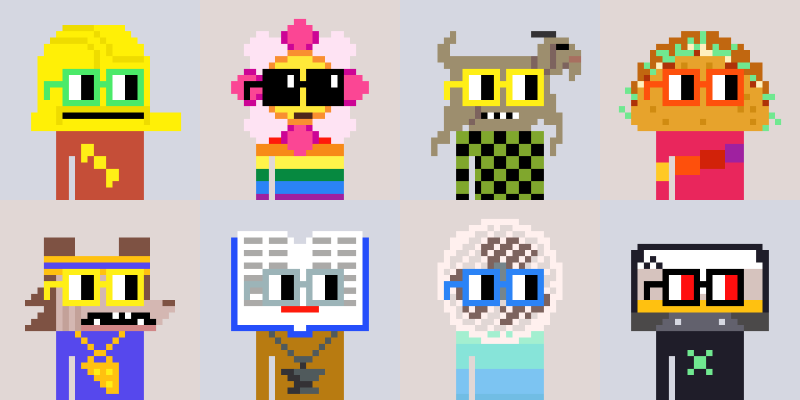
We’ve already seen projects on Ethereum like the 3D Nouns generator, derivative auctions, initiatives funded via Prophouse (an infrastructure project originally funded by the Nouns treasury but now supporting other NFT projects), and collaborative efforts enabling multiple developers to build alternative clients for Nouns.
In the real world, we’ve seen luxury Nouns sunglasses, Nouns-branded coffee, and numerous IRL events created. Moreover, other projects using the Nouns codebase have emerged without any financial backing from NounsDAO: examples include Public Nouns, a fork of NounsDAO using its funds to support public goods; and other projects like Lil Nouns, Nounlets, and nouns.build.
Many things deserve deeper discussion: for instance, the 3D Nouns generator is open-source, offering GLTF, OBJ, and VOX file formats—showing how file format issues can be naturally resolved by independent developers and assets freely ported by users. Efforts to build alternative clients for NounsDAO demonstrate the principle that a protocol should be resilient and offer users broad choice in how they access it. The success of the NFT project itself exemplifies the broader trend of CC0 NFT collections—images in the metaverse meant to be freely forked, mutated, and enjoyed by anyone who wishes to use them.
Although the project, crypto networks, and the metaverse itself remain in early stages, I believe NounsDAO represents a compelling example of what metaverse elements might one day become: a robust ecosystem centered around a core spirit or culture, persisting across both digital and physical realms.
I’ve noticed a great irony in corporate efforts behind the metaverse: these teams often build for pre-internet-era big brands. It feels like an attempt to rebuild digital society as if the social fractures and microcultures revealed by the internet never happened. One thing Narula hints at—one I don’t see many discussing—is that those most likely to build on metaverse platforms (whether Ethereum, other blockchains, or platforms prioritizing interoperability) are likely internet-native communities and creators seeking to grow their culture while retaining ownership. In Narula’s words:
"For the metaverse to contain enough quantity and quality of worlds and experiences to be worth anyone’s time, it will have to resemble an inverted pyramid, where infrastructure providers take the smallest share of value, and the rest is created and accumulated by creators."
Decentralized blockchains eliminate intermediaries. We live in an era where app stores take up to 30% cuts, algorithms are opaque, and increasingly fragmented attention competes for content. Much of the value created on these networks is extracted by the platforms themselves, and there’s a similar level of uncertainty regarding terms, services, and standards these platforms allow.
Blockchains and the smart contracts running on them provide a minimal-take platform. If you compare total gas fees on Ethereum to the total value of on-chain transactions, blockchain fees amount to roughly 0.05%. In the coming years, as scaling solutions gain wider adoption and more Layer 1 chains emerge, this figure may decrease further.
Moreover, yields for most blockchain applications are far lower than in Web2. Given that decentralized blockchains are computers capable of making commitments, developers and users are incentivized to build and enrich a robust ecosystem grounded in strong assurances that the smart contracts they interact with won’t suddenly change.
Earlier this year, our team members Arianna Simpson, Eddy Lazzarin, and Liz Harkavy published an article on the “Seven Foundational Elements of the Metaverse.” In our description, we emphasized that critically, "an open metaverse is decentralized, allows user control over identity, enforces property rights, aligns incentives, and ensures value accrues to users—not platforms."
With that in mind, whether the next-generation internet is VR or AR, desktop or mobile, matters less.
The metaverse needs to enable meaningful interactions while making irreversible commitments to users’ economic rights.
In Virtual Society, Narula presents a compelling history of humanity’s impulse to build worlds, arguing that if these worlds aren’t interoperable, we’re headed down a dead end.
As more people rely on networks for livelihoods and specialize in digital domains, we must continue advocating for decentralization and openness.
Join TechFlow official community to stay tuned
Telegram:https://t.me/TechFlowDaily
X (Twitter):https://x.com/TechFlowPost
X (Twitter) EN:https://x.com/BlockFlow_News
 a16z
a16z






