








The Exploration Path of Traditional Games Entering Blockchain Gaming (GameFi)
TechFlow Selected TechFlow Selected
The Exploration Path of Traditional Games Entering Blockchain Gaming (GameFi)
What game genre is most suitable for blockchain transformation, and how should one choose the right chain integration model? This article dives deep to uncover the answers!
 Navigating Web3 tides with focused insights
Preface: What Types of Games Are Suitable for Blockchain Integration
As early as 2017, the world's first blockchain game, CryptoKitties, launched and opened the NFT + blockchain gaming track. Since then, most blockchain games on the market have resembled traditional card-collecting games, centered around NFTs (digital collectibles), primarily involving resource collection through time investment, resulting in a singular gameplay experience.
Starting in 2019, the Play-to-Earn (P2E) model emerged, introducing single- or dual-token economic systems that revolutionized the blockchain gaming experience. The flagship title Axie Infinity surged in popularity during the GameFi boom of 2021, surpassing even Honor of Kings in daily revenue and becoming the highest-grossing mobile game globally.
In early 2022, StepN became the hottest application in the crypto market during the first quarter, achieving 300,000 daily active users within just four months. With a current market cap exceeding $2 billion, it successfully attracted a large number of non-crypto users, pioneering a lightweight, real-world-integrated blockchain gaming model. In early May, Yuga Labs' metaverse and gaming project Otherside launched land sales, triggering a massive buying frenzy and reigniting a Gas War on Ethereum—the last seen since CryptoKitties in 2017—with minting costs reaching 2–3 ETH per plot.
What lies ahead?
Currently, we can faintly perceive a trend: blockchain games will increasingly converge with traditional games in terms of gameplay, user experience, and economic systems. More traditional game companies and teams will enter the space, integrating blockchain gaming with social features, VR/AR, IP, UGC co-creation, and more under the momentum of overseas metaverse development—ultimately transforming the relationship between players and games.
As seasoned game design professionals, we believe the transformation of gaming has just begun.
This is only the beginning.
Before diving into this series of in-depth articles, let’s address a question on everyone’s mind: what types of games are best suited for blockchain integration?
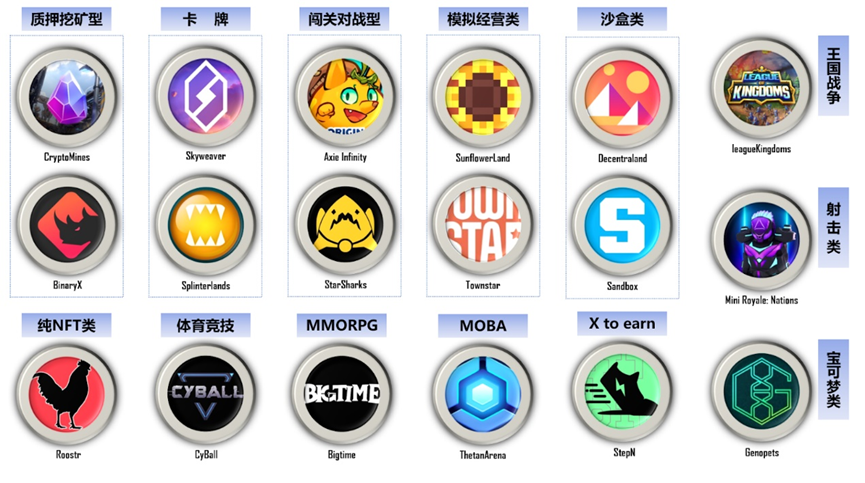
The diagram below categorizes blockchain game types based on gameplay mechanics. As you can see, apart from blockchain-specific categories like staking-mining and pure-NFT models, the rest closely overlap with traditional game genres. Therefore, there isn’t an absolute rule about which types can or cannot be blockchain-enabled. However, it’s important to note that different genres require distinct considerations in design philosophy, code architecture, operations, and more—direct copying won’t work.
Beyond gameplay-based classification, we can also categorize blockchain games by participants’ motivations:
From the player’s perspective, the ideal scenario is playing a long-running, popular, fun game that’s been blockchain-enabled—allowing them to enjoy the gameplay while earning money. Now that’s appealing.
From the developer’s perspective, the focus is on fast ROI, high profit ceilings, and large user bases—because more players mean faster, larger, and more sustained revenue (let’s set aside ideals for now).
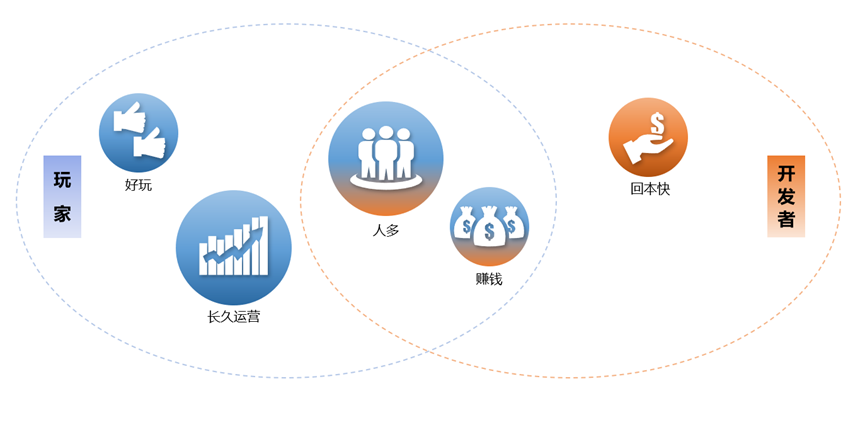
From the developer’s standpoint, we can draw some preliminary conclusions:
A <Large Player Base>
A large and active user base is paramount—it’s the common goal shared by both players and developers (the intersection in the Venn diagram of player vs. developer expectations)!
Initial hype and sustained engagement are decisive factors for a game’s success. A larger player base means more revenue and creates a positive bias where players perceive the game as more enjoyable (a major studio’s survey shows player count is a key factor in game selection). Therefore, blockchain integration should target games with potential for mass adoption.
- Strong storytelling
- For example, Sandbox markets itself as the first open metaverse world—the future “Ready Player One”
- Low entry barriers
- Core gameplay mirrors familiar traditional games, making it easy to understand and pick up
- High usability, reducing learning curve for non-blockchain players
Example: StepN integrated an in-app wallet, lowering the barrier for players to learn and use wallets for exchanges
- Familiar themes or gameplay mechanics—players exhibit path dependency
- Popular and recognizable themes among target audiences in Southeast Asia, such as cultivation, Three Kingdoms, pets, battle royale, farming/mining...
- Leveraging well-known IPs, e.g., Heroes of Mavia inspired by Clash of Clans
- Sound economic model design
- Consumable in-game tokens have persistent demand
- Design encourages extensive peer-to-peer trading with smooth, convenient transaction methods
- Healthy progression and drop rate models
- New players aren't significantly disadvantaged in resource acquisition and can catch up quickly
- Progression and goals require time investment, allowing easy expansion of new vertical and horizontal aspirations
- Built-in mechanics for inviting others to play together
- Referral systems create mutual benefits
- Team-based gameplay without power-leveling or level discrimination, e.g., team exploration, guild PvP with mechanics requiring large numbers
Example: Mechanics where big accounts boost small ones without reduced rewards; or in Dragon Nest Mobile, guild morale buffs scale with spectator likes during battles
B <Profitability>
Profitability is a shared goal between developers and players—but here’s the catch: if everyone wants to earn, where does the money come from? We’ll leave this as a cliffhanger for now and discuss it later.
From a developer’s view, blockchain integration should target profitable—and highly profitable—games. Games with the following traits tend to perform better financially:
- Strong numerical competition
- Conflict and competition drive player spending impulses
- Drawing from traditional game experience: fair竞技 games lean toward cosmetic monetization, requiring massive player bases and generally earning less than stat-driven games—the prime example being Honor of Kings
- High internal demand with free tradability
- Higher trading volume means more player earnings and substantial tax revenue for the platform
- Greater internal demand increases token consumption, supporting long-term price stability
- Players feel they’re earning alongside the project
- Official profits mainly come from transaction fees (commission) and token appreciation
- Players earn via trading, with earning power tied to reinvestment
Footnote: Currently, most blockchain games still rely on older players profiting at the expense of newcomers. Future breakthroughs may follow traditional free-to-play models: top spenders ultimately fund the ecosystem.
- High profit ceiling
- Deep numerical design
- Mechanics encouraging continuous influx of new players
- Player base capable of sustained growth
- Compensation mechanisms addressing loss aversion
- Platform design transferring value from liquid tokens to illiquid NFTs—so even if token prices crash, NFTs retain expected value in future platform games
- Highlighting values beyond earnings. For example, if players accept “StepN = running = health,” they won’t obsess over extended payback periods.
C <Fast Payback>
Blockchain integration assumes an existing traditional game candidate, not accounting for sunk costs, but still considering post-integration update costs (e.g., art production, content updates). Given that most blockchain games inevitably spiral into decline, priority should go to projects with rapid payback strategies, low ongoing update costs, and low user acquisition expenses.
- Low cost
- Low development and content update costs
- Low marketing and user acquisition costs
Example: Importing legacy players from a traditional game series, or leveraging strong social virality across platforms
- Reasonable upfront spending
- Setting progression barriers that incentivize initial spending and reinvestment
- Barrier-free early content
- Fast payback requires high DAU—minimize onboarding difficulty. Don’t test intelligence! Don’t test intelligence! Don’t test intelligence! — At least not in the early stages. Avoid imbalances caused by intellect or knowledge gaps.
D <Other Risk Considerations>
Given blockchain games embody Web3.0 concepts, fairness and security must be prioritized. Prioritize games resistant to cheating (e.g., bot exploitation) and those ensuring player asset safety.
Although the GameFi sector is still evolving through trial and error, both Web2 game blockchain integrations and native Web3 game developments continue to build and enrich their respective niches.
I. Hybrid Blockchain-Integrated Games
1. Staking-Mining Games
1.1 Overview
These GameFi titles lack deep narratives or complex gameplay, centering instead on a core mining mechanic—buying mining rigs to earn tokens—wrapped in minimal game-themed presentation and idle mechanics. At its heart, it remains “mining.”
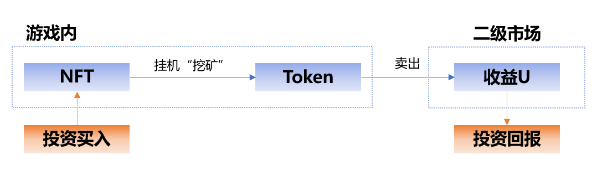
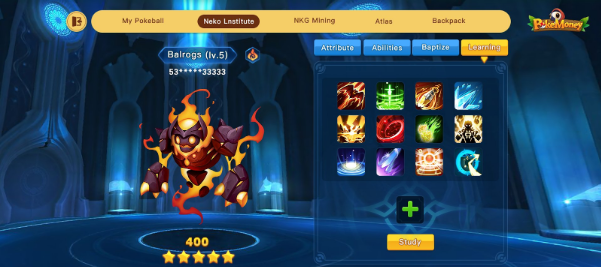
Due to low development cost, short timelines, and ease of cloning, these are currently mainstream. Representative titles include CryptoMines, BinaryX, and PokeMoney.
1.2 Model and Data
Economically, these games aren’t limited to single or dual-token models. Players stake to earn large amounts of tokens (sub-tokens in dual-token setups), shifting financial pressure from NFTs to tokens, then using various mechanisms to mitigate sell-off pressure on token prices.
Take CryptoMines (“spaceships”) as an example: token price correlates directly with user count, as shown in the nearly identical curves below. Due to lack of engaging gameplay, these projects typically have short lifespans. Profitability depends heavily on launch hype (i.e., total player acquisition), while economic complexity and speed of new feature rollouts determine longevity.
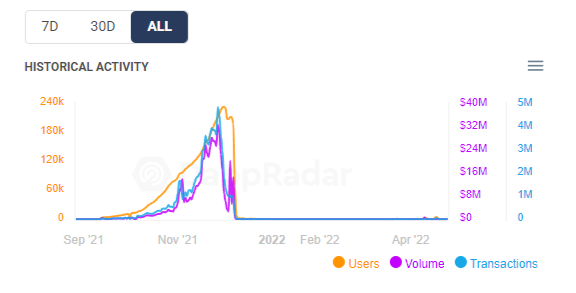
CryptoMines User Count
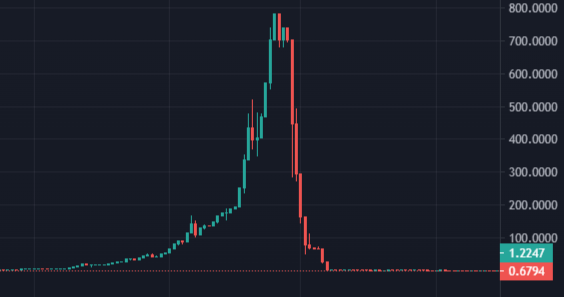
CryptoMines Price
1.3 Insights and Recommendations

① Low development cost; players have no visual quality expectations—ideal for adapting 4399-style browser games or idle mobile games
② Emotion-driven, profit-motivated games—don’t prioritize user retention
③ Typically short-lived, prone to death spirals; adding built-in dungeons, breeding, or combat can extend lifespan
④ Commonly deployed on BSC—low gas fees, compatible launch platforms, and aligned target audience
2. NFT-Based Games
2.1 Overview
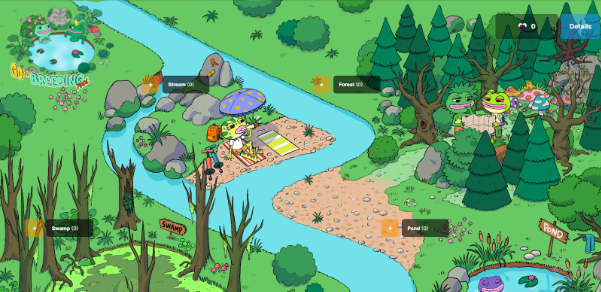
Projects start with a character concept, generating a finite number of NFTs via artists or AI, then build a game system around them. The core model empowers NFTs beyond meme value, enabling staking, battling, and earning game tokens.
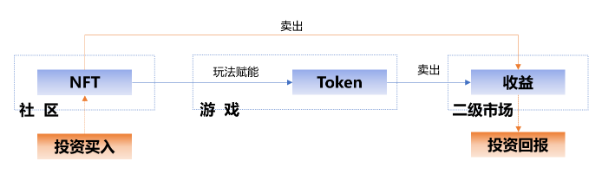
These games foster stronger community vibes and user consensus, often forming tight-knit circles. Examples include chikn_nft, Hoppers Game, and Avalant.
2.2 Model and Data
Economically, these games often go beyond simple P2E, embedding innovative mechanisms like veTokens, point allocation, and cycle resets. More intricate details attract deeper engagement and community integration.
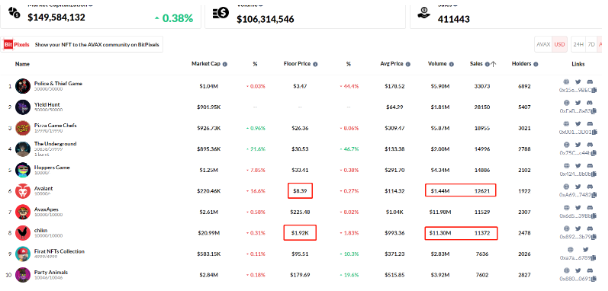
AVAX NFT Sales Volume Ranking
Data shows some projects gain early traction but, as gameplay and profitability fail to sustain interest, NFT prices plummet—lifespans rarely exceed months. However, successful IP-building—like Chikn the Avalanche Chicken—can maintain NFT value through community consensus even as P2E returns dwindle.
2.3 Insights and Recommendations

① Development focus on NFTs—unique art style and narrative; existing IPs yield better results
② Avoid cloning game mechanics and economic models—innovation tailored to NFTs drives attention and reputation
③ Currently better suited for Avalanche and Ethereum—audience alignment is stronger
II. Character Combat Games
1. Mission-Battle Games (Mobile)
1.1 Overview
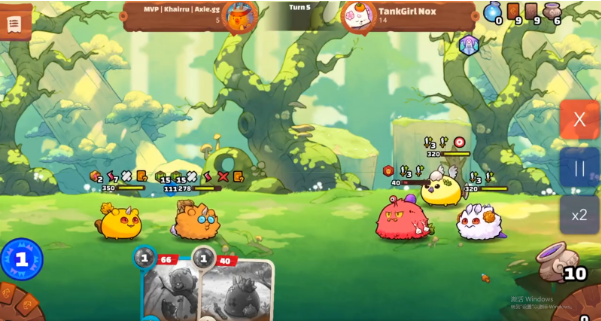
Represented by Axie Infinity, these games move closer to traditional titles—offering lore and simple storylines, increasing immersion compared to early mining games, with richer gameplay. Core mechanics involve players minting character NFTs via blind boxes or other methods, forming teams to complete PvE missions, dungeons, or PvP battles for rewards. Examples include Axie Infinity and StarSharks.
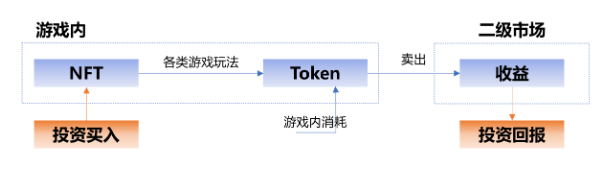
Compared to mining-type blockchain games, two key differences extend gameplay enjoyment and lifecycle:
① NFT acquisition includes randomness—blind box or minting yields NFTs with varying attributes
② Growth mechanics are expanded, with team play, PvE dungeons, and PvP validating stats—results affect output efficiency, driving players to invest time, effort, and tokens for higher yields
1.2 Model and Data
From a model perspective, these remain P2E—players consider gold-farming strategies: run low-tier dungeons with minimal-effort teams for steady income, or build high-tier teams for high-risk/high-reward PvP. Different strategies directly impact reinvestment decisions.
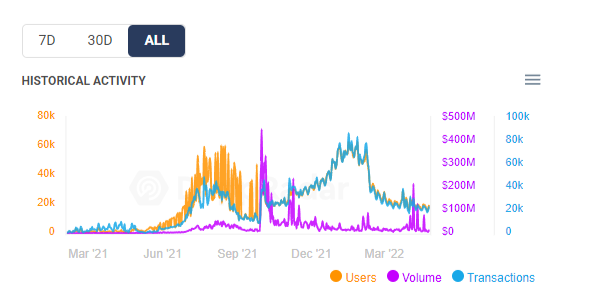
Axie Infinity
StarSharks
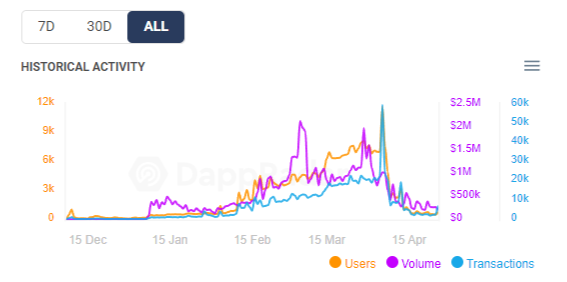
Comparing Axie and StarSharks data above, different gameplay and economic models impact overall lifecycle. Once decline begins, team capability, community sentiment, update speed, and player consensus all influence outcomes. Axie, despite suboptimal economics today, retains top-tier user counts due to strong branding and leader status. Conversely, StarSharks faces a critical juncture—can it retain players before launching its next game? (PS: It’s now in a death spiral, awaiting a new narrative to revive it.)
1.3 Insights and Recommendations

① Turn-based card or mission-battle mobile games may align best with this format
② Economic models should offer unique, gameplay-integrated innovations—multi-factor rewards and enhanced strategic depth extend longevity
③ Excessively high early returns without loyalty incentives lead to poor retention and inevitable death spirals
④ BSC currently offers greater traffic advantages due to its ecosystem
2. MMORPG (PC)
2.1 Overview
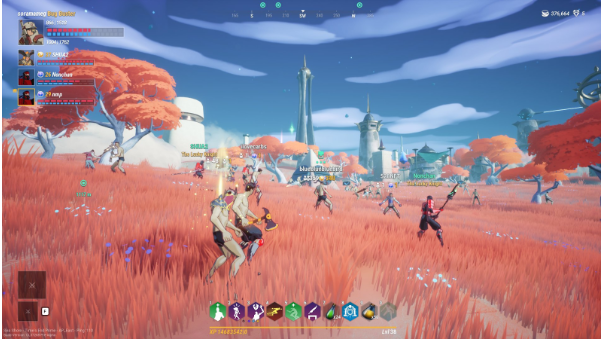
MMORPGs are among the most common traditional game genres, but due to high development costs and team requirements, few blockchain versions exist. The notable exception is BigTime, currently in closed beta.
Bigtime
2.2 Model and Data
Core gameplay model: (as few comparable blockchain titles exist, this reflects W Labs’ conceptual design)
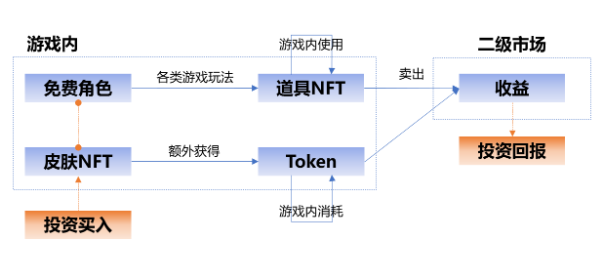
Using BigTime as an example: players can freely choose characters and play without initial investment—greatly lowering entry barriers. However, lacking tokens and relying solely on NFTs reduces liquidity, making ROI calculation impossible. Brief gameplay summary:
BigTime:
Four character classes available. Open world with randomly scattered dungeon entrances—enter solo or in teams. Completing dungeons yields NFT items (weapons, SPACE). All in-game items can be traded for profit.
Currently, VIP tickets grant tiered beta access—earlier entry increases NFT drop chances. Future plans include player-owned SPACE zones where dungeon battles yield higher returns. Current item liquidity is moderate.
Overall, gameplay resembles traditional MMORPGs: high spenders earn more, free players grind slowly. The difference is treating in-game items as NFTs. BigTime’s challenge: it needs a large base of casual players. If free players earn too little and gameplay/graphics don’t justify F2P engagement, NFT liquidity dries up—leaving even whales without sufficient rewards or flow-state experiences.
2.3 Insights and Recommendations

① Traditional game blockchain integration requires solid core gameplay, plus strong update speed and bug-fixing capabilities
② Rewards for different entry-level players shouldn’t be crudely segmented—overall differentiation should be nuanced and multi-factorial
③ Games need stronger narratives, especially around NFT items, to expand capital reservoirs and deepen engagement
④ Can traditional MMO pain points—monotonous gameplay, long playtimes—be alleviated through metaverse storytelling?
III. Competitive Games
Competitive games are built on fair, balanced platforms for head-to-head play, encompassing shooting, strategy, and action genres. As the gaming industry evolves, future games may broadly fall into three categories: single-player, competitive, and online multiplayer. Thus, in traditional gaming, MOBA titles like League of Legends, battle royales like PUBG, card games like Hearthstone, FPS games like CS:GO, strategy games like Clash Royale, and auto-chess games are all broadly defined as competitive. In the blockchain world, is there a unique Web3 path for competitive gaming?
1. Current Landscape
As one of today’s dominant game genres, skilled teams have experimented across sub-genres like cards, strategy, and MOBA. Below, we review several prominent Web3 competitive blockchain games based on popularity, user count, and gameplay.
① Card Games: Splinterlands and Skyweaver
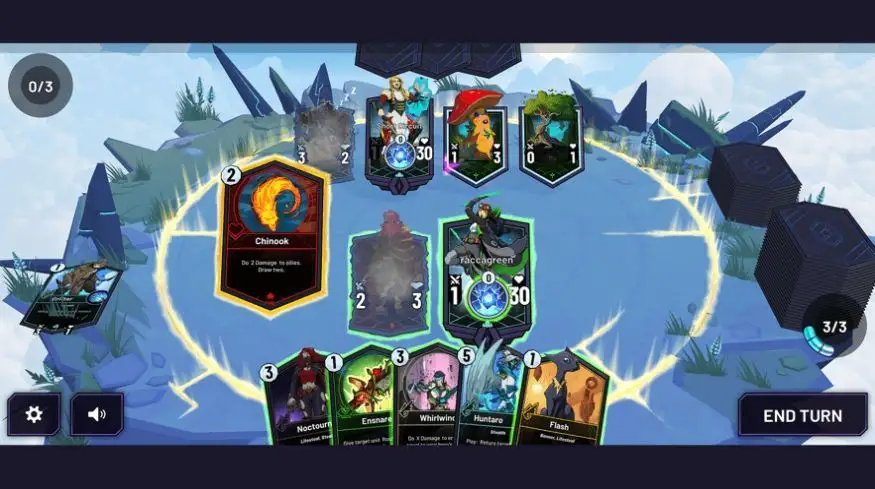
Splinterlands
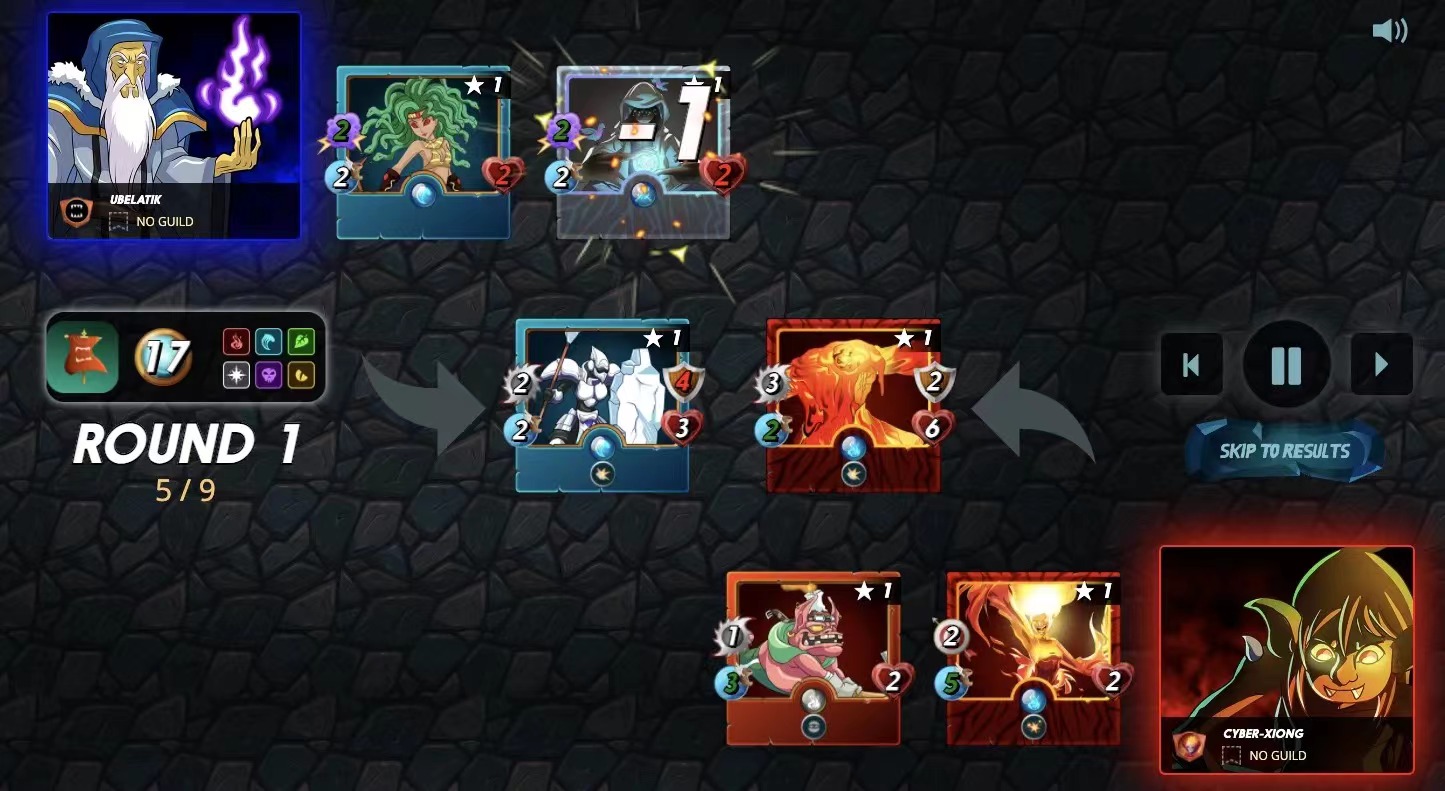
Splinterlands is a blockchain-based digital collectible card game inspired by Magic: The Gathering and Hearthstone. Players build decks with varied attributes and battle others in skill-based matches. Though launched 2–3 years ago, it only began selling tokens after fundraising in July 2021.
Skyweaver
Skyweaver, a Hearthstone-inspired blockchain game launched in 2018, underwent years of refinement before soft-launching across mobile, PC, and web. It currently lacks a token—players earn cards through battles.
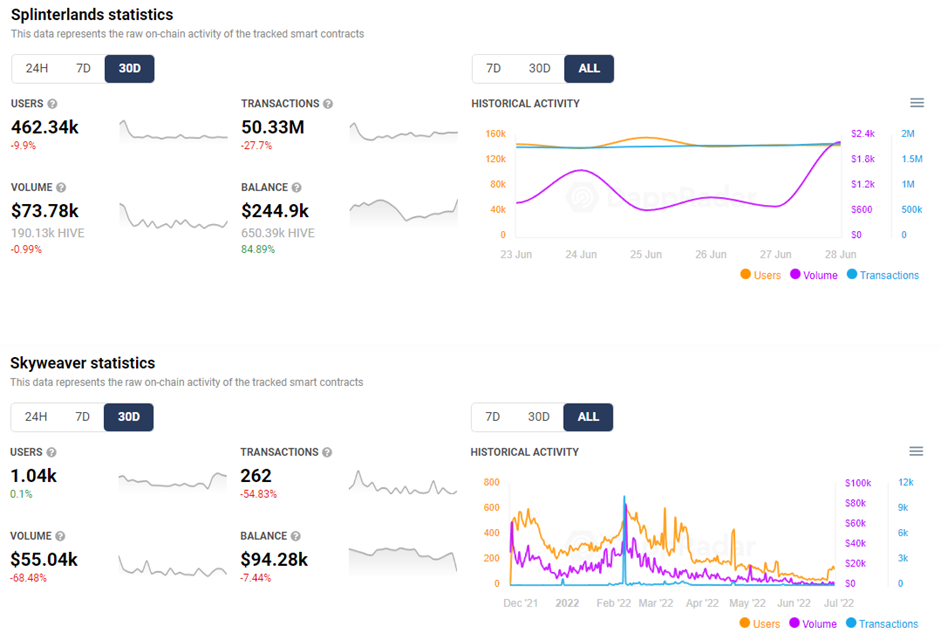
Game User Count
Due to development complexity and cost, card battle blockchain games dominated the competitive genre early on. Whether high-quality titles like Splinterlands, Skyweaver, Gods Unchained, or copycat clones, many initially attracted users with decent gameplay and strategy. But over time, as play-to-earn efficiency declined, players left. Even Splinterlands, consistently ranking among DappRadar’s top three, survives only on early adopters and farming studios—its token price and popularity steadily declining.
② MOBA: Thetan Arena
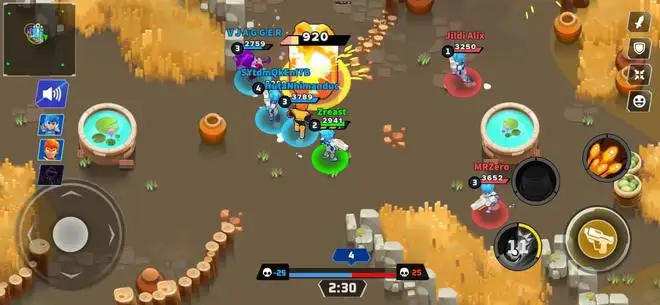
Thetan Arena
Thetan Arena is a blockchain-based multiplayer online battle arena and battle royale game featuring unique designs and sustainable esports initiatives. Players can form teams with friends, battle others, and earn rewards based on skill.
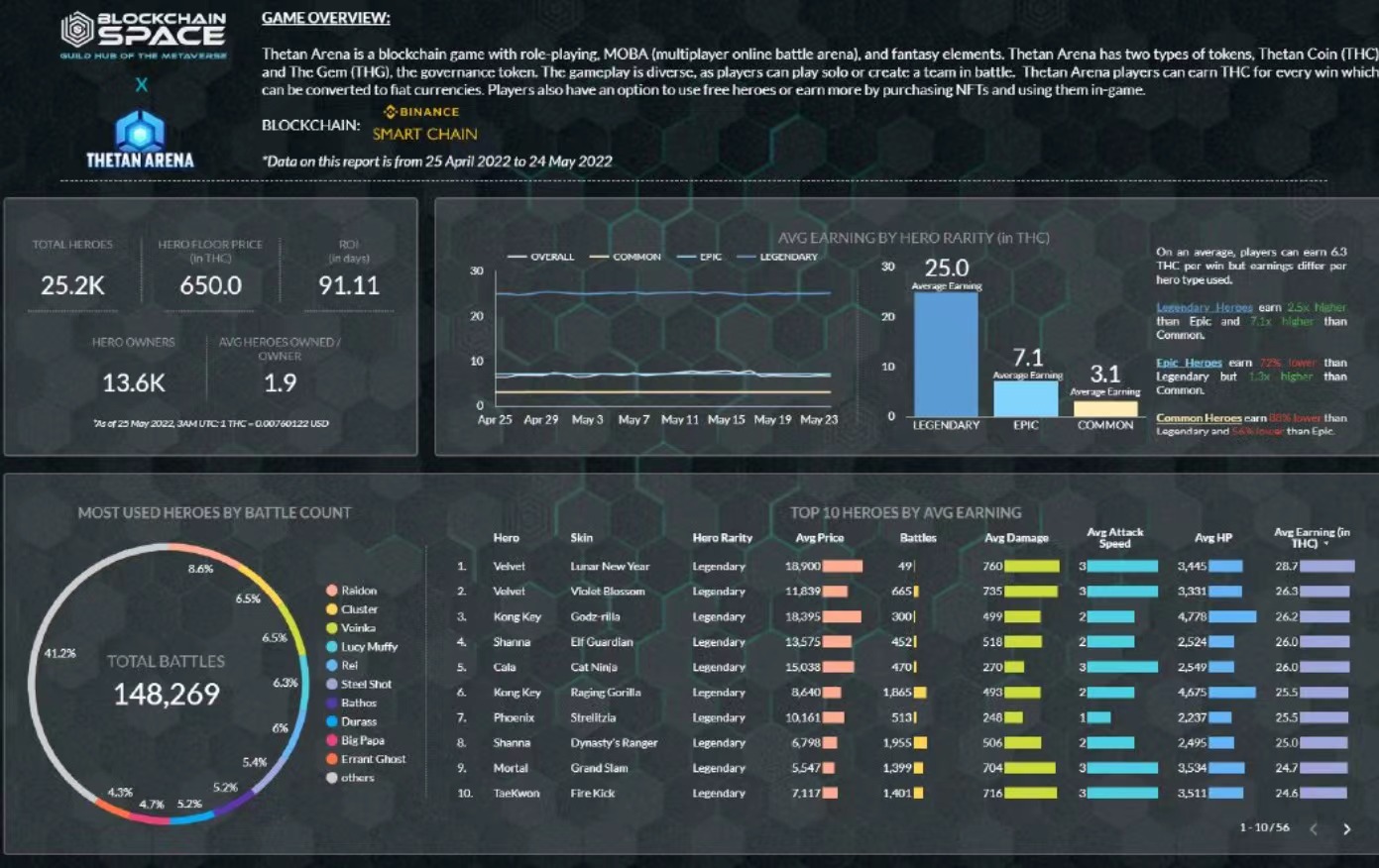
BlockchainSpace’s data collection on Thetan Arena, May
As the first high-quality MOBA blockchain game, its polished visuals, Brawl Stars-like gameplay, and Free-to-Play + Play-to-Earn model drew massive attention upon launch in November 2021. However, in today’s GameFi landscape, the “Fi” aspect dominates. As gold-farming returns dropped and
Join TechFlow official community to stay tuned
Telegram:https://t.me/TechFlowDaily
X (Twitter):https://x.com/TechFlowPost
X (Twitter) EN:https://x.com/BlockFlow_News
 瓜田实验室W Labs






