Wanxiang Blockchain Xiao Feng's Full Speech: A New Phase of Blockchain, Explosion of Application Protocols
TechFlow Selected TechFlow Selected
Wanxiang Blockchain Xiao Feng's Full Speech: A New Phase of Blockchain, Explosion of Application Protocols
Whether it's the internet protocol stack or the blockchain protocol stack, the lower-level the protocol, the more globally unified it is.
 Navigating Web3 tides with focused insights
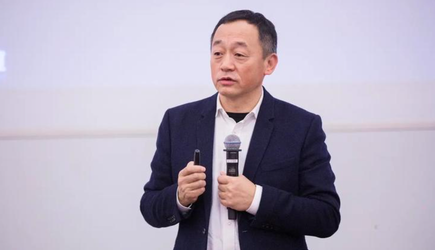
Friends, everyone, thank you all for attending the Wanxiang Blockchain Global Summit. Today, my topic is "The New Era of Blockchain: The Explosion of Application Protocols." A few days ago, Ethereum's major shift in consensus protocol was not only a significant milestone for Ethereum itself, but also a historic moment for global blockchain technology and applications. It marks the nearing end of the infrastructure-building phase of blockchain, and signals that an explosion of applications is about to begin.
Before discussing this upcoming explosion of blockchain application protocols, let’s review how the internet protocol stack was built. From the 1970s to the 1990s, internet protocols were chaotic, diverse, and flourishing.
At that time, the main competing models included:
-
DECNET, introduced by the prominent DEC Corporation.
-
IBM’s proprietary SNA internet protocol model.
-
The OSI internet protocol model promoted by European official institutions.
-
The TCP/IP internet protocol model, initiated from the grassroots level in the United States.
After decades of protocol wars, TCP/IP emerged as the ultimate winner.
I believe TCP/IP defeated the officially backed, corporate, and academically endorsed models for five key reasons:
-
First, TCP/IP was driven by real demand—code came before standards. Functional code was developed first, tested in the market, and standards evolved gradually. In contrast, the OSI model followed a top-down approach—starting with frameworks, then standards, and finally code. Clearly, the demand-driven nature of TCP/IP gave it a competitive edge.
-
Second, TCP/IP was driven bottom-up by communities and self-organized groups. Although it eventually had an official body, during its first 20 years—up until the mid-1980s—it was advanced collectively by developers who shared common values.
-
Third, TCP/IP adopted agile development with rapid iteration, continuously evolving based on market needs and technological possibilities. OSI, in contrast, used waterfall development—designing the entire model upfront and delivering it all at once—which is clearly not suited for the dynamic nature of the internet.
-
Fourth, TCP/IP was developer-friendly and user-centric—putting customers first.
-
Fifth, TCP/IP was fully open-source and permissionless. While other models were technically open, they required authorization to use. TCP/IP needed no such permission—anyone could use it and contribute to it freely.
By examining the success of the TCP/IP internet protocol stack, we can see that blockchain protocols are following a similar path—developing with the same principles. In fact, the evolution of blockchain protocol stacks mirrors that of internet protocol stacks.
We typically divide TCP/IP into five layers:
-
Layer one is the physical layer—the foundation—including cables, fiber optics, etc.
-
Layer two is the link layer, such as IP.
-
Layer three is the network layer.
-
Layer four is the transport layer.
-
Layer five is the application layer.
Using these five layers of the TCP/IP model as a reference, we can design a protocol stack for the blockchain value network.
-
The foundational layer (L0) consists of decentralized bandwidth, storage, and computing. Bandwidth, storage, and computation will form the critical base for future value networks. According to the Ethereum Foundation's roadmap, Ethereum aims to achieve 10 million TPS within ten years. Achieving this requires a 100-fold increase in bandwidth capacity.
-
Layer two (L1) is the settlement layer. As a value network, there must be a protocol layer dedicated to clearing and settling value.
-
Layer three (L2) is the transaction layer, designed to enable smooth and efficient exchange and trading of value markers such as NFTs and tokens.
-
Layer four is the data layer, where protocols generate data assets and digital assets. These are distinct: data assets refer specifically to identity-bound behavioral data generated by users, individuals, or organizations on the internet or blockchain. Digital assets are new asset classes created by users as creators—such as NFT-based digital art.
-
Layer five—the topmost—is the application layer. All familiar commercial scenarios will eventually be restructured at L4. Every business is worth rebuilding on the value network—that’s our working hypothesis for the blockchain protocol stack structure.
Within this structure, I believe Ethereum plays a central role. On September 15, Ethereum completed a major upgrade—from PoW to PoS consensus. This was not just a pivotal moment for Ethereum, but for the global blockchain industry as a whole.
Ethereum founder Vitalik Buterin previously outlined a five-stage development roadmap. I believe the Merge on September 15, followed by sharding and then Verkle trees, are the three most critical phases. Stages four and five are mainly optimizations and incremental updates.
Once these three stages are complete, Ethereum—as a foundational network for value settlement—will offer high performance, flexible scalability, and proven robustness and security from seven years of real-world operation. With higher TPS and greater scalability built on a secure and resilient network, the technical foundation will be set for an explosion of applications.
Beyond the Ethereum mainnet upgrades, additional technologies and protocols—such as sharding, layering, sidechains, and subchains—are further enhancing Ethereum’s security, robustness, TPS, and scalability. Together, they could enable the entire blockchain system to reach tens of thousands of TPS within three years, hundreds of thousands within five, and ultimately achieve the Ethereum Foundation’s vision of 10 million TPS in ten years.
If these three-, five-, and ten-year goals are met as planned, Ethereum will undoubtedly become the leading platform for value settlement in the blockchain protocol stack. Moreover, Ethereum’s infrastructure development will likely conclude within the next three to five years. What follows will be an era of building vast numbers of applications atop this solid foundation—ushering in the age of blockchain application explosion.
We can draw parallels between the historical periods of internet application explosion and the coming blockchain application explosion.
Let’s first revisit how the internet application explosion unfolded.
It is widely agreed that the internet application boom began around 2010. Yet, the TCP/IP model was formally established as early as the early 1990s. By 2000, basic internet business models already existed—but they hadn’t yet achieved large-scale operations, nor found viable monetization paths.
It wasn’t until the rise of mobile internet and smartphones—and especially the revolutionary emergence of apps—that the true application explosion began. Before apps, accessing the internet required multiple steps via computers and browsers, which excluded most people. But with one-tap access through mobile apps, internet businesses gained hundreds of millions, even billions, of users. At this scale, algorithmic recommendations and user profiling enabled high conversion rates and significant commercial value.
Drawing from this history, I believe the blockchain application explosion will begin around 2025. This forecast is based on several factors: by 2025, blockchain systems may achieve one million TPS; Web3 technologies will likely be mature; and new organizational forms will have evolved to operate effectively. At that point, blockchain will enter its era of explosive application growth—I predict this will happen in 2025.
Blockchain application protocols will have several defining characteristics. First, they will run natively on-chain. Second, they will rely on smart contracts to ensure reliable execution of commercial activities. Third, all blockchain applications will adopt decentralized governance. Fourth, NFTs will go beyond being mere proof of ownership for digital goods—they will serve as proofs of participants’ capabilities, actions, workloads, contributions, and activity levels. Based on these proofs, blockchain applications will use tokens as incentives, creating highly effective token-based incentive mechanisms that fairly reward all participants.
Moreover, blockchain application protocols will be open-source and support open collaboration. Open collaboration means anyone can join or leave without needing permission from any individual or entity. These are the core traits I’ve identified for blockchain application protocols. I believe these traits also apply to analyzing Web3 and DAOs (decentralized autonomous organizations). In fact, DAOs will become a dominant organizational form during the blockchain application explosion era.
From the perspective of commercial organization, I see five key features of DAOs:
-
First, a DAO is a trustless network—built on blockchain, smart contracts, and digital wallets.
-
Second, a DAO is transparent—its entire operation is recorded on-chain, making all data publicly accessible. In terms of information disclosure, DAOs represent an order-of-magnitude improvement over traditional businesses in transparency, timeliness, accuracy, and completeness.
-
Third, a DAO is a network of usage rights—there is no founder or owner. There may be initiators who hold influence or community leadership, but they do not own the network.
-
Fourth, a DAO is permissionless—joining or leaving is entirely up to the individual, with no approval process. No person or institution controls membership.
-
Fifth, a DAO’s business model relies on two equally essential value markers: NFTs and tokens. As discussed earlier, NFTs serve as proof of behavior, contribution, capability, and ownership. Based on these records, the DAO issues tokens as economic incentives. Tokens thus function as both the incentive mechanism and the standardized medium of value exchange across the DAO. Therefore, the DAO business model can be described as “Play NFT to Earn Token”—this is my personal view of how DAOs create value.
In conclusion, whether for internet or blockchain protocol stacks, the lower the layer, the more globally unified the protocols become. The more unified the base layer, the more diverse and abundant the application-layer protocols—just as we now have hundreds of application-layer internet protocols. I believe we’ll see hundreds of blockchain application-layer protocols emerge as well. An explosion of application protocols means an explosion of applications—and of blockchain-based commerce. That’s why I’m so excited for what 2025 will bring.
That concludes my presentation. Thank you all.
Join TechFlow official community to stay tuned
Telegram:https://t.me/TechFlowDaily
X (Twitter):https://x.com/TechFlowPost
X (Twitter) EN:https://x.com/BlockFlow_News