BlueRun Ventures Patrick in Conversation with Wanxiang's Xiao Feng: Ethereum's Shanghai Moment – From China to the World
TechFlow Selected TechFlow Selected
BlueRun Ventures Patrick in Conversation with Wanxiang's Xiao Feng: Ethereum's Shanghai Moment – From China to the World
Xiao Feng, Chairman of Wanxiang Blockchain and HashKey Group, shared Ethereum's origins with Shanghai and his perspectives on the Shanghai upgrade.
 Navigating Web3 tides with focused insights
Compiled by: Amber, Foresight News
The following is the transcript of an online dialogue between Patrick and Xiao Feng during TechFlow's Ethereum Shanghai Upgrade Study Series.
Host: Patrick, BlueRun Ventures
Guest: Xiao Feng, Chairman of Wanxiang Blockchain and HashKey Group
Patrick: Today we’ve organized a series of events with many DAOs to celebrate blockchain technology and commemorate Ethereum’s Shanghai Upgrade—a major milestone. We also want to review the contributions of Chinese individuals within the Ethereum ecosystem and reflect on the role of Chinese participants in Ethereum’s development. While we often say “don’t dwell on the past, move forward boldly,” I believe it’s still valuable to look back at history. Looking back at Ethereum’s key moments, Mr. Xiao Feng has long been a spiritual leader in China’s blockchain industry. It’s truly an honor to have this conversation with you today to share insights about what has happened in this space. Before we begin, let me briefly introduce myself. My name is Patrick Liu Yong. I’m currently investing in Web3 and AI—particularly AI application layers—at BlueRun Ventures, so I’m especially interested in the convergence of crypto and AI. Would you like to say a few words first, or shall we jump straight into questions?
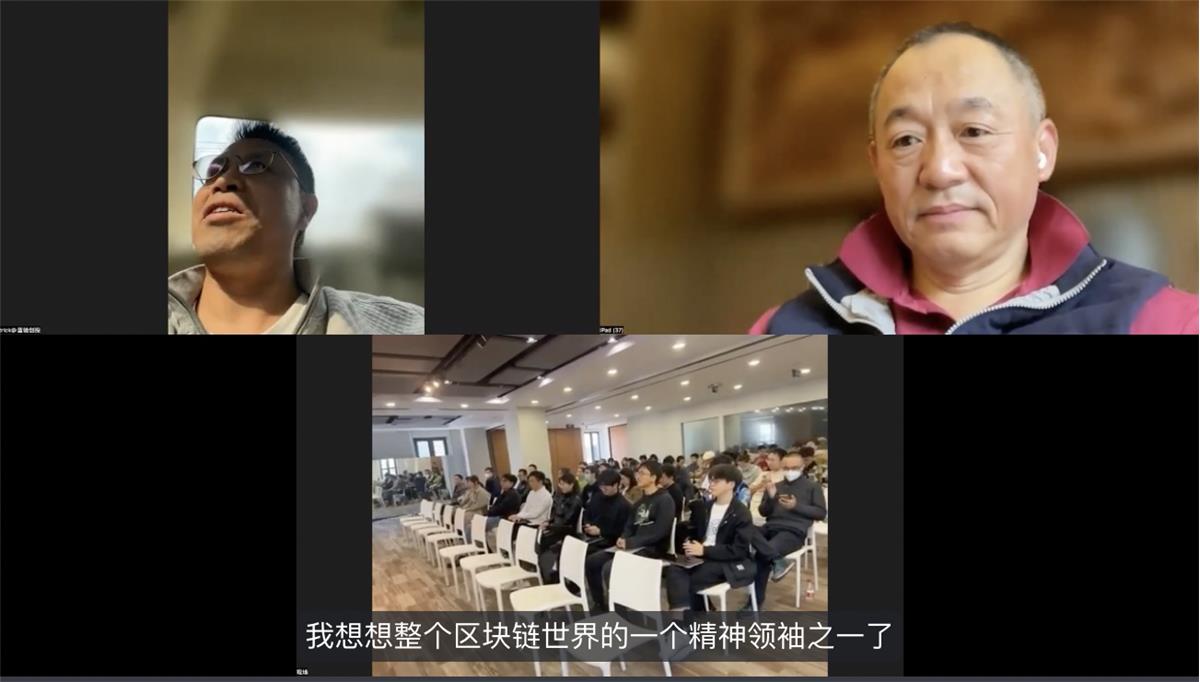
Xiao Feng: Let’s go straight to questions. Thank you for having me.
Patrick: First, you actually entered the space in 2014. Could you take one or two minutes to walk us through several key milestones from then until now?
Xiao Feng: Actually, I just shared an article I wrote in the group chat earlier. A biography of Ethereum was published in English a few months ago, and the publisher asked me to write a foreword. After reviewing the manuscript, I realized it was written by Western authors who only briefly touched upon Ethereum’s relationship with China, with Shanghai, and with the Chinese developer community. The article is titled "Ethereum’s Shanghai Moment."
Patrick: Very timely.
Xiao Feng: In the early days—especially when Ethereum first launched—the domestic community and developers responded quickly and invested significant resources and enthusiasm. For example, many Ethereum-related materials were translated into Chinese as early as 2014. I started learning about Ethereum that year and immediately recognized it as a profoundly visionary idea. If blockchain, as a groundbreaking invention, did not allow others to build applications on top of it, that would be a tremendous loss. It could mean missing out on the transformative potential of distributed ledgers for society, business, and humanity’s digital transformation.
You may have noticed how ChatGPT accelerated the pace of digitization. This acceleration is deeply connected to technologies like distributed ledgers—global unified networks where any entrepreneurial activity on a blockchain inherently serves a global customer base. Once you operate on a blockchain, you're operating on a single global computer. Think about it: this is a digital world without time zones or geographic boundaries. That’s the real power of decentralized networks—a decentralized global network and a decentralized global ledger—which together could bring profound changes to society, commerce, economics, and daily life.
But such transformation requires openness—allowing people to do different things on this network and ledger. Bitcoin was originally conceived as a global currency and wasn’t designed to support general-purpose applications or smart contracts. So seeing Ethereum’s vision back then was truly exciting—an open, permissionless platform where anyone could join and innovate. That’s what inspired many in China’s community at the time, including those who began promoting and translating Ethereum content. Even Vitalik himself came to China around that time to learn Chinese.
Patrick: In 2014, Vitalik visited China, and you discussed investment with him, ultimately completing the investment. Then in 2015, Elon Musk co-founded OpenAI with a $100 million donation—so the timelines are remarkably close. You've shared some of the exciting aspects of Ethereum’s journey. But did you also see shortcomings? I recall reading that his account didn’t hold much money, and there was skepticism around him. Looking back, how much was actually left in his account, and what kind of trust crisis did he face?
Xiao Feng: First, I met him in 2015. Although we became aware of him in December 2014—and I even gave a public talk introducing Ethereum that drew attention—it wasn’t until March 2015 that he came to Shanghai, which was after the crowdfunding phase but before the mainnet launch.
Patrick: That’s even more interesting—it aligns exactly with the founding of OpenAI.
Xiao Feng: Ethereum’s mainnet went live in July 2015. Two transformative technological systems—one being OpenAI, the other Ethereum—both emerged in 2015, though unfortunately both originated in the U.S., not in China. Before the mainnet launch, tokens held by the foundation were locked. Their treasury had about $18 million initially, and even after spending, there was still money left—I remember roughly $3 million remained. Since the mainnet hadn’t launched yet, people naturally questioned whether funds would last. Was there a performance crisis? Not really. But concerns persisted: Could the funding sustain operations until launch? What if it couldn’t?
At the time, Vitalik was in Shanghai and visited our office. I heard he had attended a meeting the night before, facing intense questioning from various parties. He didn’t respond immediately. When I learned about this, my instinct wasn’t investment-driven—I simply wanted to help this young man advance a great vision. Our team made a simple decision: offer $500,000 in cash upfront, and publicly signal our willingness to provide ongoing support.
Patrick: So it was essentially continuous backup support.
Xiao Feng: Exactly. We signed a donation agreement with the Ethereum Foundation and transferred the funds. In return, the Foundation committed to delivering ETH tokens to us at the original donation price once their tokens became unlockable post-mainnet launch. Our mindset wasn’t profit-oriented—if the mainnet failed to launch, we’d still consider it worthwhile supporting such a bold vision.
Patrick: That’s very similar to Elon Musk’s initial philosophy behind OpenAI—starting as a social venture. At BlueRun, we even have a dedicated fund for social ventures, meaning socially driven risk capital. These aren’t commercial-first initiatives. Your motivation wasn’t primarily financial either, right?
Xiao Feng: Correct. We weren’t thinking commercially at all. That’s precisely why naming this upgrade “Shanghai Upgrade” carries deep significance—it fulfills a promise. We said we’d continue supporting them, and we meant it. Fortunately, everything went smoothly. The mainnet launched on schedule—no delays. Afterward, the Ethereum Foundation’s finances were solid; they had ample funds. By late 2015 or early 2016, Vitalik returned to Shanghai. I reminded him of our commitment—we pledged continued support in 2016. But both the Foundation and Vitalik said they no longer needed additional funding. I replied: “That’s great—but our promise from Wanxiang Blockchain Lab isn’t empty talk. We must fulfill it.” So we proposed hosting Devcon in Shanghai, covering all expenses ourselves while returning all ticket sales and sponsorships to the Ethereum Foundation. This was our way of honoring our commitment.
Patrick: Another form of support—initially financial, then shifting toward ecosystem development once direct funding was no longer needed.
Xiao Feng: Yes. We wanted Chinese engineers and technologists to attend a globally focused developer conference, hear cutting-edge discussions firsthand. Much of Ethereum’s current direction and future innovations were debated at that three-day Devcon in Shanghai. Internally, we reached a consensus: attending Ethereum Devcon is essential. It previews blockchain trends for the next two to three years—ideas that might take five years to materialize. To truly understand blockchain’s trajectory, you must attend Devcon and listen carefully.
Patrick: Speaking of Devcon—from Devcon0 to Devcon1, Devcon2, and beyond—alongside Wanxiang’s annual Blockchain Week, Devcon has nurtured countless talents within the Ethereum ecosystem. Wanxiang has made immense contributions. Of course, many others associated with Wanxiang or Ethereum have also contributed significantly. Could you share some of those stories to inspire younger generations?
Xiao Feng: The Chinese Ethereum community was active from the start. Starting in 2014, many promoted Ethereum and participated in its crowdfunding. Soon after, local communities formed. Vitalik visited China frequently before 2017, maintaining close ties with both the Foundation and grassroots communities. Many individuals contributed in various ways—some I know well, others less so, given efforts spread across Beijing, Hangzhou, Shanghai, Shenzhen, and Chengdu. Early core developers like Xie Hanjian; Shi Haihua, who invested heavily in community-building in China and France; ourselves, contributing modestly; Gulou and Cancer (Juxie), who translated key articles. And of course, Ethereum miners—a uniquely Chinese phenomenon, much like Bitcoin mining dominance in China. Though I’m less familiar with mining operations, their contribution to Ethereum’s growth has been substantial.
Patrick: You’ve known Vitalik well over the years. If you had to summarize his defining characteristics, what keywords would you use?
Xiao Feng: In vivid terms, he’s a “weirdo”—much like Elon Musk. Both are unconventional. Elon lives in a tiny house, stays in factories for weeks, slept on a mattress in his office after acquiring Twitter. Vitalik is similar—someone with minimal personal needs. Back in 2015, he stayed at Shen Bo’s place during his first visit. The second time, he checked into a budget hotel like Home Inn, staying half a month to a month each trip. Invited by communities, he’d travel to Hangzhou, then return to Shanghai. He simply doesn’t care much about comfort.
Patrick: So his material needs are extremely low. Despite dreaming big, I noticed you even bought him a cat camera.
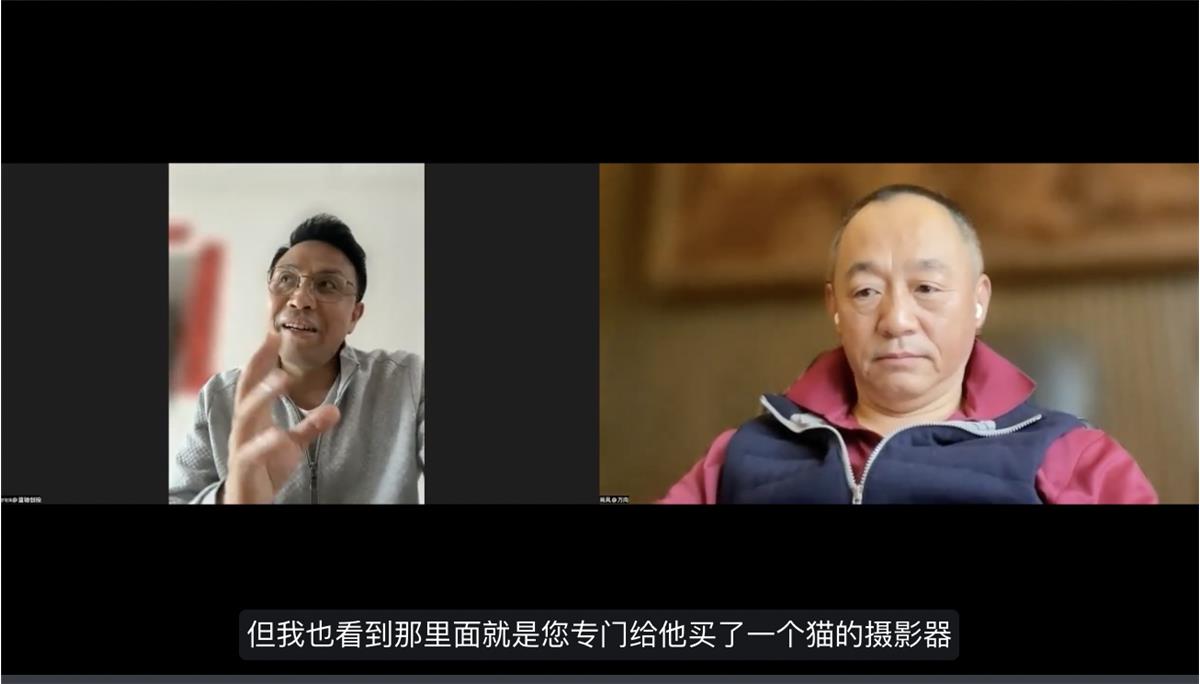
Xiao Feng: Yes, he loves cats. Like many coders and introverts, he’s fond of felines.
Patrick: Indeed. Did cats play any role in Ethereum’s development? I did a bit of research—there’s a famously expensive CryptoKitty rumored to belong to Vitalik.
Xiao Feng: I don’t know about that. But cats are generally beloved among crypto enthusiasts, programmers, and tech introverts.
Patrick: OK, here’s a sensitive question—I’d love your perspective. What does Vitalik think of you, or of Wanxiang Blockchain and HashKey? Can you capture it in a few keywords?
Xiao Feng: We’ve never discussed mutual evaluations, so I can’t speak for him.
That said, we invited him to serve as Chief Scientist at Wanxiang Blockchain Lab, and he gladly accepted. He appreciated having not just a grassroots community, but also a formal institutional partner like ours to drive progress. In its early days, the lab focused on three areas. First, training: the earliest Blockchain hackathons were held in January 2016. Vitalik attended the entire event, and we brought in three mentors from the Ethereum community in Europe and North America. These mentors helped train our own teaching team and spent considerable time working in Shanghai. Given China’s strong contributions to Ethereum, this was a form of回馈—Vitalik and Ethereum giving back to Chinese institutions. He contributed greatly to community building, regularly attending our small workshops, hackathons, and our annual blockchain summit in Shanghai.
Patrick: So gratitude is definitely a keyword—he remains grateful.
Xiao Feng: It’s more reciprocal than that—we supported each other. Last year, after the Chinese edition of the Ethereum biography, *The Infinite Machine*, was published, my foreword circulated widely. Vitalik saw it and sent someone he dined with to contact me, saying he hadn’t seen me in years and missed me. After knowing each other for so long—especially during those intense early days working side by side on the same mission—those memories remain unforgettable.
Patrick: After enduring hardship together, now comes shared success. On a lighter note, just two quick questions: What problems does the Shanghai Upgrade aim to solve, and how far is Ethereum from its ultimate goals?
Xiao Feng: Discussions around Shanghai Upgrade began years ago. Initially, the primary driver was ESG—transitioning from PoW to PoS to address carbon emissions. But personally, I believe another critical goal was improving public chain performance. From 2016–2017 onward, numerous technical solutions were explored to incrementally boost Ethereum’s throughput. These efforts eventually converged into the broader roadmap: PoS, followed by sharding, layering, zero-knowledge proofs, and more. Over time, especially since last year, Ethereum’s technical roadmap has become much clearer. During that period, we sponsored Devcon and funded projects like PraSaga through Wanxiang Blockchain Lab. We consulted Vitalik on where to allocate support in 2017—he recommended PraSaga, though it later evolved differently. The point is, many developers worked hard not just on sustainability, but on solving Ethereum’s scalability challenges. Ethereum exists to enable secondary development and applications—if it can’t support high performance, that promise becomes hollow.
Patrick: Ethereum’s ultimate goal likely includes achieving 100,000 TPS. How close does Shanghai Upgrade get us?
Xiao Feng: Originally, Ethereum’s mainnet had no plans to increase its base-layer performance—it capped at ~20 TPS. In my view, Ethereum as a base protocol serves two core roles. First, as a decentralized network, it ensures security and robustness. Second, as a mainchain, it provides finality and consensus—recording and confirming every transaction’s outcome. Beyond these functions, application-level scaling is delegated to Layer 2, 3, 4, or even Layer 5 solutions.
This approach resolves the decentralization-security-scalability trilemma through layered architecture—a stack of protocols. At the base layer: decentralized finality. Then sharding improves performance. Further gains come via parallel processing, hardware acceleration, bandwidth improvements—all incrementally increasing throughput. Personally, I suspect that by Layer 5—the actual application layer—the system might be fully centralized. There are two paths to scale: pure tech upgrades (bandwidth, ZK, etc.), but even those may not reach 1 million TPS. For specific commercial use cases, the most efficient path to performance may ultimately involve centralization.
Patrick: I completely agree with your previous insight: decentralization at the base layer, centralization at the application layer.
Xiao Feng: Exactly. Ethereum’s decentralization doesn’t preclude fully centralized apps built atop it. Such apps can rely on Ethereum for security and final settlement while optimizing performance elsewhere. These models aren’t mutually exclusive.
Patrick: OK, during the transition to Ethereum 2.0, many noted that miners lost influence. I recall that during the 2017 fork, developers played a bigger role. How do you view the role and influence of node operators and miners today?
Xiao Feng: Blockchain inherently lacks centralized governance, so forking is the natural mechanism to resolve irreconcilable differences. Forking is thus a crucial part of blockchain governance. Blockchains can exist as-is, or existing centralized businesses can adopt blockchain-based governance—for example, centralized exchanges using Merkle trees and blockchains for asset proof. Blockchain offers powerful tools for governance. One such tool is the ability to fork—then observe which chain garners community consensus, reflecting the collective will. I believe if Vitalik pushed for something the community opposed, people would simply follow a different fork. No matter how influential he is, he can’t force others to follow—he must earn broad agreement that his proposed direction makes sense in the medium to long term. Miners certainly faced economic losses during this transition, but this outcome reflected collective choice, not a unilateral decision by Vitalik.
Patrick: I appreciate your objective take on this. It reminds everyone that blockchain is a fair and transparent industry—and it’s precisely because of this fairness that the industry can keep evolving and tackling new challenges, just like with AI. Finally, I’d like to ask: What are your thoughts on AI, and how do you see the relationship between AI and blockchain—fusion or confrontation?
Xiao Feng: They’re not opposing forces—they should be combined. Humanity has long been undergoing a digital migration, striving to build a digital habitat. As Nicholas Negroponte declared in *Being Digital* (1994), the internet revealed a clear trend: humans are reconstructing a bit-based digital world. This migration isn’t driven by any single technology, but by the convergence of AI, distributed/cloud computing, and blockchain. These technologies co-innovate. Blockchain, as a foundational decentralized global network and ledger, provides infrastructure for this digital world. A digital world needs a comprehensive record-keeping system—for data, rights, ownership. Imagine GPT-4 empowering everyone to become domain experts. The old “10,000-hour rule” is obsolete—7 billion people can now access expert-level knowledge via GPT-4. Suppose 2 billion people use GPT-4 or GPT-5 to generate vast amounts of creative output. Can today’s intellectual property systems handle that volume? Impossible. Distributed ledgers offer a self-sovereign alternative.
Patrick: Data as the new means of production—we’re already aware of that.
Xiao Feng: This issue doesn’t require legislation. Simply storing data in blockchain wallets ensures it belongs to individuals by default. With an EVM wallet, carrying your identity and data across blockchains and applications becomes natural.
Technologically, blockchain will inevitably underpin the management and provenance of AI-generated creations. Just as traditional banking cannot function on blockchain, DeFi represents a重构—a rebuilt financial infrastructure for global digital commerce. Self-custody is the lowest-cost model. Existing IP and rights registration systems cannot cope with the explosion of AI-driven innovation. Secondly, information creation is becoming so fast that protecting it as “property” may no longer matter—what matters is whether it creates value for others.
Patrick: I strongly agree. People get excited about AI, but due to time constraints, we’ll wrap up here. I fully endorse today’s discussion: AI is a massive productivity hammer, while blockchain serves as the relational framework—organizing and coordinating production resources. We recently distilled our internal thinking into a public piece: over the next 50 years, three waves will converge—AI, Web3, and the digital realm (what we call the metaverse). This triple convergence will define the next half-century. Thank you so much, Mr. Xiao Feng.
Xiao Feng: Thank you, Patrick.
Join TechFlow official community to stay tuned
Telegram:https://t.me/TechFlowDaily
X (Twitter):https://x.com/TechFlowPost
X (Twitter) EN:https://x.com/BlockFlow_News
 Foresight News