








What factors could lead to the death and decline of cryptocurrency?
TechFlow Selected TechFlow Selected
What factors could lead to the death and decline of cryptocurrency?
Can cryptocurrency go to zero?
 Navigating Web3 tides with focused insights
Written by: Shivsak
Translated by: TechFlow intern
Last month was brutal for everyone invested in cryptocurrency. During bull markets, countless people predict that BTC will reach $1 million; during bear markets, equally numerous pessimists claim that BTC is just a bubble destined to collapse and go to zero.
Will cryptocurrencies go to zero? Let's explore what could kill crypto.

Let me first state my core perspective:
I firmly believe that over the next decade, Crypto/Web3 will be used to create useful financial products, thereby providing better financial services and opportunities for people around the world.
As an investor, this can be simplified as follows:
→ Valuable products are built using cryptocurrency
→ Adoption of cryptocurrency increases
→ Prices rise
The following scenarios would prove my view wrong:
● Financial products built with crypto turn out to be useless
● Government bans, macroeconomic downturns, loss of trust, or similar factors stifle crypto adoption
● Winning projects cannot be invested in
So, what could kill cryptocurrency and drive its price to zero?
U.S. Government Bans Cryptocurrency
This could potentially kill crypto—but isn’t crypto censorship-resistant? Can anyone really “ban” it?
Technically speaking, no—but if fiat on/off ramps are banned, crypto could die.
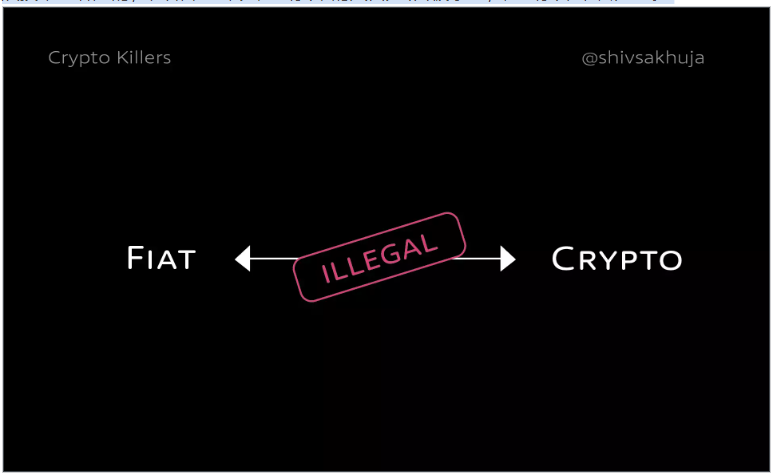
If crypto becomes illegal and cannot be converted into fiat currency, 99% of people won’t want to own it. U.S. lawmakers have previously stated they don’t intend to ban crypto, but rather regulate it. Regulation is good—it brings trust and security, enabling retail and institutional participation. Therefore, a U.S. ban on crypto seems unlikely, though it remains a potential threat.
Ethereum Fails
For example, if the Merge fails catastrophically, causing ETH network failure, I believe this could crash ETH and possibly the entire market.
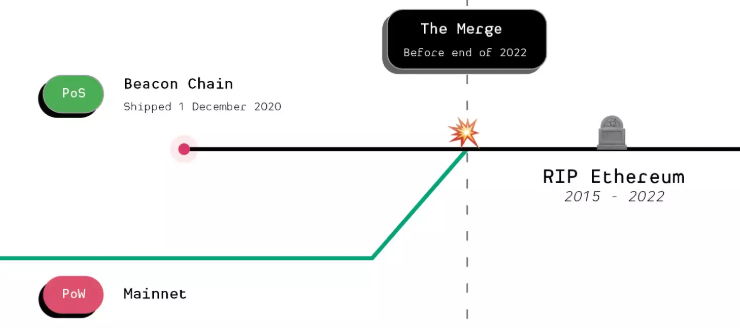
However, Ethereum’s testnet successfully completed the Merge weeks ago, so the likelihood of a catastrophic failure on the mainnet is low.
USDT / USDC Collapse
Tether's collapse wiped out UST/LUNA. USDT has existed for a long time, and many believe they hold sufficient cash reserves to back their tokens. Stablecoins are crucial components of crypto for investors, traders, DeFi participants, protocols, venture capitalists, institutional investors, and nearly everyone in the space.
Tether (USDT) and USDC together have a market cap exceeding $100 billion. If either collapses, it could trigger a domino effect, rapidly erasing massive amounts of value.

If this happens, global trust in crypto could be severely damaged and difficult to recover from. Tether officially claims USDT is fully backed 1:1 by reserves. So far, Tether has been able to pay every user who wants to redeem USDT for fiat, but lingering doubts about Tether continue to hang like a dark cloud.

Non-fatal Bear Market Scenarios to Consider
Tokens Fail to Capture Value
Most cryptocurrency purchases are driven by speculation. Tokenomics (such as burns, locks, etc.) may slightly influence buy/sell pressure, but prices are still driven more by investors than actual users.
For example, last year the ETH network settled over $5 trillion in transactions. Suppose within five years, it settles over $50 trillion. Even as transaction volume grows, could $ETH’s price remain stagnant? What if network/application adoption is high, but the token itself captures little value? Or what if an application becomes popular but isn't investable—like the latest project "Web5," which has no token?
Severe Economic Recession
One of crypto’s key drivers is price.
Price → Interest/Users → Developers → Adoption/Price.
Crypto has never gone through an economic recession. Many pessimists believe this signals downside risks. Falling prices mean fewer developers, reduced interest, and lower adoption. The longer the bear market lasts, the less attractive the risk/reward profile of investing in crypto becomes. Currently, the market has collapsed due to several factors:
1. Inflation
2. Rising interest rates and QT (Quantitative Tightening)
3. Uncertainty from war
4. Looming economic recession
5. Leveraged cascading liquidations triggered by the LUNA/UST collapse (specific to crypto).
None of these represent fundamental changes that invalidate my core thesis. Therefore, I remain bullish on crypto in the long term.
The truth is, nobody knows what will happen—this is merely one model for viewing the market.
What other factors could completely destroy the crypto market? I’d love to hear other possibilities I might not have considered—feel free to discuss and share thoughts.
Join TechFlow official community to stay tuned
Telegram:https://t.me/TechFlowDaily
X (Twitter):https://x.com/TechFlowPost
X (Twitter) EN:https://x.com/BlockFlow_News






