








Beyond the "Bridge": How Does Celer Strategize Its Cross-Chain Ecosystem?
TechFlow Selected TechFlow Selected
Beyond the "Bridge": How Does Celer Strategize Its Cross-Chain Ecosystem?
Multi-chain ecosystem, waiting for the CELER flywheel to spin!
 Navigating Web3 tides with focused insights
For the seasoned "old lambs" in the crypto world, Celer Network is both an ancient and modern presence.
Launched in 2018, it pioneered Layer2 state channels; in 2019, it became the third project to launch via Binance Launchpad, surviving a full market cycle through bull and bear markets.
In 2021, Celer Network launched its cross-chain bridge cBridge, which has since facilitated over $6.6 billion in cross-chain transfers—without a single security incident.
In 2022, Celer introduced the Cross-Chain Message Framework (Celer IM), fundamentally reshaping how multi-chain dApps are developed and used.
……
From Layer2 to cross-chain bridges and now building a cross-chain ecosystem—what exactly is Celer aiming for? To find out, we interviewed Ph.D. Dong, founder of Celer, to uncover the real story behind this fast-evolving project.
cBridge: A Haven of Security
"The future will be 'multi-chain,' not 'cross-chain.'"
Every time a cross-chain bridge suffers an attack, this quote from Vitalik Buterin circulates widely across communities.
Indeed, today’s cross-chain bridges have become hackers’ biggest ATMs—from Poly Network to Ronin, individual heists have exceeded $600 million.
Is there something inherently flawed with the cross-chain bridge sector?
According to Mo Dong, founder of Celer Network, Vitalik's reference to “cross-chain” differs from what people mean by “cross-chain bridges.”
“I recently discussed this with Vitalik. His point is more fundamental—he’s talking about different security assumptions across blockchains, which isn’t directly related to bridges. He means that if one chain experiences a rollback or fork, a cross-chain transfer might fail on that side while already being completed on another chain, creating an irreconcilable situation.”
However, Dong doesn’t fully agree with Vitalik.
“I think Vitalik overlooks one key point: the security of transactions on blockchains isn't static. Once blocks are confirmed—whether PoW or PoS—their finality strengthens over time. This is true even more so for chains like Avalanche or Polygon, where beyond a certain depth, transactions can never be rolled back—eliminating the risk of forks. So ultimately, cross-chain safety depends more on bridge design.”
He also explained why he firmly believes in a multi-chain future: “As long as blockchains remain distributed systems rather than centralized databases, each chain can only support around 1 million DAUs (Daily Active Users). Multi-chain is inevitable—just like how single-core computers evolved into multi-core ones. Whether Layer1 or Layer2, information exchange between chains is unavoidable. The interoperability layer connects the entire multi-chain ecosystem.”
Notably, Celer Network’s cross-chain bridge, cBridge, has had zero security incidents since launch.
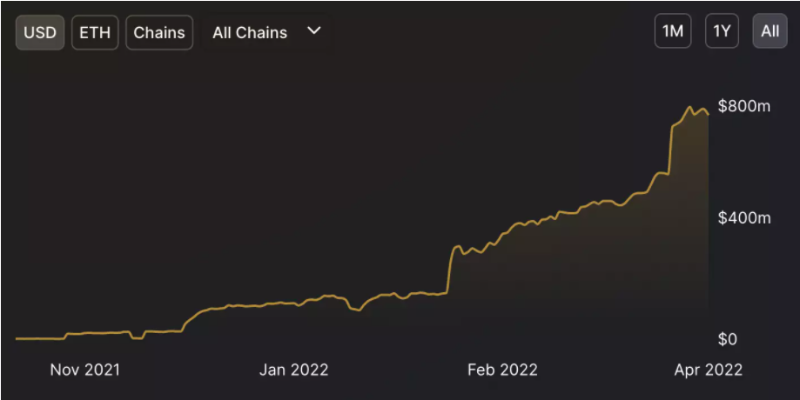
According to DeFiLlama, cBridge currently holds approximately $737 million in total value locked (TVL), enabling seamless asset transfers of 99 tokens across 29 different chains.
How has cBridge managed to maintain perfect security?
Unlike most third-party bridges, cBridge’s security is backed by the State Guardian Network (SGN)—a Tendermint-based (PoS) blockchain that provides Layer1-level security for the entire cross-chain process.
To become an SGN validator, one must stake CELR tokens. Validators and delegators earn rewards but also face slashing risks—if a validator fails or acts maliciously, part or all of the delegated tokens may be slashed according to protocol rules. The more CELR staked, the more secure the network becomes.
But what about extreme scenarios—such as if all validators turn malicious?
Founder Mo Dong said, “In practice, Celer has added an additional security mechanism similar to Roll-up systems. For users crossing chains, Celer offers a two-step verification process: even if most of the SGN is compromised, if the original asset hasn’t actually been sent, Celer can interrupt the minting process on the destination chain using an intermediate delay.”
This “intermediate delay” is a dual safeguard specifically designed by Celer. Cross-chain dApps can make different trade-offs during this delay window. Celer aims to prevent situations where a single transaction drains an entire liquidity pool, thereby reducing systemic risks for the bridge.
Additionally, at the application layer, cBridge implements multiple security measures: a risk control system (monitoring overall bridge liquidity, asset status, and changes), rate limiting (capping transfer amounts per unit time, with excess delayed), 24/7 monitoring, and a $2 million bug bounty program.
In crypto’s dark forest, absolute security doesn’t exist—and no one dares claim it. But the relentless pursuit of ‘absolute security’ never stops.
Celer IM: Enabling a Thriving Multi-Chain Civilization
If Celer focused on L2 state channels was version 1.0, then launching cBridge marked its 2.0 era. Now, with the official release of the Celer Inter-chain Messaging framework (Celer IM), Celer enters version 3.0—no longer just a single cross-chain app, but a full-fledged cross-chain ecosystem.
Celer IM is a plug-and-play tool and infrastructure for developers. They don’t need to modify any existing contract code—just add a simple smart contract plugin to transform their DApp into a native cross-chain DApp.
For example, with Celer IM, SushiSwap can quickly become a cross-chain DEX—users can convert ETH on Arbitrum into BNB on BSC with a single click.
Behind the scenes, Celer IM automatically completes these steps:
Swap ETH on Arbitrum for USDT on SushiSwap
Bridge USDT from Arbitrum to BSC
Swap bridged USDT on BSC for BNB
By simplifying cross-chain composability, Celer IM enables a thriving ecosystem built upon itself—cBridge can be seen as the asset bridge running atop Celer IM.
On April 26, when Celer IM officially launched on mainnet, nine initial partners were announced—all leveraging Celer IM for cross-chain capabilities:
ChainHop: A composable cross-chain liquidity protocol built on Celer IM, allowing users to seamlessly convert asset X on chain A into asset Y on chain B with one click.
Rubic: A cross-chain DEX protocol integrating Celer IM to enable one-click cross-chain asset transfers.
Swing: A cross-chain interoperability infrastructure integrating Celer IM to simplify cross-chain transactions. Users can perform one-click cross-chain operations within a single interface without manually switching chains.
SynFutures: A decentralized derivatives protocol integrating Celer IM to support multi-chain futures trading.
Ooki: A decentralized margin trading and lending platform integrating Celer IM to bridge fees across all its blockchain deployments.
Aperture: A cross-chain, community-driven DeFi strategy marketplace. By integrating Celer IM, users from any blockchain can access supported DeFi strategies with one click.
Solace: A decentralized insurance protocol allowing users to insure positions across over 180 DeFi protocols with a single policy, now integrating Celer IM for cross-chain insurance features.
FutureSwap: An AMM-based decentralized trading protocol integrating Celer IM to enable cross-chain governance.
Mystiko Network: A foundational web3 layer providing connectivity and privacy protection for blockchain data, transactions, and applications. Currently integrating Celer IM to prevent data tracking and ensure user privacy.
With Celer IM, fragmented liquidity across the multi-chain world is seamlessly connected.
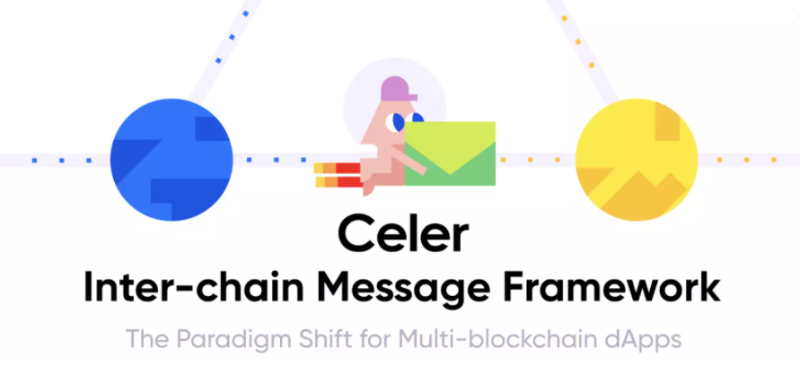
As founder Mo Dong put it: “Cross-chain bridges are like building roads so people can drive between cities. Celer IM creates a logistics network—so if you love Jinhua ham, you don’t need to go to Jinhua; you can just order it on Taobao. Celer IM turns our fragmented multi-chain world into a global village.”
Dragonfly Capital partner Haseeb Qureshi likens public blockchains to nations. In that narrative, Celer IM functions like multinational logistics and business conglomerates connecting countries—building roads, bridges, and transoceanic shipping networks. Thanks to these connections, commercial civilizations across the multi-chain world can flourish.
From this perspective, Celer sits between Layer1 and dApps—a multi-chain infrastructure layer, a cross-chain operating system.
Value Capture
How does the Celer token capture value from this global, Layer1.5-like logistics network?
The key lies in the State Guardian Network (SGN)—the central command center for global cross-chain logistics. Both cBridge and Celer IM rely on SGN’s PoS security, fast confirmations, and low costs.
For any PoS chain, security scales directly with the amount of token staked. In return for securing the network, CELR stakers earn staking rewards.
But that’s not all.
With the launch of SGN 2.0, CELR stakers will also receive a share of transaction fees generated by cross-chain activity on cBridge and from multi-chain dApps built using Celer IM.
For cBridge, SGN’s value capture depends on the volume processed in each transaction within its liquidity pools. For Celer IM, it’s based on the size of cross-chain messages.
The entire Celer ecosystem operates like a massive flywheel. During early stages, both cBridge and Celer IM require strong initial momentum. But once spinning, it creates a self-reinforcing upward spiral: more apps → more users → more value captured → more developers attracted—and it accelerates faster and faster!
The multi-chain ecosystem awaits—let the Celer flywheel begin to spin!
Join TechFlow official community to stay tuned
Telegram:https://t.me/TechFlowDaily
X (Twitter):https://x.com/TechFlowPost
X (Twitter) EN:https://x.com/BlockFlow_News






