








Crypto OG tells you how to conduct fundamental analysis?
TechFlow Selected TechFlow Selected
Crypto OG tells you how to conduct fundamental analysis?
I hope this article can help you avoid some losses and spare you unnecessary detours. Below is my approach to fundamental analysis.
 Navigating Web3 tides with focused insights
Written by: Alpha Please
Translated by: TechFlow intern
We've all bought tokens at stupid valuations—no one is immune. It's a tuition fee you must pay to participate in the cryptocurrency space. Over the years, I've become deeply immersed in this research, which has made me a better crypto investor. In this article, I hope to help you avoid some losses and spare you unnecessary detours. Below is my approach to fundamental analysis.

Fundamental analysis aims to determine an asset’s intrinsic value—an objective measure of its worth. This is how you build long-term conviction in an asset. Strong FA helps you endure the volatility of crypto markets over the long term. I’ll walk you through my personal investment process and how I do it. This framework helped me establish early conviction in projects like ETH, AVAX, LUNA, LINK, and more recently POKT, MAGIC, and GMX.
I divide fundamental analysis into three categories: 1. Project Analysis 2. Financial Analysis 3. On-Chain Analysis.
1. Project Analysis
This is where I usually begin. The whitepaper is the most critical part of any project—I always read it first. I'm amazed by how many people invest large sums into crypto projects without even reading the whitepaper.
A good whitepaper should outline:
– The problem being solved
– Their technical solution
– Token utility
– Tokenomics
– Background information on the team
Just reading the whitepaper can lay a solid foundation for your further analysis.
A strong whitepaper makes you want to dive deeper into the project. Investigate the team thoroughly—look into their academic credentials and check their LinkedIn profiles to understand their experience.
You need to assess whether the team is committed to long-term development or just building an MVP (sometimes they don't even get that far) with you as their exit liquidity. These are the people responsible for delivering the project—they must have enough passion and dedication.
For anonymous teams, you can still investigate their online presence. What have they written on social media or elsewhere?
If they’re developers, review their GitHub contributions. DM them and see if they’re willing to answer questions. Scrutinize the roadmap carefully. Look at timelines to evaluate whether now is the right time to deploy capital. If a project hasn’t delivered its core product within two years, it might not be urgent to invest. Use the roadmap to assess whether the team has met past milestones. Transparency here is crucial.
Next comes competitor analysis.
Who are the industry pioneers? How does market cap compare? What advantages does this protocol have over competitors? Have they successfully attracted users? Why would users choose this project over competing solutions?
Then comes social media analysis
How does the project communicate on social media? Is their marketing effective? Have they cultivated a strong community willing to help promote the project? Are there many social events related to the project? Join Discord and Telegram groups to get a feel for the community atmosphere. Are members engaging in deep discussions about the project's complexities, or merely generating baseless FOMO? Does the community create great memes? Memes indicate a passionate and vibrant community and help spread the project’s narrative.
Crypto Twitter (CT) is both one of the best and worst places for project analysis. Well-researched threads are always worth reading—they may reveal key details you missed in your own research.
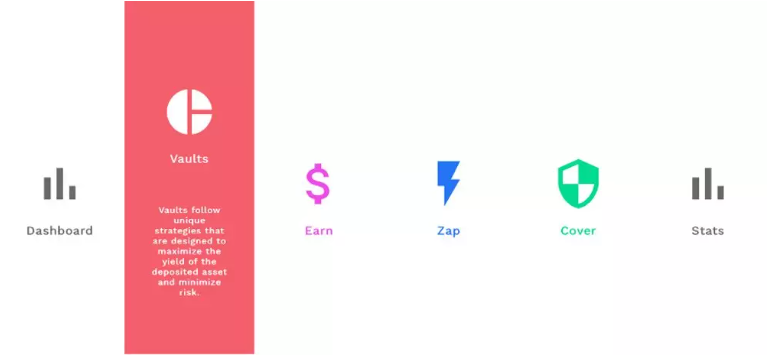
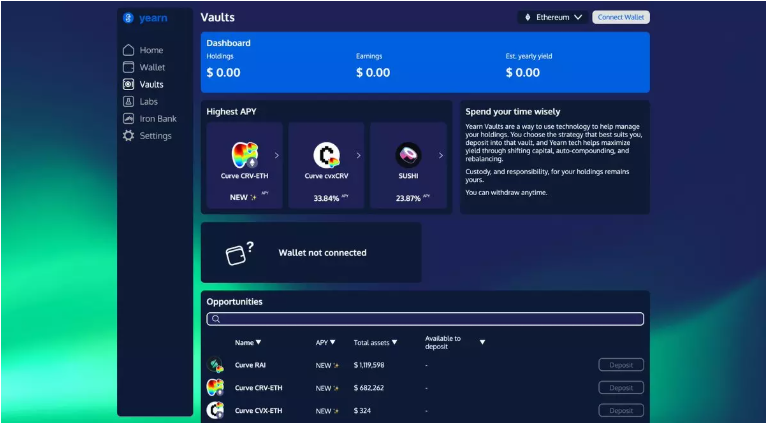
What about UI/UX? This seems subjective, but you must assess whether it provides a good user experience. Is the interface intuitive and easy to use, without requiring users to Google “how to use _______”?
Yearn in 2020 VS Yearn in 2022
2. Financial Analysis
The second layer involves focusing on financial metrics. When evaluating whether something is fairly valued, you should look at the project’s market cap and fully diluted valuation (FDV)—this should go without saying. Yet, many retail investors still fail to do so.
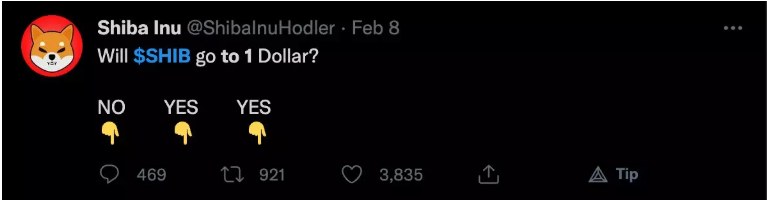
In 2021, many retail investors bought Shiba near its all-time high, shouting “Price will reach $1!” because they didn’t understand market cap. For reference, Shiba currently has a circulating market cap of $16 billion at a price of $0.00003025.
Everyone loves to say FDV is just a bull-market meme—sometimes it is, but sometimes it really isn’t. Look at Solana dApps—they offer valuable lessons on FDV. If a token’s FDV is drastically out of sync with current conditions, don’t jump in. Mimicking Solana dApps’ inflated FDVs didn’t end well.
Market cap can give misleading valuations if you ignore liquidity. Liquidity measures how easily an asset can be bought or sold.
On which exchanges is the asset listed, or what is its DEX liquidity like?
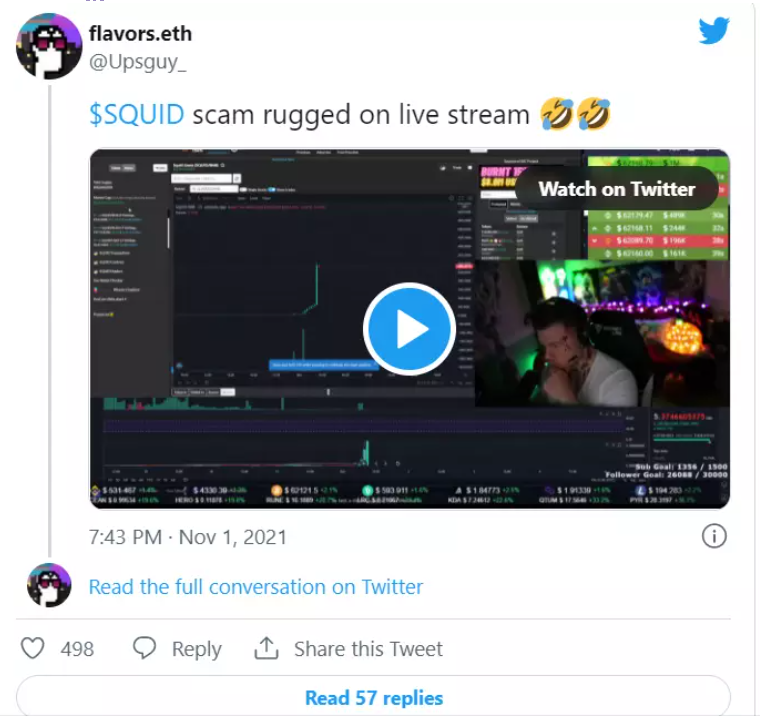
Assets with poor liquidity can be extremely dangerous—if large holders decide to cash out, prices could swing dramatically.
Take Squid, for example:
Tokenomics, tokenomics, tokenomics! Say it three times. Tokenomics refers to the economics of token supply and demand.
Supply and demand drive cryptocurrency value and price. The higher the demand relative to supply, the higher the price.
Does the product require the token? What is its utility? More real-world use cases mean more users and greater demand. Reading the whitepaper may provide some answers about token usage.
In some cases, projects may have changed from their original whitepaper. Check blogs and search Twitter to see if anyone has written about updated tokenomics. Sometimes, it's hard to find information on token release schedules, allocations, and emission rates. This is often a red flag. Not knowing potential supply dumps from the team could lead to significant short- and mid-term losses. You need to understand a project’s annual inflation rate. Newly released tokens entering circulation must be absorbed by the market.
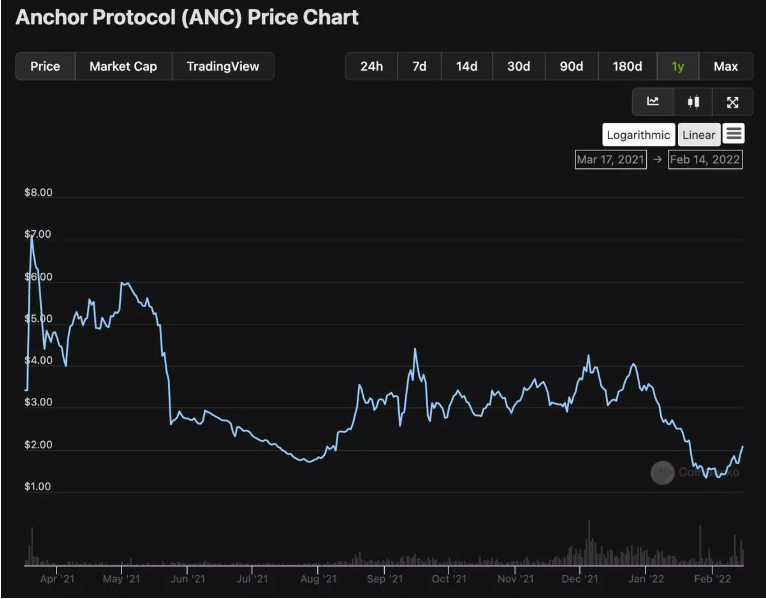
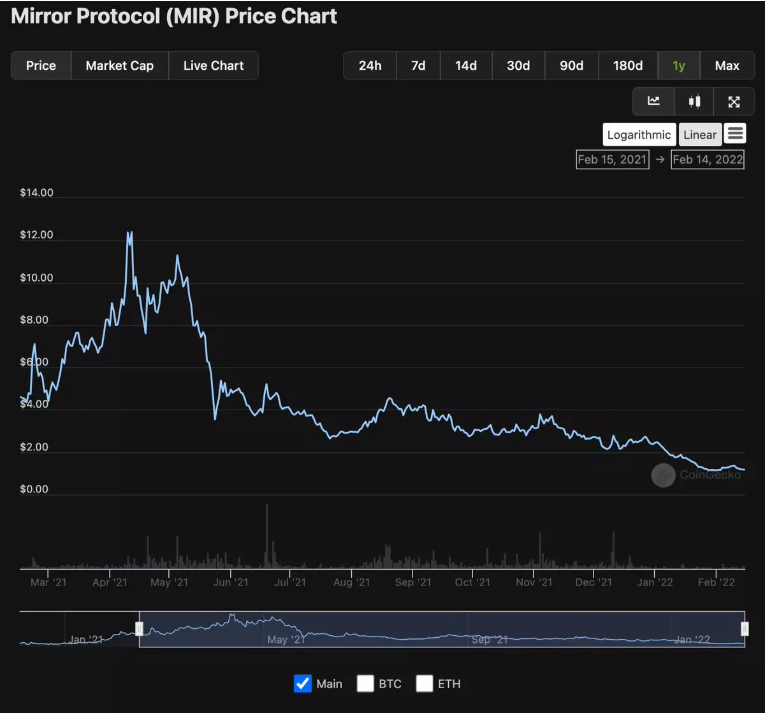
If stakers earn large amounts of tokens, there may be substantial selling pressure. $MIR and $ANC had inflation rates around 200% in their first year, as developers aimed to bootstrap dApps and attract liquidity—hence their prices consistently trended downward in the short term.
This doesn’t apply to projects without products, but it does matter for live Layer 1s, dApps, and infrastructure.
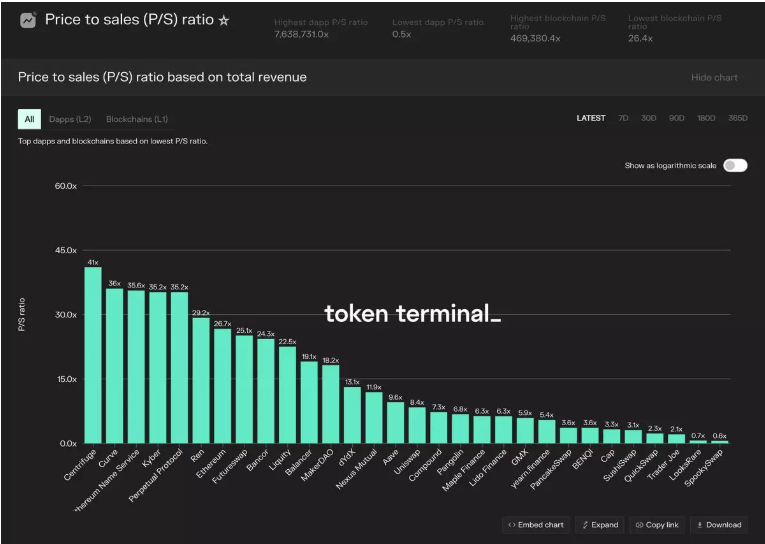
You can use TokenTerminal to access:
– Protocol revenue
– P/E and P/S ratios for protocols and dApps
Then, you can apply more traditional stock analysis tools to objectively assess whether the asset is overvalued or undervalued based on current revenue. If a protocol clearly has massive profit potential, shows strong growth, and has a very low P/S ratio, it could be a solid long-term investment.
You can even use these numbers to help build a discounted cash flow (DCF) model. This is a popular stock valuation method that discounts future cash flows a company can generate to determine its present value. Two key inputs matter—the expected growth rate and the discount rate. By adjusting these variables, you can estimate cash flows and derive a fair valuation.
Here’s an example of a DCF model attempting to calculate the minimum fair price for $1 worth of ETH.

The model suggests a value of $10,200 per ETH, indicating Ethereum is severely undervalued.
Clearly, this model doesn’t account for future changes to Ethereum or how L2s might affect demand—but it remains another useful tool when assessing assets.
3. On-Chain Analysis
Finally, I try to uncover what’s happening on-chain.
Platforms like Glassnode, Nansen, and Dune Analytics can tell you:
– Number of addresses and active addresses
– Number of addresses holding above a certain balance
– Ratio of long-term holders vs short-term holders
– Exchange supply
– Whale wallet activity
...
I always try to find reasons why now might *not* be a good time to buy. For instance, if most of the circulating supply has recently moved to exchanges, it could signal that people are preparing to sell.
Now you have a wealth of information about the project and its token, which can help you decide whether it’s a sound long-term investment. I compile all this data into documents and spreadsheets so everything is in one place for future reference. Don’t try to keep all this in your head—write it down. You’ll want to revisit your investment thesis at different times, especially during sharp price drops.
I also want to emphasize: I spend a lot of time researching projects only to decide *not* to invest.
Join TechFlow official community to stay tuned
Telegram:https://t.me/TechFlowDaily
X (Twitter):https://x.com/TechFlowPost
X (Twitter) EN:https://x.com/BlockFlow_News
 alpha please






