








Ansem's Insight: The Upcoming Recovery of the Crypto Market in Q2 and Investment Outlook
TechFlow Selected TechFlow Selected
Ansem's Insight: The Upcoming Recovery of the Crypto Market in Q2 and Investment Outlook
This was the first stage in Bitcoin's history where it demonstrated its value to the world, and Bitcoin's relative advantages were particularly important here.
 Navigating Web3 tides with focused insights
Written by: Ansem
Translated by: TechFlow Intern
First, let me clarify—I’m not a financial advisor, and this is not financial advice. It’s merely the textual form of thoughts that occupy my mind from spending too much time online with friends deeply researching the strange microcosm of cryptocurrency.
I'm not good at macro analysis of most things. If you're like me, then you probably don't put the Russia-Ukraine conflict at the top of your analytical list. When I sold some of my precious tokens in November, it was because I saw risk on the charts—not because I had any insight into fundamental causes. Incorporating macro analysis into evaluating crypto markets is definitely a weakness for me, one I plan to work on improving.
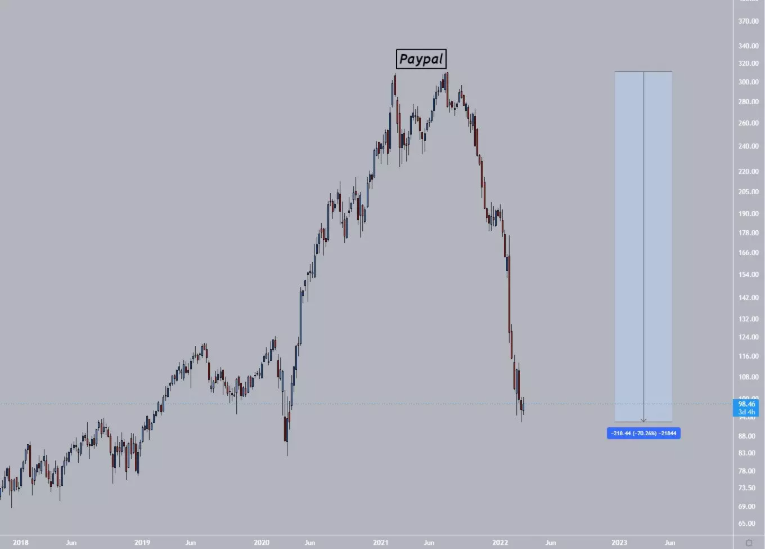
That said, aside from a few exceptions, most first quarters have been tough for the crypto market. But this time, beyond just crypto, other markets are also trending downward. We’re seeing many tech and growth stocks hit hard due to worsening global geopolitical risks and macro conditions, while commodities and war-related equities perform well. The technical charts of these large companies employing thousands look eerily similar to the rug-pull collapses we saw during the first DeFi Summer in 2020. My prayers go out to those who entered short-term positions heading into 2022.
This is Bitcoin’s first stage on a global platform to demonstrate its value, where its relative strength matters especially.
“In 2022, we’ll see whether certain sectors within the crypto bull cycle continue experiencing bear markets, or if we’ll get another full-market -90% drawdown like in previous cycles. Traders’ challenge lies in identifying mispricings in today’s market, exploiting them, and spotting new trends before the crowd catches on.”—Someone from Brooklyn said before a New York night prelim.
Given this context, if investor sentiment toward macro conditions improves, I expect cryptocurrencies to lead the recovery. Throughout the quarter, we’ve been fluctuating between 33k–45k. In my view, Bitcoin’s 30k–60k range represents multi-year re-accumulation. The next trend will resemble most closely its late-2020 rise to the prior 2017 highs—the question is how long this sideways movement will last. Many altcoins have dropped over 80% from their Q4 peaks; some have retraced entirely back to their late-2020 bull run starting points, while others are recovering significantly faster. I know full well that being bullish here isn’t popular, just as being bearish in November wasn’t welcome. I believe we’ve already seen the peak of fear and uncertainty for the first half of this year. I anticipate these accumulation ranges breaking upward in Q2, led by BTC and several strong-performing altcoins.
Q1 Review
Macro
From my brief study of macro analysis, I’ve learned four main events that would negatively impact markets if they occur:
-
1. Escalation of the Russia-Ukraine situation involving other NATO members
-
2. Faster-than-expected rate hikes by the Federal Reserve
-
3. Putin deciding nuclear weapons are a good idea
-
4. China actively entering the stage with imperial ambitions (perhaps referring to reunification with Taiwan)
In my view, most of these scenarios seem unlikely. We’re more likely to keep dealing with the existing Russia-Ukraine conflict plus the current Fed QT (Quantitative Tightening) schedule. Again, I’m no expert here and have been reading analyses from people far more knowledgeable than myself. For this reason, I primarily rely on price charts.
Bitcoin
Bitcoin is going through its first midlife crisis. This so-called safe-haven digital gold, which has mostly traded alongside high-growth names as a risk asset throughout its life, is now under intense scrutiny during a period of high inflation and global conflict. How will it perform? Given BTC’s history of parabolic rallies followed by sharp corrections, I assert it won’t trade as a risk asset in the near future. In all prior BTC cycles, we saw parabolic peaks followed by lower highs and lower lows until nearing the next halving, restarting the cycle. By contrast, in this cycle, Bitcoin traded near its February 2021 highs for months, sold off in May, reaccumulated over summer, and retested early-year highs in Q4 2021. We've formed a 400+ day trading range here, unlike 2018’s pattern of consistently declining peaks.
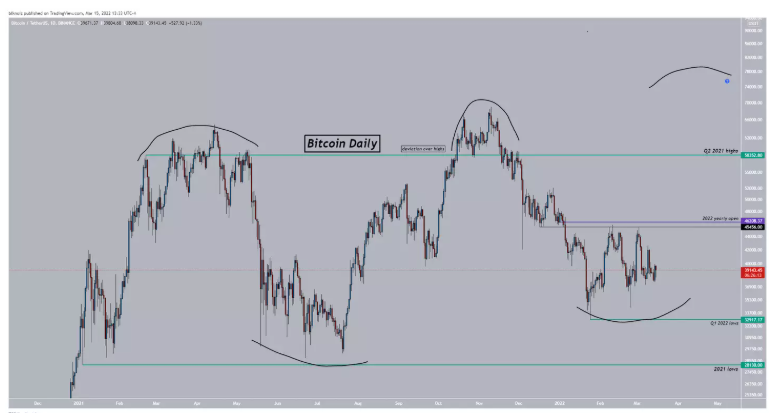
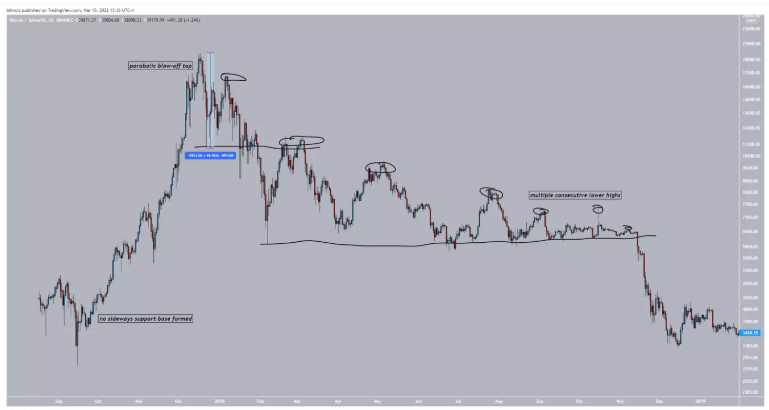
If Bitcoin fails to perform well under the current macro backdrop, then its intended purpose as an asset class has already failed—which is why I believe the current range is unlikely to break downward. I believe there are mainly two types of people buying/trading BTC: one group trades it against other high-risk assets, while the other accumulates long-term for situations exactly like the present.
The latter group grows daily, while the former continues shrinking. For those seeking higher risk exposure, there are far better opportunities elsewhere in crypto. As more capital enters the space, I expect new investors to diversify their strategies accordingly. Being bullish on gold while bearish on Bitcoin is absurd—I have strong conviction on this point.
Ethereum
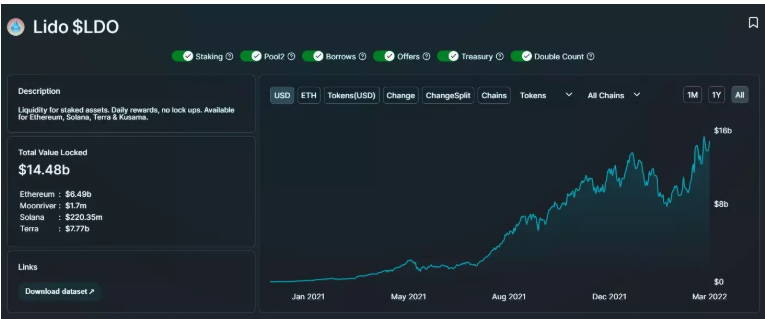
When market risk rises, it’s easy to find alternatives outperforming ETH, and when markets fall, BTC tends to hold up better than Ethereum. For staking, I see Lido as strongest—a liquid staking solution offering significant benefits to users wanting to participate in ETH staking while keeping liquidity usable across other parts of DeFi. They recently raised a round led by a16z, stating they used the service to stake their own ETH for acquisitions. Lido is well-positioned to serve both institutional and retail investors and can support additional L1s since they’re multi-chain.
Crypto Market
Despite prices not reflecting it, capital inflows and mindshare into crypto haven’t slowed over recent months. We’ve seen numerous new funds emerge, native crypto fundraising, partnerships between traditional firms and crypto natives, NFT collaborations, and more. Notable developments include:
Consensus raised $450M at a $7B valuation
Stripe expanded support for crypto businesses
Immutable raised $200M at a $2.5B valuation
FC Barcelona plans to launch its own cryptocurrency and NFTs
Spartan Group announced a $200M metaverse fund
Bain Capital Ventures launched a $560M crypto fund
Alchemy raised $200M at a $10.2B valuation
FTX raised $400M
Sequoia Capital launched a $600M crypto fund
Honestly, there’s too much to keep track of—but clearly, many players are now paying attention to the crypto market.
Other Highlights
-
Strange Clans launched the first NFT marketplace on JUNO
-
Aurory released whitepaper + game design
-
Yuga Labs (BAYC) acquired rights to Punks & Meebits, allowing users to control IP
Q2 2022 Outlook
My main focus will be the Cosmos ecosystem and BTC’s recovery. I’ve been taking profits from strong performers like OSMO and JUNO and reallocating into LUNA and RUNE, while cutting exposure to underperformers—though I may stay within this ecosystem for the rest of the year.
To me, the final phase of a multi-chain world looks like application-specific blockchains coexisting seamlessly with easy interoperability between them. We’ve barely scratched the surface of what IBC could enable. I’m excited to see how cross-chain accounts and IBC-enabled smart contracts function once implemented. As the crypto market matures, we’ll see fewer useless tokens attached to applications that don’t need them, and more tokens whose demand is tightly linked to overall protocol growth.
This quarter, all top-performing protocols shared strong tokenomics—this is no coincidence. I’ve consolidated much of my infrastructure into POKT and Genesys Go, both of which declined sharply over recent months. But if markets rebound, I expect solid performance. For GameFi, I remain bullish on DFK—the development pace hasn’t slowed during the downtrend. Bigger moves lie ahead once in-game guilds, land, PvP, and its first cross-chain expansion to an Avalanche subnet go live. I’m also waiting for Strange Clans’ second NFT edition and Aurory’s beta release. Treeverse should launch later this year.
Power in Cosmos: Osmo, Juno, LUNAtics, and THORchads
If you’ve been heavily positioned in the Cosmos ecosystem, you haven’t experienced the brutal selloffs seen in other sectors. Osmo and Juno—two major Cosmos alts besides Atom—have mostly trended upward, while other alts fell 80–90% from all-time highs.
As the primary DEX in the Cosmos ecosystem, Osmo benefits from overall IBC growth, especially given we’re still in the early stages of Cosmos DeFi. Unlike other layer 1 DEXs running alongside many apps, Osmo is both its own chain and flagship app, freeing it from constraints faced by typical AMMs. Two key innovations set it apart—it’s an appchain purpose-built for this use case:
-
1. Customizable AMMs and sovereign liquidity pools
-
2. Cross-chain functionality with IBC assets
Osmosis Vision
Osmo’s recently launched superfluid staking is also novel, enabling users to stake LP assets while providing liquidity. Osmosis’ dev team and community are strong, aligned with the core vision of Cosmos Hub and IBC cross-chain interoperability.
Juno positions itself as the premier CosmWasm L1. Most of its supply was airdropped to Atom stakers, with a core philosophy centered around being a community-driven protocol focused on cross-chain smart contracts. Compared to most other L1s, Juno remains significantly undervalued. If it succeeds as the first destination for innovative dApps beyond Luna, it has substantial momentum and upside potential. I really disliked the recent Proposal 16 governance vote suggesting removal of funds from an account due to receiving multiple staking rewards. I think it sets a bad precedent to restrict individual users this way, and hope it doesn’t pass or gets rewritten.
From Q1 writings: “Terra Luna is the only ecosystem in crypto capable of directly staking stablecoins while simultaneously growing a Layer 1 smart contract system. For this reason, LUNA is my favorite among all major Layer 1s entering 2022. I bet on their ecosystem growth, stablecoin adoption, and broader IBC expansion propelling them past competitors.”
Anchor was one of the few apps in Q1 to significantly increase TVL, reaching $15.7B—just ~$3B behind Aave. With new assets like sAvax being added and Anchor V2 launching, this uptrend should continue.
The Luna Foundation Guard’s decision to purchase Bitcoin to bolster reserves backing the $UST stablecoin will make Terra USD more resilient during market sell-offs and boost confidence in the ecosystem. Much of this bootstrap phase involves retail and institutional investors building trust in their stablecoin. They’ve gained strong backing from big names like Jump, Alameda, and 3AC, and $UST maintained its peg even during peak market volatility. As their treasury grows and $UST adoption increases, depeg risk diminishes further. Risk assessment systems like Kujira and Risk Harbor are also being implemented—no bets against Do Kwon & Co this year. Since UST growth directly reduces LUNA supply, continued expansion significantly impacts its price.
Beyond Terra USD growth, DeFi on Terra is also rebounding. Astroport, Terra’s main DEX, consistently sees over $200M in daily volume—rivaling Osmosis in liquidity. Currently, most volume comes from Luna-UST and bLuna-Luna pairs, but as more dApps launch and gain popularity, Astro should see increased activity. Other recent innovations in the Terra ecosystem face little competition from existing DeFi protocols, making it interesting to watch how much market share they capture in coming months.
Thorchain (RUNE) was one of my favorite plays alongside Solana in 2021. After several hacks last summer, it fell out of favor over the past year—but builders kept working steadily behind the scenes. Rune’s core focus is a cross-chain DEX enabling native swaps across different chains. Thorchain requires node operators to bond three times more RUNE than the external assets added as liquidity, meaning RUNE demand scales with TVL growth inside Thorchain. What fascinates me most about the Rune community is genuine interest from Bitcoiners, who typically show little enthusiasm for ETH or DeFi. Gaining traction among this hodler demographic would be highly bullish for Thorchain’s future. Currently, vast amounts of BTC sit idle without yield—this should be one of the most compelling value propositions for passive, low-risk yield seekers. Past security issues mean rebuilding investor trust will be crucial.
Recently, the launch of Thor Synths and upcoming Luna integration have become key catalysts driving conversation. With Luna being a top performer, combined with connections between BTC holders → Luna holders, this links decentralized hard money with the most popular decentralized stablecoin. In short, Thor Synths allow users to deposit Rune and receive synthetic versions of desired assets already present on Thorchain as Rune-paired LPs. Since these assets exist natively on the Thorchain blockchain, Synth holders enjoy lower fees and faster confirmations compared to native swaps, while LP holders benefit from increased revenue as synth holders forfeit their LP shares to gain targeted asset exposure. These are the first components of Rune’s ThorFi suite, which will eventually include lending and single-sided savings accounts. Rune’s tokenomics rival Luna’s, positioning both protocols well to keep drawing liquidity away from the rest of DeFi.
Yield and Speculative Premium in Metaverse: GameFi vs. DeFi
Where does yield in crypto come from, and who are the users of these platforms? Yield farming has long been a top activity for new DeFi users, appearing in many forms—all of which tend to result in poor price action for the associated tokens being farmed. One question I’ve been pondering: Which designs can prevent this trend, or do all DeFi apps using token emissions to incentivize users inevitably face this issue?
Recently, with the rise of GameFi, I believe we’ve seen a new method for valuing these tokens, as games introduce a fresh user base to protocols. To compare GameFi with DeFi, let’s first examine where yield comes from in regular DeFi apps like DEXs or lending platforms.
-
1. Token emissions
-
2. Speculators
-
3. Borrowers using the protocol
Many DeFi applications are inherently inflationary, rewarding users in their native tokens—so part of the yield comes from these emissions. Additionally, speculators constantly buy/sell these tokens without necessarily using the platforms. While this doesn’t directly affect APR, it impacts ROI from yield farming. Early adopters benefit from more speculators betting on the project’s future success. Finally, borrowers seeking leverage pay variable rates to lenders. On DEXs, liquidity provider fees replace borrower interest as the yield source.
If a game economy is designed well enough to attract players beyond core protocol users, it adds a new layer of demand previously absent. In Axie, a completely independent user base plays who had no prior connection to crypto—but the system design doesn’t necessarily ensure every user positively impacts demand for the protocol token.
Most Axie scholars renting NFTs from guilds or larger players immediately dump their in-game rewards—that’s why the SLP chart spends most of its time trending down.
-
1. Token emissions
-
2. Speculators
-
3. Borrowers [lending protocols] or LP fees [DEXs]
-
4. Players
Competitive players invested in gameplay are incentivized to buy and use tokens within the game—an incentive never present for pure DeFi products. We haven’t yet seen a game engaging enough to sustain long-term internal players, but if a game achieves such an ecosystem, users could enhance returns simply by playing actively.
DeFi Kingdoms (DFK) is the closest example I’ve seen—partly why I remain long-term bullish on DFK. Within the DFK ecosystem, consider pricing differences between regular heroes in taverns versus higher-tier heroes. Currently, a common hero floor is ~35 gems, while a 10/10 summon hero floors around 95 gems. Level 1 heroes floor ~35 gems, while level 6 heroes floor ~69 gems.
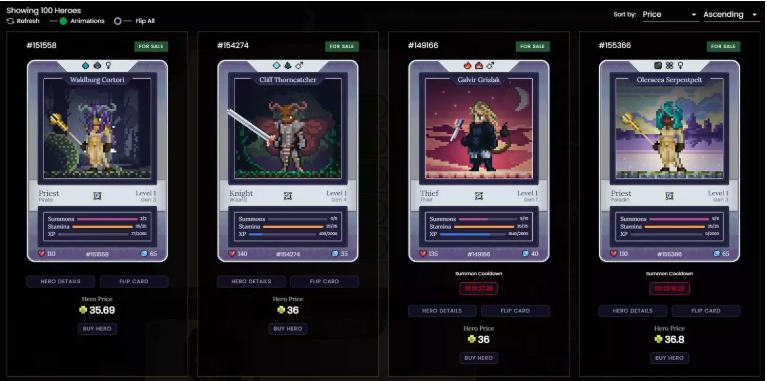
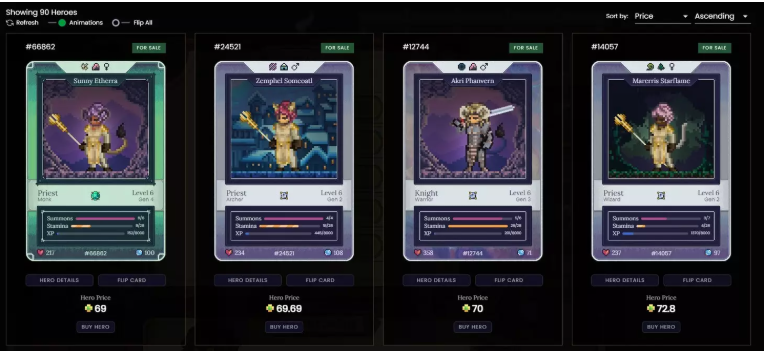
Over recent months, this represented roughly 100% return. I’ve said before that I believe DFK’s best returns will come from upgrading your heroes and optimizing summoning strategy—because later, if people want to catch up, they won’t be able to buy the best in-game heroes without paying market premiums.
As stronger incentives roll out for more powerful in-game heroes, users will earn greater profits either from yield farming in liquidity pools or from increased chances of obtaining rare items through quests. These price gaps should widen further. One advantage of playing DFK is that the game’s complexity remains largely hidden to outsiders unfamiliar with actively studying the ecosystem and its mechanics.
In both DeFi and GameFi protocols, speculative premium always leads product development. Due to how momentum drives crypto and how much external capital floods in during bull markets, valuations often exceed teams’ milestone achievements. It’s difficult to determine how much premium currently exists in your alt holdings, and what fair value these projects might settle at once pure speculators exit.
Over recent months, we’ve seen retail exit most altcoin markets—evidenced by extremely low Ethereum gas fees and lack of derivatives premium.
Diversification of Crypto Assets and Varying Correlations
I’ve been highlighting games because I believe the current environment differs greatly from previous years’ altcoin mania. Some might point to the ridiculous Doge season in Q2 2021 as counter-evidence, but I don’t think that’s a fair comparison. Fundamental analysis in crypto should include participant count. Moreover, memetic value and public enthusiasm are powerful momentum indicators (both up and down).
So let’s examine some notable alts over the past quarter and last year, assessing their varying degrees of rekt status. It’s important to identify which are most resilient and which may recover fastest.
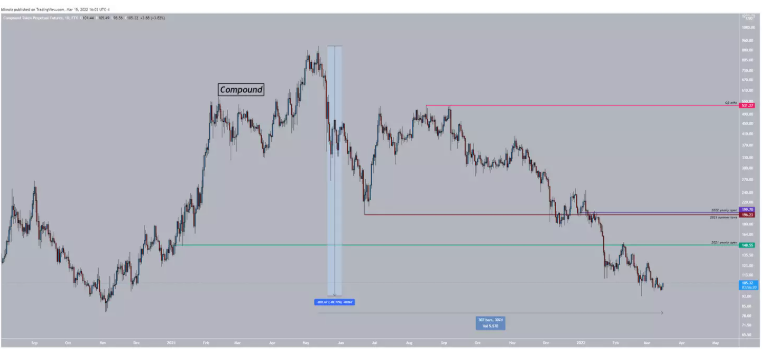
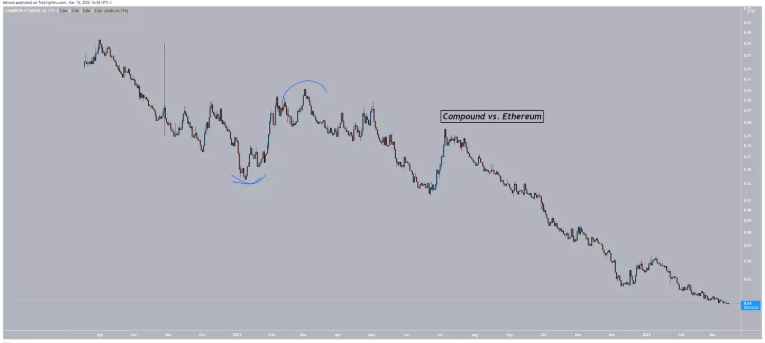
Super Rekt: Compound
-
307 days since ATH
-
Down 89.9% from peak
-
COMP and many other “DeFi blue chips” followed similar price patterns after initial surges in early Q1 2021. More accurately, most peaked in ETH terms around August 2020—meaning nearly two years of bear market
-
Given BTC and ETH haven’t made new lows for months, calling for another -90% drop seems unjustified. Still, these aren’t the first tokens I’d buy here
-
Interestingly, after hitting ATH in 2017, ETH took ~330 days to find its bottom, then consolidated before beginning a new trend
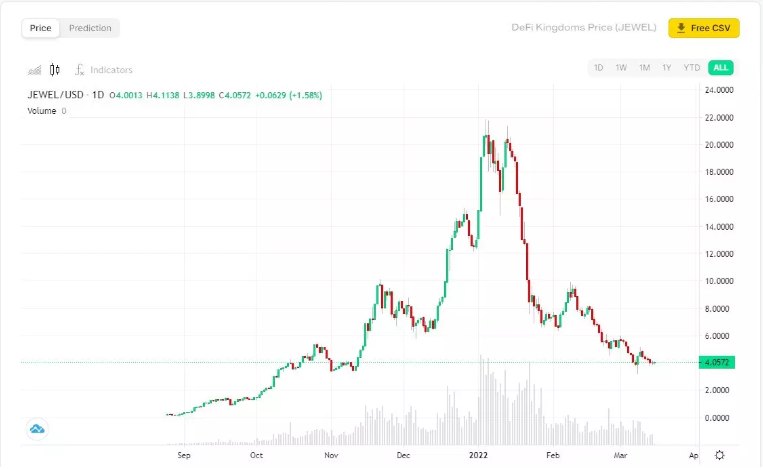
Rekt: DeFi Kingdoms
-
62 days since ATH
-
Down 85% from peak, down 71% from year-open
-
Jewel and many other metaverse tokens were crushed, though not as badly as early DeFi names, since these didn’t spend nearly as long in downtrends during Q4 as they did outperforming earlier
-
No sign of recovery strength yet in metaverse. DFK has a catalyst with Eom launching Crystalvale, but we’ll see how markets react if we take that risk
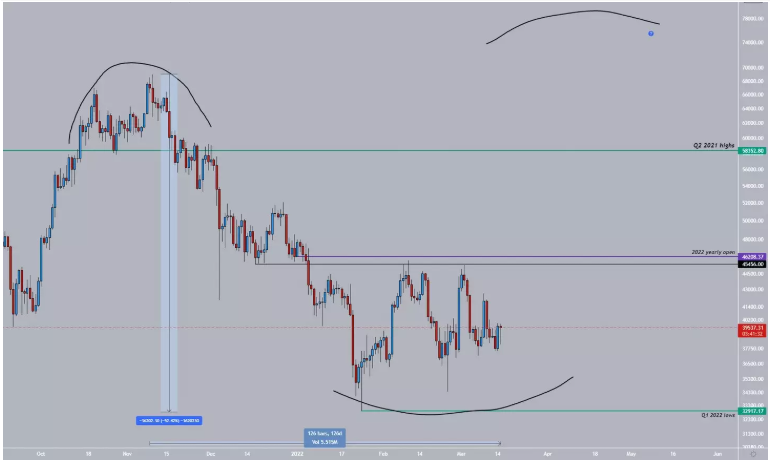
Slightly Rekt: BTC
-
126 days since ATH
-
Down 52.4% from peak
-
Bitcoin declined like many other assets, but still performed better than ~90% of alts—and even some tech stocks
-
If we get a bounce this quarter, BTC appears poised to lead the recovery.
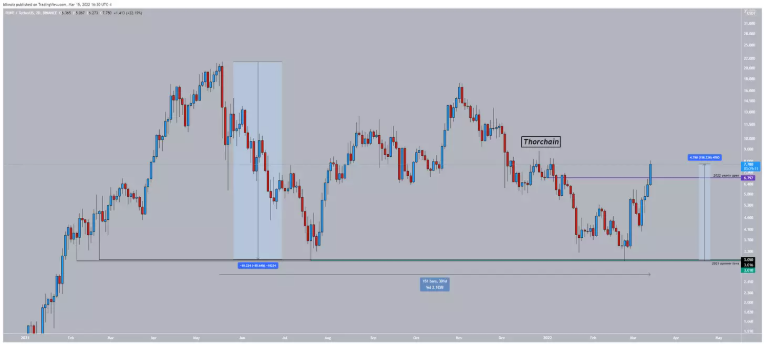
Rekt But Recovering: Thorchain
-
301 days since ATH
-
Down 85% from peak, but up ~150% from bottom
-
Starting summer 2021, another group of alts tested their lows, some harder to bounce back than others. RUNE has fundamental catalysts helping it now—timing seems favorable
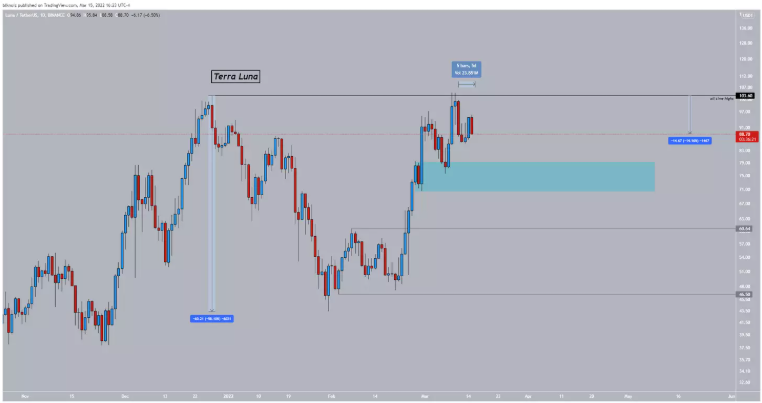
Near ATH: Luna
-
5 days since ATH
-
Down -58% from peak, now down 14%
-
LUNA led the rebound in recent price action and showed dominant strength among top 10 alts, surpassing Solana in market cap
-
If sustained momentum continues, this outperformance should persist—LUNA also led the recovery post-Axie last summer
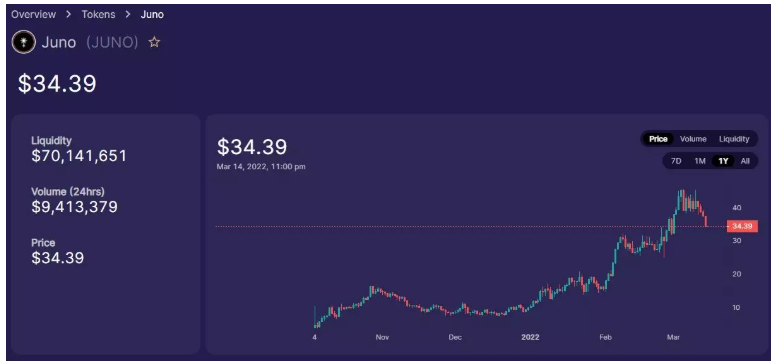
Not Rekt: Juno
-
10 days since ATH
-
Down 22% from peak
-
One of the few alts trending upward for most of the year
If you’re a passive investor who took risk in Q4, I imagine you have two clear trigger points on BTC:
-
1. Retest the year-open price around $4,600,
-
2. Surrender to the ~$2,800 summer 2021 low.
Join TechFlow official community to stay tuned
Telegram:https://t.me/TechFlowDaily
X (Twitter):https://x.com/TechFlowPost
X (Twitter) EN:https://x.com/BlockFlow_News
 @blknoiz06






