Quel type de dynamique concurrentielle s'établira à l'avenir entre le Zk Rollup, enjeu majeur du chiffrement, et l'Op Rollup ?
TechFlow SélectionTechFlow Sélection
Quel type de dynamique concurrentielle s'établira à l'avenir entre le Zk Rollup, enjeu majeur du chiffrement, et l'Op Rollup ?
Après le lancement des Optimistic Rollup, les Zk Rollup entrent maintenant dans leur printemps.
 Dédié à des analyses Web3 approfondies
Production : TechFlow Research Institute
Author : Yu Zhong Kuang Shui
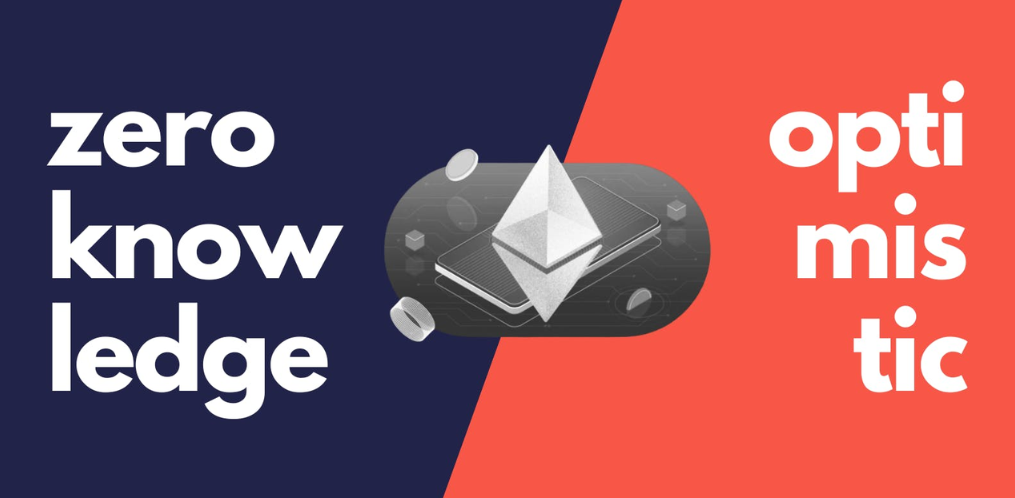
Following the rise of Optimistic Rollup, Zk Rollup is now entering its spring.
-
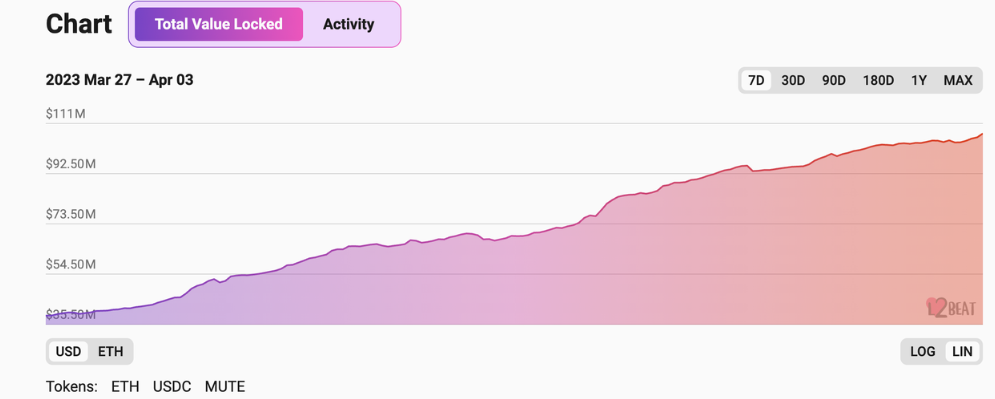
At a suitable moment after the $ARB airdrop, Zksync announced the launch of its Era mainnet, followed by a rapid increase in its TVL (Total Value Locked). According to data from L2BEAT, as of April 2, the TVL on the Era mainnet has exceeded 100 million USD.
-
Another major event for ZK was Polygon's official launch of the zkEVM mainnet beta version, with Ethereum co-founder Vitalik Buterin making a symbolic first transaction.
From the perspective of airdrop hunters' behavior, the generous rewards previously offered by Layer 2 airdrops are now attracting this group to widely enter the Zk Rollup ecosystem and participate in its protocols.
From the standpoint of narrative trends, the release of the Optimism Rollup airdrop signifies the short-term end of its narrative cycle. The market will now turn attention to newer hot topics—namely, the new ZK-based products launched at this juncture.
Regardless, the overall crypto market remains optimistic about ZKP technology and Layer 2 trends.
The advantages of ZKP-based Rollups compared to Optimistic Rollups are:
-
Faster speed and higher security: Optimistic Rollups using fraud proofs require trust assumptions and rely on honest nodes to verify transaction validity, whereas Zk Rollups only need to provide validity proofs to confirm transaction reliability.
-
Greater privacy: Thanks to ZKP technology, Zk Rollups only need to ensure off-chain integrity, allowing provers to prove batch validity without revealing specific transaction details or requiring verifiers to check every transaction before accepting new states.
However, since the EVM does not natively support ZK circuits, widespread adoption of Zk Rollups appears challenging. To lower the developer entry barrier, zkEVM has become the dominant approach in the Zk Rollup space. The core logic of zkEVM is that Zk Rollup solutions offer developers an EVM-equivalent deployment environment, then convert code into a virtual machine compatible with ZK circuits, enabling validity proofs supported by ZKP technology.
Underlying Concerns
Yet, as the market embraces the ZK wave, Zk Rollups face emerging challenges:
Polygon zkEVM
When bundling transactions for submission to Layer 1, it essentially involves a group of users crowdfunding fees to reduce costs. When there are many users, shared costs naturally don't burden Polygon significantly.
However, when user numbers are low, fees cannot be evenly distributed, forcing Polygon to subsidize operations. This means that if Polygon zkEVM lacks sufficient users, ongoing subsidies will create significant financial pressure for the team.
Zksync Era
After a large influx of liquidity, Zksync attracted many users. Under this pressure, the zkSync Era mainnet experienced downtime, halting block production for approximately four hours.
According to post-mortem analysis by the team, the cause was a database failure in the block queue, which stopped block production.
To prevent recurrence, Zksync added another layer of identity to its database monitoring agent, enabling continued operation even during database issues.
In fact, the problems faced by both Polygon zkEVM and Zksync Era are fundamentally similar—they both struggle with user growth and block sequencing.
-
On Layer 1, block ordering under incentive alignment has made MEV the standard solution for sequencing games.
-
MEV technology development on Layer 2, however, remains debatable.
Encrypted mempools might represent a promising direction for MEV applications—using ZKP technology to encrypt and decrypt user transactions while avoiding centralized censorship. Ultimately, encrypted mempools ensure fair execution order.
The Renewed Vitality of Optimism Rollup
Meanwhile, we must not overlook Optimism’s strong vitality.
Optimism introduced OP Stack—a modular blockchain framework enabling developers to build various highly scalable and interoperable blockchains upon it. Coinbase has already launched a Layer 2 based on OP Stack. Additionally, voting on Optimism’s major Bedrock upgrade concluded on April 5.
After Bedrock, Optimism will achieve a qualitative leap:
-
For developers: Better EVM compatibility allows developers to migrate their DApps to Optimism with minimal code changes, addressing long-standing concerns about high deployment barriers.
-
For users: Faster deposits from Layer 1 to Layer 2, lower data submission costs to Layer 1. The upgrade also introduces Cannon, a new interactive fraud proof system, reducing costs further.
-
For sequencers: Allows external teams to build multi-client ecosystems and introduces incentives to promote decentralization and reduce single points of network risk.
-
For the ecosystem: Incorporates diverse alternative proof systems including ZKP technology, no longer limited to fraud proofs.
Although Arbitrum is currently embroiled in controversy, the root cause lies in its lack of clear communication during early stages. Nevertheless, we cannot ignore the brand strength and influence inherent in Arbitrum’s ecosystem.
Currently, the Arbitrum ecosystem hosts over 262 protocols, including some of the most innovative DeFi projects. According to TokenTerminal data, its average daily active users over the past 30 days reached 164,000. In its 2023 outlook, Arbitrum stated that it will focus this year on reducing fees, increasing TPS, and advancing decentralization of validators, sequencers, and DAOs.
On the market side, Arbitrum plans to restart its Odyssey campaign and actively promote Nova chain adoption in social and gaming applications.
Conclusion
-
Viewing competition among Layer 2 solutions, while ZK Rollup has long been a prominent topic in crypto, it has only recently gained massive attention. Currently, Zk Rollup strategies mainly involve launching new testnets/mainnets to attract more users and developer adoption.
-
Optimism, having fallen behind in competition with Arbitrum, needs to rapidly release more competitive products to regain market attention.
-
Arbitrum focuses more on market initiatives—it is currently the temporary winner in the Layer 2 race and thus seeks to strengthen brand influence through rich marketing activities.
Overall, the competitive battleground between Optimistic Rollup and Zk Rollup lies in EVM equivalence, speed, and cost. At present, Optimistic Rollup holds a clear advantage.
-
As Steven Goldfeder, co-founder of Offchain Labs (the team behind Arbitrum), pointed out, he disagrees with the widely held belief that “ZK Rollup can better replace Optimistic Rollup.” zkEVM has yet to be realized in production environments, and current zk-Rollups are more expensive and less compatible than op-Rollups.
-
Conversely, proponents of ZK technology argue that Zk Rollup offers equivalent security and higher capital efficiency (no need to wait for challenge periods), and unlike Optimistic Rollups constrained by fraud proofs requiring execution on Ethereum, Zk Rollups face no such limitation.
Thus, one naturally wonders whether Zk Rollup’s intensified presence this year could challenge Optimism Rollup’s market share?
The answer is yes.
However, as Steven Goldfeder said: “While many teams are steadily advancing zkEVM, it is far from reaching its ‘golden era’—any team pushing this narrative prematurely harms the community.”
Before zkEVM reaches maturity, blindly promoting Zk Rollup adoption consumes the ZK narrative itself.
We cannot accurately predict the future trajectory of any project solely based on technical superiority. Each Rollup project is leveraging its unique understanding of crypto technology and markets to expand its Layer 2 market share. As discussed above, differing starting positions lead to divergent product and market strategies. Yet regardless, one thing is certain—the ultimate winner will be Ethereum.
Bienvenue dans la communauté officielle TechFlow
Groupe Telegram :https://t.me/TechFlowDaily
Compte Twitter officiel :https://x.com/TechFlowPost
Compte Twitter anglais :https://x.com/BlockFlow_News
 雨中狂睡Sleeping in the Rain