








Paradigm Partner: How to Conduct Research on Early-Stage Projects?
TechFlow Selected TechFlow Selected
Paradigm Partner: How to Conduct Research on Early-Stage Projects?
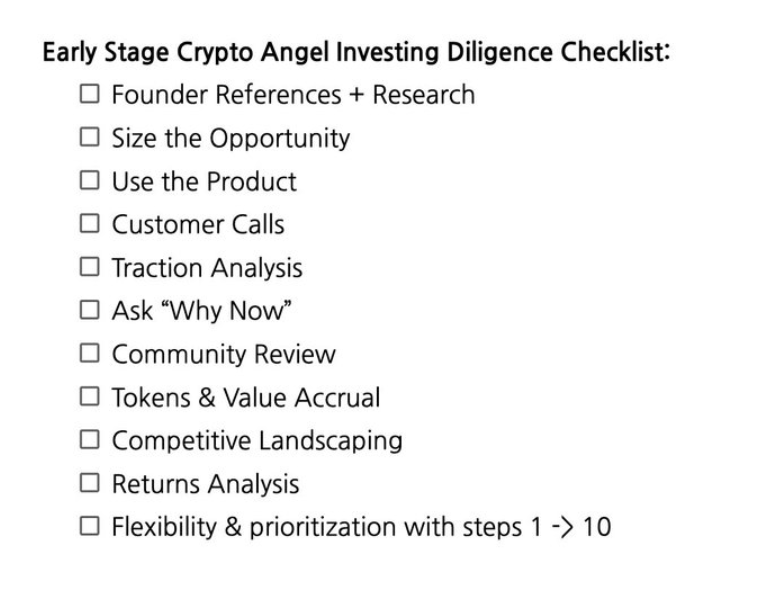
The following are typically recommended steps when conducting due diligence for investing in early-stage crypto projects.
 Navigating Web3 tides with focused insights
Written by: Caseykcaruso
Translated by: TechFlow Intern
Over the past six years, I've been investing in cryptocurrency, and angel investors often ask me how to evaluate projects. Below are the steps I typically recommend when conducting due diligence for early-stage crypto investments. (Disclaimer: These are my personal views.)
Founders
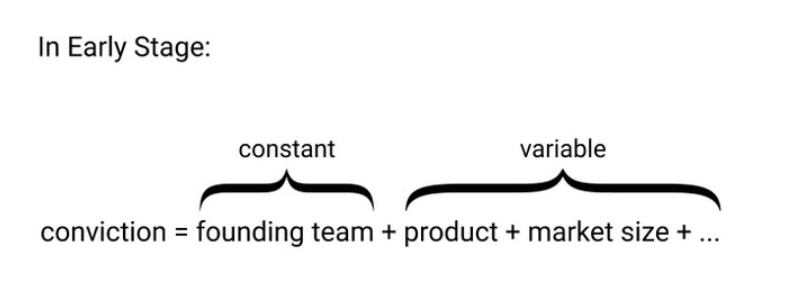
In the early stages, the constant variable in the equation is usually the team. Find their representatives, people who know the founders, and ask about their strengths, weaknesses, etc. Then ask yourself: Would I work with this person? If yes, that's bullish.
Assess the Size of the Opportunity
Think about today’s market size and theoretically project how large it could become. Be ambitious in your forecasts, as crypto is one of the fastest-growing industries in the world. Also, familiarize yourself with meme dynamics and reflexivity theory.

Use the Product
If there's a product, make sure to use it. While widely known, this step is often skipped. It helps concretize the use case, value proposition, and product offering. It's also beneficial for founders to have investors who understand and use their product.
Talk to Users
This can be quickly done via Discord. Ask users: How did you hear about the product? What did you use before? How does it compare to alternatives? What do you think about ROI and value? What would make you leave? This helps uncover the project's vitality and sustainable utility.
Traction Analysis
In Web2, company data is private. In Web3, much of the project data is on-chain and accessible through various analytics tools. Leverage on-chain data to identify growth rates of key KPIs (e.g., volume, TVL, wallets), and compare monthly or quarterly growth against competitors.
"Why Now?"
Many ideas in crypto have been tried before—just think about how many iterations we've seen across different sectors. Timing is critical. Try to understand why previous attempts failed, and consider what makes now different, such as the rise of alternative L1s or capital rotation from DeFi to NFTs.
Community
Understanding a community's sentiment, quality, and longevity is crucial. Join the project's Discord and Telegram to assess member quality. Also, distinguish between real human Twitter followers and bots.
to evaluate member quality. Also, distinguish between real human Twitter followers and bots.
Token and Value
If there's a token, take time to understand how successful token mechanisms operate. Key considerations include token value capture, metrics like TVL, issuance rate, vesting schedule, faucets, growth loops, community incentives, and hype cycles.
Competition in the Space
Identify the biggest competitors and what sets this project apart. Consider the moat they’re building today and how it might scale. If they aren’t currently the market leader, write a thesis on why they could become one—or why this may not be a winner-takes-all market.
Return Potential
According to analysis by MessariCrypto, only around 80 crypto assets have a fully diluted market cap (i.e., market cap including known future supply up to 2050) exceeding $1 billion.

Gut Feeling
Sometimes you can skip steps 1–10 because decisions need to be made faster than expected. Stay flexible throughout the analysis process, prioritize effectively, and never underestimate your intuition.
TL;DR
Compared to Web2, early-stage investing in Web3 requires new mental models and evaluation criteria. Feel free to use this checklist if it helps:
Join TechFlow official community to stay tuned
Telegram:https://t.me/TechFlowDaily
X (Twitter):https://x.com/TechFlowPost
X (Twitter) EN:https://x.com/BlockFlow_News
 Paradigm






