CC0+Meme's MFers: A Rebellious NFT Value Paradigm
TechFlow Selected TechFlow Selected
CC0+Meme's MFers: A Rebellious NFT Value Paradigm
This article attempts to explore the potential shared by memes, NFTs, and CC0: Mfers have taken up the CC0 banner, using memes as a medium to champion a rebellious paradigm of NFT value.
 Navigating Web3 tides with focused insights
Author: Hanya, The See DAO
After Azuki, Mfers became an NFT PFP project that everyone had to talk about and pay attention to.
Yet how did Mfers rise to fame? How does its path diverge so sharply from Azuki’s, and where lies the underlying logic of its valuation? And what kind of projects should we focus on after Mfers? This article attempts to explore these questions.
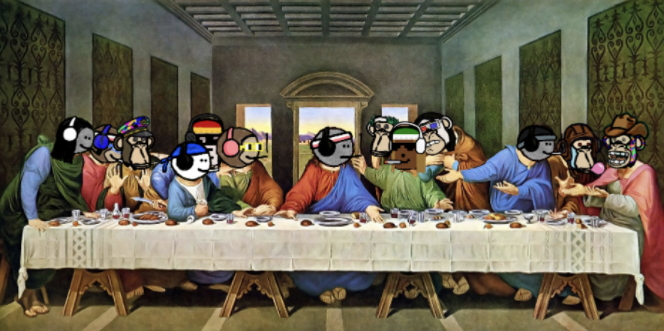
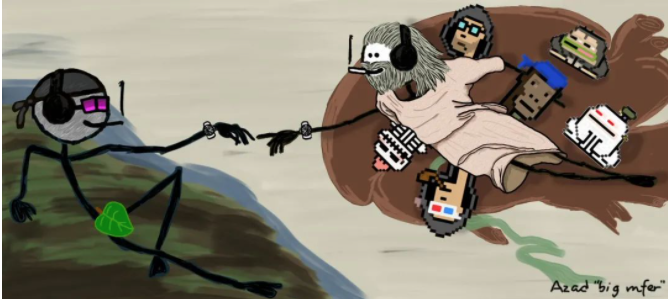
Figure 1 | Mfers community creation: The Last Supper of Mfers
A CC0 Project Without Even an Official Twitter
Mfers is a PFP (profile picture) project hand-drawn by artist sartoshi, featuring minimalist stick-figure aesthetics. As the project's founder, sartoshi is an OG member of the CryptoPunks community and holds significant influence in the NFT space. Technical development for the project was handled by Westcoastnft, who also developed Doodles.
Mfers is a quintessential CC0 project, meaning the creator retains only attribution rights. "CC" stands for "Creative Commons," a set of licenses defining permissions related to creative works. CC0 means "No Rights Reserved"—the work is placed unreservedly into the public domain, allowing anyone to freely copy, distribute, and create derivative works. This concept has existed for over two decades.
Mfers officially launched at the end of November last year and remained relatively quiet for two months, maintaining an average price between 0.2 ETH and 0.4 ETH. But starting in February this year, news of an upcoming 3D mfer airdrop triggered a surge in trading volume and prices. On February 21, the average price reached 6.03 ETH, now settling around 4 ETH.
According to OpenSea rankings, mfers surpassed Azuki in weekly trading volume, ranking among the top three. Its derivative project xmfers also saw strong gains on February 21. However, unlike BAYC or Azuki, Mfers doesn’t even have an official Twitter account.
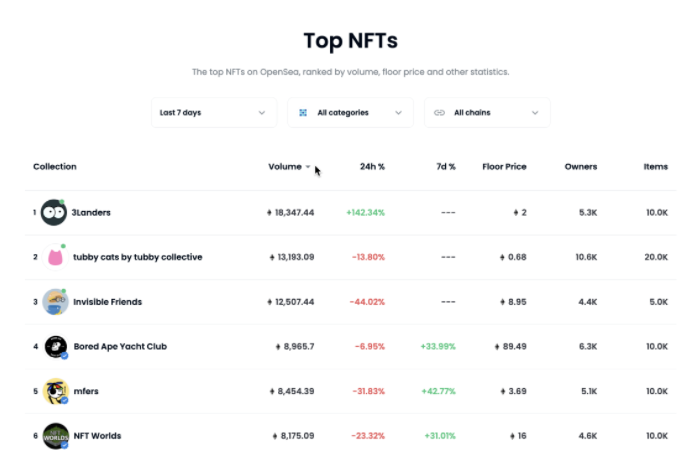
Figure 2 | OpenSea Top NFTs (as of February 26)
Another trending NFT project is 3Landers, also a PFP collection. On OpenSea’s 7-day trading leaderboard, 3Landers leads in trading volume. Like Mfers, 3Landers has released a CC0 declaration for its NFT artworks.
Other CC0-NFT projects include CrypToadz by Gremplin and NounsNFT. Checking coniun for mutual holdings between Mfers and blue-chip projects reveals that Mfers’ top mutual holders are Doodles, Mutant Ape Yacht Club, and CrypToadz. Given that Doodles shares the same technical team—WestCoastNFT—it's no surprise they hold the most Mfers.
In contrast, the mutual holding relationship between Mfers and CrypToadz stems more from their shared CC0 ethos. The Mfers community maintains a Notion page titled “Event Recaps,” including chat logs from internal discussions in December. Under the topic “growth potential and goals,” one line reads: "Carry the flag on CC0." So why are so many projects adopting CC0?
Figure 3 | Mfers’ cross-holdings with other projects
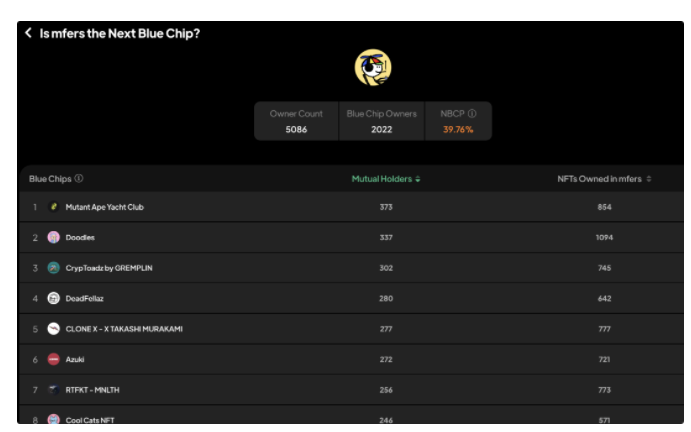
(As of February 26) Source: coniun
Meme: From Internet Memes to NFTs, Then to CC0
How does the NFT royalty mechanism work? Why would giving up rights allow creators to earn more? In fact, the idea of CC0 dates back over 20 years.
In the pre-NFT era of classical internet culture, CC0 resembled a charitable act. With near-zero marginal cost for copying, images could spread freely. This friendly and open attitude brought non-economic rewards to creators—perhaps people would try to credit the original source or follow the creator on social media—but often, users simply didn’t care about attribution, limiting CC0’s impact.
Today, with non-fungible tokens establishing on-chain ownership for JPEGs, there exists an “embedded relationship” between image content and blockchain smart contracts—a technical environment where rules are automatically enforced via code, fundamentally transforming revenue models for digital art. Previously, if unlicensed content was stolen, creators faced high legal costs defending copyright, since infringement directly impacted income.
Now, NFT royalties can be encoded into smart contracts, enabling automatic payments to creators upon secondary sales. Digital artists earn ongoing income as their NFTs circulate in the secondary market. The value-generation process shifts downstream—to each transaction event. Every time an NFT changes hands, the creator receives a royalty ranging from 2.5% to 10% of the sale price.
For successful NFT projects, this shift creates massive profits: For blue-chip projects like BAYC and Azuki, secondary market royalties have already exceeded primary sale revenues. Economically, creators’ focus shifts from “how to protect my copyrights” to “how to make my NFT spread and circulate more widely”—creating ideal conditions for CC0 adoption.
Compared to traditional copyright enforcement, earning royalties from secondary sales offers far better returns. The economic incentives behind NFT royalties are essential to understanding CC0’s “publicness.” Within this framework, CC0 ceases to be purely altruistic; instead, it rests on solid economic foundations and profit motives. Since CC0 boosts dissemination, should all NFTs adopt CC0? Clearly, the market says otherwise.
Figure 4 | Source: Unsplash
CC0 Suits Meme-Based Projects Best
Although CC0 promotes wider dissemination of NFT projects, not every project adopts it.
Projects like BAYC and Azuki typically require substantial R&D investment, possess strong technical and operational capabilities, and pursue long-term roadmaps. These types generally avoid CC0.
In contrast, projects like Mfers lack even basic official operations—no official Twitter, let alone sustained management. Their popularity comes from strong meme visuals and grassroots community momentum. Such projects are better suited for CC0.
Why?
For BAYC and Azuki, brand promotion relies on centralized efforts—official teams collaborating with NFT holders to produce and disseminate content. Visually, they lack strong meme appeal, making organic spread beyond core communities (project team and NFT holders) difficult.
The teams know this well—opening up CC0 wouldn’t significantly boost visibility. Instead, restricting commercial use to NFT holder communities while leveraging official connections to celebrities, game developers, and fashion brands helps grow brand influence and incentivizes more people to buy the NFTs.
But for meme-based projects, virality is built-in from inception, with extremely low distribution costs. Requiring commercial permissions would hinder this natural spread. Moreover, neither the team nor the community needs to invest much effort—they just need to ride the wave and benefit from traffic growth. Even if the team disappears, meme-based projects can remain vibrant. This explains the fundamental difference in strategy.
After Liberation by CC0, How Does Meme Translate Into Price?
Mfers understands the essence of meme virality, evident in its visual design: The mfer stick figures consist of bold lines and simple color blocks. As Mingzin noted in his analysis: “The rough style (lacking verisimilitude) makes viewers more empathetic toward the depicted body language.”
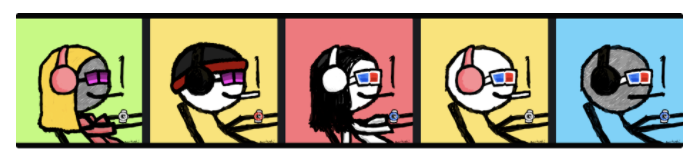
Figure 5 | Visual characteristics of Mfers
The self-replicating nature of memes is inversely proportional to the polish and realism of the NFT artwork—just look at the panda-head stickers saved in your WeChat. High-definition emojis aren't nearly as useful as low-res ones, which gain nostalgic value through repeated compression—the ultimate proof of widespread sharing.
Mfers’ simple aesthetic evokes childhood memories of doodling stick figures in textbook margins. No professional skills required—anyone can do it. Today, the image of a stick figure wearing headphones at a desk mirrors our adult reality. CC0 opens the door to creation: crypto-native youth need only return to childhood creativity and imagination to join the bustling world of memes.
Meme-based NFTs are more likely than artistic or brand-focused NFTs to adopt CC0 because their success depends heavily on FOMO sentiment and community activity in the crypto market—copyright restrictions only hinder the spread of meme symbols and NFT trading.
Backed by NFT royalty economics, CC0 and memes successfully unleash community creativity: Mfers’ group chats generate over 3,000 messages per night; the “official unofficial” Discord server continuously produces memes in the memecraft channel; mfers spawned derivatives like xmfers, mphers, buttfaced mfers, and even “absorbed” previous market favorites—from CryptoPunks to Azuki: zuki mfers, ape mfers, punk mfers…
In short, CC0 adoption in the NFT market closely relates to a project’s strategic positioning. Through the trinity of NFT, meme, and CC0, we can grasp the group dynamics of the entire Mfers community.
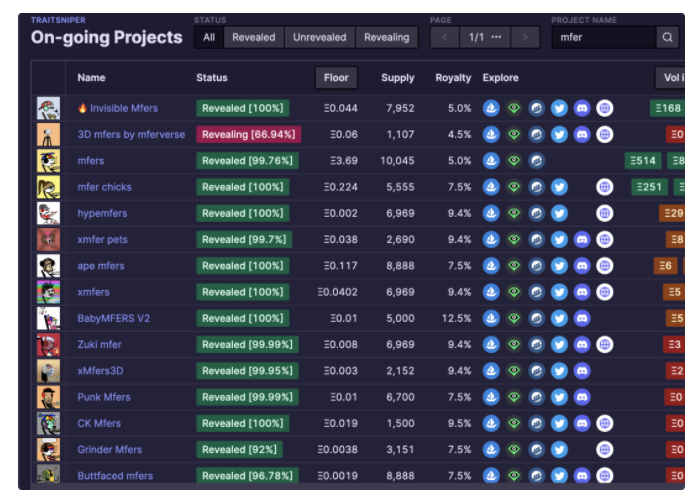
Figure 6 | Overview of Mfers Derivatives (as of February 26)
Source: app.traitsniper.com/?name=mfer
CC0 and Popular Culture
Back to Fiske and Rifkin
Finally, I want to discuss Fiske and Rifkin.
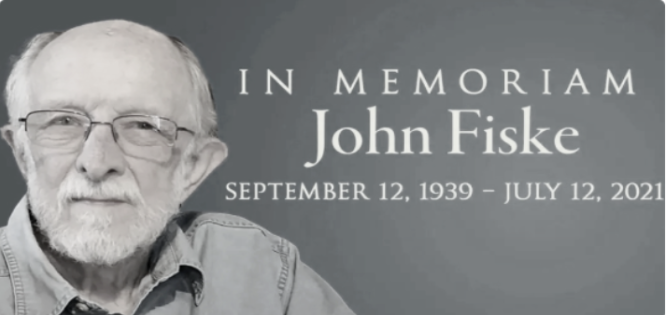
Figure 7 | Fiske
John Fiske was a media scholar who expanded on the Birmingham School’s theory of active audiences, developing the concept of the “productive audience.”
Fiske argued that in cultural economies, circulation isn’t about money—it’s about the flow of meaning and pleasure. Audiences transform from consumers of commodities into producers—producers of meaning and pleasure. In such an active environment, there are no passive consumers—only the circulation of meaning, which becomes the sole driving force.
Does this sound familiar in today’s NFT market?
NFTs are clearly a form of cultural economy, and NFT natives are the “masses.” Compared to meme-driven projects like Mfers, 3D NFTs represent the highest barrier to remixing. Feeling powerless to contribute creatively (“I can’t really do anything”), the general community must rely on professional designers and artists for aesthetics, and on project teams for utility.
Only within CC0, meme-oriented NFTs do the masses truly escape the passive role of “content recipients,” becoming active producers of meaning and enjoyment.
This point is crucial. As Fiske wrote in *Understanding Popular Culture*, popular culture is created by the people, not imposed upon them—it emerges from within or from below, not from above. For Rifkin, this reflects the collaborative commons model of the “zero marginal cost society,” where “productive audiences” become what he calls “collaborative prosumers.” In this system, “property gives way to open-source sharing, ownership yields to access, and markets give way to networks.”
This recalls web3’s respect for collective creativity: Mirror.xyz’s team doesn’t own publishing or management rights—they recognize the flexibility of web3 toolkits. Traffic economies and the long tail become “finite games” of the web2 era.
Likewise, “rebellious CC0” abandons property and copyright to embrace a broader creative stage: It provides a symbol of “everyone can be a prosumer.” If CryptoKitties chose to collaborate with weirDAO artists, sartoshi of Mfers chose to collaborate with all “productive audiences.” The result? Mfers ferment organically within the community. Copycat projects, whether willing or not, become allies. “Precisely because it does not compete, nothing in the world can compete with it.”
Within this theoretical framework, memes serve as the symbols through which Fiske’s notion of popular culture operates; NFTs act as carriers of value and entry tickets to this community; and CC0 ascends to a philosophical stance. Amidst an environment obsessed with individual ownership and self-interest, “publicness” paradoxically becomes one of the community’s most cherished values. Amid endless roadmap promises and engineering mindsets, self-organization and participatory creativity drive community productivity. As the Mfers community puts it: “No utility is the greatest utility.”
Conclusion
The article *“Mfers: A New Web3 Tribe Born from Global Internet Subcultures and Postmodernism”* explores the cultural community within mfers from humanistic perspectives such as global internet subcultures and postmodern resonance. This piece instead investigates the possibilities created by the convergence of meme, NFT, and CC0: Mfers raises the CC0 banner, using memes as a medium to champion a rebellious NFT value paradigm.
But as Fiske described, the masses possess a “nomadic subjectivity,” navigating fluidly through layers constructed by cultural industries—perhaps explaining why internet pop culture undergoes rapid turnover, with memes cropping up like韭菜 (scallions), endlessly regrowing after each harvest.
Culturally, crypto-punk subcultures and modernist disillusionment will continue connecting NFT-native communities in free and open environments. At the structural level of NFT value, Mfers shows us alternatives to traditional “project-team vs. consumer” dynamics, revealing the narrative of “public value” in crypto. After Mfers and 3Landers—who will carry the CC0 torch next?
Join TechFlow official community to stay tuned
Telegram:https://t.me/TechFlowDaily
X (Twitter):https://x.com/TechFlowPost
X (Twitter) EN:https://x.com/BlockFlow_News