StarkWare: Valued at Over $2 Billion, Backed by Vitalik Buterin—Is the Next Opportunity in Layer 2?
TechFlow Selected TechFlow Selected
StarkWare: Valued at Over $2 Billion, Backed by Vitalik Buterin—Is the Next Opportunity in Layer 2?
What is the story behind StarkWare's founding and development? What opportunities have emerged from Ethereum's current pain points and Layer 2 scaling? And what insights can engineer-entrepreneurs draw from their entrepreneurial journey?
 Navigating Web3 tides with focused insights
Author: Afa Rabbit

Why study this company?
StarkWare has several notable characteristics:
-
First, although it is science and engineering-driven, its CEO excels at working with VCs and possesses strong PR and team-building capabilities;
-
Second, the founding team has a clear and long-term strategic vision, avoiding immediate ICOs and dedicating significant time to building a developer community;
-
Finally, the company began considering profitable business models early on, achieving a solid balance between technology and commercialization. Ethereum co-founder Vitalik Buterin was an early investor in StarkWare and has contributed to edits in many of the research papers StarkWare has published since.
What is the story behind StarkWare's founding and growth? What opportunities do Ethereum’s current pain points and Layer 2 scaling present? And what lessons can engineer-founders draw from their entrepreneurial journey? These are the questions this article aims to explore.
Note: This account provides no investment advice nor accepts any PR requests. This article does not constitute any investment recommendations.
*Articles from this account are welcome to be shared; please credit the source when reposting.
Article Structure
1. Market Pain Points & Company Overview
-
Macro Data Snapshot: How High Is the Ceiling?
-
Market Pain Points
-
Company Overview
-
What Is Zero-Knowledge Proof?
-
What Role Does ZKP Play?
-
Founding Team Background: Tech-Driven and Complementary Skills
-
Why Is StarkWare Considered a Science-Driven Startup?
2. Founding Team
-
Founding Team Background: Tech-Driven and Complementary Skills
-
Why Is StarkWare Considered a Science-Driven Startup?
3. Funding History & Business Metrics
-
Seed Round Investor: Ethereum Co-Founder Vitalik Buterin
-
StarkWare Users & Business Data
4. Business Model & Key Products
-
What Needs Does It Address?
-
Core Products: StarkEx & StarkNet
5. Company Development Timeline
-
Starting from Solving Technical Challenges and Meeting Demand
-
Balancing Math Engineering with Product Marketing
-
StarkPay
-
Expanding into NFTs and GameFi
6. Perspectives from Investors
-
Infrastructure Improvements Drive Transaction Growth and Unlock Opportunities
7. Other Evaluations
-
Potential Risks and Challenges
8. Characteristics of the Entrepreneurial Path
-
Iterate Quickly, Prioritize Developer Community Building
1. Market Pain Points & Company Overview
Macro Data Snapshot: How High Is the Ceiling?
According to MarketsandMarkets, the blockchain technology and services market will grow from $4.9 billion in 2021 to $67.4 billion by 2026.
Market Pain Points
As the crypto world continues heating up, Ethereum has become one of the most popular ecosystems. According to Dapp.com’s Q2 2020 report, Ethereum saw a 32% increase in unique users and a 97% rise in active users that quarter, reaching 4.5 million total users and 1.25 million active users—figures that continue to grow.
However, the current Ethereum network struggles under global transaction loads. To improve speed and reduce on-chain fees, developers are exploring Layer 2 (L2) solutions—scalability layers built atop Ethereum’s mainnet (Layer 1).
We can understand L2 as a scalability solution for Ethereum—an execution layer capable of running code independently while still operating on top of Ethereum L1.
StarkWare primarily uses zero-knowledge proof (ZKP) systems to address Ethereum congestion, aiming to reduce computational load while still recording transaction data on the main chain.
Company Overview
Founded in 2018 and headquartered in Israel, StarkWare leverages STARKs—a commercialized form of zero-knowledge proofs (ZKPs)—to enhance blockchain scalability and privacy. STARKs offer trustless setup (no trusted setup required) and post-quantum security.
StarkWare develops full proof stacks, providing software and hardware support for fast, reliable generation and verification of computational integrity proofs for general computations.
What Is Zero-Knowledge Proof?
Today, ZKPs are already in use, with public-key cryptography being the most common form—foundational to much of today’s internet and cryptocurrencies. However, current ZKP applications remain relatively narrow: typically allowing someone to prove ownership of a private key tied to a public key, but not yet extendable to arbitrary complex computations.
That said, general-purpose ZKPs are evolving. Two prominent examples are privacy-focused cryptocurrencies: Zcash and Monero. Zcash uses SNARKs—a different type of ZKP—to enable private transactions globally. Monero employs Bulletproofs to achieve similar goals.
What Role Does ZKP Play?
As generalized ZKP technologies mature, their potential applications will broaden significantly.
Enhancing Blockchain Scalability: ZKPs can scale blockchains by orders of magnitude using two primary methods: off-chain batching and recursive composition of ZKPs. Among the five fundamental approaches to blockchain scaling, ZKP-based solutions offer the best results.
Empowering Off-Chain Computation in the Web3 Stack and Enhancing Financial Services: After the 2008 financial crisis, financial institutions powering the global economy must comply with risk thresholds. With ZKPs, these institutions could prove real-time compliance to auditors, governments, clients, and the public without revealing confidential ledger data.
2. Founding Team
A science-driven infrastructure company in crypto.
Founding Team Background: Tech-Driven and Complementary Skills
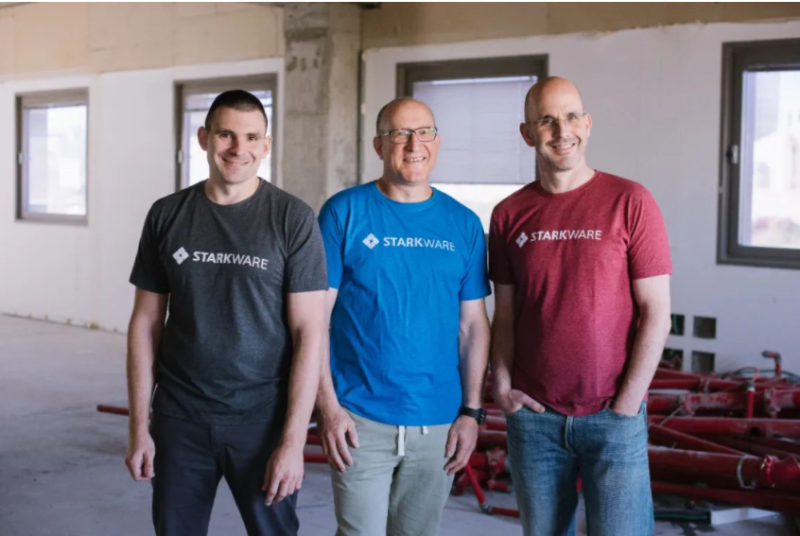
Founders Michael Riabzev, Eli Ben-Sasson, and Uri Kolodny
Image Source: StarkWare Official Website
CEO and co-founder Uri Kolodny graduated with a degree in Computer Science from Hebrew University and later earned an MBA from MIT Sloan. A serial entrepreneur, Uri previously founded several tech-oriented startups, including OmniGuide (an MIT-backed company focused on endoscopic surgery) and Mondria (a big data visualization tools developer). Before that, he served as an EIR (Entrepreneur-in-Residence) at two Israeli venture capital firms and worked as an analyst at McKinsey.
Uri also has strong experience engaging with venture capital firms. He demonstrates excellent team-building skills and robust external PR capabilities—evident in StarkWare’s early establishment of a technical blog to share insights about their work and scientific findings with the public. Ethereum’s founder frequently provides feedback on StarkWare’s research papers. His extensive entrepreneurial background enabled him to define the company’s vision early and effectively execute the product roadmap.
Why Is StarkWare a Science-Driven Company?
First, the core technical team is led by Eli Ben-Sasson (Technion – Israel Institute of Technology, where Einstein served as the first chairman of the academic council), Alessandro Chiesa (UC Berkeley), and Michael Riabzev (Technion). Alessandro Chiesa is a co-founder and Chief Scientist at StarkWare. Prior to StarkWare, he co-authored the Zerocash protocol and was a co-founder of Zcash, mentioned earlier.
In March 2021, Avi Wigderson, scientific advisor to StarkWare and Eli Ben-Sasson’s PhD advisor, won the Abel Prize—an annual award presented by the King of Norway to one or more outstanding mathematicians, named after Niels Henrik Abel.
The technical team collectively boasts over a decade of experience in ZKP systems, co-authoring the foundational STARK paper. Their combination of deep industry experience and strong academic credentials sets them apart.
3. Funding History & Business Metrics
Seed Round Investor: Ethereum Co-Founder Vitalik Buterin
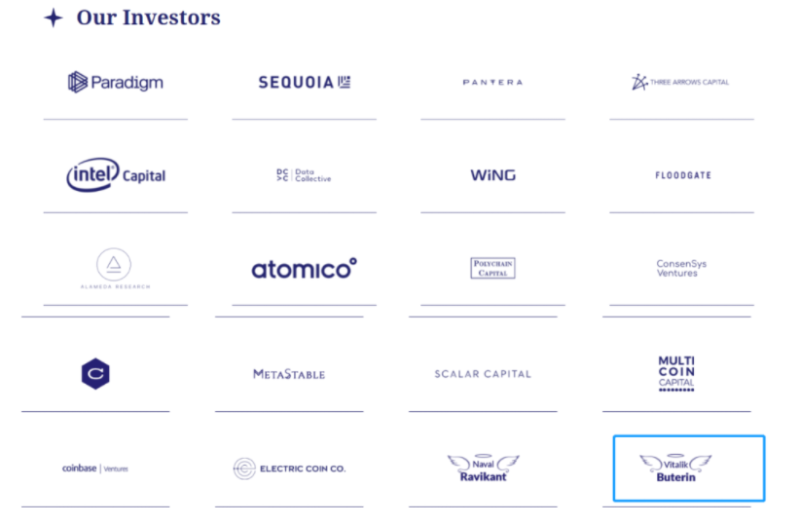
Image Source: StarkWare Official Website
-
January 2018: StarkWare raised $6 million in seed funding from investors including Vitalik Buterin, Paradigm, Pantera Capital, and Polychain;
-
July 2018: Ethereum Foundation invested $12 million in StarkWare;
-
October 2018: Series A round raised $30 million, with participation from Sequoia, Paradigm, Scalar Capital, Multichain Capital, Intel Capital, Semantic Ventures, and Pantera;
-
March 24, 2021: Series B raised $75 million, with continued investments from Sequoia, Wing VC, Paradigm, and Pantera, joined by Three Arrows Capital and DCVC;
-
November 2021: Series C raised $50 million at a $2 billion valuation, led by Sequoia Capital, with participation from IOSG and others.
StarkWare Users & Business Data
In an interview in November 2021, StarkWare CEO Uri Kolodny stated the company was already profitable. The Series C funding was primarily aimed at expanding the team and growing the ecosystem. Clients include ConsenSys, Immutable, dYdX, and Sorare.
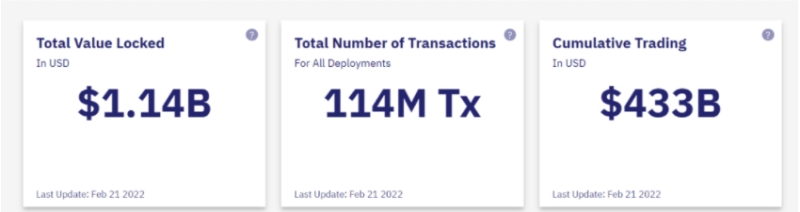
StarkWare enables significantly lower gas costs—addressing a persistent market pain point caused by high Ethereum gas fees. As of November 2021, transactions settled via StarkEx exceeded $200 billion, encompassing around 50 million transactions, serving hundreds of thousands of users.
Regarding uniqueness and business positioning, co-founder Eli Ben-Sasson noted that StarkWare leads among all L2 solutions in total transaction volume and capacity, giving it a first-mover advantage: “Over $200 billion has been settled through StarkWare, with more than 50 million transactions processed.”
4. Business Model & Key Products
What Needs Does It Address?
StarkWare’s primary contribution lies in technological advancements in zero-knowledge proofs and computation: First, the team developed STARKs (Scalable Transparent Arguments of Knowledge).
STARKs are a form of validity proof with fully trustless setup. Using this method, all on-chain computations can be moved off-chain to a dedicated STARK prover. The prover then submits proofs to an on-chain STARK verifier to confirm computational integrity and correctness. (Keep STARKs in mind—we’ll refer to them repeatedly.)
“Looking at the blockchain, we see something of tremendous use and potential but so limited in scale,” said Ben-Sasson, StarkWare’s president. “It needs to scale dramatically and exponentially—and it must do so under the same principles of decentralization and openness.”
Core Products: StarkEx & StarkNet
Currently, there are two main types of rollups: ZK rollups (based on zero-knowledge proofs) and Optimistic rollups. Rollups allow Ethereum transactions to occur off-chain while storing only transaction data on-chain, reducing network congestion, increasing speed, and minimizing gas fees.
StarkEx
StarkEx is StarkWare’s Layer 2 scalability engine. Using Cairo—a language similar to assembly—it enables functionality within a zero-knowledge environment. StarkEx supports hybrid on/off-chain data availability, fast withdrawals, ERC-721 and ERC-20 standards, and ensures data availability.
It also generates validity proofs to ensure all off-chain computations are correctly executed. STARK proofs are verified on-chain before being submitted to Ethereum’s mainnet.
StarkNet
StarkNet is a permissionless, decentralized L2 ZK-Rollup built by the StarkWare team on Ethereum using STARK zero-knowledge proofs. It is Turing-complete and offers EVM compatibility via a Solidity-to-Cairo compiler.
What is Cairo? Cairo is a Turing-complete programming language. Built on Cairo, StarkNet supports general computation on Ethereum. Developers can build and deploy applications on StarkNet, users can initiate and execute transactions, and network participants are incentivized to maintain node operations.
All StarkNet transactions are periodically batched into a single proof, verified on Ethereum, and all underlying data is published on-chain.
5. Company Development Timeline
Starting from Solving Technical Challenges and Meeting Demand
StarkWare’s unique scalability solution stems from R&D rooted in engineering and science—including cryptography and mathematical computation—ensuring everything meets requirements before launch. While other ZKP solutions demand more computation, their secure architecture convinces many developers that they represent the future of Ethereum scalability.
The founding team had a clear strategic vision early on. They immediately considered monetization strategies, explicitly stating their goals and roadmap in a 2018 blog post:
"We aim to build a business with recurring revenues—we’re old-school that way. Achieving recurring revenue requires an important first step: developing technology and generating demand."
StarkWare’s business model focuses first on delivering user value, with the broader vision of reshaping the entire blockchain ecosystem.
Unlike many crypto startups rushing to launch ICOs, StarkWare declared early in 2018 that it would not conduct an ICO. Instead, they proposed exploring a new path called Tech4Tokens (T4T).
This likely relates to founder Uri’s venture capital background.
Let’s clarify what T4T means: Venture capital firms invest in companies in exchange for potential upside. StarkWare believes investing in their own technology could yield similar returns. Imagine the team as venture capitalists specializing in technology, forming a tech-crypto fund that invests in technology in exchange for tokens—hence, Tech4Tokens (T4T).
If StarkWare acts as a tech-crypto fund, it becomes its own earliest investor: the earlier the investment in technology, the greater the impact on token value. We aren’t interested in standard cost-plus returns but want to capture meaningful future value from what we create ourselves.
In the future blockchain ecosystem, talent will be far scarcer than capital. Returns on successful tech experts’ token portfolios will reflect this scarcity.
StarkWare envisions multiple potential sources for its token: some from foundations, others via mechanisms to gradually increase token supply. StarkWare believes that if tokens are to serve as effective compensation tools for developers, token supply must become a core element of blockchain governance.
One of Stark’s visions is to become a consultancy service provider, gathering top engineers, raising substantial funds for R&D, assembling larger and more diverse teams, and offering robust technical support to future clients.
Balancing Mathematical Engineering with Product Marketing
By the end of 2018, StarkWare had grown to twenty employees, combining strong mathematical and engineering talent with agile product and marketing teams.
They further refined their strategy, focusing on key priorities. StarkWare decided to prioritize scalability, with privacy taking secondary importance, as STARKs profoundly address the two most urgent issues in permissionless blockchains: scalability and privacy.
By moving computation and storage off-chain and generating STARK proofs for computational integrity, which are then verified on-chain, most processing occurs off-chain—saving space while preserving computational integrity and trustlessness.
In summary, throughout 2018, StarkWare’s engineering team built a highly sophisticated software stack from scratch, improving validator and verifier performance and reducing proof size by at least an order of magnitude (and continuing to improve).
These achievements enabled StarkWare to successfully demonstrate a complete STARK proof system capable of running on browsers and smartphones via WASM—an unprecedented milestone for transparent proof systems.
In summer 2018, StarkWare received a grant from the Ethereum Foundation.
March 2019: StarkWare launched StarkPay, a payment scalability engine based on STARK technology, addressing many shortcomings of Lightning Network and other L2 payment solutions. The Lightning Network, launched in 2016 to scale Bitcoin, was among the first Layer 2 solutions, cleverly shifting transactions off-chain while relying on blockchain security. It promised scalable payments with low latency and minimal fees.
However, Lightning has drawbacks: both payer and payee must be online to sign transactions with private keys, resulting in relatively poor capital efficiency and operational security challenges.
StarkPay
StarkPay aims to provide a scalable, capital-efficient, non-custodial payment solution without requiring users to be constantly online (liveness requirements).
Compared to the Lightning Network, StarkPay offers several advantages:
Scalability: Computational resources used by StarkPay scale with the number of users and transactions. It achieves higher capital efficiency—payment processors and verifiers have no liquidity requirements, and recipients don’t need to be online to update balances. Deposits, withdrawals, and payments can occur offline and later sent to the blockchain or payment processor.
However, StarkPay faces clear limitations, particularly around data availability. To fully benefit from STARKs’ logarithmic on-chain scaling, data is stored off-chain, creating data availability challenges. (Simply put, data can be corrupted in many ways—the fewer corruptions a data provider can prevent, the more reliable the system.)
A potential future direction involves forming a consortium of data availability validators who sign attestations confirming data is available off-chain. On-chain verifiers would reject proofs lacking such attestations.
Expanding into NFTs and GameFi
In 2020, StarkWare announced a formal partnership with Immutable, the team behind Gods Unchained—a collectible card game built on Ethereum. This brought StarkWare’s scalability engine StarkEx into blockchain gaming and NFTs. They planned to use STARKs to verify the integrity of off-chain game logic, strategically signaling the founders’ belief in the massive potential of games and collectibles.
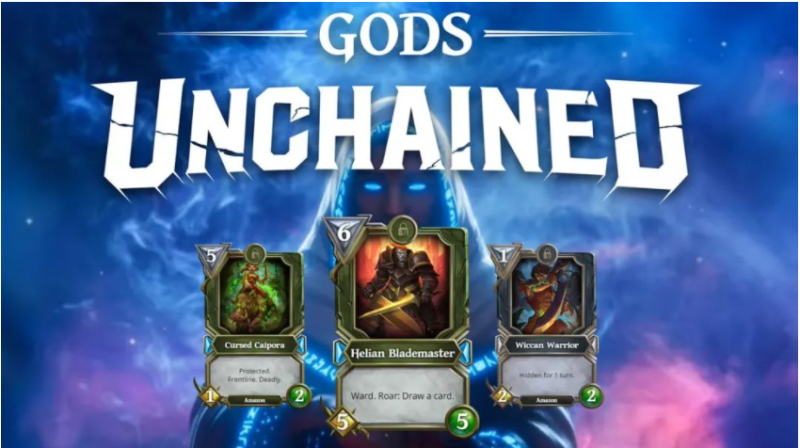
Gods Unchained achieved notable success in the 2020 blockchain gaming ecosystem, generating nearly $6 million in revenue during beta testing and topping the NFT leaderboard within 24 hours of launch.
However, Ethereum’s native throughput limit of ~4 transactions per second constrains any application seeking further scale. For NFTs, throughput bottlenecks are severe—lack of scalability becomes a major barrier to project growth.
StarkEx solved this for Immutable by supporting ERC-20 and ERC-721, enabling NFT trading and minting, while delivering over 9,000 non-custodial transactions per second.

August 2020: Launched Cairo, StarkWare’s production-grade, Turing-complete STARK system.
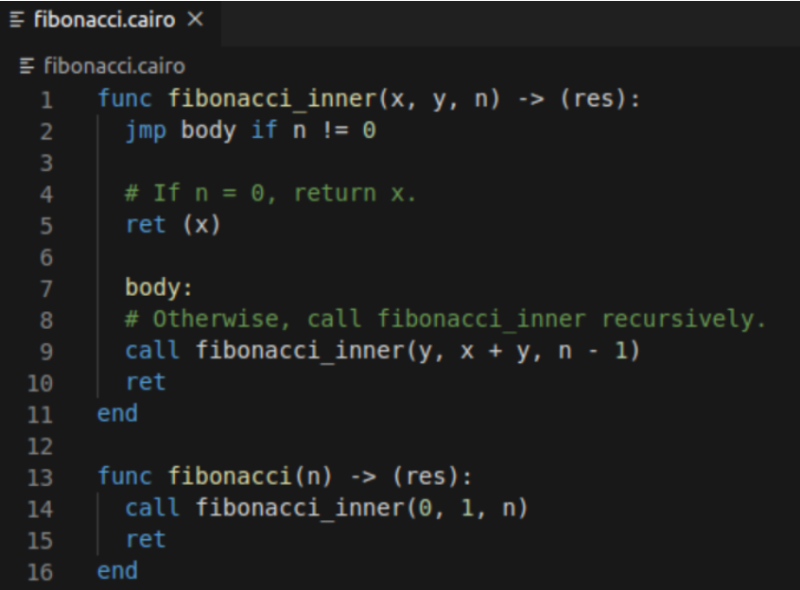
December 2020: Rapidly launched StarkEx 2.0, transitioning to a universal Cairo framework, enabling more efficient code for verifying complex, costly computations and enhancing scalability. One use case involved proving Merkle sub-tree validity instead of checking numerous individual Merkle paths.
StarkEx 2.0 introduced fast L1-L2 bridging, allowing users to quickly withdraw funds and interact across layers. DeversiFi, a decentralized exchange using L2 Validium for private trading, planned to adopt this feature. StarkEx 2.0 also added ERC-721 support, enabling trading of NFTs following the ERC-721 standard—including large-scale off-chain minting. This capability benefited ImmutableX and future clients in collectibles and gaming. Contract interfaces were improved: users can now deposit to any L2 account and withdraw to any L1 address.
For example, Bob can directly deposit into Alice’s L2 account. Alice can withdraw funds directly to her cold wallet Ethereum address or send them to Bob’s Ethereum address. Additionally, users can now register via any address (e.g., operators themselves), allowing apps to remove registration steps during onboarding—reducing friction and improving conversion. StarkEx 2.0 also supports smart contract key recovery: each Ethereum address can now link to multiple L2 accounts, enabling smart contract wallets to recover keys and traders to store funds across multiple off-chain accounts.
December 2020: Released the Cairo toolchain, including compiler, Cairo VM, Tracer debugger, and IDE extensions (Vim, Visual Studio Code) with syntax highlighting—marking the beginning of active developer community building.
January 2021: Based on prior progress, formally began constructing StarkNet—a decentralized, STARK-powered L2 ZK-Rollup supporting computation on Ethereum, built on the Turing-complete Cairo language.
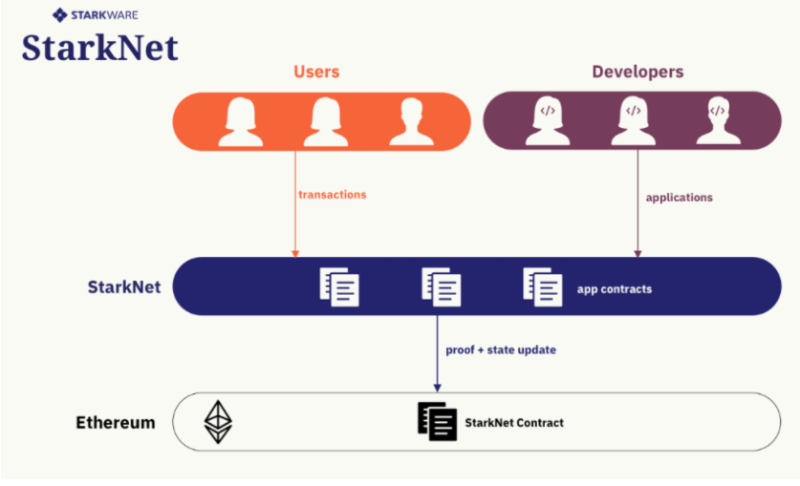
As shown, developers, users, and StarkNet nodes can build and deploy applications with custom logic. Users send transactions to StarkNet just as they do with Ethereum today. Nodes and participants are cryptoeconomically incentivized to ensure efficient and fair network operation.
All StarkNet transactions are periodically batched, their validity proven via STARK proofs, and verified on Ethereum. Because verifying STARK proofs requires exponentially less computation than performing the original calculations, StarkNet scales Ethereum by orders of magnitude.
Since all StarkNet state transitions are STARK-verified, only valid changes are accepted on Ethereum. All data needed to reconstruct the full StarkNet state is published on-chain. Anyone can run their own StarkNet node. These properties make StarkNet as secure and permissionless as Ethereum.
StarkWare’s approach is to first solve hard problems, build core technology, then incrementally apply it in production environments.
April 2021: Proposed dAMM—an L2-powered AMM design where liquidity remains unified on L1 while users trade on L2. (AMM stands for Automated Market Maker, eliminating order books. Liquidity providers add trading pairs to pools.)
April 2021: After months of close collaboration with dYdX, StarkWare migrated dYdX’s perpetual contracts platform to run on StarkEx. That same month, following the earlier announcement with Immutable X, StarkEx-powered Immutable X officially launched NFT minting and mass trading on Ethereum mainnet.
July 2021: StarkEx 3.0 officially launched. For the first time, Ethereum smart contracts could own assets on StarkEx and trade them with L2 users via L1 Vaults. This gave StarkEx (L2) users a low-cost way to interact with external logic and liquidity on L1. Around the same time, StarkNet Alpha 1 launched, featuring L1-L2 interoperability and on-chain data preservation.
November 2021: StarkWare closed its Series C round. By then, the company was already profitable; funding was primarily for team expansion and ecosystem development.
December 2021: StarkNet Alpha officially launched on mainnet. Earlier in summer 2021, StarkNet Alpha was deployed on a public testnet. This version supported fully permissionless general-purpose smart contracts. StarkWare upgraded it twice: first to Alpha 1, adding L1<>L2 messaging and on-chain data availability, then to Alpha 2, enabling composability.
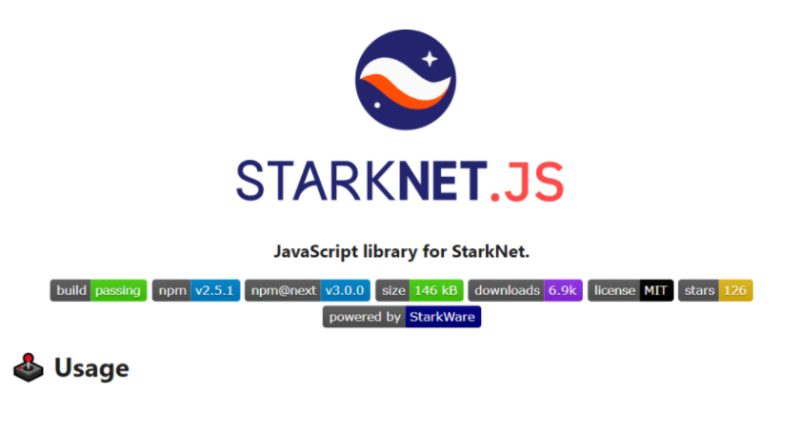
February 2021: Downloads of the StarkNet.js library reached 6.9K.
StarkNet Alpha launched on the public testnet in June and on mainnet in November. By mainnet deployment, StarkNet already offered general computation comparable to Ethereum—achieving rapid technical development.
6. Perspectives from Investors
Multichain Capital, an investor in StarkWare, believes that as more users and developers adopt Ethereum, VCs are increasingly allocating capital to infrastructure startups—particularly those enhancing Ethereum scalability—to drive user growth and expand transaction volumes.
Sequoia invested in StarkWare back in 2018—one of its earliest crypto bets. By 2021, approximately a quarter of Sequoia’s investments were in crypto startups.
7. Other Evaluations
Potential Risks Facing StarkWare
Among those familiar with ZKPs, there’s a consensus that due to mathematical and engineering complexity, STARKs are still some time away from full commercialization. Historical precedent shows that the evolution of public-key cryptography and STARKs took years before becoming commercially viable.
8. Entrepreneurial Journey
Overall, StarkWare’s trajectory reflects a clear-minded founding team. They prioritized essential features, released early once functional, and openly shared iteration progress with the community.
Although StarkNet launched with limited functionality, continuous iterations allowed developers to build meaningful and complex applications. As of February 2022, hundreds of developers had built dozens of dApps on StarkNet, with over a dozen external teams developing tools and infrastructure for the ecosystem.
Emphasis on developer community building—with ongoing feedback shaping development. Once basic usability was achieved, strategic focus shifted toward improving system performance.
Next, StarkWare plans to further open-source StarkNet’s sequencing and validation software, allowing anyone to participate as a sequencer or prover.
The team’s entrepreneurial philosophy emphasizes openness, continuous improvement, listening to the community, and a shared vision of co-creating the future of scalable crypto solutions.
What’s your take on the future of Layer 2?
Join TechFlow official community to stay tuned
Telegram:https://t.me/TechFlowDaily
X (Twitter):https://x.com/TechFlowPost
X (Twitter) EN:https://x.com/BlockFlow_News