








The Intrinsic Value of Games and Their Future Development Direction
TechFlow Selected TechFlow Selected
The Intrinsic Value of Games and Their Future Development Direction
Games build culture—this is a significant part of their intrinsic value, stemming from the fact that games are shared social experiences.
 Navigating Web3 tides with focused insights
By Mark Laursen
Translated by Alex, TechFlow
As the year draws to a close, I find myself in a reflective mood. I’ve worked in gaming for a long time and have witnessed multiple shifts in gaming culture. I wanted to write this piece to express my thoughts on this culture—the uniqueness of experiences, the importance of achievement, and the value games can offer both players and developers. These concepts, along with my background, are one of the cornerstones of Ember Sword, and I hope this article clarifies where I—and our team—come from.
The gaming industry has seen many pivotal moments: the evolution from text-based games to graphics, the shift from modems to broadband and then high-speed internet, and even the emergence of VR technology. Over the past 50 years, we’ve made tremendous progress across various breakthroughs—in game design, style, genre, and production quality. Video games have given us so much, and most importantly, they’ve brought us together in ways we couldn’t have imagined as we began our incredible lifelong journey as gamers.
The End of Shared Experiences?
But one thing hasn’t changed—no matter what technological boundaries we cross or how far we go—is a very simple, deeply human fact: games hold intrinsic value for us as individuals. Every game we play shapes us in some way and provides endless joy that we all seek and cherish. Then there are the bigger games—those that not only define us as individual players but also shape entire generations and genres. The value of games is deeply personal, yet universal, because every player has their own unique experience and takes away something distinct. Moreover, these experiences connect everyone who has played the same game. For example, we’ve all talked with friends about tough challenges, glorious achievements, and heroic feats in games.
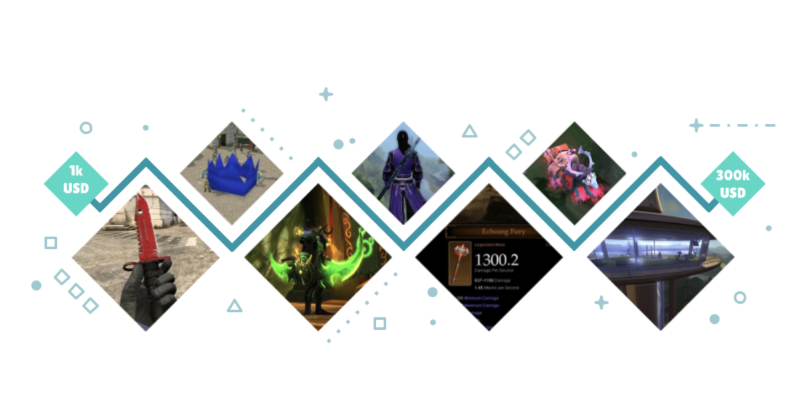
For a long time, sharing personal experiences has brought us together. And in massively multiplayer online games (MMOs), this connection is amplified—it becomes more real and tangible. The opportunity to create and embody this intrinsic value and make it “real” is truly immense.
Unfortunately, many games have chosen to become less social in order to cater to solo players. This, in turn, alienates social players, turning MMOs into almost anti-social experiences—an irony given the name “massively multiplayer.” If we continue to alienate these players, we may witness the decline of a gaming style and possibly the end of an era—not to mention missing the chance for a new, potentially even greater era to take off. We cannot let this core aspect of gaming—the intrinsic value at the heart of the experience—fade away. Because ultimately, this is one of the key reasons and motivations that keep drawing us back to games, again and again. It’s the structure supporting both gaming and social experiences—and it must be protected.
The Power of True Achievement
"Effort in games should not be avoided. Appealing to the lowest common denominator should not be your strategy..."
In the past, time and effort held different value in video games. Players once paid a one-time fee for a game they could "lose themselves in," spending countless hours exploring and building their own legends... This has slowly morphed into a system where our time is broken down by the second and monetized. Some of these games have turned into "pay-to-play" or worse, "pay-to-win," resembling slot machines more than actual gameplay experiences.
Effort in games should not be circumvented or exploited. Appealing to the lowest common denominator should not be your strategy—instead, you should foster and shape the kind of effort players want to invest in your game. In short: players should be left with something rewarding and fulfilling—achievement. A real achievement. Not a pop-up with silly text telling you that you just reached level 20—because everyone does that. That’s not a real achievement; it’s a simple, outdated trick to make players feel accomplished without actually achieving anything meaningful.
Why do players love sitting down for hours playing Dungeons & Dragons? Or first-person shooters like Counter-Strike? Or any type of MMORPG where people play far longer than is healthy? It's the sense of accomplishment in a space where you’re not judged for who you are, your appearance, or your beliefs—the entire self is stripped away, leaving pure achievement and competition as the driving forces. We all enjoy excelling; we all want to succeed and learn to improve. Games give us the chance to enter a world where you can be anyone, do anything—regardless of who you are, your social status, or even disabilities. You can become a legend in the history books of a game.
“It’s a sense of accomplishment in a space where you’re not judged for who you are, your appearance, or your beliefs…”
The Value and Pitfalls of Collectibles
Games have intrinsic value. They always have. It comes from the time and energy players themselves invest. It’s comparable to collecting art or Pokémon cards—the value of the artwork or card depends on decisions made by those interested. You can trade your Pokémon cards with friends, gift them, sell them, earn more through purchases or tournaments, or whatever else. Art collectors love art, collect pieces they enjoy, sell and trade, and display them for others to appreciate. The intent and desire behind games are the same—the only difference being that gamers willing to spend money on their hobby vastly outnumber art collectors and similar enthusiasts.
“Games build culture—that’s a crucial part of their intrinsic value, stemming from the fact that games are shared social experiences.”
Think of NFTs as Pokémon cards and cryptocurrency as gems in mobile games—or any premium currency used in games. The only difference now is that blockchain technology allows us users to easily trade these gems and Pokémon cards. We used to trade them on black markets, but now we can freely trade them using technology that severely reduces fraud. Many overlook the fact that games have intrinsic value, mainly because nearly all digital item trading happens underground in black markets, where fraud and unregulated behavior thrive. Most gamers deeply involved in item trading have likely experienced being scammed. This is a major issue in current digital trading—but it doesn’t happen on the blockchain. Now, on the blockchain, transactions or purchases don’t require intermediaries. In a trustless system, this part is secure; as a buyer, you only need to ensure the item you’re purchasing is exactly what you want. That said, blockchain isn’t immune to scammers—wherever money can be made, people will try to exploit the system. But it’s far less likely, because the blockchain itself is secure.
Games build culture—that’s a crucial part of their intrinsic value, stemming from the fact that games are shared social experiences. A culture emerges and is built from this, and more importantly, it plays a role in shaping the culture of individuals. All kinds of games rise and fall around each other, creating a shared landscape of existence that transcends their identity as mere “games.” If we continue combining gambling with gaming through predatory monetization, aggressive microtransactions, closed content via cash shops, and loot boxes modeled after slot machines, this landscape risks losing its value. Worse still, some companies invest millions of dollars creating systems whose sole purpose is to trick you into spending money.
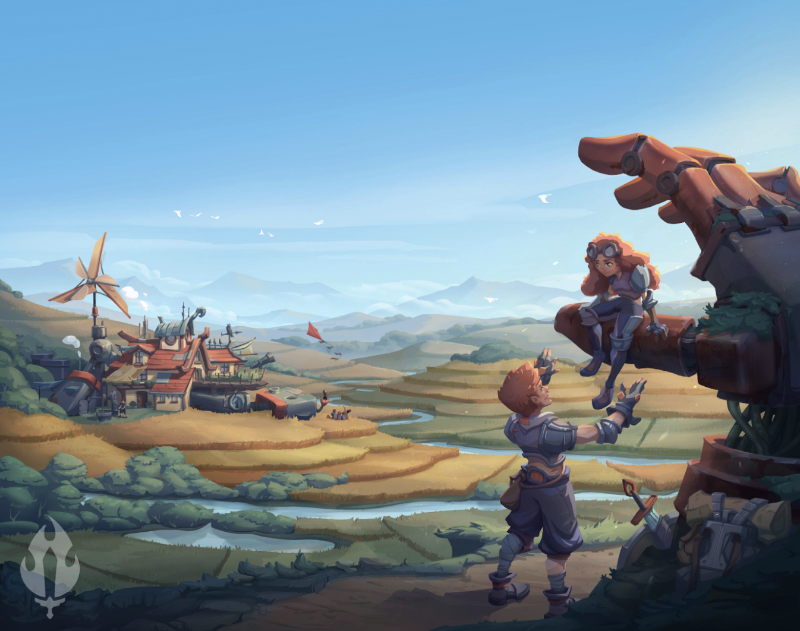
In the past, games were a novelty worth gathering around and celebrating—that was their core value. While they’re no longer news, we now have the opportunity to reclaim what was lost. What lies at the center of this value? Community. Culture. Through gaming and blockchain, we’re witnessing a revival—restoring what we once had: a community rooted in shared cultural values, something many of us have long desired. This should be celebrated, not undervalued. Because now, there’s a real chance to revive a feeling that has nearly become myth and legend.
Cash Grabs vs. Shared Value
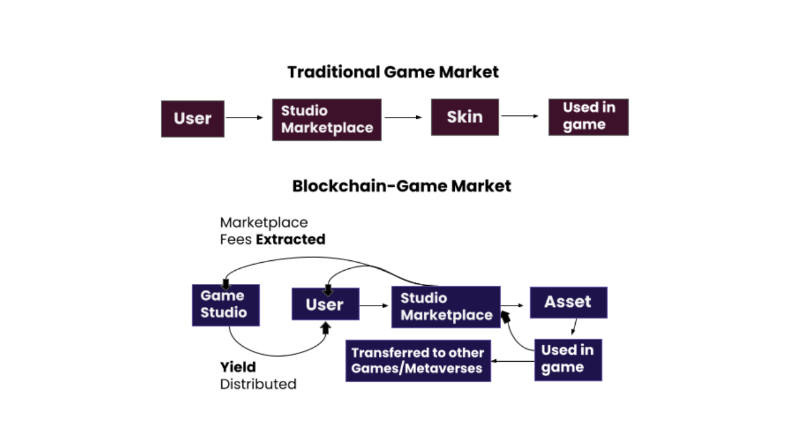
Why haven’t publishers and developers embraced item trading earlier? The primary reason has always been money. Developers and publishers don’t profit from secondary market trades. Thus, their focus remains on capturing larger shares through cash shops, where they keep selling and you keep buying things you don’t truly own. They can always replicate—and have replicated—items, devaluing not only your experience but also your purchases. Once bought, attempting to trade these items often results in harsh penalties. Companies have gone as far as disabling, banning, and completely deleting accounts, projects, time, and effort. One of the core tenets blockchain fixes is the ability to profit from post-sale trading. This paradigm gives companies a way to earn without constantly pushing DLCs, new versions, gated content, or cash shop bundles. Instead, it allows them to truly focus on making their games as fun as possible.
In a decentralized system, there’s no central entity or middleman—peer-to-peer transactions don’t require prior trust. You can securely trade any NFT item across various markets, with the blockchain handling verification and transfer. Outdated, broken systems riddled with scams, fraud, refunds, and disputes can now be replaced and elevated by blockchain security technology. This is a landmark milestone in combating online fraud.
This kind of fraud is especially problematic in video games, which is another reason developers and publishers haven’t authorized free item trading among users. Unfortunately, alongside the rise of video games, identity theft has also increased since 2015. We’re not talking about millions, but hundreds of millions to billions of dollars—this is the scale of gaming’s economic power. And it’s not just today, but yesterday, last year, ten years ago. Yet, if you never looked closely, you’d never see the countless communities, forums, and local gaming clubs where loved ones, family, friends, and like-minded people gather to buy, sell, and trade within their favorite games—despite the risks of losing everything.
There are many headline-grabbing fairy tales about couples working hard to earn enough through digital item trading to buy a house. How could that be bad? How could involving actual users in profits be negative? Real players—the ones generating buzz, hype, building communities, and shaping metagames. Why shouldn’t they participate in the economy too? Why should only massive corporate giants, towering entities perched atop everything and everyone, reap all the value—especially when much of that value originally belonged to players? Why not share it, build upon it, democratize the gaming economy in favor of users, so we can all benefit together?
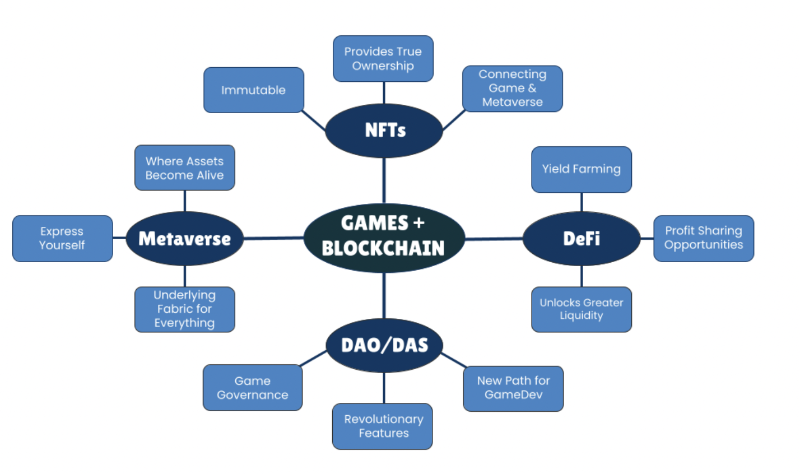
Allowing players to participate in the game economy directly increases their “buy-in” and investment in the game. It also fosters deeper loyalty and commitment. Engagement becomes wholehearted rather than half-hearted. As the saying goes, “rising tides lift all boats”—a perfect metaphor for profiting from games. When we let blockchain technology and smart contracts act as “intermediaries” and build an economic structure focused on creating user value, even the largest corporate giants stand to gain. No longer limited to primary asset sales, they can earn royalties generated on secondary markets. This can further circulate within the player base, turning it into a sustainable revenue system.
Video Games Are Evolving—The Future Is Here
The essence of trading digital items—whether exchanging gold or pulling out your hard drive to give your favorite game avatar to a friend—is the concept of play-to-earn, recently popularized by the rise of blockchain games like Axie Infinity. This concept allows developers to harness what was previously considered a negative issue in games—gold farming, a notorious problem, especially in MMORPGs. In World of Warcraft alone, billions of dollars have been earned, with bankers quitting comfortable jobs to set up sweatshops in developing countries, where workers toil for a fraction of the income.
“We truly have the chance to launch a system that goes beyond gaming…”
There are many insights here. First, surprisingly, workers in these sweatshops earn a higher percentage of sales revenue from gold farming than farmers do in fair-trade coffee. Additionally, the UK Department for International Development has already recognized gold farming as a potential tool for socio-economic development in a report discussing how virtual economies can be transformed into real-world opportunities.
Ember Sword is one such game tapping into the earning potential of gaming. As mentioned before, our plan is to release digital cosmetic collectibles in-game each month, which players can discover by engaging in fun adventures and experiences. By enabling players to obtain genuinely valuable collectibles through gameplay, we reduce the need and desire to engage in exploitative activities like gold farming—since simply playing and enjoying the game becomes more profitable in the long run.
Games hold immense potential, and blockchain technology is the perfect match to unlock it—not only to push the industry forward in ways we’ve never seen before but also to make a real global impact. In fair, transparent, and open systems, this difference matters. We have a genuine opportunity to launch a system that goes beyond gaming—one that captures and expresses the intrinsic value we old-school gamers have always known exists and meant something special. The value of friendship, the value of love, the value of sharing what you enjoy with others who feel the same, and expressing yourself in the purest form.
TechFlow is a deep-content platform focused on alternative asset investment. Follow our official account for more in-depth content, or add WeChat TechFlow01 to join the TechFlow community and participate in discussions.

Join TechFlow official community to stay tuned
Telegram:https://t.me/TechFlowDaily
X (Twitter):https://x.com/TechFlowPost
X (Twitter) EN:https://x.com/BlockFlow_News






