








Full Transcript of FTX Founder SBF's Testimony Before Congress: The Future of Digital Assets and Finance
TechFlow Selected TechFlow Selected
Full Transcript of FTX Founder SBF's Testimony Before Congress: The Future of Digital Assets and Finance
A successful policy framework should allow cryptocurrency platforms to offer both spot and derivatives trading of crypto assets under a unified system, managing risks related to all trading activities in customer accounts through a single rulebook and a single technological platform.
 Navigating Web3 tides with focused insights
Compiled by MIM, TechFlow
Note: This is the full text of the congressional testimony prepared by Samuel Bankman-Fried (SBF), co-founder and CEO of FTX. Including appendices, it exceeds 22,000 Chinese characters—an enormous workload. While we could have summarized it briefly—and much of the content focuses on FTX itself—we believe a complete version better enables readers to understand the narrative logic within Western discourse, particularly SBF’s strong emphasis on stablecoin regulation. In past interviews, SBF has repeatedly highlighted the importance of liquidity and stablecoins for this industry, noting that all industry prosperity rests upon liquidity. Therefore, an appendix specifically addresses stablecoin regulation. Given its length, readers may selectively browse sections of interest.
Finally, a bonus: muscle memory from a seasoned League of Legends player.
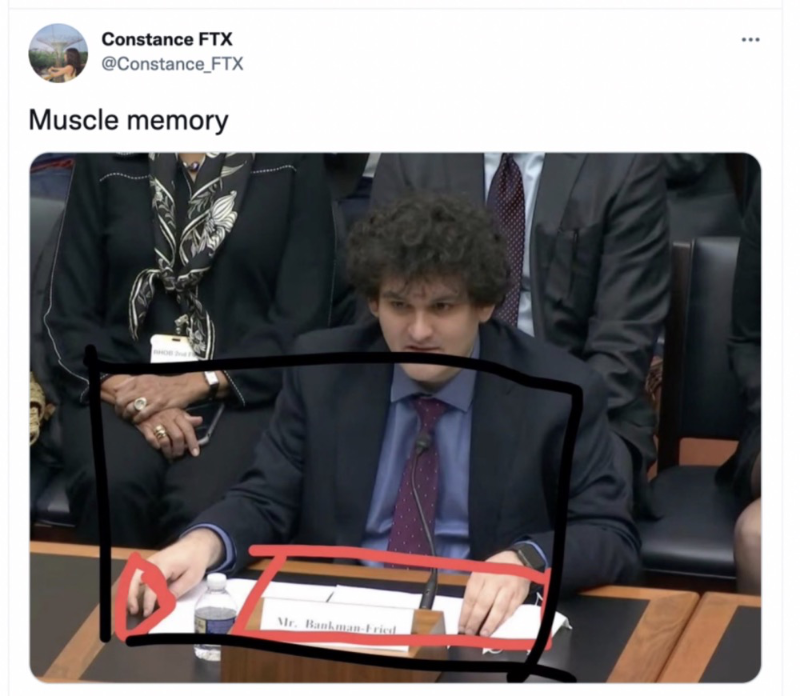
Below is the full testimony:
Chairwoman Waters, Ranking Member McHenry, committee members, and distinguished guests, thank you for inviting me to testify before this committee. As a member of this committee, I am honored to share information and insights about the digital asset industry as this chamber and Congress deliberate on various critical issues. I am pleased to join my colleagues and teammates in providing as much information as possible to help inform a sound and robust debate on whether and how this committee should approach some of these key topics.
Background of FTX
FTX Group was established in 2019 as an exchange or marketplace for trading crypto assets. In the United States, the company operates as a federally regulated exchange with licenses from the U.S. Department of the Treasury and the Commodity Futures Trading Commission (CFTC). FTX was founded by three Americans—Samuel Bankman-Fried, Gary Wong, and Nishad Singh—and began operations in May 2019. The goal in founding FTX was to build a digital asset trading and exchange platform focused on innovation, superior user experience, and strong customer protections. FTX built the FTX.com exchange to create a platform powerful enough for professional trading firms yet simple enough for new users.
Given the core founding team’s experience in large-scale engineering systems at Google and Facebook, along with Wall Street trading expertise, they had unique insight into building a trading platform from scratch—one not constrained by legacy technologies or market structures. FTX aimed to combine the best practices of traditional financial systems with those of the digital asset ecosystem.
Early Success. Since launch, the FTX.com exchange has been successful. The platform currently handles approximately $15 billion in daily trading volume and accounts for about 10% of global cryptocurrency trading volume. The FTX team now includes over 200 people globally, with most focused on compliance and customer support. The primary international headquarters and operational base of the FTX Group is located in The Bahamas, where the company is registered as a digital asset business under the Digital Assets and Registered Exchanges Act of 2020.
Beyond offering competitive products, FTX is known for high performance and reliability. During periods of high volatility across the digital asset markets, FTX.com experienced relatively brief downtimes and technical performance issues compared to major competitors. This focus on customer experience and product reliability has been key to FTX’s position since January 2020 as one of the fastest-growing exchanges in terms of trading volume.
Core offerings include the FTX.com website (which provides access to the market for crypto assets; users can also access via the mobile FTX app), a vertically integrated single technology stack supporting the order-matching engine, an application programming interface (API), custodial services and wallets for customers, and a settlement, clearing, and risk engine system. In typical transactions, only buyers, sellers, and the exchange are involved.
FTX Group holds operating licenses and authorizations across dozens of jurisdictions worldwide, including the United States. At the time of writing, the FTX platform has millions of registered users, with around one million on the FTX US platform. Approximately 45% of FTX.com users come from Asia, 25% from the European Union (EU), and the remainder from regions outside the U.S. (excluding sanctioned countries). Nearly all FTX.us users are based in the United States.
U.S. Operations. FTX serves U.S. customers through the FTX US platform, which includes FTX US Derivatives. FTX US is a separate legal entity with a management and capital structure similar to the broader corporate family, operating its own website (FTX.US) and mobile app. Like FTX.COM, FTX US’s core product is a spot digital asset exchange, enabled through compliance licensing like other U.S. crypto platforms. FTX US is headquartered in Chicago, with additional offices in other U.S. cities.
FTX US Derivatives was formed through the acquisition and rebranding of LedgerX, and now functions as a division offering futures and options contracts on digital commodities to both U.S. and non-U.S. persons. FTX US Derivatives holds four licenses from the U.S. Commodity Futures Trading Commission (CFTC): Designated Contract Market (DCM), Swap Execution Facility (SEF), Designated Clearing Organization (DCO), and Chief Compliance Officer (CCO). Prior to acquisition, the business became the first crypto-native platform to receive a DCO license from the CFTC in 2017—a milestone for both the agency and the cryptocurrency industry. That license was later amended in 2019 to allow clearing of futures contracts.
Commitment to a Diverse Workforce. FTX takes pride in its team and believes a culture of mutual respect and collaboration is one of our key strengths. This culture stems from diversity and requires empathy, understanding, and humility—qualities that benefit our business and enable FTX to better understand customer needs and deliver appropriate products. FTX employees come from around the world with diverse racial backgrounds, and 60% of leadership roles are held by women.
Commitment to Reducing Climate Impact. FTX takes environmental concerns seriously and is consistently committed to minimizing the impact of our operations on the global environment. As a company, FTX has taken several significant steps toward this end. Here, I would like to explain why FTX's environmental footprint is minimal and outline additional measures we've implemented to further reduce our impact.
First, FTX does not operate factories or produce physical goods, so we do not rely on global transportation networks—a major source of energy consumption. FTX employs a small number of staff and maintains only a few small leased offices worldwide, operating primarily online. Thus, FTX’s business operations do not directly contribute to climate change on a global scale.
Second, depositing and withdrawing digital assets on the FTX platform does consume energy, as public blockchains facilitate and record these transactions. However, over 80% of deposits and withdrawals on FTX use low-cost, carbon-compliant Proof-of-Stake (PoS) blockchains. These PoS mechanisms contrast sharply with Proof-of-Work (PoW) blockchains, which require massive energy consumption to maintain network security (e.g., Bitcoin blockchain). By using PoS blockchains for the vast majority of FTX deposits and withdrawals, we significantly reduce the climate impact associated with blockchain activity. To offset the remaining ~20%, FTX subsidizes blockchain network fees to absorb part of the associated energy cost. Deposits and withdrawals are distinct—trading and transfers within the exchange (the bulk of user activity) do not require on-chain transactions and thus consume only the energy needed to run a web-based trading venue.
Third, FTX actively works to account for and mitigate the environmental costs related to mining activities on public blockchains by purchasing carbon offsets to neutralize these impacts. Due to the decentralized nature of mining, pinpointing the exact sources and proportions of energy consumption is extremely difficult. Nevertheless, FTX estimates its annual carbon cost at $1 million and has purchased 100,000 tons of carbon offsets through two providers at a total cost of $1.016 million. Additionally, through its affiliate FTX Climate, FTX has created a comprehensive program focused on solutions with maximum impact on climate change. Beyond achieving carbon neutrality, our initial plan funds high-impact research and supports special projects and carbon removal initiatives. FTX plans to invest at least $1 million annually through FTX Climate. For more details, visit https://www.ftx-climate.com.
Fourth, FTX believes the energy consumption and impact of PoW networks should be evaluated in proper context. Such assessments should consider their benefits, understand differences between PoS and PoW mechanisms, examine how each type of network is used and evolves, and compare them with other energy-consuming activities or industries. For example, Bitcoin has provided tangible financial benefits—access to financial products, asset transfer, wealth creation—for many people, benefits that should be weighed against network energy costs.
Moreover, while PoW networks attract attention due to their energy usage, transaction activity on PoS networks is growing rapidly because they offer faster processing times and lower costs. FTX believes PoS networks will become increasingly important over time, further minimizing the overall climate impact of blockchain technology. Finally, PoW blockchain energy consumption is relatively small compared to other industries, especially when benchmarked against traditionally mined commodities like oil, livestock, and other environmentally impactful assets traded on CFTC-regulated venues—Bitcoin ranks very low in environmental impact among such assets.
Commitment to Giving Back. FTX is dedicated not only to improving customers’ lives through exceptional products but also to enhancing the well-being of broader global communities. To this end, FTX established the FTX Foundation, whose mission is to donate to the world’s most effective charities. FTX has committed to donating 1% of net fee revenue to the foundation. To date, FTX and its affiliates and employees have donated over $10 million to save lives, prevent suffering, and secure a better future for humanity.
Discussion
In this testimony, I will discuss the following topics:
(1) An overview of the products offered by FTX and their role in the digital asset economy;
(2) Stablecoins and how to address risks associated with these tools;
(3) The current regulatory landscape and principles guiding policymakers toward good policy outcomes.
Throughout this discussion, I will distinguish between FTX’s non-U.S. and U.S. operations, referred to as FTX International and FTX US, respectively.
My statement covers several key themes, as it touches on multiple topics.
First, FTX empowers individual investors and consumers. Our products are accessible and affordable, enabling individuals to achieve their economic goals through simplified choices. They can easily access financial products from anywhere (often via smartphones), without gatekeepers assessing rent-seeking fees or introducing investor risk—this is how the digital asset ecosystem tangibly improves people’s daily lives and helps them achieve economic security. Accessible financial tools supported by inclusive policies (balanced with other policy goals) will further empower individual investors.
Second, FTX has designed and operates a market structure platform with reduced risk. It is true that irresponsible actors exist in the digital asset industry—they make headlines. But FTX is not one of them. In fact, FTX has built a resilient, low-risk platform, which is a competitive advantage. Therefore, if policymakers remain flexible and allow for low-risk, round-the-clock, direct-to-investor market structures exempt from traditional intermediated market requirements, the FTX model should fit within any regulatory framework meeting the highest global risk standards. However, such regulatory frameworks are not always optimal for individual investors.
Third, FTX is already subject to the highest level of U.S. federal oversight, including regulation by the Commodity Futures Trading Commission (CFTC) and the U.S. Department of the Treasury, as well as strict supervision by other global and state regulators. As discussed below, FTX supports and desires operation under a unified federal regulatory regime. In all cases, FTX views official-sector regulators as stakeholders and partners, believing ongoing, proactive dialogue with them is essential—this applies equally to the U.S. Congress. We welcome and are eager to share our insights on the digital asset industry and how it can continue improving everyday lives.
Of course, the future is hard to predict, but FTX believes digital assets and, more broadly, blockchain technology are likely here to stay, continuing to offer exciting opportunities for consumers, investors, and entrepreneurs. FTX believes the U.S. should continue leading domestically in realizing these opportunities. FTX fully supports a regulatory framework for digital asset trading that protects investors and ensures orderly markets. To maintain U.S. leadership, policymakers must leverage existing policy strengths while adapting to the best features of the digital asset industry—features that empower consumers and reduce market risk.
1. FTX Products and Their Role in the Digital Asset Economy
Core Product: Digital Asset Exchange. As noted above, FTX’s core offering is its digital asset exchanges—FTX.com and FTX.us. On these platforms, users trade digital assets for cash, stablecoins, or other digital assets. Users place various order types on the centralized limit order book (CLOB). They can submit limit orders at specific prices or trade at the best displayed price on the CLOB. A robust matching engine connects buyer and seller orders and displays the best available prices.
Futures and volatility contracts linked to digital assets are listed on the platform, with or without leverage. Leverage on FTX.com is capped at 20x, while leverage is currently unavailable to FTX.us users (though credit facilities are available to qualified contract participants—see below). The platforms list cash-settled quarterly futures (and perpetual futures exclusively on FTX.com). FTX.com also offers MOVE volatility contracts—similar to futures but expiring based on the dollar amount Bitcoin moves in a day, week, or quarter rather than its price. FTX.com also lists Bitcoin options. Lastly, FTX US Derivatives offers Bitcoin and Ethereum (ETH) options, futures, and swaps to U.S. users.
Users post collateral in cash, stablecoins, or other digital assets to cover initial and maintenance margins for derivatives and leveraged products. The exchange integrates risk management and back-office systems for clearing and settling trades—including updating ownership records of traded digital assets or derivative contracts (clearing), and transferring value between user accounts (settlement), using delivery-versus-payment or delivery-versus-delivery models. Last week’s market events demonstrated the effective risk-reducing attributes of FTX’s core products. On the evening of December 3, 2021, multiple digital assets rapidly declined in value, leading to a surge in trading volume on FTX. This was particularly evident when the FTX risk engine activated and began liquidating relevant client positions. The market drop occurred late, long after U.S. trading hours ended. Yet, because digital assets trade 24/7, the FTX risk engine reacted immediately to falling prices and began liquidating positions before any customer account turned net negative. In a traditional market, the risk management system would not respond instantly but wait until markets reopened days later. During that time, customer positions could deteriorate significantly before any loss prevention mechanism kicked in. Crucially, FTX’s risk model avoids systematically storing such risks over weekends or market closures by addressing risky positions and accounts in real time.
Over-the-Counter (OTC) Portal for Order Arrangement and Matching. FTX.com also provides an OTC portal allowing users to connect with large counterparties, request quotes for spot digital assets, and trade directly. The portal forwards quote requests, returns quotes, and enables order placement. It serves a function similar to other facilities in traditional markets where central limit order books are not used for trade matching.
Margin Lending. FTX platform users can lend their digital assets to others needing them for spot trading. Users wishing to obtain digital assets they don’t hold (including qualified users on FTX.us) can borrow by posting collateral such as cash, stablecoins, or other digital assets from their accounts. The FTX platform includes a lending book system that matches lenders and borrowers.
NFT Marketplace. FTX operates a marketplace where users can mint, buy, and sell non-fungible tokens (NFTs). NFTs are tokens that cannot be exchanged for another. They serve various purposes—redeeming physical items or experiences (like movies or phone calls), linking to digital images, etc. FTX’s NFT marketplace uses an auction system. Users can also purchase directly at the seller’s listed price. Users may choose to display their NFT collections on the FTX NFT portal, continue buying or selling on the marketplace, or do both. The NFT marketplace is open to both FTX.com and FTX.us users.
FTX Pay. FTX Pay is a service enabling merchants to accept payments in digital assets or fiat currency. Users can fund their FTX accounts via ACH or credit card and then pay registered merchants using their FTX account. For digital asset payments, the user’s FTX account is debited the equivalent amount in selected digital assets. FTX facilitates user-to-merchant payments through its payment infrastructure.
Staking. FTX.com allows users to “stake” certain supported digital assets on the platform. Users earn staking rewards; additionally, staking certain tokens unlocks benefits such as reduced trading and withdrawal fees and other rewards. Users can generally “unstake” their digital assets at any time, though a delegation or unstaking period may apply. For certain assets, FTX may allow immediate unstaking upon payment of an unstaking fee.
Types of Digital Assets on FTX. FTX has established listing criteria and frameworks to determine which digital assets may be listed. These include evaluations of security, compliance risk, legal risk, technical risk, and other factors. On FTX.com (unavailable to U.S. users), FTX lists around 100 stablecoins and other digital assets on its spot exchange. These include tokens such as Bitcoin (BTC), Ethereum (ETH), Uniswap (UNI), Chainlink (LINK), Solana (SOL), and Aave (AAVE). Stablecoins include USDT (USD Tether) and DAI.
On FTX.us, FTX adopts what we consider a conservative approach to listing and trading digital assets. Due to stricter listing standards, far fewer tokens are listed on FTX.us. The platform takes care to avoid listing assets with U.S. securities characteristics. Listed assets and tokens resemble Bitcoin and Ethereum—both explicitly recognized by the CFTC as commodities under its jurisdiction.
In summary, this quick review shows that current digital asset economy products and those on FTX closely mirror traditional financial products. This reflects industry maturity, as more sophisticated investors enter and demand familiar products and solutions. Yet, a defining difference is that investors can access all products on a single platform without navigating multiple intermediaries. Moreover, all market data is public and free—users fully see order and trade activity. Easy access to financial products and solutions on a user-friendly platform is a powerful feature that empowers investors, consumers, and entrepreneurs. By simplifying tool usage, users can better focus on daily financial goals and core needs—ultimately promoting greater financial inclusivity and economic security, which FTX believes is its contribution.
2. Benefits of Stablecoins and Addressing Their Risks
FTX believes stablecoins are among the most important payment innovations in the digital asset industry, and our users heavily rely on them for payments and settlement. FTX recognizes the important work of the President’s Working Group (PWG) and has read with interest the recently released “Report on Stablecoins.” FTX has shared recommendations on ensuring stablecoin safety and resilience, included here as evidence—please visit https://www.ftxpolicy.com/stablecoins to read more.
Beyond our recommendations on stablecoin regulation, FTX wishes to highlight two additional points for the committee’s consideration.
First, the committee should understand that FTX currently does not believe federal banking-style regulation of all stablecoin issuers is the optimal solution for consumers. FTX permits stablecoin use on our platform and uses them for corporate fund transfers because we believe they reduce risk. Indeed, FTX chooses to use stablecoins for large fund transfers—including M&A activities—instead of traditional bank payment rails.
To some, using stablecoins may seem less risky than strictly regulated bank payment systems—because stablecoin transfers settle nearly instantly, and both parties can easily verify settlement by checking wallet balances on the public blockchain. This contrasts sharply with wire transfers, which involve multiple intermediaries (each carrying counterparty risk), take days to complete, and are costly. Other payment systems (e.g., ACH or credit card networks) also face scalability and cost limitations, though they hide these from users.
Therefore, FTX questions the notion that "bank-like regulation for all stablecoin issuers is the best solution for consumers." We worry that such regulation might inadvertently introduce risks that stablecoins currently avoid. However, we recognize that issuers and their stablecoins should meet minimum standards on core requirements:
1) Daily attestation of which assets (cash, bonds, etc.) back the stablecoin
2) Periodic audits to confirm asset backing meets requirements
3) Haircuts applied to moderately risky assets
4) Open channels for law enforcement to blacklist addresses and individuals linked to financial crimes
These core requirements can be satisfied under various regulatory regimes, including non-bank federal agencies like the CFTC or SEC. Indeed, legislators have already proposed bills targeting these regulators.
Second, FTX believes continued use of appropriately standardized stablecoins will protect—not threaten—the U.S. dollar’s dominance as the world’s reserve currency. This view may seem counterintuitive, but today’s most widely used stablecoins are pegged to the dollar and ultimately settled in dollars. Such a system reinforces global reliance on the dollar rather than undermining it. In fact, FTX worries that overly burdensome stablecoin regulation could endanger the dollar’s reserve status, as issuers may relocate to other jurisdictions and shift focus to stablecoins pegged to non-dollar fiat currencies.
Certainly, competition among payment providers benefits consumers most, and U.S. policymakers have historically allowed or encouraged such competition. FTX believes new innovations—including stablecoins in payments—often emerge outside defined regulatory boundaries, usually because incumbent providers fail to meet market needs for various reasons. However, to sustain innovation and healthy competition, policymakers should strike an appropriate balance and avoid forcing all innovators into identical regulatory boxes. FTX applauds this committee’s hearing and its effort to understand the benefits of new innovations like stablecoins before acting on PWG report recommendations.
3. Regulatory Oversight of U.S. Crypto Platforms and Operational Challenges
The committee has previously asked thoughtful questions about the best way to supervise crypto platforms offering trading, and some members have introduced legislation on this topic. Others have questioned whether federal legislation is necessary. We appreciate this deeply.
Last week, FTX published “Key Principles for Regulating Cryptocurrency Trading Platforms.” I include it here as evidence—readers may visit https://ftxpolicy.com for details. This document was designed and released to help the committee and other policymakers consider how best to protect investors and serve the public through reasonable regulatory oversight of crypto platforms.
While the FTX Key Principles document contains detailed elements, I’d like to highlight several points for the committee’s consideration.
First, when considering frameworks for supervising spot and derivatives crypto trading markets, policymakers should adopt a principles-based approach leveraging existing policy objectives applicable to traditional capital and derivatives markets. These objectives are broadly universal—ensuring customer and investor protection, promoting market integrity, preventing financial crime, and ensuring overall system safety and soundness. FTX believes any new policy related to crypto platforms should serve these ends, meaning many principles reflected in the Commodity Exchange Act (CEA), Securities Act of 1933, and Securities Exchange Act of 1934 are relevant to our industry. FTX believes it makes sense to appropriately leverage these goals and the expertise of the CFTC and SEC.
Second, FTX and other crypto platforms have brought significant innovations to trading, and a sound policy framework should preserve these innovations because they help minimize risk, promote capital efficiency, and protect investors—better serving the public. As mentioned in this testimony, key innovations include: (1) automated risk management systems ensuring customer accounts trading multiple assets never go net negative; (2) 24/7 trading, reducing risk by enabling continuous market and system risk management without prolonged interruptions; (3) non-intermediated market structures giving all investors equal market access, minimizing conflicts of interest; (4) free access to market data for all users, aligning platform operator incentives with investor interests.
Third, a successful policy framework should allow crypto platforms to offer both spot and derivatives trading of crypto assets under a unified system, managing all customer account-related trading risks through a single rulebook and technological platform. In mature jurisdictions like the U.S., regulatory frameworks are fragmented across securities, commodities, and their derivatives markets. FTX has shown that integrating assets and their derivatives markets delivers significant benefits to market participants. These stem from a single rulebook, a unified collateral and margin system, and a single technology stack spanning front-end (user interface) to back-end (settlement and risk management). Given their risk-reducing and customer-protective attributes, public policy should permit this single-rulebook model to continue.
To achieve this, in places like the U.S. with multiple regulators, agencies should cooperate and use their authorities where applicable to accommodate the crypto asset model. Our Key Principles propose a joint regulatory program where crypto platform operators can opt in, designating one regulator (CFTC or SEC) as primary and the other as secondary. This model is familiar to global regulators and requires shared responsibility and cooperation. A key feature—having a primary regulator—is likely necessary to support a single rulebook, matching engine, and risk engine powered by one technology stack—features that again reduce risk.
FTX believes this model could largely be built within existing CFTC and SEC structures, though some policy gaps may remain—such as appropriate treatment and disclosure for certain crypto assets that aren’t purely securities but may evolve in function/purpose while still meeting the CEA’s commodity definition. While some tokens are securities, others lack clear classification under current definitions. Policymakers may need to refine definitions and establish differentiated disclosure frameworks. In any case, FTX envisions all tokens and their derivatives trading on a single platform under one rulebook, with a unified system managing all customer account trading risks.
Fourth, appropriate regulatory frameworks for crypto assets should be market-structure neutral and explicitly allow non-intermediated markets to exist. While FTX believes U.S. regulators have authority to accommodate current market structures, such models aren’t typically considered under CFTC or SEC regimes. As owner and operator of registered futures markets and clearinghouses, FTX is familiar with CFTC’s system and finds its principles-based supervision meaningful. The regime requires platform operators to establish publicly disclosed and approved policies/procedures addressing key issues: asset custody, lifecycle-critical features, reporting market activity to regulators, providing market data to users, maintaining sufficient financial resources, and preventing cyberattacks and financial crime. Given the constant emergence of new digital asset categories, this approach is particularly valuable—it offers flexibility for both the CFTC and platform operators to adapt rules, policies, and procedures quickly to new market developments.
Conclusion
FTX thanks the committee for the opportunity to share insights on the digital asset ecosystem and propose responsible ways to sustain industry benefits and fulfill its promise.
FTX believes that, despite potential cautious modifications or constructive interpretations by regulators, most or many of the products and tools offered on our platform can continue serving U.S. customers under current regulatory paradigms. We believe new policies affecting the digital asset industry and FTX’s business should build on existing best practices—our recommendations on stablecoins and market regulation follow this principle. Through this approach, FTX believes combining the best of traditional finance and digital assets will let consumers continue using empowering tools to pursue economic security—all in one place, from a single low-risk platform.
Appendix
Stablecoin Regulation
Note: As global regulators continue considering whether and how to regulate components of the digital asset ecosystem, we believe sharing our views on practical, responsible, and thoughtful regulatory approaches is crucial. This article is not commentary on existing stablecoin regulations, legal interpretation thereof, or advice on suitability of trading or holding specific stablecoins. Rather, it explores a hypothetical new regulatory framework for stablecoins designed to address key regulatory priorities while preserving essential usability features.
Background on Stablecoin Regulation
As the crypto industry matures, establishing a robust regulatory regime that grows alongside it is vital. This ensures the industry takes seriously its responsibilities to protect consumers, ensure transparency, and prevent illegal activities, while still allowing room for innovation and growth.
Stablecoins play a crucial role in the crypto ecosystem; most crypto transactions settle in stablecoins, making them one of the most promising payment tools in broader finance. Currently, it remains unclear under which regulatory regime stablecoins will ultimately fall.
What Are Stablecoins?
Let’s start with the basics: What exactly are stablecoins?
Various stablecoin designs exist in the crypto ecosystem. For illustration, we assume a U.S. dollar-pegged stablecoin in this article, though euro, pound, and other fiat-pegged counterparts exist. We assume a 1:1 exchange rate—one token equals one dollar. Let’s call this hypothetical token STBC.
In this scenario, the hypothetical stablecoin—STBC—is a blockchain-based asset redeemable for USD. This is typically achieved through the following mechanisms:
Reserves: Usually, a stablecoin is backed by one or more USD-denominated bank accounts or similar assets, held in the name of the sponsor, issuer, or similar entity. The dollar value of these assets should equal or exceed the stablecoin’s circulating supply.
Tokens: STBC is a blockchain-based token, with one token representing one dollar (supported by the mint/redeem process described below). Tokens may be issued by private enterprises, central banks, or decentralized protocols.
Mint/Redeem: To create one STBC token, an eligible user must deposit one USD into the reserve account. In return, the protocol mints one new STBC token and sends it to the user.
Likewise, an eligible user can send one STBC token back to the protocol to redeem one USD. The protocol then burns the token and returns one USD to the user.
What Are the Benefits of Stablecoins?
We believe stablecoins are one of the most important innovations in the crypto industry.
Suppose you want to send $20 to a friend. What options do you have?
a) You and your friend might both use a peer-to-peer app (like Venmo), each figuring out how to fund/withdraw from it.
b) You could wire $20. This may take a day and cost over $5; internationally, it could take a week and cost much more.
c) If you and your friend have U.S. dollar bank accounts, you could send $20 via ACH. Settlement may take days, and both parties face "reversal risk."
d) You could withdraw $23 from an ATM, pay $3 in fees, hand $20 to your friend, who then figures out how to spend paper cash.
e) You could send 20 STBC to your friend’s crypto wallet; on an efficient blockchain (or if both use the same exchange), the transfer arrives in under a minute, costing a fraction of a cent.
Option (e) powerfully illustrates stablecoins as an efficient remittance method.
Taking this further, suppose a user wants to build a blockchain-based application. How should users deposit and withdraw assets?
Here, users face the same choices and cost structures; once again, stablecoins emerge as the cheapest, safest, and fastest way to interact with the application.
What Are the Risks of Stablecoins?
Three main risks are associated with stablecoins:
Reserve Volatility Risk
If a stablecoin is backed by assets other than USD in a bank account, those assets may depreciate against the dollar. For example, if 1,000,000 tokens are backed by $1,000,000 worth of SPY (S&P 500) ETF, and stock prices drop 5%, only $950,000 backs 1,000,000 stablecoins—meaning the “stable” token has effectively devalued relative to its promised redemption!
Unlike investment products where clients benefit from asset appreciation, stablecoins rarely exceed $1 in value because users can always mint more at $1 each. Thus, the core idea behind reserve assets should focus on low-volatility assets closely resembling the dollar. U.S. Treasuries may be suitable; Bitcoin could work only if overcollateralized to reduce holder risk. Backing 100 stablecoins with $101 BTC is unacceptable—a 2% BTC drop causes undercollateralization. But backing 100 stablecoins with $400 BTC is far safer, requiring a 75% BTC drop before reserves are threatened. Any stablecoin issuer or designer must have a transparent, robust risk model to manage reserve volatility and determine suitable reserve assets.
Redemption Risk
Concerns also arise if a user holding 1,000 STBC tries to redeem them but gets rejected.
This could happen if reserves are depleted—no USD left to redeem STBC—or if reserves are non-USD and have depreciated.
Alternatively, the issuer might arbitrarily block redemptions, perhaps to present more favorable metrics.
Either way, lack of redemption ability (or lack of transparency in redemption processes) poses user risk.
Financial Crime
The final risk is that stablecoins may be used for financial crime or funding illegal activities.
Any stablecoin issuer or designer must implement creation, redemption, and usage mechanisms aligned with regulations to prevent such misuse.
What Would a Reasonable Stablecoin Regulatory Framework Look Like?
As noted, we believe stablecoins represent a significant positive use case and have transformative potential for payments and remittances. Stablecoins will revolutionize the payment industry, drastically reducing friction and transaction costs, offering reliable, accessible value transfer worldwide. Therefore, we believe discussions around stablecoin regulation must focus on practical frameworks that simultaneously address usability, reliability, transparency, consumer protection, and identification/prevention of financial crime.
We look forward to engaging regulators on what such a framework might look like. There are many possible approaches, and we welcome feedback and active participation from regulators and other industry players.
As noted, stablecoins carry real risks that must be mitigated through thoughtful framework design.
Thus, while we expect ongoing discussion on details, we support proposals for a transparency-based reporting and registration system for stablecoins.
A proposed framework could include:
a) Stablecoins must be issued to U.S. users under supervision of one or more U.S. regulators and registered on an official “Regulated Stablecoin” list.
b) Registration would be notification-based, emphasizing transparency and reporting, with clear obligations for recordkeeping, reporting, and periodic reviews. The overseeing regulator would have authority to revoke certification.
c) Registration would require daily reserve disclosures detailing total net reserve value and breakdown by asset category (e.g., “$100 at XYZ Bank; $95 in U.S. short-term Treasuries; $50 in U.S. prime commercial paper; $30 in AA+ foreign commercial paper; $10 in other permitted assets”).
d) Issuers must maintain “adequate” reserves, defined via haircuts on reserve types. For example: 0.10% haircut on FDIC-insured bank USD; 1% on U.S. short-term Treasuries; 10% on AA+ commercial paper; 15% on A-rated commercial paper; 20% on EUR, GBP, JPY, CHF, CAD, AUD, SGD, HKD; 50% on Bitcoin.
e) Independent accounting firms must conduct semiannual audits to verify reserve composition.
f) Clear, transparent redemption requirements (e.g., KYC documentation) must be mandated, with explicit complaint procedures if redemption is denied.
g) To combat financial crime, all registered stablecoins must be on public ledgers, and creation/redeem processes must be structured to ensure stablecoins linked to illicit activity (detected via on-chain monitoring tools) cannot be redeemed.
As noted, this is a basic framework illustrating key components of a potential stablecoin registration program. Each point aims to protect usability while addressing regulatory concerns. Properly designed, such a framework could enhance stablecoin usability. We look forward to discussing these concepts with policymakers, regulators, and market participants.
Join TechFlow official community to stay tuned
Telegram:https://t.me/TechFlowDaily
X (Twitter):https://x.com/TechFlowPost
X (Twitter) EN:https://x.com/BlockFlow_News






