SBF's Latest Prison Interview: FTX Never Went Bankrupt, Just a Liquidity Crisis
TechFlow Selected TechFlow Selected
SBF's Latest Prison Interview: FTX Never Went Bankrupt, Just a Liquidity Crisis
SBF expressed disappointment with the Biden administration, stating that his trial had become a political tool.
 Navigating Web3 tides with focused insights
Author: The New York Sun
Translation: BitpushNews
Interview Background:
· Interviewer: Ari Hoffman, Deputy Editor of The New York Sun.
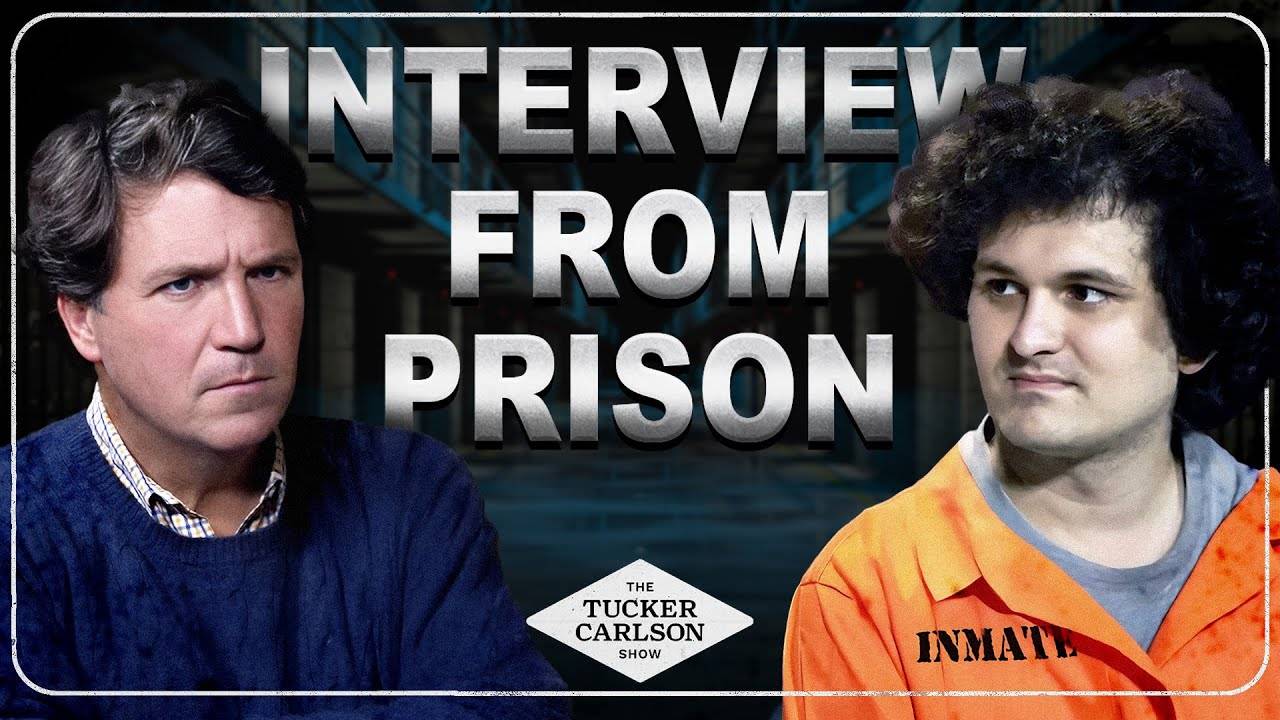
· Interviewee: Sam Bankman-Fried (SBF), founder of FTX, sentenced to 25 years in prison on charges including fraud.
· Interview Date: February 18, 2025, conducted in three sessions of 15 minutes each, with one-hour intervals.
· Location: Metropolitan Detention Center, Manhattan.
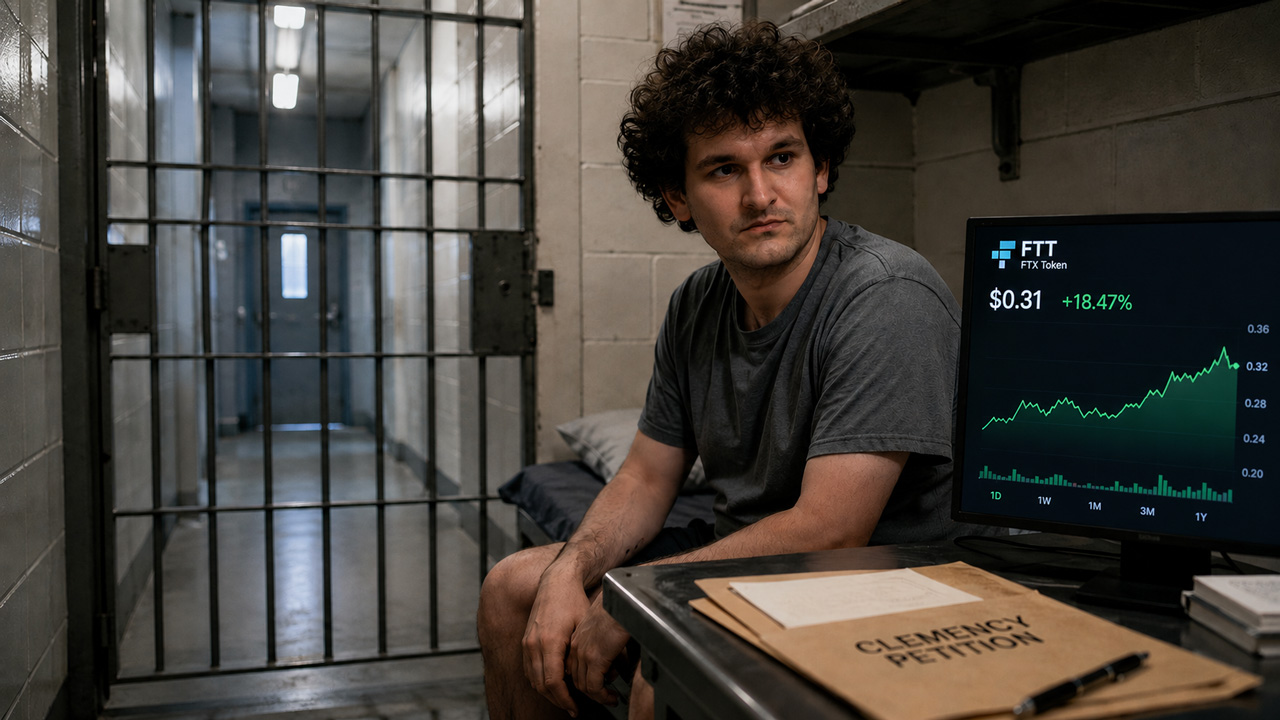
During the interview, Sam Bankman-Fried elaborated on his views regarding FTX's collapse, legal battles, the U.S. political landscape, and the future of the cryptocurrency industry. He insisted that FTX was never insolvent but faced only a liquidity crisis, criticized the FTX bankruptcy trustee and the U.S. judicial system for unfairness, claimed his case was a "victim" of political conflict, and expressed cautious hope for a potential pardon by President Trump. He also shared personal reflections, such as his experience falling from being one of the world’s wealthiest individuals to rock bottom.
Below is a structured summary of the full interview. For readability, the dialogue from the video has been moderately edited.
AH: Hi, Sam, this is Ari. Great to speak with you. We have limited time, so I’d like to dive right in. I know you have some thoughts about the current political environment, especially around pardons. Also, your prosecutor Danielle Sassoon has recently made headlines. Why don’t you start by sharing your thoughts?
SBF:
Sure, a lot has happened recently. As you mentioned, my prosecutor Danielle Sassoon has been in the news lately due to her dispute with the Trump Justice Department. My trial judge, Judge Kaplan, was also a New York judge appointed by Trump, which ties into a broader political struggle—the incoming Trump DOJ versus what they see as the Biden DOJ.
President Trump’s view of the Justice Department, combined with distrust from some within his circle toward the judiciary, makes this situation even more complex. They believe the DOJ has become increasingly politicized over recent decades, especially lately.
AH: Do you think your case is connected to this political struggle?
SBF:
It certainly is part of it, though there are many other factors too. High-profile trials often involve career implications for all officials involved. I don’t believe my case received a fair or impartial trial, particularly due to certain rulings in court.
For example, the judge allowed prosecutors to tell the jury that “all investor money was lost,” while simultaneously blocking my defense team from rebutting that claim. But that simply wasn’t true. This became a critical point in the trial, and the story the jury heard was false.
AH: What do you think about the recent turmoil at the Justice Department, especially in the Southern District of New York (SDNY)? Do you think misconduct by prosecutors played a role in your case?
SBF:
I think there are parallels. Take, for instance, the sentencing outcomes for those who pleaded guilty. We had a Republican who admitted guilt to only minor charges, yet he was sentenced to seven-and-a-half years—four times longer than the combined sentences of the other three defendants. Meanwhile, others who pleaded guilty seemed to receive much more lenient treatment. The disparity in sentencing is striking.
Additionally, prosecutors threatened his wife, saying they would charge her if he didn’t cooperate—she was running as a Republican congressional candidate at the time. That kind of tactic is deeply political.
AH: In media coverage, you’ve been portrayed as a wealthy donor primarily supporting Democrats, with only symbolic contributions to Republicans. Do you feel there’s a misunderstanding about your political stance?
SBF:
It’s actually more nuanced. In 2020, I did make significant donations to Biden’s campaign, partly because I didn’t want the Democratic Party to become a Bernie Sanders-led party. However, by 2022, my political views had shifted.
I spent considerable time in Washington engaging with lawmakers, regulators, and executive agencies, particularly on crypto policy. I became deeply disappointed with the Biden administration and the Democratic Party, especially on cryptocurrency regulation. Their policies were devastating for the entire industry. Republicans, comparatively, were easier to work with.
So, my efforts in Washington focused more on Republicans, trying to prevent excessive regulatory actions by the Democratic government. The Biden administration proved highly destructive and difficult to collaborate with. Frankly, Republicans were more rational. I spent a lot of time in D.C., doing everything I could across party lines to stop harsh government measures against the industry.
AH:There’s been a lot of discussion about the shifting attitude toward tech giants—people like Zuckerberg and Bezos, whom you likely interacted with. Do you think, had the trial not happened to you, you might have been on stage at an inauguration? Or let me rephrase: Do you see what’s happening now? Do you understand it? Or how do you view it?
SBF:
I obviously can’t speak for them, but I think they’re seeing some of the same things I’ve observed over the past four years. You saw Zuckerberg express what started as a reasonable, constructive position on government misinformation, which eventually turned into something more resembling political censorship. I think they encountered similar frustrations working with the Biden administration, just like many in the crypto space discovered—anything related to business and ultimately free speech.
AH: Do you think your trial was used as a political tool?
SBF:
I think to some extent, yes. Many high-profile cases are like this—tied to prosecutors’ careers, media attention, and political influence. I don’t believe this was a fair trial.
AH: What do you think about politicians launching meme coins? Have you heard of the TRUMP coin? He launched it before the inauguration.
SBF:
I’ve heard of it, though I don’t know much about it—my information sources in prison are somewhat limited. But I’m not surprised to see politicians entering the digital space. I expect we’ll see more aspects of life move into this domain over time, partly because it’s a far more flexible medium compared to traditional finance.
That’s why the industry grows so fast and innovates so rapidly. There are many reasons, but one key factor is that building within it is much easier. Infrastructure updates faster and is more open.
AH: What’s your view on the bankruptcy process? Do you think FTX was truly bankrupt?
SBF:
FTX was never bankrupt. It was a liquidity crisis, not an insolvency issue. At the time, we had enough assets to repay all customer funds. But due to the law firm’s takeover and their handling of the situation, the process became extremely slow and even misled the public.
Customers could have recovered their funds as early as November 2022. But the bankruptcy trustee took two years to acknowledge sufficient assets existed. They initially claimed only $1 billion in assets, but now $15 billion has been identified. This was a complete management failure.
AH: What’s your perspective on how funds were used between FTX and Alameda Research?
SBF:
FTX was a leveraged trading platform where customers used margin. Alameda Research was FTX’s primary market maker, playing a crucial role in the market.
All asset flows are traceable through financial records. We maintained clear records of assets and liabilities, and at no point did liabilities exceed assets. The problem arose when the liquidity crisis triggered market panic, making it impossible to quickly liquidate assets.
AH: Do you believe you were wrongly convicted?
SBF:
Absolutely. Of course, looking back, I would have made some different decisions. But the most important thing is that in November 2022, I should have refused to let Sullivan & Cromwell take over FTX. I should have continued managing the liquidity issue myself instead of allowing them to take control and completely mislead customers. I didn’t. Since then, it’s been a painful few years of waiting—not just for me, but for millions of customers falsely told no money remained, receiving nothing until recently.
This caused millions of customers to wait two years to recover funds that should have been safe from the beginning.
AH: For most people, the amount of money you managed and handled is almost unimaginable. What is your relationship with money? I mean, there are many articles about your interest in effective altruism and other things, but from your perspective, what does having so much money feel like? And losing it suddenly—how was that experience?
SBF:
I basically divide it into two categories: my personal livelihood, like individual spending. From that angle, my life hasn’t changed much. I lived off my salary—a decent $200,000 a year, but nowhere near billions. I didn’t change my lifestyle drastically. I never felt strong temptations—I never really understood the appeal of yachts. That was never something I cared about. Instead, I thought about my impact on the world.
I viewed it largely through the lens of effective altruism: I had substantial funds to donate—what could I do with it that would be most beneficial? Some went to global health initiatives, helping people who die from diseases that shouldn’t kill anyone anymore—malaria being one example. Some supported animal welfare, pandemic prevention, and various other causes.
Certainly, some also went to politics. That’s how I thought on a larger scale, because frankly, with billions of people in the world, millions die annually from neglected tropical diseases—a domain where funding on the scale of billions can genuinely make a meaningful difference.
AH: If you were to regain your freedom, do you have any plans?
SBF:
You know, money isn’t the priority. I don’t miss the money—freedom is what matters. Right now, I’m still awaiting the outcome of my appeal. If successful, I’d return to meaningful work, particularly in technology and finance.
AH: If you found yourself free again, in whatever way, I mean, do you have any ideas what you might do? Would you consider returning to the crypto space?
SBF:
Obviously, that’s very far off. I’d carefully consider what I want to do in the future—even then—but I try not to dwell on it too much now, since I can’t control anything.
AH: What do you miss most in prison?
SBF:
Freedom. I miss the ability to access information instantly and make decisions on my own. I used to constantly build new things, and now I can only wait passively.
AH: What’s next for you? In the immediate sense, what are your plans for the coming weeks or months? Does it feel like everything’s the same, or is there a narrative arc unfolding?
SBF:
You know, days blend together. Prison doesn’t offer much to do. I was used to working hard, and here there’s nothing. But at a higher level, one thing clearly ahead is the resolution of my appeal. We have oral arguments scheduled—likely within the next three to six months. I feel cautiously optimistic, but the odds are always stacked against anyone in the federal criminal justice system.
So cautious optimism just means I believe there’s a chance, and I hope the judges will approach the case with openness, care, and critical scrutiny. Beyond that, prisoners don’t really control their lives—so most things happen to me, not by my choice.
AH: Thank you, Sam. Hope you get a fair outcome soon.
Join TechFlow official community to stay tuned
Telegram:https://t.me/TechFlowDaily
X (Twitter):https://x.com/TechFlowPost
X (Twitter) EN:https://x.com/BlockFlow_News
 比推 BitpushNews