








Mechanism Crypto Game Paper: The Financialization of Entertainment
TechFlow Selected TechFlow Selected
Mechanism Crypto Game Paper: The Financialization of Entertainment
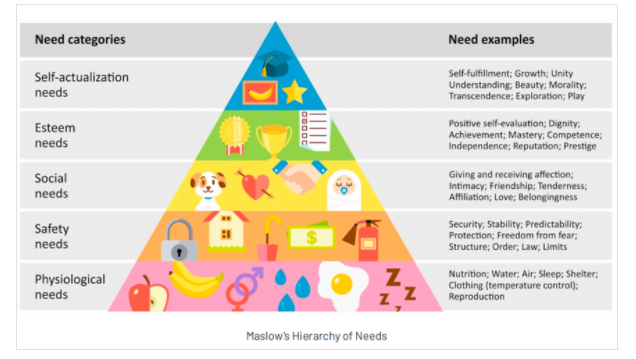
In games, the threshold for fulfilling desires is lower than in real life, allowing people to satisfy their basic needs through them.
 Navigating Web3 tides with focused insights
Author: Mechanism Eva Wu
TechFlow is authorized by the author to translate and republish
As the crypto gaming space becomes increasingly saturated, perspectives on it rarely show nuance—instead, people tend to take sides between “everything is a Ponzi scheme” and “crypto games will fundamentally transform work, life, and play forever.” As traditional gamers and developers transition into crypto investors, they bring their personal and professional identities (and capital) into these concepts, making discourse in this space deeply subjective.
In this paper, I share my recent thoughts on crypto gaming, structured in key points. I discuss:
(1) Short-term vs. long-term trends.
(2) The current reality: financial incentives are driving growth.
(3) Opportunities and execution risks for entertainment-driven crypto games.
Financialization of Entertainment
Traditional games have already been moving toward the financialization of entertainment—people can earn money through skin trading, streaming, or professional play. Crypto simply takes this to a new level. Currently, I observe two main categories emerging:
(1) "Play-first" crypto games, where core gameplay is fun and engaging, and crypto serves as a competitive advantage to further attract players.
(2) "Earn-first" crypto games, where the primary appeal—and ultimately the fun—comes from earning money within the game’s crypto economy.
Both types tap into fundamental human motivations for playing games: games lower the barrier to fulfilling desires compared to real life, satisfying basic needs (see Maslow’s hierarchy of needs). Put differently, humans enjoy playing versions of life within parameterized, alternate realities. The most popular games leverage mimetic desire—creating loops that both satisfy and shape desire.
Play to Earn, Earn, Earn
Currently, Axie Infinity leads the crypto gaming space. Despite criticism from many game design experts about its lack of engaging gameplay, it has achieved a $35 billion valuation ($AXS). Dedicated players can earn thousands of dollars per month, attracting low-income players seeking economic opportunity—especially in the Philippines, where 40% of global players are based.
Axie Infinity and dozens of clones suggest that fun may not be essential to a crypto game’s success—the critical factor is rewarding players with real-world income. Illuvium won’t launch for another two years, yet it already has an $11 billion valuation ($ILV), driven largely by pre-launch token and staking mechanics.
Key questions around the early appeal of "play-to-earn" (P2E) games:
(1) How much do players actually care about the core game itself?
(2) Is earning potential and NFT market value more important than gameplay?
(3) More fundamentally, if money is the goal, is it truly a game—or just a gamified micro-economy centered on "farming crypto" as the core mechanic?
While this may sound like a sin in gaming, in many ways crypto investing and trading itself can be seen as the internet’s largest massively multiplayer online role-playing game (MMORPG)—one many find highly addictive and entertaining.
Timing Predictions: Play-First vs. Earn-First Games
Earn-First Games: Economy-Centric, Enabled by Crypto
Due to shorter development cycles, investor capital flooding into associated guilds, and asymmetric rewards attracting waves of new players, earn-first games will see the fastest short-term growth and competitive movement.
Early Appeal of Earn-First Games
With token incentives guiding and sustaining interest among players and speculators, earn-first crypto games can enter the market faster. Because investors and traders compete to become top players, successful P2E games may generate high speculative premiums. Crypto natives find such games particularly exciting (regardless of actual fun), as they experiment with concepts like NFT flipping, airdrops, staking, yield farming, and ownership economies.
Although these crypto-native games may initially aim for fun gameplay experiences, user analysis reveals that earning opportunities are what truly drive player growth. For these players, gaming blends with work and investment—they make calculable opportunity cost decisions about time and strategy when choosing which NFTs to buy, which games to play, and which tokens to farm.
The rapid rise of crypto-native guilds, communities, and esports leagues around earn-first games proves that earning is central. Guilds like YGG and Merit Circle (which recently raised over $100 million) exist and trade at massive premiums because the earn-first games they participate in offer real earning opportunities. If you believe in today’s gaming guilds, you must also believe in earn-centric games—where earning is the core.
The Trap
All games in the world aim for genuine enjoyment, but developers must remain pragmatic about who their current users are, why they play, and who their primary target audience should be. At this stage, crypto games typically target two overlapping groups: traditional gamers and crypto investors. If a game's marketing and distribution revolve around crypto exchanges, token launch platforms, and industry events, then despite any intention to build games, developers aren't targeting traditional gamers. Currently, most crypto games target crypto enthusiasts and low-SES players motivated by earning opportunities—an audience that remains large and growing.
Most games fail to cross the chasm from early adopters (crypto enthusiasts) to mainstream markets (traditional gamers or low-SES players). Nevertheless, games like Axie Infinity are paving the way, attracting a broad audience interested in earning through gameplay.
Some early successful crypto games simply embraced crypto-native principles, offering entertainment through earning. Meanwhile, some developers will spend years building AAA-quality titles aimed at general gamers—but face a major risk: after months or years of development, they might deliver only a mediocre game that lacks competitiveness in earning potential. Compared to replicating traditional game fun, a more viable path for developers in this space is focusing on creating a minimum viable product centered on engaging play-to-earn mechanics.
Will the Music Stop?
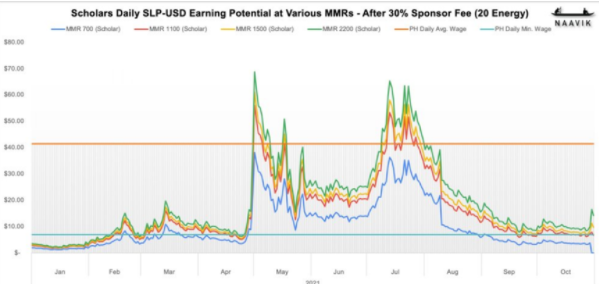
Earn-first games inherit a tough sustainability challenge—they cannot sustainably grow their economies indefinitely. Currently, Axie Infinity’s revenue has begun to decline, discouraging players whose primary motivation is earnings. If new players cannot win and profit, Axie’s inflation will outpace growth, triggering economic collapse. Hundreds of guilds invested in Axie Infinity would be affected. Since most of its user base plays for financial incentives, attempts to make gameplay “more fun” are unlikely to solve impending economic decline.
Research from Lars & Naavik shows that a typical Axie Infinity player’s daily income has already fallen below the minimum wage in the Philippines. High-level players still earn above minimum wage, but their incomes have also declined since August.
That said, these endogenously inflationary, Ponzi-like economies are more durable than expected—especially when abundant venture capital rushes to fund the next big P2E hit. Similarly, online casino games focused on earning—like poker and slot machines—have sustained multi-billion dollar industries for decades.
While earn-first crypto games aren’t identical to online casinos, we see them similarly blending the desire to earn with financial and game mechanics. While earn-first crypto games won’t linearly evolve to replace traditional games, they can innovate and forge their own paths and business models, enabling sustainable earning and enjoyment.
To summarize this section, I don’t believe current iterations of crypto games will simply unlock “the next phase of gaming” or trigger a paradigm shift. In the short term, crypto gaming doesn’t appear to be an evolution of traditional gaming, but rather products taking entirely different paths. While monetary incentives currently attract players, in the long run, games using crypto to unlock fundamentally new mechanics will be better positioned.
Just as DeFi protocols cannot rely solely on inflationary tokenomics and yields, games emphasizing fun over crypto-first approaches can stand as independent products, making them strong contenders. However, these games will experience delays until we see more market entries, due to longer development cycles and significant execution risks. More on this below.
Play-First Games: Fun Gameplay Meets Crypto
In the medium term, we’ll see more gameplay-first games introducing crypto concepts and innovations. These innovations will span a spectrum—from cosmetic skins becoming NFTs to token models enabling player ownership within games.
Initially, developers will attempt to force “play-to-earn,” tokens, and NFTs into very traditional game frameworks. I predict extensive experimentation with P2E as a concept over the next 2–5 years. But in the long run, I believe developers will use crypto to unlock entirely new game mechanics. For example, games could introduce creative ideas like dynamic NFTs that mimic wear-and-tear, or bottom-up games built from user-generated content (e.g., Loot). Ultimately, crypto can become a vast sandbox for gaming innovation.
This is how crypto gaming can usher in a new golden age. With great graphics, compelling stories, and emotionally engaging hooks, these games can use crypto in novel, exciting ways to enhance achievement and deepen player immersion.
Opportunities
Crypto also unlocks new powers in gaming. In traditional games, key stages of the creation value chain capture most industry profits. Crypto enables game companies to monetize almost any stage of development, flipping the existing “free-to-play” model. Most notably, games can raise funds and build communities even before launch. Traditional games historically considered monetization modes upfront: paid games, free-to-play, and subscriptions. Changing revenue models is one of the most exciting frontiers. Without free-to-play, there would be no esports as we know it.
Additionally, crypto introduces a new class of participants beyond traditional gamers: enthusiasts, collectors, and earners. These individuals may not actively play but support the ecosystem through trading, betting, event participation, livestream viewing, speculation, and collecting memorabilia. Crypto allows these peripheral actors to contribute meaningfully to a game’s future in novel ways.
Likewise, it offers (a double-edged sword) the ability to let players own their in-game achievements and items, effectively financializing their enjoyment. While most players haven’t yet developed strong ownership desires, one successful crypto game could awaken this sentiment, prompting players to question why they’ve never owned their digital assets. However, this comes with risks.
Risks
Despite promising prospects, crypto-enabled games won’t go mainstream simply because experienced developers enter the space. In fact, many games incorporating crypto create unnecessary complications. Understanding (and experimenting with) how crypto interacts with gameplay remains limited, leading to extremely difficult design challenges.
Even so, these crypto games can’t succeed on AAA visuals alone—they must surpass existing games in overall quality. A game mastering crypto economics but delivering mediocre gameplay can at best poach users from other crypto games, without impacting the $200 billion online gaming industry. I believe the games that ultimately succeed over the next decade will be those using crypto to unlock new gameplay mechanics—not merely adding P2E layers to traditional games.
Today’s best games simulate and parameterize real life, operating within guardrails as closed economies. Tokens or NFTs financialize parts of games, removing key barriers and fundamentally altering gameplay by exposing them to the full financial landscape of the “real” world. Faced with a game influenced by speculators, investors, and arbitrageurs, traditional developers lack experience designing and controlling gameplay and player psychology. These games feature external incentives tied to token and NFT price movements. The first step is acknowledging this reality and intentionally designing for these forces.
While many developers try to compensate knowledge gaps with crypto-native VCs or advisors (who boast expertise in tokenomics), in reality, almost no games successfully address tough design problems through collaboration between crypto natives, seasoned game developers, and economists using a “player-first” approach. Developers should seek partners who can help navigate the many opportunities and external factors crypto introduces to their games.
Ownership and Monetary Value Affect Player Psychology
“Ownership”—especially via NFTs—has become a buzzword. It’s easy to forget that the primary reason for tokenizing game assets is to introduce monetary value or increase transferability. Ask traditional gamers, and many still believe they “own” their assets—even if they’re not NFTs. While most current crypto games use NFTs as stores of value, NFTs can also serve creative purposes—like building identity across games or sharing with friends.
Tokenizing in-game assets introduces a difficult design challenge: assigning monetary value may negatively impact gameplay. When Diablo III introduced a real-money auction house (trading in-game items for cash), some players loved it—but ultimately led to player attrition. The auction house disrupted the natural rhythm of loot drops, leaving some players feeling unrewarded. This remains an unsolved design problem. For Diablo III players, introducing monetary value changed how and why they played. Players who once played for fun began playing for profit—a psychological shift that caused many to quit in search of less financially entangled games.
Game psychologists note that much of gaming’s joy and addictiveness stems from unpredictable, random rewards. The ability to easily purchase known rewards with money may strip away the core fun. NFTs and many P2E games are rapidly moving toward pure financialization, potentially killing essential gameplay. To hardcore gamers, gaining material advantages in competitive games through speculation feels deeply unfair.
Traditional gamers value skill-based meritocracy, making the addition of tokens or NFTs (and their real-world complexities) hard to accept. If a game feels “off” or misaligned with their understanding of gaming and who should play, it will immediately draw backlash from traditional gaming communities. Such games should focus on tokenizing cosmetic skins (not gameplay-affecting ones, to avoid pay-to-win dynamics) and consider non-transferable tokens that players can “mine” through gameplay.
Implication: New developers aiming to build large-scale games with play-to-earn mechanics must proceed with extreme caution—integrating crypto incentives and NFTs in ways that preserve game quality, or risk ruining both the game and the earning incentives for players. Moreover, crypto-native developers face a blue ocean opportunity: creating a new generation of games that use crypto not just by adding a token or tokenizing assets, but by reimagining game design itself. These games require longer development times, but once a few get the formula right, they have a real chance to onboard billions of traditional gamers into crypto gaming.
Conclusion
In closing, I believe crypto will enable a paradigm shift in gaming. While the exact form remains unclear, I expect that in the short term, earn-first crypto games like Axie and Zed Run will act as attractive “black holes,” drawing players in through financial incentives. Peripheral guilds and DAOs will amplify this growth. In the medium term, we’ll see traditional games experiment with new monetization models using tokens and NFTs, attempting to attract both traditional and earn-first players. In the long term, we’ll witness a new generation of games embracing crypto not just as a P2E add-on, but as a foundational design element.
For game developers seeking creative risk, this represents a major blue ocean—with attention and capital ready to deploy. Crypto brings far more than just tokens or simple NFTs—it enables an innovative gaming world. It empowers developers to create entirely new genres, leveraging the design freedom offered by crypto and a new class of players, embedding professionalism, earning, and ownership directly into the gaming experience.
Regardless of your views on these market segments, they will have an interconnected future—cross-pollinating, learning from each other, and collaborating. If you're building this future, we’d love to hear your insights.
Join TechFlow official community to stay tuned
Telegram:https://t.me/TechFlowDaily
X (Twitter):https://x.com/TechFlowPost
X (Twitter) EN:https://x.com/BlockFlow_News






