








Pantera Capital Partner: Why We Invested in Genopets?
TechFlow Selected TechFlow Selected
Pantera Capital Partner: Why We Invested in Genopets?
Based on our strong conviction in this space, we recently invested in Genopets, the first-ever "move-to-earn" game, whose ambitious plans are pushing the industry forward.
 Navigating Web3 tides with focused insights
By Paul Veradittakit
One of the most significant developments in our industry in 2021 was the rise of crypto gaming. The year saw numerous events—just to name a few: Axie Infinity's hypergrowth, the emergence of guilds like Yield Guild Games, unique "bottom-up" games such as Loot, Facebook rebranding to Meta, and the recent $100 million Solana gaming fund...
And if that wasn't enough, the energy at NFT.NYC was electrifying. Competitive startups, multinational corporations, A-list celebrities, Hollywood studios, and many others gathered to discuss and celebrate the disruptive potential of NFTs across their respective fields. Particularly compelling was the convergence of open blockchains, NFTs, and gaming—a trend showing no signs of slowing down.
Driven by strong conviction in this space, we recently invested in Genopets—the first-ever “Move-to-earn” game of its kind—with an ambitious roadmap to push the industry forward.
We co-led this round alongside Konvoy Ventures, with participation from other leading industry stakeholders including Eniac Ventures, Alameda Research, Solana Capital, Spartan Group, and more.
What is Genopets?
In the team’s own words:
Genopets is a free-to-play NFT game that combines Tamagotchi-style nurturing and evolution, Pokémon-like training and battling, and Animal Crossing-inspired gathering and collecting—all while rewarding players with cryptocurrency as they engage in physical activity and mini-games.
If you’re familiar with these analogies, the concept becomes very intuitive.
Users can choose to mint their Genopet for free by answering a series of questions to imbue it with unique personality traits, or purchase one on the open market. Each Genopet is linked to a unique NFT owned by the user.
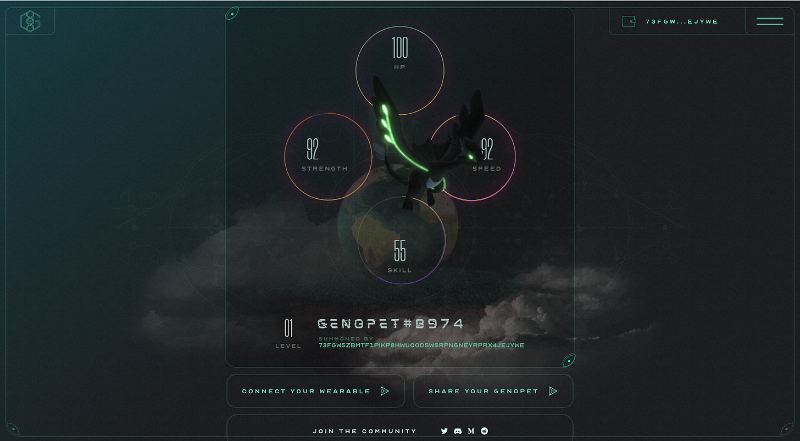
Now that users have their Genopet, they can “evolve” it by earning XP, enhancing its battle performance against other Genopets, and unlocking special attributes. XP is earned through real-world physical activity (tracked via mobile devices or wearables) or cognitive mini-games played within the app against other players.
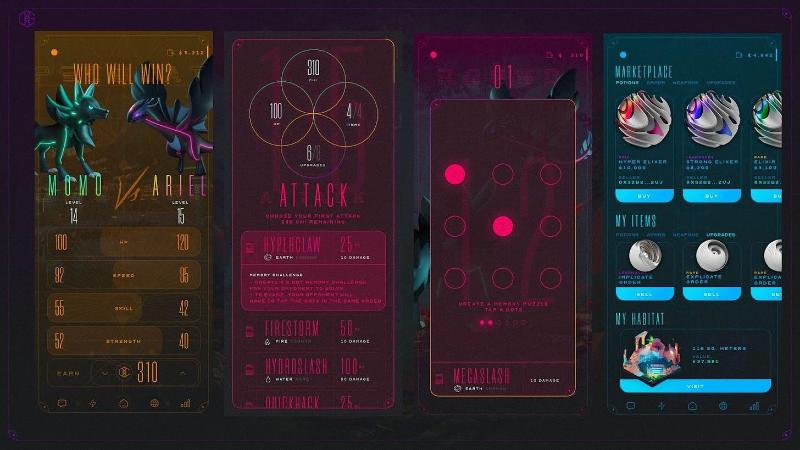
As a Genopet evolves, it gains greater utility within the game application and becomes more attractive to speculators or other players on the open market.
While “motion gaming” has found success on platforms like Nintendo Wii and Pokémon Go, “Move-to-earn” represents an entirely new genre.
By exercising and completing step-based challenges, players accelerate their Genopet’s evolution, thereby increasing the value of their in-game assets. This stands in stark contrast to other play-to-earn models we’ve seen. Rather than incentivizing mindless screen tapping, Genopets offers economic incentives for improving personal health.
Regardless of prior experience with decentralized applications (DApps) or crypto games, Genopets is designed for all players. The team has made the experience as user-friendly as possible, abstracting away NFT minting, microtransactions, and any other blockchain interactions from the end user. Their goal is to allow non-crypto-native players to mint, upgrade, and even sell their Genopets without directly interacting with a blockchain or crypto wallet. All you need is a smartphone to download the app and start earning.
Why is the game free-to-play?
One key way Genopets differentiates itself from many other “play-to-earn” games is that it’s completely free to start playing. For example, to play Axie Infinity—the standard-bearer of play-to-earn gaming—users must first purchase three Axies from the marketplace, which can cost thousands of dollars and creates a high barrier to entry. Other games have similar requirements, ultimately fueling the rise of “scholarship guilds” (like YGG mentioned earlier), where organizations lend players assets in exchange for a share of their earnings.
With Genopets, however, there is no upfront cost. In fact, players can mint their Genopets, evolve them through physical activity and gameplay, and then sell them on the open market for a profit.
There are two main advantages here for both free-to-play and play-to-earn gaming. First, it dramatically expands the addressable market. Many casual mobile gamers won’t even spend $0.99 in the App Store, let alone invest a substantial amount into in-game NFTs before playing. By guaranteeing a free onboarding path, Genopets attracts a broader and more diverse player base.
Second, it enhances the sustainability of the in-game economy. Games like Axie Infinity have been criticized for relying too heavily on continuous user growth to fund rewards for existing players.
As user growth slows—and external capital injections into the ecosystem decrease—some argue this could create a trickle-down effect that negatively impacts other parts of the game and overall player rewards. By approaching game economics from a different angle—one focused on value generation through participation rather than user acquisition—Genopets aims to build a resilient, long-term ecosystem.
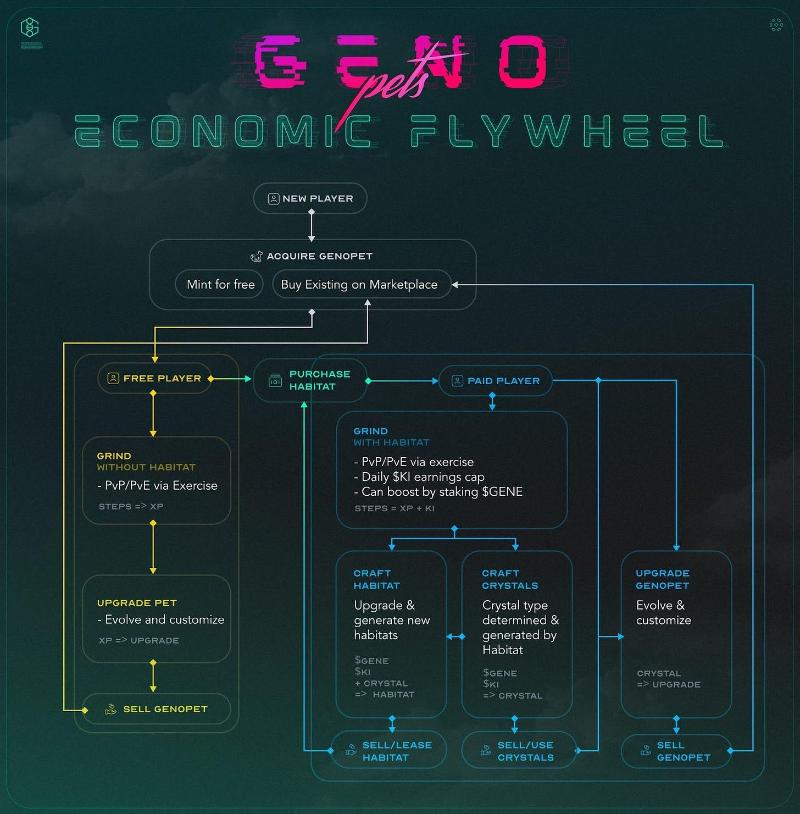
That said, users who want to purchase in-game items have ample opportunities to boost their Genopet’s performance (and their own earnings). Premium crystals can temporarily alter your Genopet and influence its future evolution (e.g., a “Fire Genotype Crystal”). Habitats are spaces where Genopets live and evolve; players can even rent out their habitats to others for XP rewards.
What is the game’s architecture?
Solana’s high throughput, fast settlement times, and low transaction fees make it an attractive choice for many new blockchain games, so it’s no surprise that Genopets chose it as their Layer 1.
Genopets’ on-chain elements fall into two main categories. The first is NFTs, which include the Genopets themselves, premium crystals, habitats, and other (upcoming) unique items. These are fully owned by users, meaning they can be transferred between wallets, combined with other games, or sold on open marketplaces. All the capabilities of an open economy are available to Genopets players. The second category is the in-game currency system, consisting of the $GENE (governance) and $KI (utility) tokens.
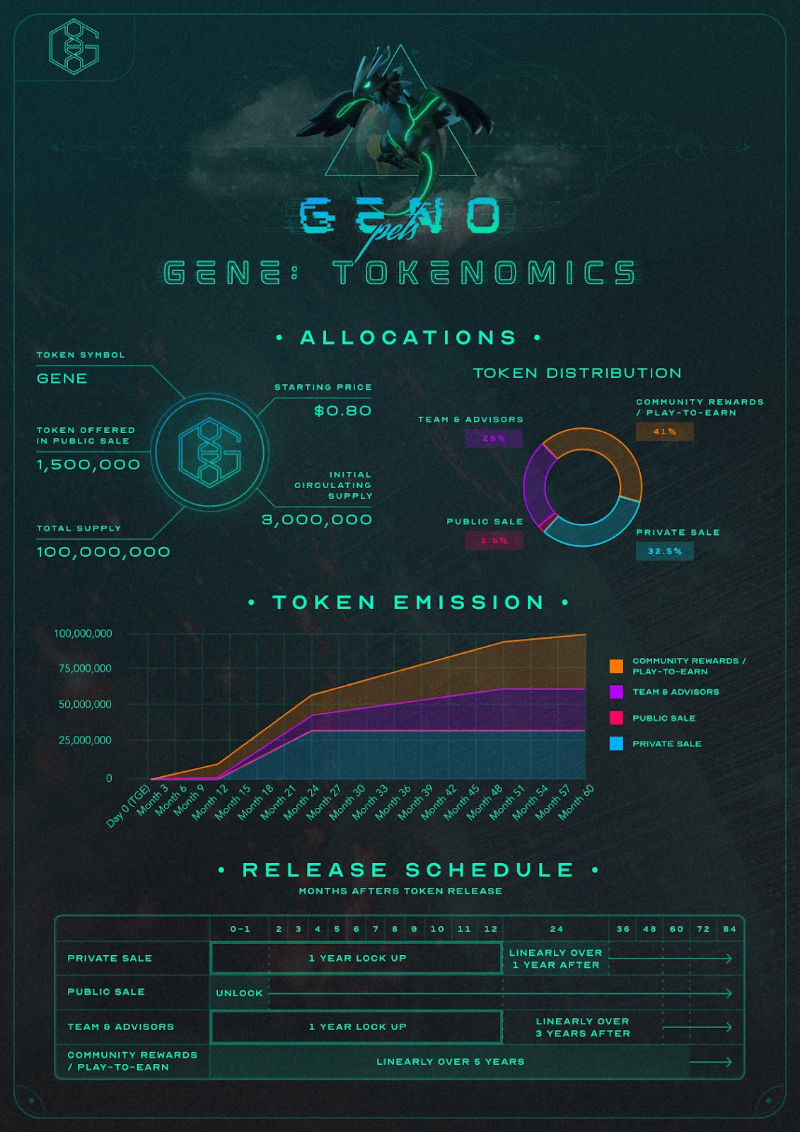
For a deeper dive into these components and how they affect gameplay, I recommend reading the project’s whitepaper.
What is the long-term vision for Genopets?
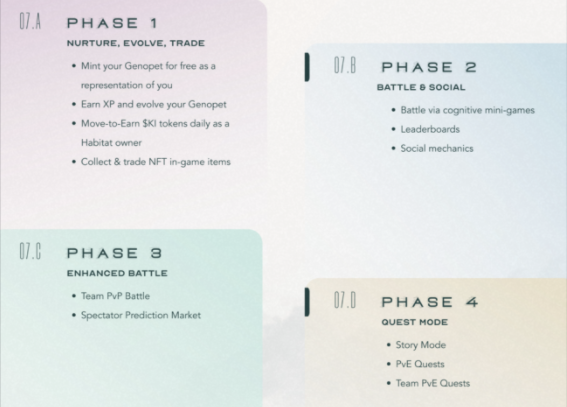
Looking ahead, there’s much to be excited about. Whether it’s new mini-games, leaderboards, social mechanics, prediction market integrations, or other innovative features, the pipeline is full of exciting possibilities.
As Genopets prepares to launch its public beta in the coming months, community interest has surged. Their Discord server already has over 100,000 members, and they’ve amassed more than 120,000 followers on Twitter.
Most importantly, we’re excited by Genopets’ bold experimentation with the fundamental nature of gaming. The unique fusion of free-to-play, play-to-earn, and move-to-earn mechanics creates a new genre altogether. If early traction data is any indication, there is genuine user demand for games like Genopets—and a clear challenge to traditional gaming models.
Join TechFlow official community to stay tuned
Telegram:https://t.me/TechFlowDaily
X (Twitter):https://x.com/TechFlowPost
X (Twitter) EN:https://x.com/BlockFlow_News
 Pantera Capital






