Backed by dozens of institutions, as a gateway to Web3.0, what sets SubDAO apart?
2021.11.06
Share Share to X (Twitter) Navigating Web3 tides with focused insights
Share to WeChat
Share to WeiboShare to WeChat
Share by Link
Share by Image
TechFlow Selected TechFlow Selected
Backed by dozens of institutions, as a gateway to Web3.0, what sets SubDAO apart?
SubDAO is committed to becoming the gateway to Web3.0 by providing blockchain-based digital protocol signing, a DAO social network, asset management, and other tools and services.
2021.11.06 - 09:50:39
SubDAO
Navigating Web3 tides with focused insightsSubDAO is committed to becoming the gateway to Web3.0 by providing blockchain-based digital protocol signing, a DAO social network, asset management, and other tools and services.
Since the birth of the blockchain concept, one question has lingered in the minds of everyone across the industry: How can true decentralized governance be achieved?
BM, founder of EOS, once offered an interpretation: By adopting multiple competitive game rules and objectively selecting the most outstanding individuals in different fields to achieve collective decision-making, true decentralized governance can be realized.
Today, we refer to this model as a DAO.
The rise of DAOs has given birth to many pioneers exploring in this direction within the industry.
SubDAO is one of them.
What Exactly Is a DAO?
Before diving into SubDAO, we should first turn our attention back to the concept of DAO itself. Looking across human history, we see that the idea of organizations has always existed—and almost all such organizations have been centered around rigid ownership structures. Although over time power appears to have gradually shifted downward from emperors and kings to modern societies featuring voting systems and grassroots self-governance, with even corporations adopting open, flat organizational models, it seems people now hold more power and can influence more decisions. In reality, however, actual decision-making within any organization or group still typically rests in the hands of just a few—such as CEOs or department heads. We have yet to discover a truly self-governing model. That changed with the emergence of blockchain and the concept of DAOs. A DAO (Decentralized Autonomous Organization) is a blockchain-based mechanism that enables participants worldwide to coordinate with each other without relying on third parties, through a rational distribution of rights and responsibilities, thereby advancing shared goals. The rise of DAOs has sparked a global wave of enthusiasm. Cities like Miami have begun exploring ways to use blockchain and cryptocurrency for municipal governance. Within the blockchain industry itself, efforts to experiment with DAOs are even more active. Take SubDAO—an initiative co-founded by a former IBM Technical Team Leader and several early well-known developers from Polkadot—which quickly attracted significant investor interest upon launch. To date, SubDAO has received three official Grants from the Web3 Foundation and raised millions of dollars in funding from dozens of institutions including Huobi Ventures, OKEx Blockdream Fund, Hypersphere, CMS, and even Ryan Selkis, founder of Messari.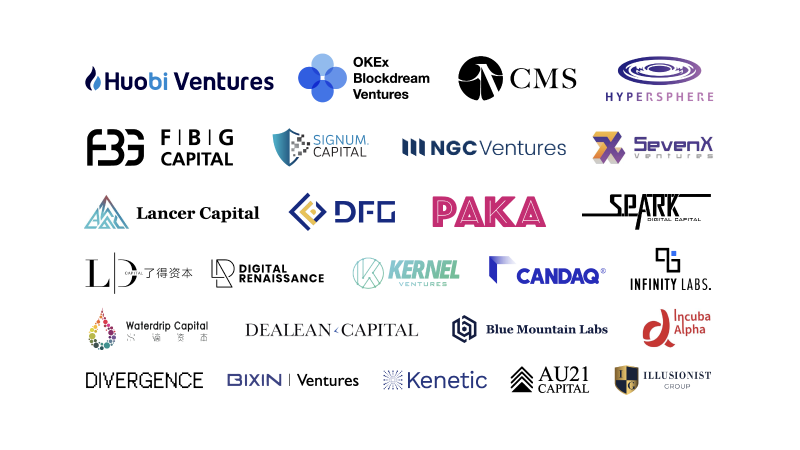
SubDAO Is More Than Just a DAO
SubDAO aims to become a gateway to Web3.0 by offering blockchain-based digital agreement signing, a DAO social network, asset management tools, and other services. Additionally, SubDAO’s suite of ecosystem tools enables functionalities such as crypto asset management, credit lending, and instant messaging within DAOs. The SubDAO network consists of four components: SubDAO Nodes: Blockchain nodes developed using Substrate. These nodes possess standard blockchain capabilities and provide off-chain data access, forming the foundational layer of the SubDAO network; SubDAO Airfone SDK: Provides developers with connections to DAOs within the SubDAO network, offering wrapped interfaces for DAO governance so that developers can easily and rapidly integrate DAO governance features into web applications, mobile apps (iOS/Android), and desktop software; SubDAO Smart Contracts: The core of DAO governance. Governance actions are enforced via smart contracts without manual intervention. Key components include the Template Library, Asset Vault, and SubDAO Guard; SubDAO App Frontend: The user-facing interface for interacting with DAOs. Through the SubDAO frontend, participants can directly engage in DAO governance. SubDAO’s vision is to embed DAO governance into every aspect of life, making everything public and transparent: One DAO Serves All. One single DAO should be able to meet diverse user needs. Therefore, SubDAO cannot simply be another DAO. On SubDAO’s official website, its product is best described as: SubDAO = DAO Infrastructure + Electronic Agreement Signing Service + Cross-Chain Wallet + Social Networking. Currently, because DAO members can come from anywhere, relying solely on informal communication among community members inevitably reduces operational efficiency. Traditional DAO governance mechanisms also commonly face coordination challenges during group decision-making. Thus, having dedicated voting or communication tools could greatly enhance governance effectiveness. This is precisely where SubDAO excels. Typically, building a custom DAO requires considerable effort from development teams. If essential governance elements could be configured with one click, it would significantly reduce both development and time costs. Moreover, beyond basic functionality, each DAO often requires personalized customization based on its unique development trajectory. This, again, is SubDAO’s strength. As a foundational toolset for DAOs, SubDAO develops a series of utilities tailored for DAO governance and available for community use. To date, SubDAO has launched several tools serving DAO governance, including DAO Wallet, PolkaSign, and DAOFi. Among them, DAO Wallet is a Chrome plugin wallet offering payment functions, social networking, and DAO management; PolkaSign is a reliable Web3.0 application providing electronic agreement signing services.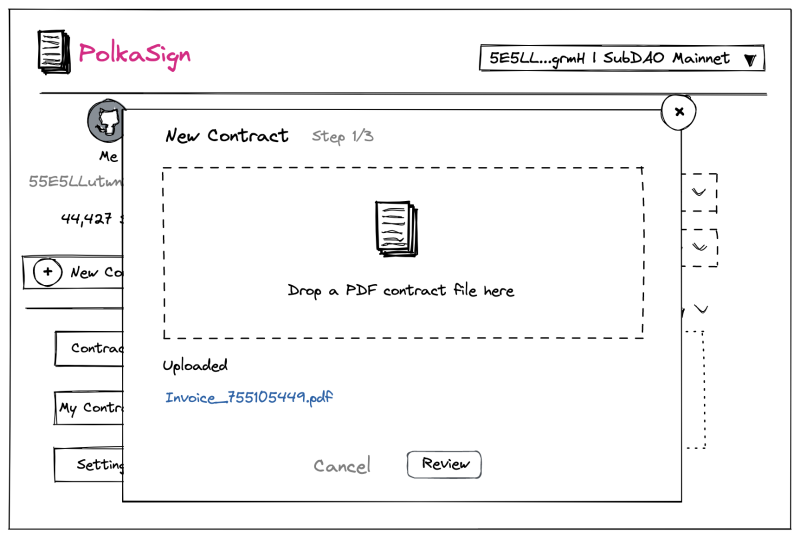
Governance-as-Mining
Beyond its product advantages, SubDAO's innovation in economic modeling for DAO products is also worth noting. While DAOs represent an innovation in governance, they still face certain limitations. DAO operations rely heavily on human activity rather than automation. Although the DeFi era has seen smart contracts automate many tasks—such as scheduling fund disbursements—the initial setup of these rules still requires direct human negotiation. In fact, many self-organized research groups today are essentially functioning as DAOs. While DAOs need to accomplish tasks, motivating individuals to take action remains challenging. The root cause? A lack of effective incentives. Without proper incentives, members lose interest in governance over time, eventually leading to the DAO’s demise. To address this, SubDAO introduced its own solution: launching its native token GOV, allocating 27% of the total supply to Governance Mining ("governance-as-mining"). GOV, short for "governance," is SubDAO’s native token with a total supply of 1 billion and an annual inflation rate of 5%. Within the SubDAO network, GOV is used to pay transaction fees.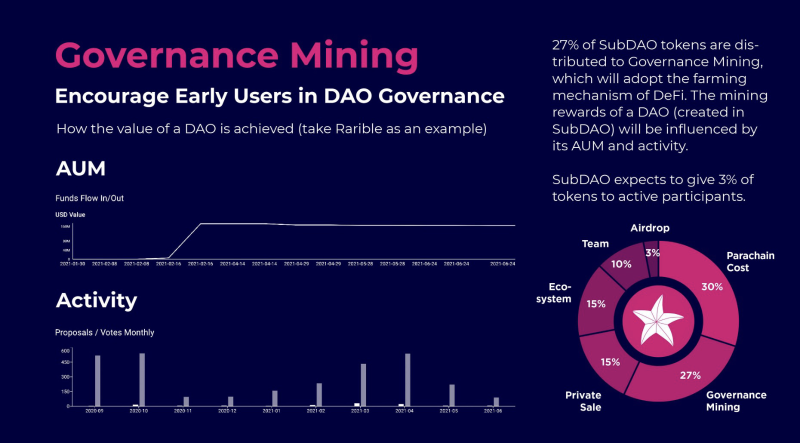
Join TechFlow official community to stay tuned
Telegram:https://t.me/TechFlowDaily
X (Twitter):https://x.com/TechFlowPost
X (Twitter) EN:https://x.com/BlockFlow_News
Add to Favorites
Share to Social Media
AuthorYU