








JPEG Mania: How Big Crypto VCs Are Pushing NFTs to Dominate the Crypto Market
TechFlow Selected TechFlow Selected
JPEG Mania: How Big Crypto VCs Are Pushing NFTs to Dominate the Crypto Market
As with all other crypto-related markets, cycles are predictable and acceptable. There's no telling how long a sustained upward cycle will last, but the long-term outlook is certainly bright.
 Navigating Web3 tides with focused insights
Author: Joseph Young
Compiled by: TechFlow
The crypto market experiences waves of frenzy every now and then, especially during bullish market conditions.
In the summer of 2020, when Bitcoin and Ethereum prices stalled, a small group of self-proclaimed "apes" kicked off an investment frenzy driven by degeneracy, helping to spawn one of the most exciting sectors in today's cryptocurrency market: DeFi.
People were adding liquidity to schemes that were "obviously" Ponzi schemes, generating APRs over 1,000,000%, essentially creating a large-scale, high-risk game of musical chairs.
Yet after the frenzy, a serious subset of world-changing technological innovations grew—innovations that profited from these less rigorous projects and eventually spilled over into more legitimate ventures.
The following year, we saw a similar trend on Ethereum with dog- and animal-themed projects, possibly fueled by Dogecoin-related hype and a flood of new retail entrants. While this brought no positive change to the market or industry, many participants did walk away with substantial profits.
NFTs—the shorthand for non-fungible tokens—are the current craze, with billions of dollars flooding into the space as artists, art enthusiasts, and traders all reap rewards.
New retail investors have undoubtedly contributed to this NFT boom, but now there are larger players entering the game: capital.
A few weeks ago, when the so-called "jpeg mania" resurfaced, some on-chain detectives discovered that Three Arrows Capital, a Singapore-based multi-billion-dollar crypto investment fund, was accumulating large quantities of CryptoPunks, causing prices for OG crypto punks to surge.
Subsequently, the fund began increasing its positions in other popular NFT projects, often triggering retail investors to follow suit.
While Three Arrows may be one of the largest funds treating NFT accumulation as an investment-grade asset, it is not alone.
I co-manage a relatively small fund in California with tens of millions of dollars in assets. A few weeks ago, we decided to allocate a percentage of our fund’s AUM to high-quality NFTs, acquiring several premium CryptoPunks and other exciting pieces such as Gyres.
We’re working on building a virtual gallery to showcase the artworks we own, which we’ll incorporate into future NFT-focused editions of Alpha Alerts for added fun.
Yesterday, it seemed another crypto fund began acquiring NFTs as investment-grade assets.
Paradigm, another billion-dollar investment fund, yesterday began building a significant position in NFTs starting with a project called Parallel—a yet-to-be-released card game.
A crypto detective recently tweeted about this, tracing wallets linked to purchases of large volumes of Parallel cards back to a wallet fully funded by Paradigm.
It's clear: NFTs are now investment-grade assets.
The Focus Is Shifting
To me, two main NFT categories appear to be attracting the most attention and capital: Gaming NFTs and Generative Art.
Gaming NFTs include collections like the aforementioned Parallel cards—NFTs that will play a role within gaming ecosystems. Axies in the Axie Infinity game are another example of a series falling into this category.
As Web3 evolves and more users engage with ownership in the digital economy, these types of NFTs are likely to continue attracting significant buyer interest.
Generative NFTs are created based on parameters defined by an algorithm, capturing the beauty of mathematics and mechanics. How fitting for crypto, right?
A prominent example is Tyler Hobbs’ Fidenza collection—a set of 999 algorithmically generated images composed of various line arrangements.

A Fidenza just sold last night for approximately $2,000,000, setting a new sales record for the series.
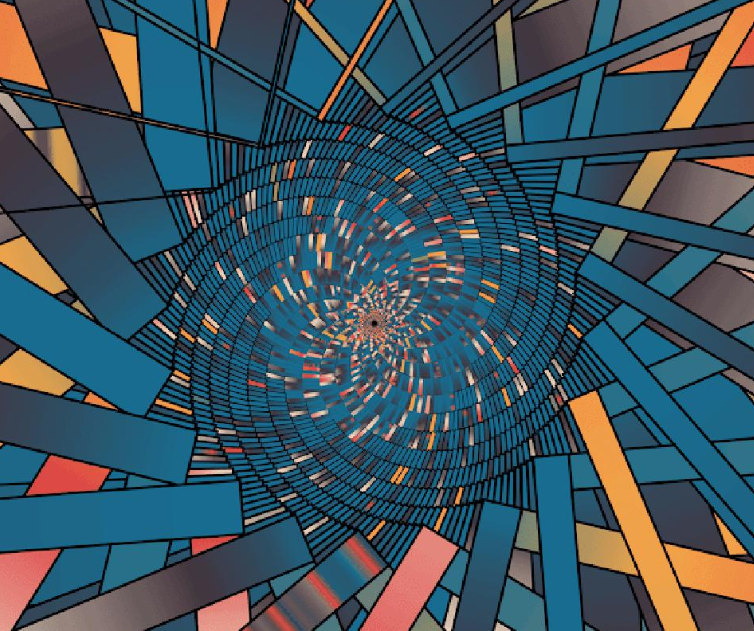
Another example—aside from Fidenza—is Gyre by Latvian artist Shvembldr, which is personally one of my favorites. I recently purchased two Gyres for my personal collection at an average price of 5 ETH (about $15,000). They’re currently worth around $100,000 total, highlighting the dramatic price appreciation these artworks have seen.
I’m generally very excited about the NFT space and believe there’s significant room for growth in the coming months and years.
However, this doesn’t mean it will only go up in this market. Like all other crypto-related markets, cycles are to be expected and accepted. There’s no telling how long a sustained upward cycle might last, but the long-term outlook is certainly bright.
Join TechFlow official community to stay tuned
Telegram:https://t.me/TechFlowDaily
X (Twitter):https://x.com/TechFlowPost
X (Twitter) EN:https://x.com/BlockFlow_News






