








FTX Founder SBF on Wang Feng's Ten Questions: Responding to SushiSwap Conspiracy Theories, Liquidity Mining, Forks, NFTs, and Other DeFi Hot Topics
TechFlow Selected TechFlow Selected
FTX Founder SBF on Wang Feng's Ten Questions: Responding to SushiSwap Conspiracy Theories, Liquidity Mining, Forks, NFTs, and Other DeFi Hot Topics
NFTs are extremely popular now, but I think they're stupid.
 Navigating Web3 tides with focused insights
Compilation | Bite
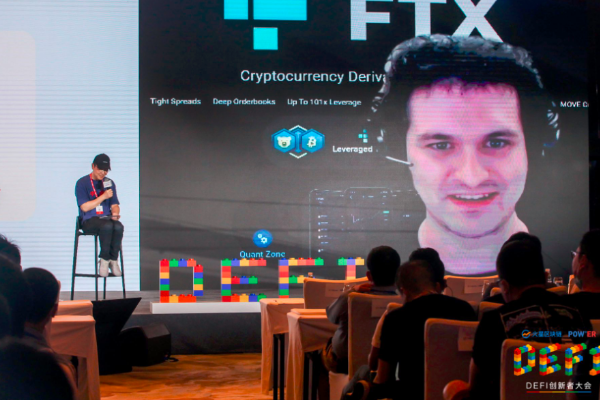
Mars Finance APP (WeChat: hxcj24h) — On-site reporting: The "POW'ER 2020 DEFI Innovators Conference," hosted by Mars Blockchain and co-hosted by TRON, is taking place today in Shenzhen. Covering ten major细分 tracks within the DeFi sector, the conference has widely invited leading global and domestic DeFi innovators, industry pioneers, and top-tier investment and research institutions to deeply discuss challenges and opportunities in DeFi, investment strategies across primary and secondary markets, and features lightning pitches for DeFi projects and an autumn NFT crypto art auction.
Sam Bankman-Fried (SBF), founder and CEO of FTX, engaged in a live "Wang Feng's Ten Questions" dialogue via video link with Wang Feng, founder of Mars Blockchain and Consensus Lab.
During the conversation, SBF stated that the biggest bottleneck for DeFi is blockchain capacity—specifically, how many transactions per second can be processed—and expressed hope for greater blockchain capacity in the future. He emphasized the need to find effective solutions to scalability issues. SBF added: “When users interact with our products, are they getting the best possible experience and outcomes from decentralization? We need stronger systems and products to meet people’s expectations for the development of DeFi as a whole. The world may need many specific products. NFTs are very hot right now—we should consider what people expect from NFTs and whether we can use NFTs to fulfill more of their needs.”
Key Takeaways:
1. SBF is currently focused primarily on Serum and FTX.
2. The biggest bottleneck for DeFi is blockchain capacity.
3. SBF confirmed that SushiSwap did indeed repurchase $14 million worth of SUSHI tokens.
4. Liquidity mining empowers DeFi growth, but it is not a necessary condition.
5. Listening to user feedback online is extremely important.
6. Order books are powerful tools that allow us to do what we want—provide liquidity and better utilize capital flows.
7. The new Solana public chain will definitely be faster than Binance Smart Chain.
8. NFTs are a cool idea, but still immature.
Below is the full transcript of this episode of "Wang Feng's Ten Questions":
Question One
Wang Feng: A few days ago, I saw a photo of you circulating widely online—a snapshot of you napping on a sofa in your office at midnight, with colleagues still discussing work nearby. The caption read: “This is what Sam ‘going home to sleep’ looks like.” As one of your FTX colleagues put it, “I’ve never seen SBF go home.” You’re involved with FTX, Serum, SushiSwap, Solana, Alameda Research… How do you allocate your personal energy these days? What takes up most of your time each day? Where will you focus your attention in the future? If you had to pick just one area to concentrate on, which company would you prioritize?
SBF: I am indeed doing many things simultaneously, and I find it incredibly energizing and exciting. Over the past two years, I've been building the FTX ecosystem. Recently, my main focus has been on Serum, and I hope more people will join and collaborate, sharing insights together. I also continue to stay involved with Alameda Research. We’ve always had close collaboration with Solana, especially regarding the development of Serum. Recently, there's been a lot of attention around SushiSwap—I only stepped in because the community asked me to, temporarily taking over technical keys. I don’t work for SushiSwap; I’m just a member of the Sushi community. The operation of Sushi relies on community governance.
My current primary focus is on Serum and FTX—these are my main areas of effort.
Question Two
Wang Feng: I’ve always been curious about one thing—why did SushiSwap’s founder, Chef Nomi, hand over control of the project to you? To put it indirectly, why not give it to someone like CZ (Changpeng Zhao) or another public chain leader?
SBF: I honestly don’t know why I was chosen to take over the technical keys. My guess is that perhaps I have high credibility in the space and possess the technical capability to handle the migration. During such a difficult period, I think Chef Nomi needed someone who could help complete the liquidity migration for Sushi. But again, this is just speculation.
As for why he ultimately chose me, you’d have to ask him directly. I don’t actually know who he is. I suspect none of the people speculated online are actually Chef Nomi, and I doubt we’ll ever truly know his identity.
Wang Feng: Chef Nomi’s actions throughout this incident were highly dramatic and puzzling. From publicly available information, we know "Chef Nomi" is just a pseudonym—no one has claimed to be him. Based on your understanding, who is this person?
SBF: Regarding who Nomi really is, I don’t know. I only communicated with him on Twitter. My impression is that they were confused about what to do at the time, made a wrong decision, and regretted it. Then they needed to figure out how to save both themselves and the project. Judging from many of his tweets, he clearly didn’t have a clear grasp of the situation back then.
For me, the entire process was also very dramatic. I was genuinely shocked by the whole affair. The timing couldn’t have been worse—the whole world was watching Sushi’s liquidity migration, and Nomi’s behavior turned it into a farce.
Wang Feng: There are conspiracy theories online suggesting that the mastermind behind SushiSwap is actually you—you already have your SRM platform and the Solana blockchain, and you want to push DeFi forward on the next-generation public chain. You were originally a CeFi heavyweight, yet you helped ignite the narrative around DeFi dominance. There’s a Chinese saying—“conspiracy theory.” Have you heard of it? Could you please clarify this for everyone?
SBF: I really didn’t work for SushiSwap, nor am I Nomi—I was just helping out casually. FTX listed Sushi’s spot and futures trading, so I posted many tweets about its launch on FTX. It wasn’t until I saw Nomi announce he wanted to transfer the technical keys to me that I started seriously thinking about the project. I interacted with him on Twitter, trying to suggest potential collaboration points between FTX/Serum and SushiSwap, but didn’t receive much positive response. In the early stages, I wasn’t involved at all. Only when he publicly tagged me on Twitter and said he’d pass the keys did I get technically involved—for about a week. After Sushi completed its liquidity migration, I stopped spending any time or energy on Sushi entirely.
Question Three
Wang Feng: On September 15, SushiSwap announced a $14 million buyback of SUSHI tokens, but instead of rising, the price fell. Many users questioned whether the buyback was fake—that the team didn’t actually purchase tokens from the market, but merely burned SUSHI from reserves (Treasury) that hadn’t entered circulation. Is this true?
SBF: For those questioning this, I recommend checking the on-chain data—the entire buyback process was transparently recorded on-chain. Anyone who checks can verify it. However, the selling pressure and actual volume sold in the market may have exceeded the $14 million buyback amount.
Wang Feng: Many people bought SUSHI expecting gains from the buyback announcement and ended up trapped in losses. Do they still have a chance to recover?
SBF: That depends on many factors—first, the overall state of the DeFi market, and second, Sushi’s own development path. It depends entirely on what Sushi and its community decide to do going forward—not on any individual, certainly not me. If Sushi launches more products—like futures—or introduces margin trading and advances its ecosystem, that would make a real difference.
Wang Feng: SushiSwap once absorbed nearly $1 billion in liquidity from Uniswap, surpassing it in total value locked (TVL). Yet according to the latest data on September 23, SushiSwap’s TVL dropped from a peak of ~$1.6 billion on September 4 to about $460 million—less than a quarter of Uniswap’s (~$1.9 billion). Now that Uniswap has launched its token, what cards does SushiSwap still have to play?
SBF: Compared to SushiSwap, Uniswap currently offers users higher incentives through staking, making it appear more valuable—but that value is based purely on reward tokens. Long-term, a DEX cannot rely indefinitely on incentives. Instead, its core functionality must meet traders’ needs: lower fees, faster execution, broader product offerings like derivatives and margin trading. When incentives eventually disappear and liquidity providers no longer receive rewards, what will retain users? Ultimately, it comes down to the product itself—is this a platform users actually want to use? Does it offer the assets they want to trade? So we must refocus on building strong DeFi products. That’s where DEXs should ultimately land—can we build the products the community truly wants?
Question Four
Wang Feng: In my view, liquidity mining ignited this year’s DeFi boom. No VC involvement, no KYC, no pre-mining became powerful marketing slogans—projects issued governance tokens at near-zero cost. But fundamentally, this is a form of “user subsidy” under the guise of decentralized governance, reminiscent of internet-era subsidy wars in group buying, food delivery, and ride-hailing. You’ve said before that the bubble created by liquidity mining has placed DeFi at a crossroads between life and death. Do you believe DeFi’s development necessarily depends on liquidity mining?
SBF: The answer is somewhat ambiguous—yes and no. Liquidity mining is an effective way to boost DeFi growth, but it isn’t mandatory. It certainly provided momentum for DeFi’s expansion, but long-term, it’s not a necessity. Many current liquidity mining programs are temporary measures, not sustainable strategies. Where DeFi goes next depends on whether its products are genuinely useful.
Wang Feng: For most ordinary investors, DeFi lacks good user experience. Regarding DeFi’s growing pains, Vitalik has pointed out centralization backdoors and oracle problems. In your opinion, what is the core bottleneck constraining DeFi’s future development? And who has the power to overcome it?
SBF: The biggest bottleneck is blockchain capacity—how many transactions per second can be processed? Ten TPS is clearly insufficient. We need much larger blockchain capacity for DeFi in the future, and this simply cannot be solved on Ethereum.
The second issue is a lack of serious focus on the product and project itself. We should spend more time evaluating whether a product is truly good and useful—not obsess over hype.
Projects like Compound and Aave exemplify focusing on delivering solid solutions. People often prefer borrowing on these decentralized lending platforms over centralized ones. Look at existing DEXs—none of them are efficient for trading because Ethereum can’t support the computational load required for even basic use cases.
Moreover, when users interact with our products—whether decentralized or centralized—are they getting the best possible experience and results? I sincerely hope more people reflect on which decentralized products can genuinely benefit the world.
Right now, NFTs are trendy, but I think they’re silly. With NFTs, we need to identify real-world applications where they actually add value.
Question Five
Wang Feng: Forking has also been a focal point in DeFi this year—especially YFII forking from YFI, SushiSwap forking from Uniswap, and Swerve forking from Curve—all sparking widespread imitation. After a fork, is the relationship between the new project and the original a zero-sum game or a positive-sum game?
SBF: I think the outcome varies by project. If a fork merely copies everything—including the same business model—then yes, it’s a zero-sum game with the original. But if the new project adds meaningful innovations on top of the original, then additional value can emerge. For example, CREAM forked from COMPOUND but built additional interesting features on top, demonstrating value beyond mere duplication—it wasn’t just zero-sum.
Question Six
Wang Feng: From my observation, during this wave of DeFi, FTX has undoubtedly been one of the most active and responsive exchanges. FTX quickly launched a DeFi index and listed every major trending project—from COMP to SUSHI—based on market and community discussions. What mechanisms allow FTX to敏锐ly capture market trends?
SBF: I frequently listen to user feedback online and personally try out other industry products at least once. This helps me understand what users like. I also communicate regularly with key players in the industry to stay informed about developments. Plus, we have an excellent team that can rapidly develop products and quickly pivot when needed.
Wang Feng: Media reports cite an FTX funding document where you reportedly committed to achieving a net profit of $40 million in 2020, with projections of tripling profits annually over the next three years. With three-quarters of 2020 already passed, how much progress has been made toward this goal? Where does your confidence come from?
SBF: That wasn’t a commitment—it was part of several different forecasts we made: optimistic, baseline, and downside scenarios. These are all plausible outcomes, and such revenue projections are common in fundraising and business planning.
I’m happy to say we’re on track to meet our goals—and might even exceed them. I’m excited about our growth, including increasing trading volumes and expanding our community. We’ve invested significant time building user communities across regions, including China. There’s still room for improvement, and we welcome more feedback from Chinese users to help us enhance our services and drive further growth.
Wang Feng: For FTX’s own operations, what are the current proportions of DeFi vs. CeFi? What are your plans for the next year?
SBF: DeFi really took off over the past two months. FTX has listed numerous DeFi projects and launched a DeFi index. Fundamentally, FTX is a centralized exchange, not decentralized. While FTX can do a lot to promote DeFi development, it will never become decentralized. Our goal is to be the best centralized exchange and, from that position, actively support and contribute to the growth of DeFi.
We aim to build a DeFi ecosystem—which is exactly why Serum exists. We hope this project becomes the most exciting DeFi initiative out there.
Wang Feng: Speaking of Serum, do you have any new plans? What details are you working on?
SBF: We’ve done a lot. First, we launched a DEX with a fully decentralized order book and matching engine capable of handling tens of thousands of orders per second, while keeping miner fees extremely low. In the coming weeks, we’ll launch more DeFi projects on the Serum ecosystem—some already completed, others gradually rolling out. For instance, we’ll introduce a front-end UI allowing anyone to freely list trading pairs based on their needs.
Additionally, within weeks, we’ll launch a new integrated product combining AMMs and asset pools—an all-in-one automated market maker solution. Overall, these launches will create more opportunities for people to engage with Serum.
Question Seven
Wang Feng: Currently, DEXs mainly implement Automated Market Maker (AMM) mechanisms on Layer 1, consuming significant network bandwidth, resulting in low efficiency and high fees. Many are now attempting to integrate order book models on Layer 2. Due to dissatisfaction with Ethereum congestion, some have migrated to semi-centralized blockchains like EOS. My question is: Will the order book model grow within the DEX ecosystem?
SBF: I believe order books are extremely useful—all centralized exchanges use them. They let users provide liquidity as needed and greatly improve trading experience. However, Ethereum is too slow to support order books effectively. For DEXs like Serum, built on the high-performance Solana L1, we can solve Ethereum’s speed limitations and successfully bring order books to decentralized exchanges. AMMs are also cool—for some teams, using AMMs allows automatic liquidity management without constant oversight.
Question Eight
Wang Feng: Although Ethereum suffers from congestion and high gas fees, it still dominates the DeFi and broader blockchain ecosystem. Many alternative chains hope to capture a share of Ethereum’s success. Recently launched Binance Smart Chain adopted Ethereum Virtual Machine (EVM) interoperability and programming capabilities, supporting Ethereum-based development tools. Public records indicate Solana also plans full integration with Ethereum, enabling interoperability with Ethereum’s ecosystem and ERC-20 tokens.
Can we view Solana as another version of Binance Smart Chain—offering similar Ethereum-compatible functionality? Since BSC got a head start, what’s Solana’s plan moving forward?
SBF: Solana currently operates on L1. Its greatest advantage is speed—extremely high transaction throughput per second. We aim to deliver superior decentralized asset services. As mentioned earlier, we want to build a full DeFi ecosystem on top of it, developing more applications and projects. Initially, we may adopt new development tools.
Long-term, we’ll place greater emphasis on system stability. The Solana chain will definitely be faster than Binance Smart Chain. Once we establish a robust ecosystem, Solana and Serum should become exceptionally powerful.
Question Nine
Wang Feng: NFTs are now widely seen as the next big trend after DeFi. Some say investing in NFTs in 2020 feels like investing in DeFi in 2019. Which NFT projects have recently caught your attention?
SBF: I think NFTs could potentially be cool—they represent collectible assets. But right now, I’m not interested because they lack real value. Current NFTs are mostly just images that anyone can download freely, and those images don’t require NFTs at all. So far, we’ve only seen technical demos on NFTs, not practical, useful products. For NFTs to gain real value in the future, we need to see meaningful, functional use cases.
Wang Feng: A couple of days ago, you tweeted that NFTs reminded you of your earlier warnings about STOs: “Don’t invert the priorities of something good.” Do you think NFTs risk repeating the same mistakes as STOs? What’s your take?
SBF: Yes, there’s definitely a risk. NFTs are a cool idea right now, but they’re not mature yet, and no truly useful products have emerged. People are just fascinated by the concept and engaging in speculative trading. To succeed, NFTs must first produce genuinely useful products.
Question Ten
Wang Feng: Looking at the evolution of global centralized exchanges, we clearly see regional tendencies similar to the early internet era—U.S. users primarily cluster on Coinbase and Kraken; Chinese users mainly use Huobi and OKX. Will decentralized exchanges (DEXs) also exhibit regional characteristics in the future?
SBF: The user base differs by region, and conditions vary. In Eastern countries, companies develop at an extremely fast pace—Western counterparts may lag behind in terms of growth speed. The U.S. has many strong blockchain companies, though their growth rates may be slower. We need to observe how things unfold. Innovation is critical, and there will be many breakthroughs ahead. When discussing blockchain, we should examine the trajectory of exchanges and users in Eastern countries separately, as it may differ significantly from the West.
Wang Feng: Interestingly, I’ve noticed many ethnic Chinese faces on your team—co-founder and CTO Gary Wang, CFO Jen Chan, COO Constance Wang, etc. Why is the proportion of Chinese executives so high? What percentage of FTX users are from China?
SBF: I met my CTO Gary during college. I highly value Chinese talent and Chinese users. Our Chinese user base is actually very large—users from East Asia, including China, account for roughly half of our total user base. Also, since we operate in Hong Kong, that likely attracts many talented individuals from China. But overall, our hiring principle is to attract the best talent regardless of nationality or region.
We see many opportunities in China and highly value Chinese users. We hope to attract even more Chinese users in the future. Our company hosts outstanding professionals from diverse nationalities, and we’re delighted to have many Chinese executives—we warmly welcome more Chinese leadership and users.
Wang Feng: Looking at your team photo, all the women pictured are Chinese. Why is that?
SBF: Oh, are you asking why we have so many Chinese female employees? Honestly, it’s quite random. Of course, we also have many non-Chinese female employees.
Wang Feng: Thank you, Sam, for joining this dialogue. The content was fascinating. If time permits, I’d love to connect with you again. Thank you.
Join TechFlow official community to stay tuned
Telegram:https://t.me/TechFlowDaily
X (Twitter):https://x.com/TechFlowPost
X (Twitter) EN:https://x.com/BlockFlow_News






