WAIC Tickets Hyped Up to 3,000 Yuan: We Found AI's True Innovation
TechFlow Selected TechFlow Selected
WAIC Tickets Hyped Up to 3,000 Yuan: We Found AI's True Innovation
WAIC 2026 Day 1 Observations: AI in 20 Innovative Products.
 Navigating Web3 tides with focused insights
Author:Xu Shan
This year's WAIC is already hard to finish visiting in a single day.
On July 17, the 2026 World Artificial Intelligence Conference opened in Shanghai. The exhibition expanded to "three locations, four venues" for the first time, with a total area exceeding 100,000 square meters. Over 1,100 companies brought more than 3,000 exhibits, among which over 300 products made their global debut during the conference. Intelligence Computing and Embodied AI became core tracks side by side for the first time, each gathering over 200 companies. From the queues after the opening to the layers of phones held up in front of robot booths, AI remains one of the most watched tech topics today.
But walking into the venue, the most obvious change this year is not how many more model parameters there are, nor what high-difficulty moves robots have learned again, but that more and more companies are starting to answer the same question: How can AI truly transform from a technology that "looks impressive" into a product that people actually use and can complete tasks?
This change is happening first in the physical world. Industrial robots are beginning to enter automotive, 3C, and new energy production lines; home robots are busy folding clothes and tidying up toys; robot dogs are being led by audiences to walk freely through crowds. The competition in Embodied AI is shifting from motion control and Demo displays to stable operation, scaled delivery, and real-world scenario verification.
At the same time, AI is also looking for entrances closer to people. Earphones are becoming all-day online intelligent assistants; phones are being redesigned around agents; plant sensors are starting to "translate" the needs of a potted plant; and personal servers are attempting to become local AI nodes in the home. AI hardware is beginning to rethink: when agents can understand intent, call services, and continuously execute tasks, what form should hardware take to carry them?
The competition standards for the models themselves are also changing. Whether they can reduce inference costs, remember long-term experiences, understand real physical laws, and directly deliver usable results is replacing pure parameter and leaderboard competition. Around these capabilities, development tools, enterprise agents, and computing infrastructure are also lowering thresholds: a single sentence can generate a hardware solution, enterprises can call upon "simulated consumers" to complete research, and even a device in an office can become a local "Token Factory."
A relatively clear main thread is: The AI industry is further moving towards "planning and execution," towards delivery in reality. Models remain the foundation, but what the industry further competes for are entrances, context, execution capabilities, and cost and reliability after entering real scenarios.
This year's WAIC theme is "Intelligent Partners, Co-creating the Future." And for an AI to truly become a partner, it cannot just chat. It must be able to remember you, understand the environment, use tools, complete tasks, and enter factories, offices, and homes with a low enough threshold.
With this clue, we found these noteworthy products and technologies on the first day of WAIC.
1. More Important Than Showing Off Is Working Stably
The robot exhibition area is still lively this year, but we care more about: after leaving the booth, can robots work continuously in real environments?
The standard for judging whether Embodied AI has taken a step forward is becoming "whether it can run stably, be delivered in batches, and whether people are truly willing to use it." Therefore, we selected three samples in different scenarios. They have different forms but are all answering the same question: How do robots transform from a wonderful Demo into products that truly work in factories and homes?
WeiYi Intelligent Manufacturing: Seeing the Real Landing of Industrial Embodied Intelligence
Walking to the WeiYi Intelligent Manufacturing booth, an intuitive feeling is: WeiYi Intelligent Manufacturing has brought industrial embodied intelligent robots that truly enter factories and participate in production to the scene.
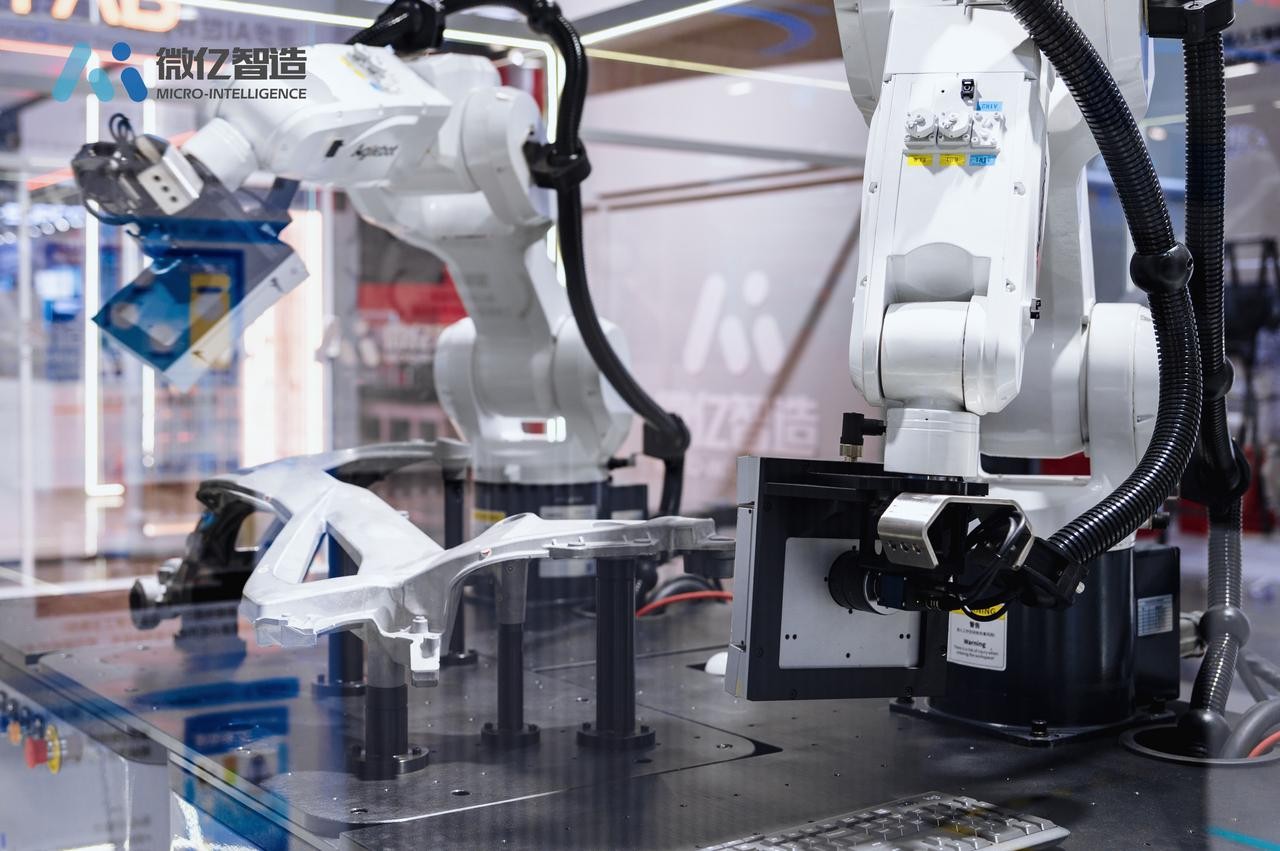
As an Industrial Embodied Intelligent Robot (EIIR) supplier with a 31% domestic market share, WeiYi Intelligent Manufacturing has long深耕 the physical AI track. Its products have landed in automotive, 3C, new energy, and other industries, serving over 25 Fortune 500 companies, with industrialization progress leading the field.
The two products exhibited this time are very representative. The globally debuted "Embodied Quality Inspection | Multi-Arm Collaborative Robot" features 0.2μm-level inspection precision and high-speed flying shot capabilities. It breaks away from the traditional manual teaching mode and has been put into operation on production lines in top automotive companies' factories in China, the US, and Germany. The "Embodied Operation | Intelligent Assembly Robot" is based on an "Eye-Hand-Brain-Cloud" collaborative architecture. It can autonomously learn the assembly process through one visual observation, shortening the production line changeover cycle from days to hours, significantly improving flexible manufacturing capabilities.
The greatest value of Embodied Intelligence is actually on the production line. WeiYi Intelligent Manufacturing's landing practice also proves that industrial scenarios are still the track where physical AI achieves scaled application fastest. When Chinese companies begin to move from exporting single devices to exporting intelligent manufacturing standards and solutions, it also means they are participating in reshaping the new paradigm of global manufacturing.
Vita Dynamics Big Head: People Are Really "Walking" Robot Dogs at the WAIC Scene
At the WAIC scene, we occasionally saw several audience members leading robot dogs through the crowd. No remote control, no need to learn complex operations; a single leash enables autonomous following. The backpack is handed over to it to carry, and it can automatically follow and record during the walk, like a considerate companion beside you, attracting many audience members to watch along the way.

Remote-control-free autonomous navigation has always been Vita Dynamics' core technical advantage. The change worth noting at this exhibition is that staff no longer need to spend a lot of time teaching audiences how to operate. Ordinary people pick up the rope and can walk directly with it.
This "walk upon pulling" experience also becomes a microcosm of "Big Head" moving from a technical product to a consumer-grade product, completing scaled mass production delivery. While many quadruped robots are still competing on motion performance and hardware parameters, Vita Dynamics hopes to lower the usage threshold of professional equipment, turning robot dogs from novelties in booths and labs into consumer-grade intelligent partners that ordinary people can easily use and integrate into daily life.
Future Not Far: Bringing Home Robots into Real Life
At the WAIC scene, Future Not Far moved the home scenario into the booth.
It can be seen that the second-generation home general-purpose robot F2 was mostly busy washing clothes, folding clothes, tidying up toys and slippers, playing chess with people, opening drinks for people, etc. There were many people queuing to experience it on site. Compared to showing off high-difficulty moves like somersaults, F2 focuses more on a practical matter: after a robot enters the home, what can it actually help people do?
As a robot company focusing on home embodied intelligence, Future Not Far's F2 is positioned as a "Home Butler." It can accompany children, the elderly, and pets, and can also complete inspections, storage, and basic housework. It is equipped with the company's self-developed robot brain Self-Evolving WAM, which can continuously learn and adjust based on the home environment and usage habits.
The home is actually one of the most difficult scenarios for robots to handle: rooms get messy, items get moved, and every family's needs are different. Therefore, compared to a successful on-site demonstration once, whether it can work long-term and stably is more important. According to Future Not Far, its robots have entered over 500 paid families, accumulating over 50,000 hours of service.
2. Everything Is Growing AI Interfaces
Past AI hardware was mostly about adding a voice assistant to existing devices. The more obvious trend this year is: manufacturers are starting to redesign the hardware itself around AI.
Earphones hope to become all-day online assistants; phones attempt to write agents into the operating system; printers turn suggestions in chat boxes into sheets of paper; and plant sensors translate environmental data into reminders ordinary people can understand.
AI can be worn on the ear, held in the hand, placed on a desk, or become a tool for creating other hardware. We selected these products because we saw more attempts on them—finding new interaction methods and daily entrances for AI.
Jili Guagua AI Printing Desk Pet: Letting AI "Spit" a Suggestion into Reality
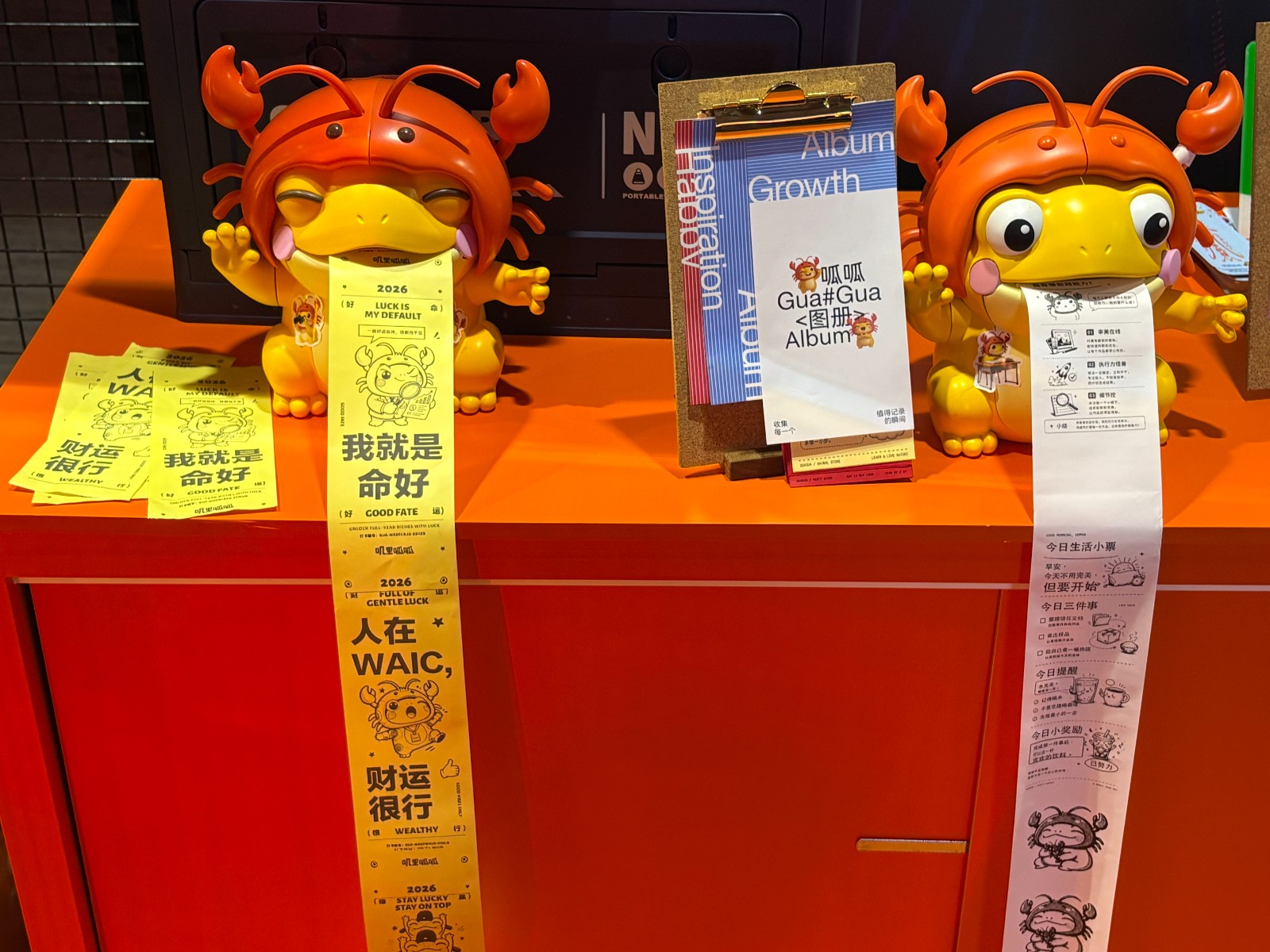
The Jili Guagua booth looks like a wishing wall covered in luck receipts. Several "Golden Toads" are placed among them, occasionally "spitting" out to-do lists, knowledge cards, and thermal paper strips written with "Good Luck" or "Prosperity" from their mouths. Passersby can hardly help but take a second look.
This product is not just putting a cute shell on a printer. Users can converse directly with it. After the AI understands the demand, it turns suggestions that originally stayed in the chat box into a paper strip that can be torn off, stuck up, or carried around. The device supports different printing media such as adhesive backing, with printing precision reaching 300 DPI. The team also plans to continue exploring color printing.
Jili Guagua has iterated three versions in half a year and is currently still in the prototype stage. The team hopes it will ultimately become an information interaction entrance in the home: it can print children's knowledge cards, family messages, and daily to-dos, and can also grow its own content ecosystem around the Golden Toad IP. It demonstrates an interesting product idea—paper can also become a lighter, more tactile interaction interface.
noonwake Luck Calendar Machine
At first glance, this is a product that makes people very want to buy it.
This is an AI metaphysics jewelry bracelet. One of the beads has a sensor. It can recognize human emotional changes.
Nowadays there are already enough tool-based AIs. NoonWake.AI wants to do companion AI in a very light way.
The AI metaphysics bracelet is one of their products. On-site personnel told us that the company currently has three product lines: "Everything Has a Spirit" for young domestic users, Starot for overseas, and an upcoming "Luck Calendar Machine" AI hardware. As an AI desktop companion for young people, it further increases the sense of ritual in young people's daily lives.
Those who like metaphysics are in luck.
Photosynthetic Plant Language Plantiemoji: Plants Can "Speak" Now
Walking to the Photosynthetic Plant Language booth, a plant inserted with Plantiemoji was expressing its status with emojis: lack of water, lack of light, or "Having a good day today." Staff picked up a phone to photograph the leaves. The AI plant doctor immediately analyzed leaf color, spots, and edge status, and gave disease judgments and maintenance suggestions. For people who often cannot distinguish whether a plant lacks water or has root rot, this experience is quite intuitive.
Photosynthetic Plant Language is a company focusing on AI plant maintenance and intelligent hardware. Plantiemoji can monitor soil moisture, environmental temperature and humidity, and light, and translate professional data into emojis and reminders that ordinary people can understand.
At this WAIC, the company also displayed a plant growth model. It attempts to find patterns between multi-dimensional environmental indicators and plant representations, gradually recognizing the different growth habits of each potted plant. The product logic behind it is: the value of intelligent hardware is not just collecting data, but understanding data for users and giving action suggestions.
Plants certainly cannot really speak, but AI is turning plant growing from guessing based on experience into a continuous dialogue that can be understood.
Viewpoint Transition STACK ANYWAY: Say One Sentence, AI Helps You Make the Hardware
Opening STACK ANYWAY, input a hardware创意, and the AI on the screen starts breaking down requirements, matching boards and components, and generating corresponding design solutions and code. Talking with the staff, what it wants to do is very much like a "Hardware Version of Cursor": users only need to say clearly what they want to build, and the remaining engineering problems are handed over to AI to handle.
Viewpoint Transition is a startup company focusing on AI hardware development tools. The core product STACK ANYWAY is面向 Maker and hardware developers. The platform completes solution design, component selection, BOM generation, and code adaptation through multi-agent collaboration, and connects to the supply chain, supporting packaging and ordering of required materials. Staff introduced that the platform can match over 1,000 real hardware solutions, backed by a community of over 10,000 developers.
Doing software prototypes, code can now be generated in a few sentences; but making a piece of hardware still requires switching repeatedly between design tools, boards, suppliers, and code. STACK ANYWAY attempts to shorten the distance from creativity to device. After Vibe Coding changes software development, the next step may be allowing more people who don't understand hardware engineering to participate in creating the real world through natural language.
Qwen Qwen Clip: Growing Qwen "On" the Ear
On the first day of WAIC, Alibaba Qwen brought its first AI agent earphone—Qwen AI Clip-on Earphone Qwen Clip—to the scene.
Clip-on earphones that can be worn all day are a track that has suddenly emerged in the earphone sub-category this year—the design logic is very direct: for an AI assistant to be present at all times, the premise is that you are willing to wear it all the time.
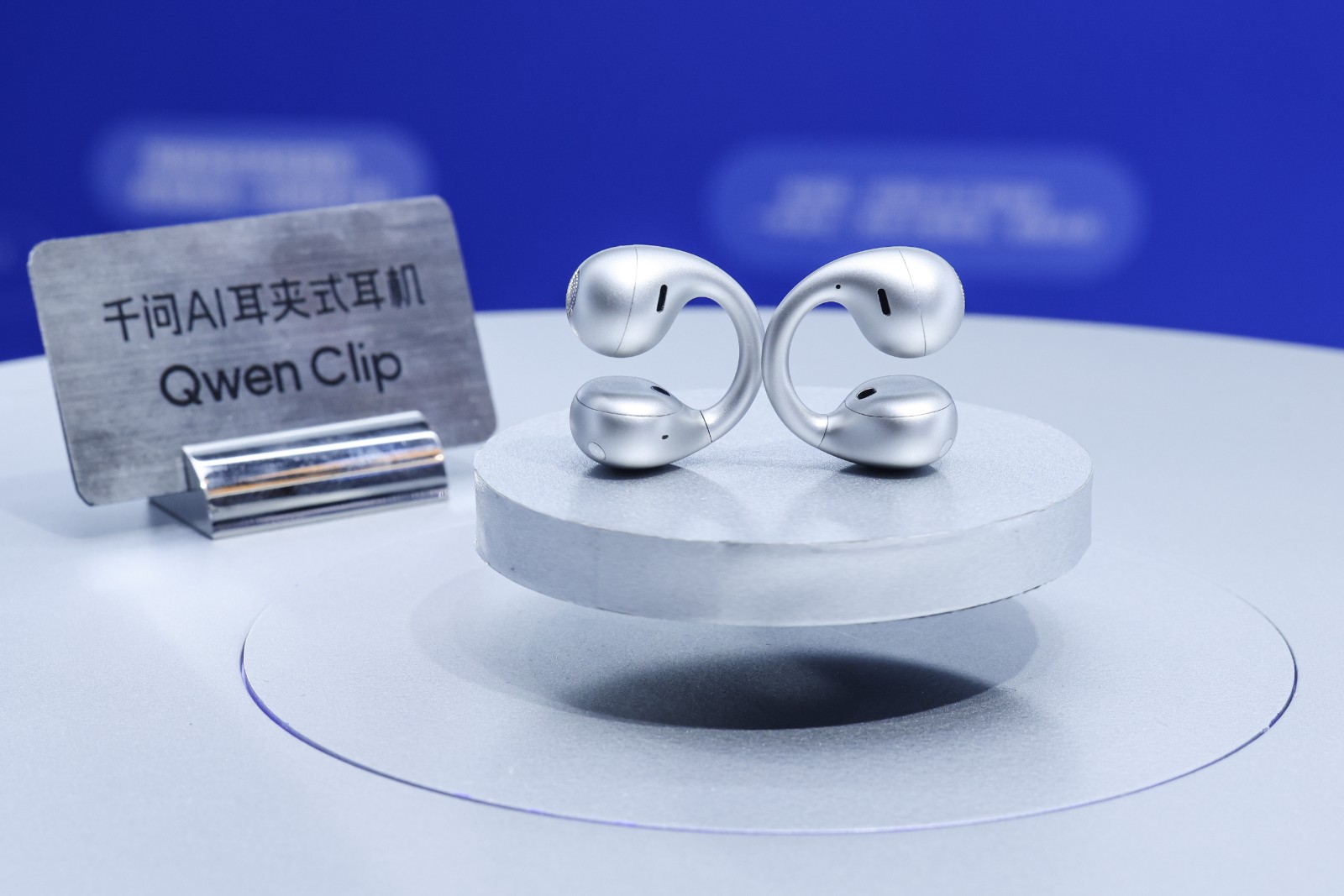
According to the Qwen team, Qwen Clip was jointly created by Qwen and Bose. The Bose acoustics team is responsible for tuning, balancing wearing comfort and sound quality performance in the open clip-on form. Functionally, it puts several key capabilities of the Qwen AI assistant into the ear: simultaneous interpretation, meeting minutes, health records, etc., can all be invoked at any time during conversation without taking out the phone.
For large model manufacturers, the entrance competition is shifting from screens to bodies. Earphones may be the one with the lowest threshold among them—changing no usage habits, yet giving AI all-day presence qualifications.
StepFun STEPX Neo: Why Large Model Companies Are Building Phones Themselves
STEPX Neo, just released by StepFun, may be one of the most discussed phone products at this WAIC.
Released simultaneously with the phone are the large model native AI terminal brand STEPX, the agent native operating system Step AOS, and the personal agent "Step Amoo."
On Step AOS, users no longer operate Apps step-by-step, but directly express intents, and the agent autonomously completes subsequent links; the system dynamically schedules models according to task complexity through "End-Cloud Multi-Brain," remembers user preferences using a "Dual-Domain Three-Step Memory Structure," and is equipped with a security closed loop of trusted execution, operation auditing, controllable permissions, and one-click undo for misoperations. Ecologically, StepFun has already reached cooperation with Alipay, Meituan, Didi, Amap, WPS, CapCut, etc., in the first batch, and uses interfaces rather than simulating click GUI methods to connect services.
While most manufacturers are still "adding AI" into phones, StepFun chose to rebuild the phone for agents. Whether this route can work remains to be verified, but it at least raises a question the industry must answer: In the agent era, should phones still look like they do now?
Doubao Phone 2nd Gen NaviX Ultra: Doubao Comes to "Play" the Phone for You Again
Following last year's first Doubao phone, Nubia directly placed the premiere of the same series 2nd generation product NaviX Ultra at the WAIC scene this year, and gave it a more aggressive official positioning—the world's first AI agent phone.
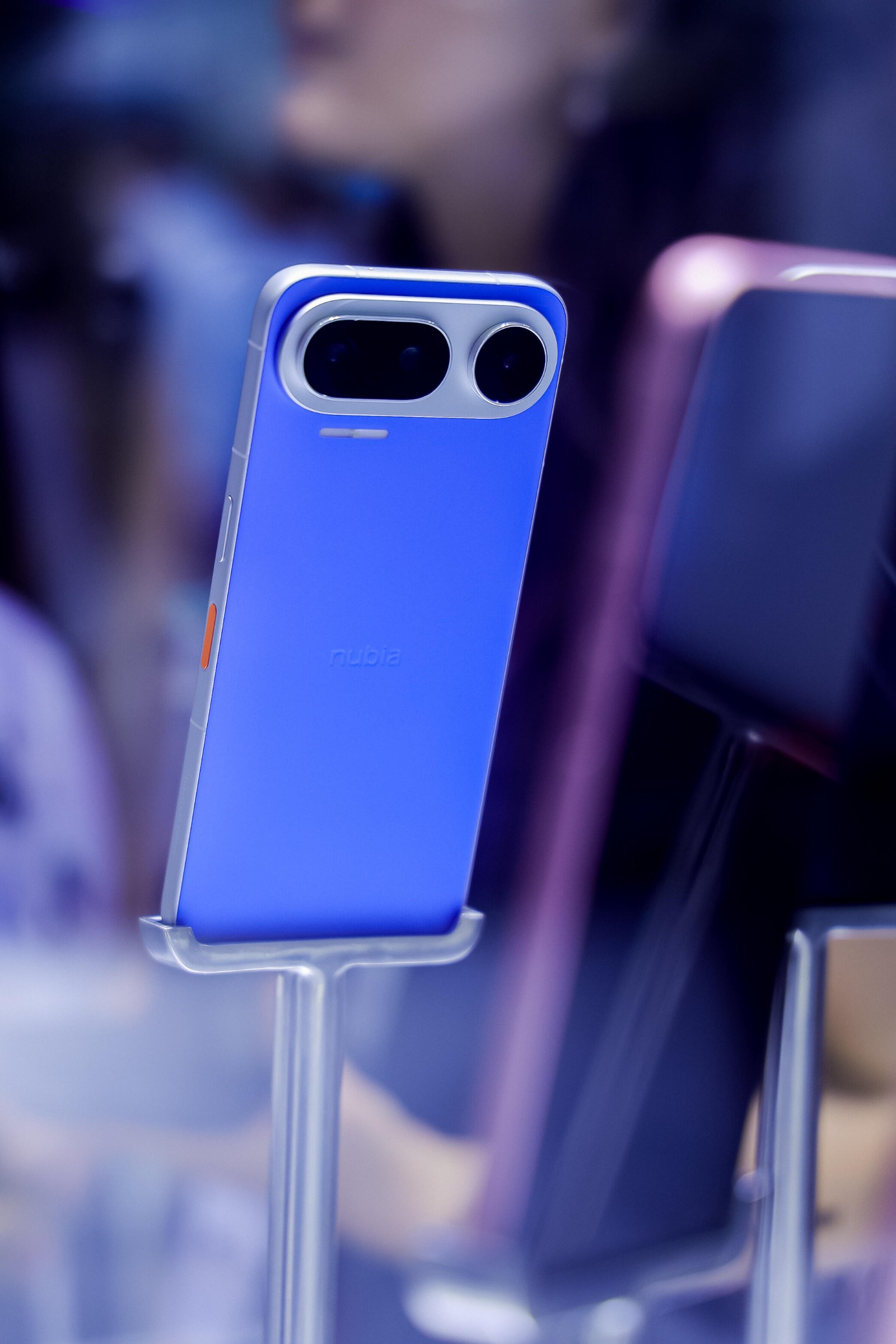
NaviX Ultra was created through deep cooperation between Nubia and Volcengine. The core is the built-in Doubao Phone Assistant: a system-level GUI Agent capable of understanding phone screen content, executing user commands, and completing cross-app operations.
Compared to the 1st generation product, the 2nd generation is obviously a step further in AI permission opening and system-level integration—Doubao is no longer an App installed in the phone, but is woven into the system itself. In appearance, the new machine offers four colors: black, pink, white, and blue. The lens module is supplied by Sunny Optical, and some colors are also equipped with an orange AI physical button. According to supply chain news, the new machine's overall stock is about 200,000 units, with the first batch within 100,000 units.
This number is not large, but ByteDance's intention is clear: using the complete chain of "Doubao Large Model + Volcengine + Terminal," push agents to become the phone's factory standard configuration. When StepFun, Honor, and ByteDance give three different answers at the same WAIC, AI phone competition has shifted from function stacking to a positioning battle for agent entrances.
3. When Models Become Protagonists, Hardware/Software Boundaries Disappear
A very interesting change in the model track this year is the reversal of host and guest. In the past, hardware manufacturers played the protagonist and models were supporting, but this year under almost every model booth, there is a pile of hardware products.
We found that model understanding capabilities are gradually being valued, and everyone is polishing their understanding layer. But it is already hard to find pure vertical players in the entire general model track; everyone is engaging in close combat in similar directions.
Against this background, here are some products with more innovative ideas that we saw on site:
Unisound U2 Large Model: Introducing Hybrid Thinking Mechanism, Focusing on Token Consumption Cost-Effectiveness
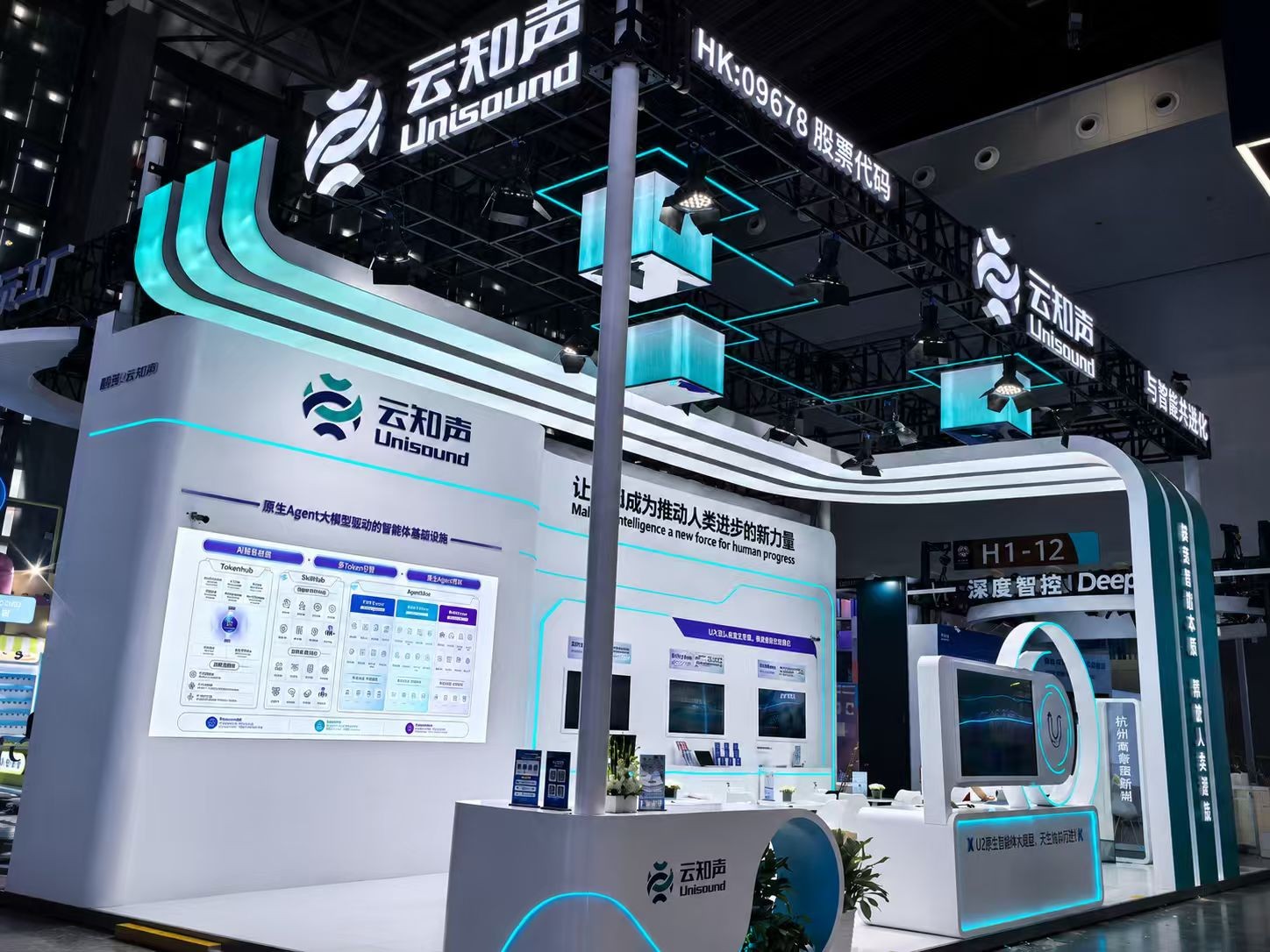
Large models are moving from "understanding and generation" to "planning and execution." Whether a task can be truly finished and done correctly is receiving more and more attention. Unisound's native agent large model U2 showcased this time gave a set of "hybrid thinking" methods at WAIC, making token consumption more cost-effective.
Simply put, it lets the model autonomously switch between two inference methods during the reasoning process. Implicit thinking thinks quickly internally without expanding steps; it is fast and consumes few resources, but easily "goes off track while thinking"; explicit thinking makes every step clear and verifiable, but is slow. In the past, models always adopted the explicit token thinking method. Now U2 is responsible for efficient exploration in the early stage of tasks, and switches to explicit mode in complex links, responsible for logical precision verification.
It is understood that the model will perceive its own uncertainty in real time. Once ideas diverge, it triggers explicit reasoning to correct deviations. And by pressing out invalid steps via implicit reasoning, Token consumption in the thinking link is said to be reduced by about 25%.
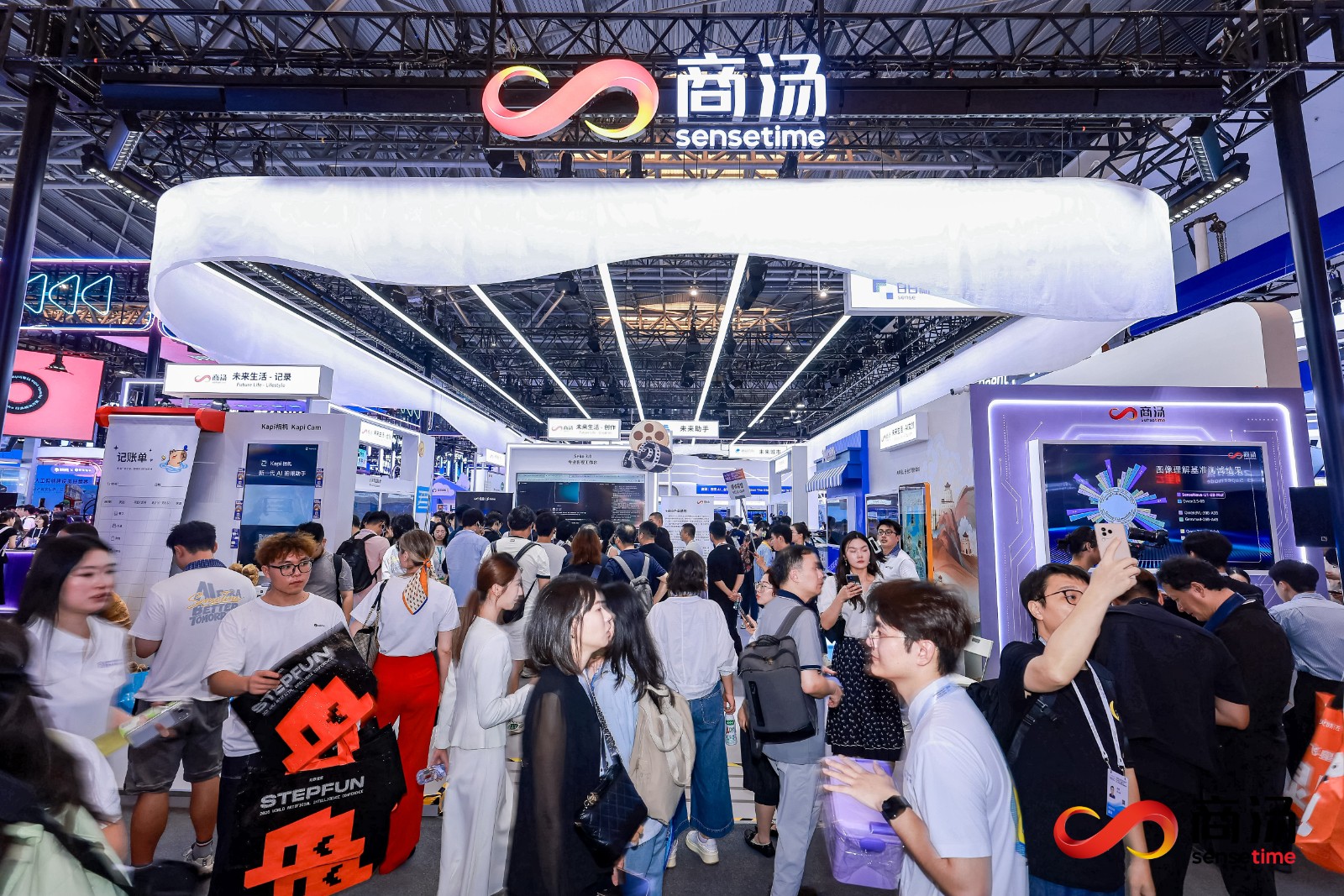
SenseTime SenseNova U1 Pro Multimodal Agent Base: Supports Production-Level Image Creation, Native 8K Output
After the generation capabilities of large models are repeatedly verified, "design" is becoming a new direction for multimodal model competition.
SenseNova U1 Pro, in architecture, unifies multimodal understanding, reasoning, and generation, achieving efficient collaboration of language and visual information, conducting deep creation through endogenous text-image interleaved thinking, and delivering directly.
Therefore, in generating accurate, beautifully designed, production-usable image materials, it rivals top overseas models. It is understood that the images it generates can already directly meet industrial-level requirements such as commercial printing and outdoor posters.
In the content creation field, SenseTime also displayed its AI video creation agent Seko. It connects script conception, character setting, storyboard planning, video generation to post-editing all in one platform, achieving creation while editing, and immediate availability upon editing.
Currently Seko has already attracted over a million young creators and 1,300 enterprise customers, and by significantly lowering creation thresholds, makes "one-person film crew" a reality.
MiniMax M3: Letting Models "Look at Images Directly," Focusing on "Sufficient and Cheap"
The flagship model M3 brought by MiniMax this time has two ideas worth comparing.
First, M3 "looking at images" is not quite the same. Currently many models processing images actually first use recognition tools to extract text from the image, turn it into a segment of text, and then give it to the model to read, equivalent to going through a layer of "translation." M3 cuts the image into pieces and directly turns it into language the model can understand. With less transit, more information is retained, speed is faster, and details in the image are not easily lost.
The second is model cost-effectiveness. It is introduced that M3 has a total of 428B parameters, but only 23B actually work each time. The secret lies in the self-developed MSA sparse attention architecture. Before the model thinks, it first filters out content most relevant to the current question before calculating, doing no useless work. This allows it to support 1M tokens ultra-long context at a moderate scale, and prices are pressed to 2.1 yuan per million tokens for input and 8.4 yuan for output, said to be far lower than overseas flagship models.
The accompanying MiniMax Code also added financial capabilities this time. After accessing third-party databases, writing research reports, doing research, and due diligence can all be handled directly.
4. AI Products/Solutions: No Longer Comparing "Made It," But "Made It Well"
If last year's solutions were still competing on "I made it," this year's keyword has become "I did it better."
Everyone is starting to compare engineering polishing, rather than zero-to-one stunningness. Pure innovative technical solutions are indeed fewer; more players choose to use new methods to solve problems they couldn't chew before in original tracks.
Here are some AI products and solutions we think are noteworthy this year:
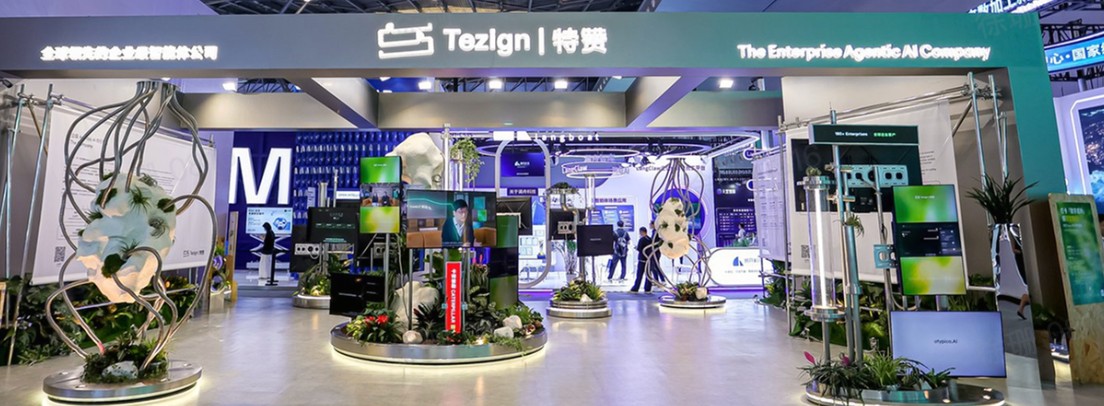
Tezign: Enterprise AI Competition Is Coming to "Context"
On the Tezign booth, we noticed how enterprise-level AI plays value in various industries. Tezign provides a set of enterprise-level agents GEA, constructing a four-layer enterprise-level agent closed loop from business intent to business results, composed of an intent layer, orchestration layer, skill layer, and context layer. The orchestration layer is driven by a proprietary divergent reasoning model, capable of coordinating 30+ basic models and calling 400+ modular skills. But what truly constitutes Tezign GEA's moat is the context layer.
Context is not just internal enterprise data assets. Understanding consumers is also a kind of context, and difficult to replicate. The "Subjective World Model" proposed by the Fan Ling team attempts to solve how to let AI truly read a consumer? He finally solved this difficulty through intrinsic motivation, unexpressed preferences, and cross-situational judgment patterns.
Tezign also combines real social corpus and deep interview data to build a large-scale simulated consumer system, capable of replacing recruitment and interview links in traditional user research 7x24 hours, compressing time and cost to one-tenth of the traditional model.
This means understanding consumers can change from periodic project-based research into a continuously running capability asset. This is the direction Tezign will continue to optimize in the future.
Baichuan Intelligence: AI Family Doctor Moves into WeChat, M4 Capabilities Extend to Oncology and Pediatrics
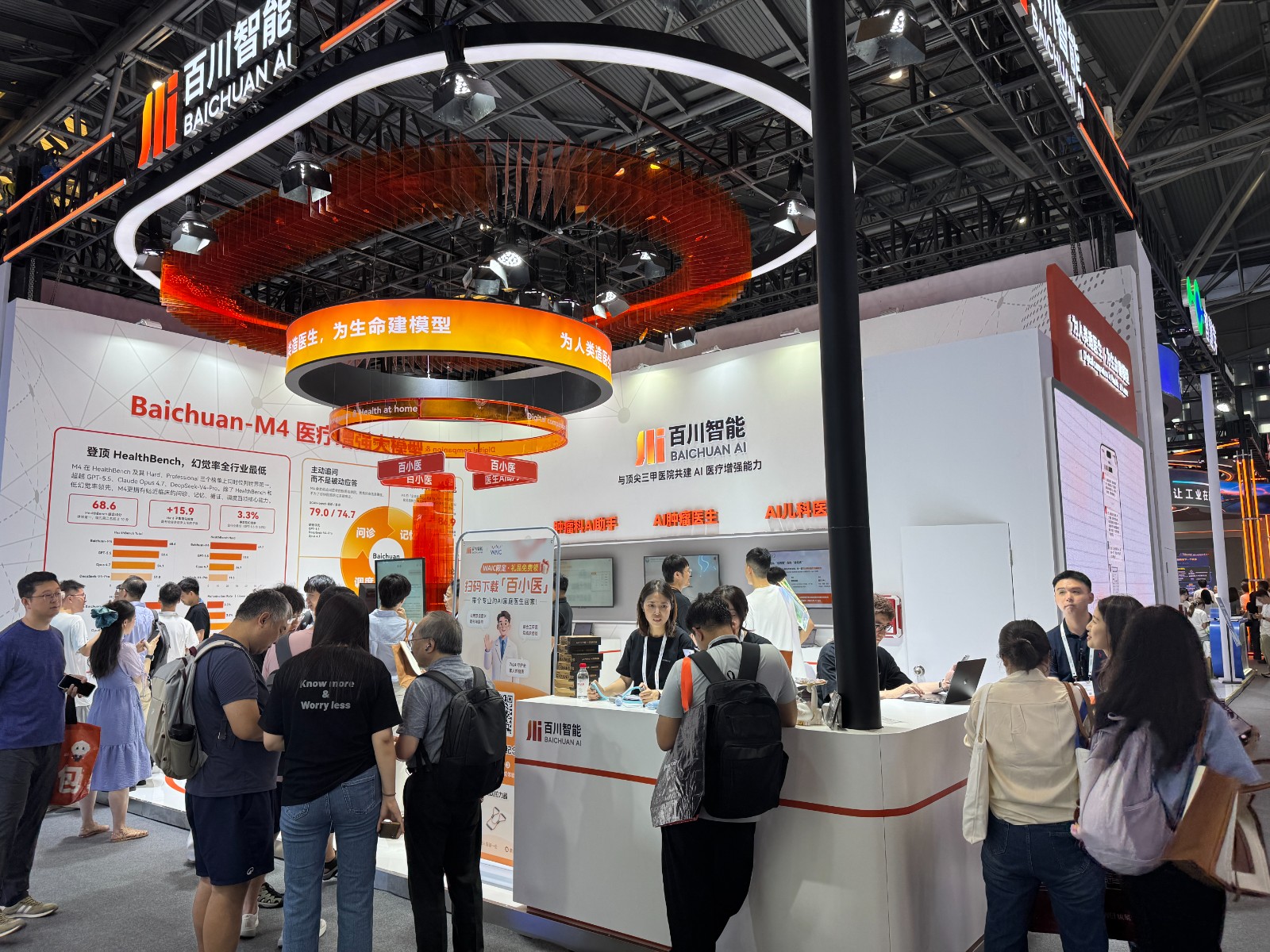
Baichuan Intelligence brings large models into more complete medical health scenarios. At this WAIC 2026, Baichuan displayed the latest generation medical enhanced large model Baichuan-M4, and the AI family doctor "Bai Xiao Yi"面向 family health services.
Bai Xiao Yi consists of two forms: APP and WeChat Bot. The APP mainly serves single medical visits, while the WeChat Bot is more suitable for long-term use, continuously recording health information around family members, providing follow-up, medication, and visit reminders.
Based on M4, Baichuan extends the model to medical fields with higher requirements for professionalism and reliability such as oncology and pediatrics. It is understood that in the oncology direction, Baichuan co-built an oncology AI assistant with the Cancer Hospital of the Chinese Academy of Medical Sciences. Around multi-source evidence such as diagnosis and treatment guidelines, clinical trials, drug instructions, and medical literature, it provides evidence-based retrieval and solution analysis support for doctors. In the pediatrics direction, Baichuan jointly built an AI pediatric doctor with Beijing Children's Hospital, covering inquiry, judgment, evidence-based, and medication links, and carrying out verification in real outpatient, consultation, and family service scenarios.
ModelBest: Robots That Can Work Offline, and "AI Making AI" Training Experiments
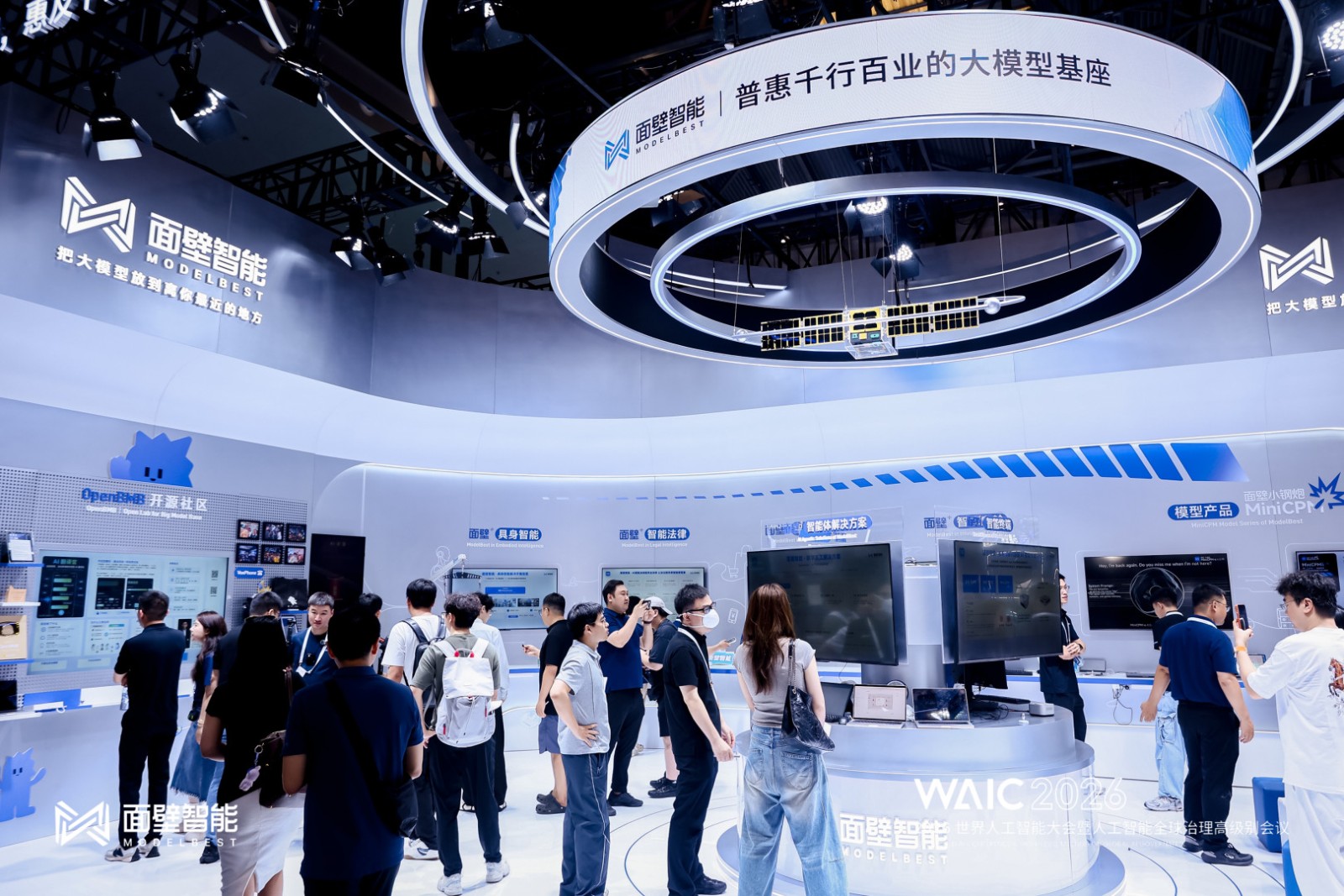
Embodied Intelligence has an old problem: demos are stunning, landing is awkward. The exhibition hall guide and park inspection Agent solution released by ModelBest jointly with Leju Robots targets precisely this pain point—the idea is to put the model into the end side, letting robots work stably in any network environment.
In the guide scenario, robots can explain and answer questions freely based on local knowledge bases even when offline, understand exhibition hall environments and human commands in real time, plan routes and avoid obstacles for navigation themselves, and also support multiple languages and custom voices. The inspection scenario relies on multimodal capabilities to identify vehicle illegal parking, road abnormalities, facility failures, etc. It is worth noting that sensitive images are analyzed locally and do not leave the device; data sovereignty remains in the customer's hands. This is a practical plus for government and enterprise customers.
More interesting is an experiment at the bottom layer: the "AI Making AI" ForgeTrain Agent system. Simply put, it lets the Agent optimize the training framework itself. It spent 18 hours continuously tuning, pushing computing power utilization to a new high, subsequently ran ten-thousand-step production-level long training on Ascend 910 series chips, with loss steadily declining. The final result is quite convincing: using only 130M parameters, it surpassed or matched Google's 270M parameter Gemma 3, and the whole process was completed within a domestic software and hardware closed loop.
Memory Tensor: Letting AI No Longer Re-know You Every Meeting
In the "Cornerstone Partner" exhibition area of the WAIC 2026 Shanghai Ecology Exhibition, computing power, data, and models remain the most watched technical foundations. But at the Memory Tensor booth, a question closer to daily experience was placed at the front: Why do we still have to reintroduce ourselves every time we converse with AI?
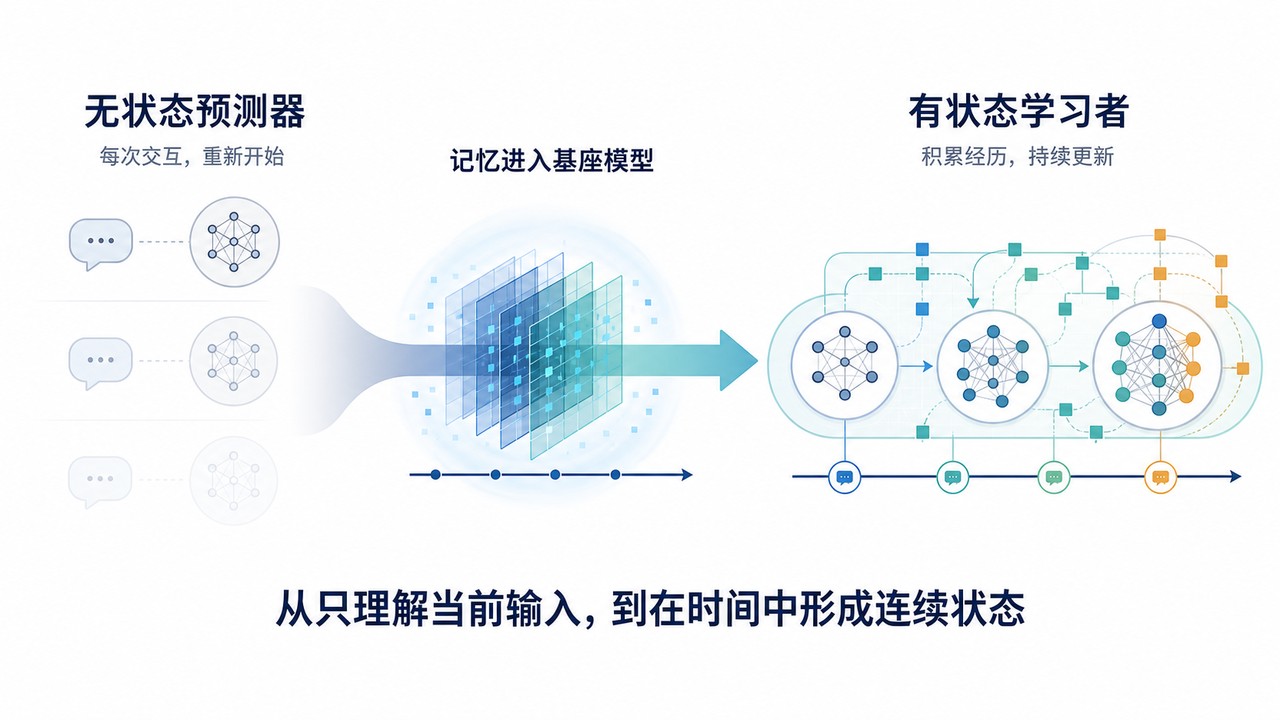
Memory Tensor is a startup company focusing on AI long-term memory and memory-native base models. The common practice now is to store user profiles and historical conversations outside the model, search them out when needed, and give them to the model to read again, more like preparing a notebook for AI. Memory Tensor hopes to turn memory into part of the model's own capabilities, letting AI continuously retain and update status during long-term interaction, understanding what happened in the past, and what connection these experiences have with current tasks.
As AI moves from Q&A tools to personal assistants and intelligent partners, whether it can remember users and continue tasks is becoming a new product threshold. Of course, this also brings issues of privacy, forgetting, and false memories. But from an industry perspective, the next stage of more usable AI may not just be smarter, but also able to truly "remember you."
Suochen Technology: Robots Understanding the World Don't Necessarily Rely on "Eyes"
Current Embodied Intelligence is almost all walking the same path: relying on cameras to see images, making judgments based on vision. Suochen Technology, originating from CAE (Computational Physics Simulation), gives a rare route: letting robots understand the world via "force" and "fluids."
Vision has natural blind spots. Airflow, liquid pressure, material internal stress, deformation trends of flexible objects—these invisible physical phenomena are precisely the key to fine operations. For example, plugging and unplugging connectors, visual solutions require camera precision of fractions of a millimeter, while humans actually rely on force feedback in their hands.
Suochen's approach is to first use its own fluid mechanics and solid mechanics solvers to batch simulate physical fields in different scenarios, thereby training AI models; robots only need a small amount of force sensing and fluid sensor data to infer the complete physical field around them, predicting subsequent motion, deformation, and risks. For example, how friction changes underfoot in humid weather, or whether liquid containers will tip over, can all be calculated in advance, and directly constrain the force and amplitude of actions.
This "physics-driven priority" route has already landed in low-altitude economy scenarios, providing meter-level refined wind field prediction for urban flight service centers. Cooperation in the robot direction is also advancing. In the present where vision almost monopolizes Embodied Intelligence perception, this is a direction worth noting.
Superfusion: Moving the "Token Factory" into the Office
The form of computing power supply can also be an innovation point. The TokenBox exhibited by Superfusion this time has the idea of "dismantling" super nodes from the machine room, making them into a liquid cooling all-in-one machine that can be directly placed in an office. No need to build a machine room; 4 to 6 kilowatts of power supply is enough to run, and it is quiet enough.
This "small server" is about the size of a small refrigerator. A single unit can run large models of 1.6T parameter scale, supporting about 50 digital employees online simultaneously. The four slots on the body are very flexible; GPU and CPU are both pluggable. Upgrades directly replace modules. For this, Superfusion's R&D team even transforms originally air-cooled acceleration cards into liquid cooling, uniformly packaging them into standard modules before installation.
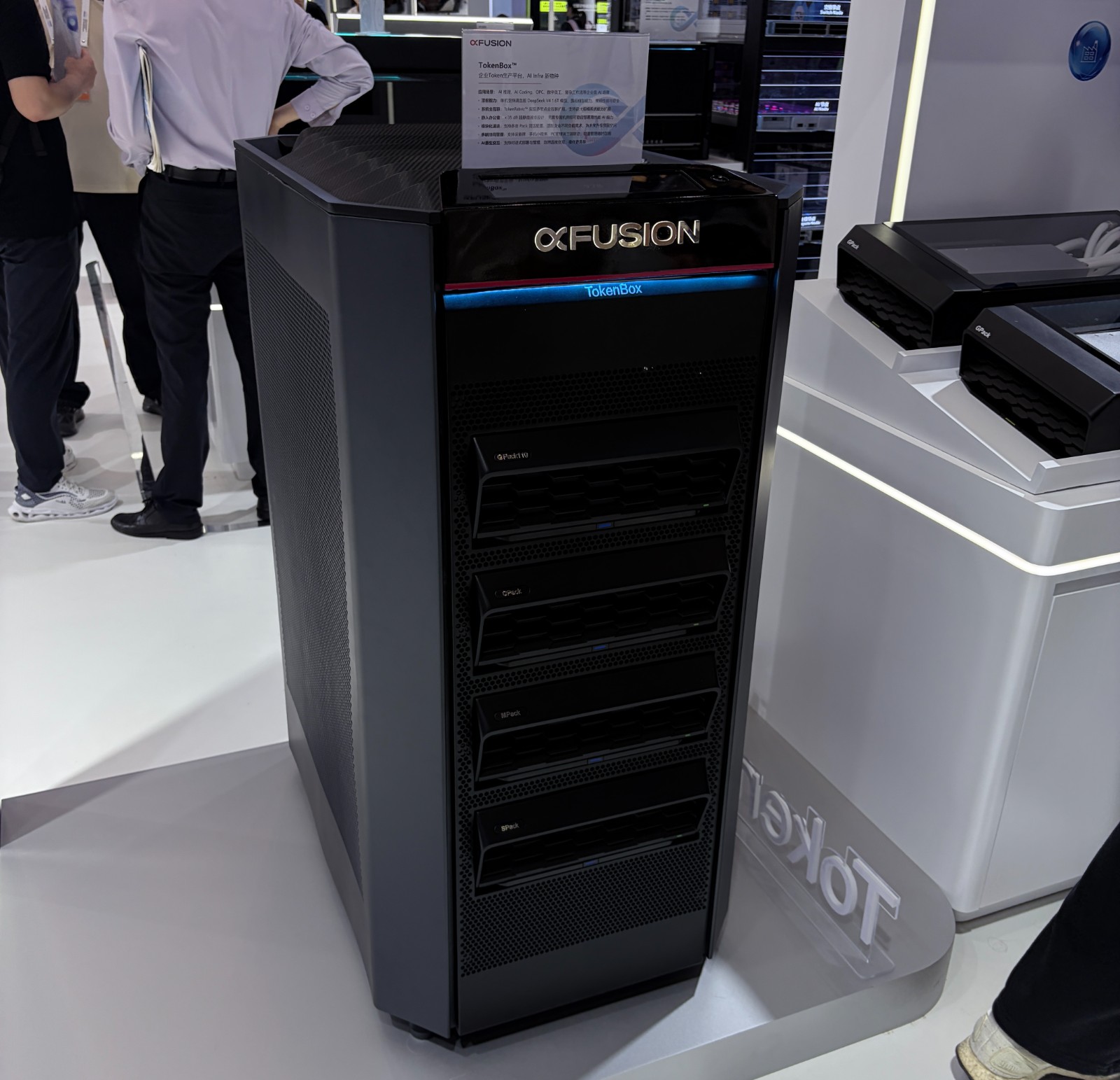
Its positioning is between cloud API and self-built machine rooms: hardware solves "from electricity to computing power," software solves "from computing power to Token," ultimately exposing only one API interface to enterprises, with internal Agents calling directly.
Who is paying? The answer is somewhat unexpected. Short drama crews are typical customers. They frequently call video generation models, with Token costs high. Rather than continuing to pay cloud vendors, it is better to spend around a million yuan to move computing power to the crew. Another type is government and enterprise customers, who need local computing power and also do not want internal data to leave the domain.
Got It: Click the Button, "One-Click Understand" Life
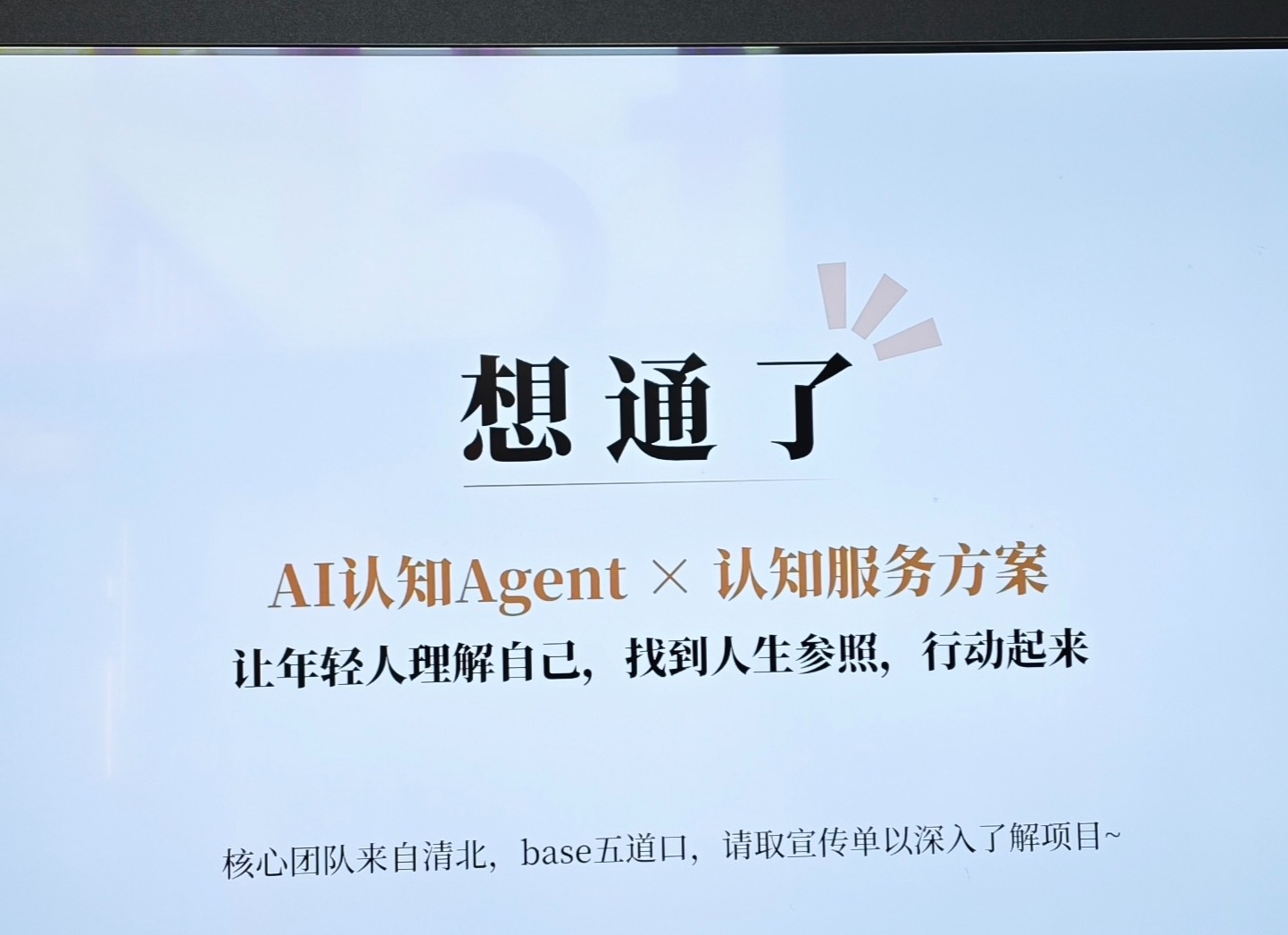
There is a conspicuous button in the product interface, "One-Click Understand."
According to the introduction, their positioning is "AI Cognitive Coach." They want to use AI conversation as an entrance. Through cognitive assessment, long-term memory, and mental model construction, they help users sort out emotional roots, thinking patterns, and life dilemmas. They want to build a "Life Sample Library," using real life experiences to provide delicate, adapted life references for young people. In the future, it can also connect to schools, psychological institutions, cognitive education platforms, elderly companionship, and other scenarios.
Conclusion: Behind the Bustle, Innovation Changed Its Way of Living
After visiting this year's WAIC, the intuitive feeling is: AI is no longer a matter for a certain industry, but a matter for everyone. A ticket can be resold for two or three thousand yuan; the level of bustle is visible. But this bustle is not empty; behind it is AI changing from a technical topic into a strategic direction where all parties are jointly betting.
A signal rarely seen in previous years is "localization." In the H2 exhibition hall, regional forces such as Shenzhen Futian Artificial Intelligence Town and Shanghai Jing'an exhibited in groups. State-owned institutions such as China Southern Power Grid and the China Meteorological Administration also entered the field comprehensively. When local governments and traditional giants begin to seriously write AI into their answer sheets, it shows that this transformation has crossed the boundaries of the tech circle. Although for traditional enterprises, AI transformation is still a long and arduous road.
So, has innovative power weakened? Not necessarily.
It is indeed hard to see stunningness emerging out of nowhere this year, but walking through the exhibition halls you will find innovation has not disappeared, it just changed its way. It hides in some details. For example, in the offline stable operation of end-side models, in the liquid cooling "Token Factory" in offices, in the real service hours of over 500 paid families.
From "making stunning demos" to "finding reassuring landing points," this is not an ebb of innovation, but the maturity of innovation. When a technology begins to seriously answer "who is using it, is it easy to use, is it worth using," it has truly walked to the door of changing reality. At next year's WAIC, we look forward to seeing more answers that have already crossed this door.
Join TechFlow official community to stay tuned
Telegram:https://t.me/TechFlowDaily
X (Twitter):https://x.com/TechFlowPost
X (Twitter) EN:https://x.com/BlockFlow_News