Goldman Sachs Research Report Analysis: Kimi K3 Breaks the Compute Monopoly Narrative, AI Infrastructure Investment Logic Faces Revaluation
TechFlow Selected TechFlow Selected
Goldman Sachs Research Report Analysis: Kimi K3 Breaks the Compute Monopoly Narrative, AI Infrastructure Investment Logic Faces Revaluation
When a Chinese lab matches the performance of top U.S. models using computing power far lower than the West's, the valuation logic of the entire AI industry needs to be re-examined.
 Navigating Web3 tides with focused insights
By: Rita
TechFlow Guide
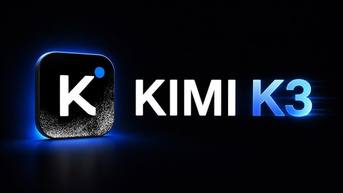
On July 16, Moonshot AI released Kimi K3. It topped the Arena.ai front-end code leaderboard with a score of 1679, surpassing Claude Fable 5 and GPT-5.6 Sol. API pricing is $2.3 per million tokens, setting a new high for Chinese model pricing.
Two days later, Zhipu fell 28%, and MiniMax fell 16%. Nasdaq 100 Index Futures fell more than 1.8%, and the Philadelphia Semiconductor Index accumulated a drop of over 18% from its high.
Goldman Sachs gave a judgment in its report on July 18: Kimi K3 marks a turning point. A Chinese lab unable to match the largest pre-training compute in the West rapidly narrowed the gap with top US models through architectural innovation, synthetic data, reinforcement learning, and post-training techniques. This proves that "Scaling Laws" have not failed, but "scaling" is no longer the only path to victory.
Kimi K3 Gives Chinese AI "Pricing Power"
Kimi K3 is a 2.8 trillion parameter Mixture of Experts model, scoring 57 on the Artificial Analysis Intelligence Index, already approaching Claude Fable 5 and GPT-5.6 Sol.
Its API pricing is set at $2.3 per million tokens, setting a new high for Chinese models. In comparison, Alibaba Qwen3.7 Max is $1.4, Zhipu GLM5.2 is $0.9, MiniMax M3 is $0.22, and DeepSeek V4 Pro is $0.18. This pricing is still lower than the world's most advanced models, but the gap is narrowing; Kimi K3 has entered the "high-end frontier" interval.
Goldman Sachs views Kimi K3 as a signal: Chinese AI model companies are moving from "cost efficiency" competition to "pricing power" competition. Price wars are giving way to value wars.
Why Zhipu and MiniMax Fell
On the day Kimi K3 was released, Zhipu fell 28%, and MiniMax fell 16%.
Goldman Sachs believes this decline reflects investors' concerns about the long-term competitive landscape of Chinese AI model companies; who the ultimate winner will be remains uncertain. The competitive landscape of Chinese AI model companies remains highly dynamic, and the sustainability of leadership positions exists with uncertainty.
Goldman Sachs rates MiniMax as Buy and Zhipu as Neutral. The report listed three core indicators for evaluating Chinese AI model companies: financial strength, pricing power, and cost efficiency. MiniMax recently completed financing, strengthening its financial strength; Goldman Sachs believes its risk-reward ratio leans upward.
The Era of Compute Expansion May Be Ending
Goldman Sachs Partner Rich Privorotsky characterized the sell-off triggered by Kimi K3 as a "de-leveraging event" and warned that the "era of compute expansion" may have reached its end.
He pointed out a deep-seated issue: a Chinese lab unable to match the largest pre-training compute in the West rapidly narrowed the gap with top US models through architectural innovation, synthetic data, and reinforcement learning. The conclusion is that "Scaling Laws" are still valid, but "scaling" is no longer the only path to victory.
If this judgment holds, then the investment logic of "stacking compute to win" no longer holds. NVIDIA led the decline among the Magnificent Seven tech giants, the Philadelphia Semiconductor Index approached a technical bear market, and TSMC's earnings exceeded expectations but capital expenditure guidance instead exacerbated market doubts about returns on AI infrastructure. The market is pricing in this new logic.
Next Phase: Fierce Competition in Coding, Healthier Video Generation
After Kimi K3, competition will not stop.
Goldman Sachs expects more Chinese AI models to be launched intensively in the second half of 2026, including Zhipu GLM, Alibaba Qwen, MiniMax M3 Pro, etc., with parameter scales further expanding to the 2 to 5 trillion interval. Competition in the programming and code generation track will continue at high intensity.
The situation in the video generation model track is different. Goldman Sachs holds a more optimistic view on video generation models, believing that SeeDance (ByteDance), Kuaishou Kling, and MiniMax's Hailuo and the upcoming H3 model will continue healthy growth in the second half of 2026. Pricing and gross margins in this track are healthier than text models because compute supply remains tight and demand significantly exceeds capacity.
TechFlow Perspective
The biggest impact of Kimi K3 lies not in the technology itself, but in the changes in competitive logic it reveals.
When a Chinese lab catches up with the performance of top US models using compute far lower than the West, the valuation logic of the entire AI industry needs to be re-examined. Compute is still important, but it is no longer the only moat.
Goldman Sachs characterizes this as the "end of the era of compute expansion," but a more accurate statement might be the "end of the era of compute monopoly." Architectural innovation, algorithm efficiency, and data quality are becoming new competitive dimensions. For investors, this means AI investment logic is shifting from "who built the largest data center" to "who can make better models with less compute."
That era of "stacking compute to win" is being rewritten by Kimi K3.
Disclaimer
This article is TechFlow Research's organization and interpretation of a third-party brokerage research report (Goldman Sachs, July 18, 2026). The ratings, target prices, earnings forecasts, and related judgments cited in the text are the views of the brokerage's analysts, represent only the position of their affiliated institution, do not represent the views of TechFlow Research, and do not constitute any investment advice.
The market involves risks; decisions must be made independently. This article should not be used as a basis for buying or selling any securities.
Join TechFlow official community to stay tuned
Telegram:https://t.me/TechFlowDaily
X (Twitter):https://x.com/TechFlowPost
X (Twitter) EN:https://x.com/BlockFlow_News
 @chaoxiangooo