"Super Bull" Tom Lee: S&P 500 Target Raised to 8,000 Points, Four Major Risks Roil Second-Half Market
TechFlow Selected TechFlow Selected
"Super Bull" Tom Lee: S&P 500 Target Raised to 8,000 Points, Four Major Risks Roil Second-Half Market
He is bullish on the biggest beneficiaries of AI productivity dividends, such as finance, healthcare, and technology, and expects the S&P to possibly experience a sharp correction in the fall due to the new Fed communication mechanism, IPO lock-up expirations for companies like SpaceX, and other factors, but as long as the economy does not substantially deteriorate, it will still show a "V-shaped" rebound.
 Navigating Web3 tides with focused insights
By: Zhang Yaqi, Wallstreetcn
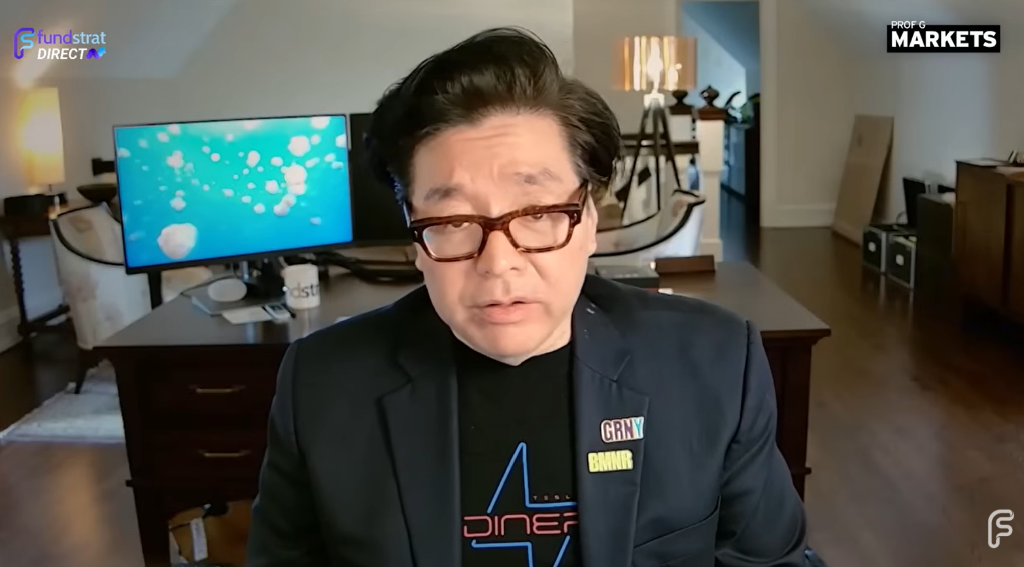
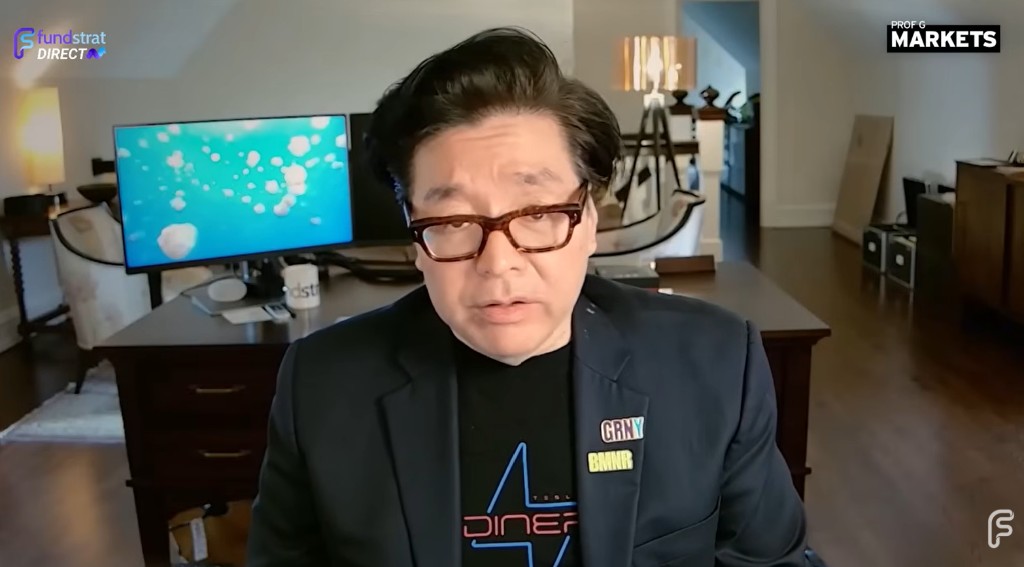
Well-known Wall Street bull and Fundstrat Global Advisors co-founder Tom Lee has raised his year-end target for the S&P 500 to 8000 points, listing the financial services sector as the biggest short-term beneficiary of the AI productivity dividend. He believes earnings growth will continue to dominate the market, but investors must be wary of multiple risks in the second half of the year.
In a recent podcast episode, Lee stated that entering the second half of 2026, the core logic behind maintaining his optimistic stance lies in the continuous upward revision of earnings estimates: the market's consensus expectation for S&P earnings per share in 2027 has risen from $350 at the beginning of the year to $400, while the corresponding forward P/E ratio has instead decreased from 19.4x to 18.4x. This means that although the index has risen nearly 9% within the year, the market is actually "cheaper" in terms of valuation than at the beginning of the year. He bases his 8000 point target on 2027 earnings per share of $400 multiplied by a 20x P/E ratio.
However, Lee also warned that the S&P index might experience a sharp correction similar to a bear market in the autumn, triggered by factors including changes in Federal Reserve leadership, supply pressure from large IPO lock-up expirations, shipping obstructions in the Strait of Hormuz, and margin leverage levels at historical highs. He maintains a baseline judgment of a "V-shaped rebound," believing that as long as there is no substantial deterioration in economic fundamentals, any correction will quickly reverse.
Earnings Drive Remains Solid, But Quality Questionable
Lee attributes the potential "fourth consecutive year of double-digit gains" in 2026 to three overlapping main lines of earnings growth: AI and energy infrastructure construction, manufacturing reshoring, and the continuing effects of government infrastructure spending. He pointed out that 76% of large-cap growth fund managers underperformed the benchmark within the year this year, mainly because they missed the rally in the semiconductor and DRAM memory sectors, and the catch-up behavior of these laggards in the second half will constitute additional upward momentum.
However, he also admitted that earnings quality issues cannot be avoided. Large technology companies include valuation gains from private equity investments in earnings, there is a price hike-driven "bullwhip effect" in the semiconductor supply chain, and hyperscale cloud vendors maintain capital expenditures through public market follow-on offerings and debt financing—these factors all mean it is reasonable to apply a higher valuation discount to current earnings growth. He stated that credit spreads are currently still at abnormally narrow levels, which is his primary reference indicator for observing whether cracks are appearing in the stock market.
AI Productivity Dividend: Financial Services Sector is the Biggest Short-Term Winner
Lee believes AI has proven two things in practice: it makes capable people more efficient, and it also generates real output from previously "implicitly idle" work time. Taking knowledge-intensive industries as an example, the time truly producing value in a 40-hour week may not exceed 6 hours; AI is filling these gaps and converting them into actual capacity.
Based on this logic, Lee lists the financial services sector as the most certain beneficiary of the AI productivity dividend in the near term, in addition to healthcare and technology industries. He is also bullish on AI downstream software stocks (IGV) and the Mag 7—reasoning that the valuation de-rating these stocks previously experienced has made the risk-reward ratio reasonable, and their compound growth potential as AI downstream beneficiaries has not been fully priced in by the market.
Looking at a longer time dimension, he believes industrial robots will be the first to change warehousing and logistics, and then penetrate into the residential construction industry—by then semiconductor demand will see a structural leap, because the chip usage density per robot is about 50 times that of an iPhone. Amazon, with its first-mover scale of about one million industrial robots, will be one of the core beneficiaries of this trend in his view.
OpenAI Delays IPO: Crack in Narrative or Strategic Consideration?
Lee expressed that the successive IPO delays by OpenAI and Anthropic are "intriguing," but does not believe this is directly related to SpaceX's successful listing. He speculated that tightening U.S. government review of new models might be one reason, but admitted he does not have inside information.
He believes that if the above two companies choose to list, the issuance itself will not be difficult—the private market has been quite smooth in meeting their financing needs. When evaluating OpenAI and Anthropic, investors will not simply apply the valuation framework for subscription businesses, but need to see the realization path of free cash flow. He analogized Meta's mobile transformation and SpaceX turning satellite spectrum into a core asset, believing there is a non-zero probability of "home run" level success for these two companies—but this is essentially a bet on the founders' personal judgment and execution ability, containing high key man risk.
Four Major Tests in Second Half and V-Shaped Rebound Logic
Lee outlined four main risks facing the market in the second half: First, new Fed Chair Warsh intends to reconstruct the monetary policy communication mechanism, including canceling fixed-frequency press conferences and forward guidance, and the market needs to find alternative policy signals; Second, lock-up periods for large IPOs such as SpaceX will expire sequentially in the autumn, at which point the supply of circulating market value will increase significantly; Third, shipping in the Strait of Hormuz has not yet returned to normal, and the global petroleum product supply gap continues to expand; Fourth, margin debt year-over-year increase is as high as 55%, historically at the fifth highest level in nearly 70 years, highly correlated with market corrections in the coming months.
For the judgment that these risks will ultimately lead to a "V-shaped rebound" rather than continued decline, Lee's basis is: as long as corporate credit spreads and the yield curve do not signal substantial economic deterioration, the market has the foundation for rapid repair. He pointed out that the market correction earlier this year related to the conflict with Iran has already validated this framework.
Semiconductors: Cyclical Stock or Structural New Story?
Lee holds a relatively optimistic attitude on whether semiconductors can maintain strength. He pointed out that in every semiconductor cycle in the past 50 years, the market size itself did not see leapfrog expansion, but this time the large-scale application of robots will bring a completely new level of demand—chip demand per autonomous robot is about 50 times that of a smartphone. Special performance requirements for semiconductor applications in space will also spawn differentiated demand. He believes that at least within the visible cycle of 2026 to 2027, the difference in impact on market direction between the narratives of "big cycle" and "structural shift" is not significant, and recent visibility is quite clear.
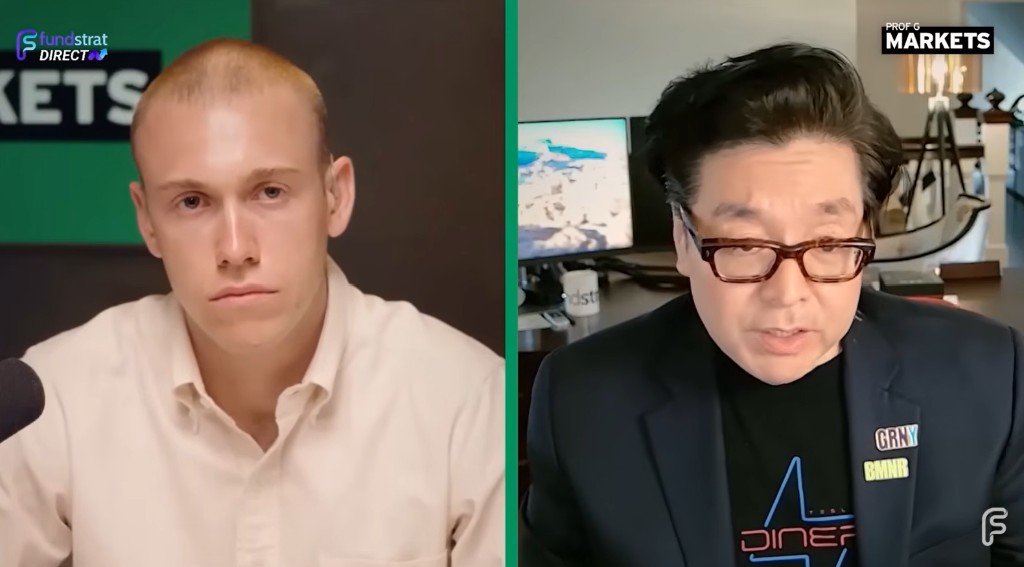
Below is the full interview transcript:
Host: At the end of last year, a guest on the program made a very bullish prediction for 2026. Fast forward to now, the U.S. stock market has indeed performed well, with a year-to-date gain close to 9%, but there are still many unresolved issues in the market. Now that the first half of 2026 has concluded, we want to invite this guest back to talk about: Is he still bullish? What are investors underestimating right now? And where will the market head in the second half?
Joining us today is Tom Lee, co-founder, Managing Director, and Head of Research at Fundstrat Global Advisors. Tom, glad to have you back on the program.
2026 First Half Review: Leading and Lagging Sectors
Host: We want to ask you to review the market performance in the first half first, and then talk about the outlook for the second half. The S&P index rose nearly 9% in the first half, the Dow Jones rose 8%, and the Nasdaq rose 11%. The divergence between sectors is also obvious—the "Mag 7" performed relatively under pressure this year, we will talk about the cryptocurrency situation later. Let's talk about your overall feeling about the first half first.
Tom Lee: 2026 is expected to be the fourth consecutive year achieving double-digit gains. This might surprise some viewers, but historical experience shows that when the market has three consecutive years of strong gains—like we saw in 2023, 2024, 2025—the fourth year often performs steadily as well. This is also one of the reasons we were optimistic at the beginning of the year.
The judgment at the beginning of the year was that earnings growth would become the main driver of the market, and indeed that is the case. At the beginning of the year, the market's consensus expectation for S&P earnings in 2027—very close to our prediction—was $350, now it has been上调 to $400, up $50. And the P/E ratio corresponding to 2027 earnings was 19.4x at the beginning of the year, now it has dropped to 18.4x.
This might surprise everyone: although the index rose 9%, the stock market is actually "cheaper" than in January. I think there is full reason to remain optimistic now, because I do believe there is further room for upward revision in U.S. corporate earnings. The core factors driving earnings growth still exist—partly AI and energy infrastructure construction, partly the trend of manufacturing onshoring, in addition the government's infrastructure spending still has some continuing effect. These are tailwinds supporting spending growth, and overall, investor sentiment has not become overly optimistic yet.
However, now at mid-year, there are two factors worth paying attention to. First, margin debt levels are much higher than at the beginning of the year, up 55% year-over-year, which is about the fifth highest year-over-year increase in nearly 70 years of history. Historical experience shows this is usually related to those investment groups relying on borrowed money to trade "running out of ammunition."
But on the other hand, looking at fund manager performance this year, among large-cap growth funds, 76% of fund managers underperformed the benchmark, this proportion is quite rare; among large-cap balanced funds this proportion is 60%, although not that extreme, but not low either. That is to say, growth fund managers largely missed this round of rally in the semiconductor and DRAM (memory) sectors this year, I think they will go chase this rally in the second half, which is also one of the reasons I tend to continue being bullish.
Host: I actually have quite a few concerns about the current market. For example, looking at the Shiller PE indicator, it is now at an extremely high level, basically approaching the range of the internet bubble period. I gradually feel that the distinction between forward earnings and trailing earnings is starting to become very important—much of the earnings we see now are built on contracts signed with these AI companies, and whether these AI companies truly have the ability to fulfill these contracts in the future, I think this point is completely worth questioning.
For example, the spending plans of OpenAI and Anthropic respectively, and SpaceX etc. At the same time, we also noticed a study recently confirmed by Goldman Sachs: a significant portion of the earnings reported by many large technology companies actually reflects the rise in valuation of their private equity investments in AI companies, and due to relevant accounting standards, this part of valuation growth is counted into actual earnings figures.
What I want to say is, although the earnings growth numbers look very strong, I actually have some contradictory feelings about this, especially when they say "earnings in the next 12 months will reach so and so". I would very much like to hear your views on my kind of skeptical attitude.
Tom Lee: I basically agree with your view, because what you raised is actually the issue of earnings quality. I think there are several factors that indeed warrant questioning earnings quality. First, book gains from investment valuation increases on the balance sheet are not the same as true operating earnings.
The second difference is that there is currently a certain degree of "price increase" factor—for example in the chip supply chain, some companies because wafer fab capacity cannot be expanded, or the expansion cycle is very long, so they turn to achieving growth through price increases, this way more revenue will directly reflect on the profit end. But this will cause a "bullwhip effect", because we know the supply chain will eventually catch up with demand, and prices will also fall back.
At the same time we also know hyperscalers are writing huge checks投入 construction, now they are starting to raise funds from the stock market to support these expenditures—this is why Google set up an ATM follow-on offering mechanism, Meta might also adopt a similar practice, of course there is also SpaceX's IPO. These are all efforts to try to raise financing from the public market.
The last point is, there is currently also the phenomenon of credit consumption—that is to say, enterprises are using another part of the capital structure (debt) to finance these expenditures. So I think, based on these reasons, we should indeed demand higher valuation multiples applied to earnings growth.
Having said that, I think currently these activities are mainly concentrated in four countries or regions—so we must seriously think about what this means. These four countries or regions are of course the United States and China, additionally I count South Korea and China Taiwan as one group, that is AI infrastructure partners, possibly plus Japan. So, although we can maintain a certain skeptical attitude, the story happening is actually: AI is currently obviously only benefiting a few countries or regions.
Is the Market Overheated? Debate on Shiller PE
Host: Speaking of Shiller PE, I think the real question for us currently is: is the market overheated? And interestingly, there doesn't seem to be much consensus on this issue currently—everyone is looking at different indicators, all trying to judge whether the market is a true bubble, or just "overheated", or neither. What do you think about this issue? I think earnings quality should also play a certain role in this discussion.
Tom Lee: I did this kind of analysis when I was at JPMorgan before, and now at Fundstrat we continue this practice—you can calculate Shiller PE by industry separately, this way you can compare more "apples to apples". For example if calculating Shiller PE for technology stocks separately, you can compare 1929 with now. Of course, the so-called "technology companies" of that era are completely not the same as now—technology companies back then were radio manufacturers, later also included microwave oven manufacturers and the like.
But measuring this way, the current Shiller PE is actually not that extreme, because in the composition of earnings now, the proportion of the technology sector is continuously rising. The technology sector—I don't have exact numbers at hand, but roughly accounts for 60% to 70% of all earnings growth, but in the total earnings amount the proportion is only about 40% or so. And in 1999 this was not the case—at that time technology stocks proportion in total earnings was not high, but its contribution to valuation multiples was very large.
So I think from the perspective of earnings composition, this time is quite different. ISM data also reflects the same trend—if you split manufacturing and services apart, in the past 50 years, we have already transformed from "manufacturing accounting for the main body of economic activity" to manufacturing only accounting for about 30%. So I think, Shiller PE actually has room to go higher.
However I want to add a fair question: are credit spreads underestimating risk? Because the 10-year Treasury yield has been rising, I am actually surprised that high-yield bond and investment-grade bond spreads remain at such narrow levels. Logically, considering geopolitical risks and capital cost pressure brought by high interest rate environment, spreads should widen, but in fact they haven't. To say, before observing whether the stock market will appear cracks, I will first watch the credit market—but I think the signal the credit market is currently transmitting is actually, there is still excess liquidity in the market.
SpaceX and Ultra-Large IPO Second-Order Effects
Host: Regarding the impact or second-order effects of these large IPOs, there seem to be contradictory statements in the market—one view believes these ultra-large IPOs will suck dry a large amount of IPO funds in the market; another view believes this will instead play a positive promoting role for the IPO market, equivalent to declaring "the IPO window has reopened". What do you think? For these large IPOs coming up, what do you think the second-order effects will be?
Tom Lee: I think those affected by IPOs can be roughly divided into three groups: first is the issuers themselves, second is the private shareholders of these companies before listing, third is the broader overall market. SpaceX is a very good example—its IPO size is only $75 billion, while the company's overall valuation exceeds $1.5 trillion, so the current float only accounts for about $90 billion.
From a market cap perspective, SpaceX as a stock, its circulating market value is actually smaller than most components in the Nasdaq 100 index, roughly can rank into the top 50 of Nasdaq total market value, this is also the reason its trading performance is good. But these shares will be unlocked in stages, by the end of this year, the total market value of unlocked circulation should exceed $1 trillion. I think, for the public market and overall market, this is quite a large increment of supply. This supply pressure effect of SpaceX, I expect will gradually appear by the end of this year.
But before this, this also created huge wealth effect—because SpaceX in its entire development process only raised $18 billion in total, now valuation reaches $1.5 trillion. So those shareholders who held shares during SpaceX's private stage, created huge wealth, this will actually bring real economic stimulus effect, because banks will be willing to issue loans using their held shares as collateral, so I think this will actually boost GDP.
So you are right, Scott, there are indeed counterbalancing forces here. My judgment is, the overall economy will benefit from these IPOs, because this created huge book wealth and locked assets; the stock market will perform well before unlocking, because once unlocking begins, the market needs to digest these new supplies; and the issuers themselves will perform very well, because they now have channels to raise funds from the public market, can use this to accelerate spending. So I think issuers will fully benefit from their IPOs.
AI Story Appears Cracks? OpenAI and Anthropic Delays
Host: Let's continue talking about capex and the topic of second-order effects of these AI companies—these companies made extremely huge commitments on capex, I think this is also the reason many related stocks were pushed up. I want to propose a hypothesis: it looks like OpenAI might shelve its IPO plan, I have to think this means market momentum has already shifted, or growth expectations failed to reach expected levels.
Are you worried we are starting to see—I don't want to use the word "AI bubble"—but at least some cracks appeared in the AI narrative, and this kind of crack will spread to the entire market? Or do you not worry too much about this issue?
Tom Lee: There are indeed many places where the AI narrative could go wrong, Scott. First, as you know, we need to build huge electricity and infrastructure to support all this, building all this itself is a huge project. To be honest, we currently don't even know what impact this will have on residential electricity prices, nor know how much environmental damage it will bring, or say if you happen to live near a hyperscale data center, what impact quality of life will suffer.
I think we actually don't fully know why Anthropic and OpenAI both delayed their respective IPO plans, this point I think is quite intriguing, because whichever party lists first, can benefit from "listing first", no one wants to become the "last to list" company.
I guess this might be related to the U.S. government tightening approval on new models—you know, for example Mythos model previously underwent massive review, Fable model was also taken offline for a time. Is it possible the U.S. government is saying "we now have to review all your models"? Then possibly therefore require them to tighten their own plans? I'm not sure, but for me this is indeed an intriguing phenomenon. But I think SpaceX is a huge success case, so I don't think SpaceX's success and OpenAI, Anthropic delaying IPOs have any direct relationship.
Why OpenAI Has Not Listed Yet?
Host: I want to dig deeper into this issue—why OpenAI still not listing? What exactly are they worried about, anxious about? I very much want to hear your views.
From a financial perspective, OpenAI's current situation seems not too good. Frankly, from a profitability perspective, last year they lost nearly $40 billion; if looking at operating profit, last year roughly lost $21 billion. Currently our cognition of the AI industry is: revenue growth is very rapid, usage is also continuously growing, but the cost of running and training these models is extremely high, we have not yet seen AI business truly achieve profitability, currently still in some kind of "trial stage".
So I am curious, is it because—we recently saw their financial data was leaked, market reaction was not too good, my personal intuitive feeling is, these financial data from a profitability perspective are indeed surprisingly bad. I want to know, is it possible investors might not be able to bear such financial status, so they feel need to straighten out the business model first before listing? I very much want to hear if you think this factor played a role, and your views on these enterprises themselves—these companies carry such high expectations, but business model seems yet to truly work out.
Tom Lee: I declare first, I do not have all inside information, just expressing personal views. I think if OpenAI or Anthropic list, their IPO will be very successful, because their story is actually relatively easy to understand—they are not that kind of business complex conglomerate. OpenAI and Anthropic are obviously at the forefront of building complex reasoning models, these models will eventually become our Agents. And currently the public completely cannot participate in investment, institutional investors actually also basically cannot participate.
I think their financing in the private market is actually no problem at all—in fact, they financing billions, tens of billions of dollars has always been very smooth. So this might be one of the reasons they暂缓 listing, but for me this is still an intriguing phenomenon. But I think, investors when looking at OpenAI, Anthropic, will not treat them as a subscription business to look at, they more need to see free cash flow, need to see the company willing to continuously invest and recruit talent to maintain leading position—because these two companies are very unique existences. Of course, I am not an insider, so do not exactly know the real situation.
Does Tom Personally Really Bullish on This AI Trade?
Host: As an investor, do you personally really agree with this story? This is exactly what I want to figure out—because I feel my thoughts are similar to yours: AI is undoubtedly an extremely important historical moment for the market, and these two companies are exactly the leaders in this field, if opportunity is placed in front, why not bet? But I do think, the business model issue remains a huge unanswered question. I very much want to hear how you personally look at this.
Tom Lee: This is still a story being written in "future tense", we are now at most just in "Chapter One", can only rely on analogy to make some speculation.
For example—although a bit off topic, but for me, SpaceX's most amazing achievement lies in, they turned satellite spectrum this kind of resource into reality—SpaceX (and Starlink) completely relies on satellite spectrum to operate, and this spectrum resource before they entered, compared to ground spectrum was almost worthless, they however turned it into the world's most valuable spectrum resource. Musk almost got global satellite spectrum at "zero cost", and in today's United States, if you want to obtain 20 MHz width cellular spectrum, per person roughly needs to spend $200. This is truly a world of difference—he almost got satellite spectrum for free, now it however became the world's most valuable spectrum resource.
Meta is also a similar example: they initially owned a free, user-generated content based business—essentially initially just a "digital yearbook" only, but they turned it into one of the largest monetization businesses in history. I still remember when Meta just launched mobile business, many people were not optimistic at all, thought Facebook what advantage could have on mobile end, because desktop version already had such rich content experience. But facts proved, mobile transformation was exactly their "intercepting" the entire advertising market key.
Then OpenAI and Anthropic? Relying on their ability to build complex reasoning models, who knows which industry they will eventually disrupt? Maybe we think they are just doing advertising business, maybe we are oversimplifying their true business model. Will they build future biotech laboratories? Will they build future labor force? I think this is still a story being written, but if referencing Meta such most valuable company achieved achievements, referencing Google turned search this business to a completely different level, referencing SpaceX turned satellite spectrum into core asset—I think this is why I feel these companies' IPO has a certain non-zero probability to become true "home run" level success cases.
Host: I completely agree, and very glad you mentioned this point. But do you also worry there exists such risk—万一 OpenAI type companies fail to succeed, fail to hit this "home run", something goes wrong, for example Sam Altman made wrong strategic decision, causing company to collapse in some way?
My personal view is, this non-zero probability risk actually should be priced in—not only reflected in OpenAI's own valuation, should also be reflected in overall market valuation, because the entire market to a large extent has already become highly dependent on OpenAI's success, and also dependent on OpenAI continuously investing huge funds to buy computing power and chips this matter itself whether can smoothly proceed.
Tom Lee: There is indeed an interesting paradox here—the more successful OpenAI is, the more it illustrates two things: first, Sam Altman this person himself becomes more and more important, because ultimately, it is him as a "person" making various decisions. I believe he won't really type in ChatGPT asking "what should I do next"—although he might really do this—but his strategic level "self-realization", actually highly relies on extremely excellent talent team. So this to a large extent is a "people story", to build two such amazing companies, relies exactly on people.
You are right, this is essentially betting on Sam himself and his vision, at the same time also betting on Anthropic team and their vision—this is actually a "two horse race", and two companies completely possible along different directions each achieve success.
Host: It is exactly this kind of "betting" that makes me worried about the current market—too many things bet on him personally, bet on his execution ability, bet on whether he can truly land and realize this AI story. If finally fails to realize, in my view, S&P index this year nearly 9% gain, most of this growth did not come from large technology stocks themselves, but came from semiconductor and DRAM memory companies—that is all these chip related stocks "selling shovels" for AI boom.
If this story finally fails to realize, if things didn't develop according to everyone's expected direction, market very likely will appear very violent, very fierce downward turn. Of course currently all this has not happened, this story is still continuing to unfold, but I guess this should also be within your scope of attention.
Tom Lee: I think there is one point worth noting—we somehow are discussing from narrative level. Because even if OpenAI and Anthropic really are pivotal, assume they really encountered major setbacks, S&P overall earnings level actually will not therefore deviate too much from that $400 expectation.
But at the same time we also need to realize, since the 1940s, historically every period has that one person—his every move is crucial for the market, that is the Fed Chair, this is a single individual, this itself is huge "key man risk". And fortunately, we never truly encountered Fed Chair suddenly due to some reason unable to fulfill duties situation—I think this to some extent is capitalism's a "miracle", because can say, Kevin Warsh (current Fed Chair) nowadays is possibly one of the world's most pivotal figures.
Host: I agree with your view—market indeed exists fragility. S&P index now roughly at 7300 points level, I still remember 2009 market bottomed roughly at 600 something points. So indeed walked a very long road, but fortunately, nowadays valuation multiples actually lower than 2009.
Tom Lee: You are right, but very different point is, U.S. economic growth rate is suddenly accelerating, this is exactly the root of all this phenomenon you just described—because all this basically is AI driven. This is also why we can feel certain comfort, yet at same time should maintain high vigilance reason: on one hand, this prosperity mainly concentrated in few countries, makes people feel slightly reassured; but on other hand, you are right, this also created extremely strong "path dependence" on few individuals.
Host: This almost became a question: facing this kind of fragility, what exactly do you do? Is it because it is fragile choose "leave and watch", or at same time realize, as you mentioned, inside here indeed exists "home run" level opportunity, are you willing to miss? This is roughly the core question. Next we invite Scott to talk about your some predictions for second half.
AI Productivity Boom: Who Will Benefit
Host: Tom, you previously mentioned AI is creating a productivity boom, we also indeed saw productivity improvement, and not just a technology level boom. You think which industries will from this wave of productivity improvement most benefit?
Tom Lee: This is actually a quite difficult to precisely quantify question. I think AI has proven several things—although I can only give some anecdotal examples, but first point is, it indeed makes those capable originally very strong people become more efficient—because I at Fundstrat Capital and Fundstrat internal personally witnessed this point, we essentially deployed a "researcher army", but this army is actually our Claude Agents.
At same time it also revealed the essence of work. Most people will say "this is a weekly 40 hour job", from economic statistics perspective, we will say "you worked 36 hours", or "weekly work hours is 40 hours", because clock-in records are like this. But we all know, most people in this 40 hours, truly efficient work time might only account for a part of it—truly input-output time, will it one week 40 hours inside actually only 6 hours? Very possible, rest of time everyone might just be browsing information, eating lunch, or doing other things.
What AI does, is actually filling these originally "blank" times, created more actual output—I think this is the embodiment of productivity improvement. I think many white-collar jobs, even healthcare industry, financial services industry and technology industry, all conform to this characteristic—AI is making all these practitioners become more efficient, even if they theoretically still just within originally that "effective work hour proportion" working, but now can complete things far more than before.
After a few more years, we should very soon see—robots will possess high skill and flexibility, many people think this will only appear in warehouse and factory this kind of scenarios, I think this is right, but I also think after a few more years, residential construction industry will also be thoroughly changed—for example future houses might be built by robots possessing exquisite skills. We completely can like using stone carving Louvre alike carve your house, and price similar to your current house, we completely can reproduce Europe those magnificent buildings—this in today's United States is fundamentally cannot build out, but borrowing robot technology then possible to realize. So I think, once robots possess sufficiently strong ability, will bring this level of productivity leap.
Robots, Residential Construction and Amazon Logic
Host: I want to deeply talk about this topic, because we every year try to pick one company we think will outperform market large technology company—although doing this has certain risk, but this year I most interested one company is Amazon, reason is exactly the point you just mentioned: our core logic is, AI truly can create shareholder value matching market hype expectation fields, first is autonomous driving, especially Waymo; second is industrial robots, and Amazon currently owns about one million industrial robots, entire rest of all enterprises in nation added together roughly only 400,000 units. You think Amazon will from this "robot era" great tide you envisioned benefit?
Tom Lee: One hundred percent will. Scott, Amazon—you might know this company better than me—essentially is a logistics company, they have warehouses everywhere, have large merchant resources. Why Amazon will not participate in future residential construction field呢?Like Sears Roebuck back then, they completely have ability to "deliver" houses, then let their robots act as carpenters and construction agents, assemble whole house together. Once so, their Total Addressable Market (TAM) will instantly double, because this will cover entire residential and office property market. As a logistics company, as long as involves logistics fields, essentially are their potential market.
Host: I think this logic quite reasonable.
S&P 8000 Points and Four Major Tests Before Year End
Host: We continue talking about your some predictions for second half. Beginning of year you came on program given S&P target price was 7700 points, currently market trend basically conforms to this expectation, but you in mid-year report made adjustment, now you expect S&P index by year end will rise to 8000 points, but one I think very interesting precondition condition—you think S&P index in autumn will experience a like bear market adjustment, then will quickly rebound rise. Can you specifically talk about why you judge this way?
Tom Lee: Yes, we indeed raised target price to 8000 points—this is basically based on 2027 $400 earnings per share, according to 20x P/E ratio calculated result. But from June to December, I think market still has to undergo quite a few tests.
First and most obvious test, is Fed about to welcome new Chair, Kevin Warsh has some quite ambitious goals—he wants to fundamentally re-adjust Fed's operation way. He set up five special working groups, one is redefining "inflation" measurement way, second is analyzing (Fed's) communication mechanism, third is about data collection way, additionally there are other several directions.
In my view, these are all new challenges market needs to re-adapt to, because market has already accustomed to some kind of fixed communication rhythm—for example Federal Open Market Committee (FOMC) interest rate decision after hold press conference. But before Powell, interest rate decision after hold press conference actually was not normal. It is said Kevin Warsh might only when he feels "have words to say" then hold press conference, he also does not plan to provide forward guidance anymore, so market will have to find other alternative indicators to judge policy direction—maybe eventually will rely on prediction markets. And he might also want to redefine inflation measurement standard, but this will be very tricky, because he himself also wants first pull inflation back to 2% target—but problem is, "2%" exactly according to which statistical caliber measured?
Second challenge will be all these IPO liquidity unlocking—regarding SpaceX, unlocking truly only starts in autumn. Third challenge is conflict with Iran, is causing petroleum product supply continuously accumulating, constantly expanding gap, because Strait of Hormuz shipping has not yet returned to normal. Even if U.S. domestic gasoline supply sufficient, does not represent lubricating oil etc. other petroleum products in global other regions similarly supply abundant—to speak plainly, petroleum is let entire economic machine normal operation "lubricant", some link will whether appear problem, this point I think highly uncertain.
Fourth challenge is margin debt level—historically usually with future six months some form of market correction related. So I think, from now to midterm elections between, might also appear fifth risk factor, or say we previously talked about that kind of "fragility", might further exacerbate market correction. And you also know, once correction truly begins, market trend often will be very miserable. So I not completely sure next will happen what, I also don't want to call current this position "top". We always advise clients maintain positions, continue hold, because I think currently market already exists enough doubt sentiment, but even so, from no matter we at which position see top, I think correction magnitude will be quite considerable.
Why This Adjustment Will Present "V-Shaped" Reversal
Host: Why do you think market will so quickly rebound back? Because you just mentioned these tests, are exactly I brain inside always thinking problem—market seems理所当然 will experience these tests, of course this never is looking at market or investment should have thinking way. But these tests look indeed very important, if truly appear correction, why do you think market will so rapidly rebound?
Tom Lee: Whenever U.S. market appears violent correction, our consistent stance is, these corrections often will present "V-shaped" reversal—and this judgment has always accompanied large amount of doubt voices. Take earlier this year as example, we at that time said, with that conflict related market correction will be "V-shaped" reversal.
Host: You indeed said this.
Tom Lee: Yes, many people didn't believe, because they will point out oil prices and various uncertainty factors. But I realized, market often will digest negative shocks in advance, this is also why I think even if might appear very violent correction, but as long as economic fundamentals not truly go bad, not fall into substantial negative cycle—yield curve and corporate credit spreads will give us answer—as long as economy not truly collapse, no matter appear what kind of correction, eventually will present "V-shaped" reversal. I know this words sound a bit mechanical, of course this judgment eventually will also undergo market test, but this is still my current default judgment.
Host: And from recent these several rebound speeds look, market indeed becoming more and more inclined to "V-shaped" reversal. That conflict is a very good example—you beginning of year already said, we will see like bear market correction, then market will violently rebound back, and this is exactly we finally saw situation, only is with "with Iran erupt conflict" this unexpected form presented.
Look at you currently most bullish sectors, you mentioned energy, small-cap stocks, financial, industrial—these I all agree. Additionally you also mentioned technology sector, especially named "Mag 7" and software stock index IGV, that is those previously experienced "SaaS Doom" and "SaaS Doom 2.0" heavy hit software stocks. This point I also agree, but why will you long-term bullish Mag 7 and IGV?
Tom Lee: I think they are all AI wave downstream beneficiaries—like Scott mentioned Amazon is AI huge beneficiary alike, I also think financial services industry will be AI huge beneficiary. So I think, nowadays investors more are buying those "bottleneck links", because these links growth is obvious. But as time passes, those located at AI downstream companies will also continuously obtain compound growth dividend—because these software companies are not iron plate one single entity, they each have board of directors, have CEO, have sales team, have engineers, they similarly in witnessing we witnessing all changes, also have many ways can from AI benefit.
So for us, exactly these stocks previously experienced "de-rating", let us feel currently risk-reward ratio quite attractive.
Meta and Microsoft: Performance After Sell-off
Host: There are two scale huge, profitability extremely strong companies, this year stock price however suffered heavy hit. Microsoft stock price fell 24%, P/E ratio dropped to 22x; Meta fell 15%, P/E ratio dropped to 20x. How do you look at these two companies?
Tom Lee: I for these two companies all very confident, I believe they cope with future situation ability, will far than market currently expects more clever. These two companies all have long-term history records, prove they understand and can cope with enterprise development those key, concerning survival strategic turning points.
So, although now easily simply say "Meta has problem, because they on hyperscale computing infrastructure invested too much, already no longer that kind free cash flow abundant company", but I think, this still is a extremely talent strength organization, Zuckerberg also repeatedly proved he has ability make very precise strategic turns. So I for they can very well cope with current situation very confident, even if currently financial data looks正处于 some kind of transition stage.
Microsoft also similar situation—Microsoft in AI field made some very wise investments, and precisely because of this, they on cloud computing business achieved huge scale advantage, this itself very can explain their foresight. So in my view, these two companies all possess quite good "dashboard" and "crystal ball", I for them future several years can very well cope with current situation very confident.
Host: This point I also agree. Look again at this year performance most bright sector—basically is semiconductors. Apollo's Torsten Slok provided a set of data very interesting: currently semiconductor stocks already account for S&P index total market value 19%, that is to say, entire market roughly one fifth is semiconductor stocks, and in 2025 this proportion was not yet 10%.
Semiconductors Already Account for One Fifth of S&P Index
Host: I very much want to hear your views on semiconductor this story next will how unfold, because this indeed is currently pushing market core force. We can even look at small-cap stocks, for example Russell 2000 index—among very large part of gain actually also comes from these niche AI related targets, and not everyone impression small-cap stocks should represent that kind traditional value stocks. Can say entire market currently basically all around semiconductors turning. You think this trend will how unfold? You think still has rise space? Why this round rise will so fierce?
Tom Lee: Semiconductors historically always is a very typical cyclical sector, past everyone usually according to "book-to-bill ratio" to trade this kind stocks. But past several rounds cycles since, this kind cyclical logic already no longer that applicable. You raised question actually is exactly core: this exactly is a long cycle, or say has what fundamental things changed?
Host: Correct, exactly this problem.
Tom Lee: At least for right now, for 2026, even possibly 2027, these two explanations actually all not that important, because short term visibility already very clear.
I guess semiconductors might be entering a brand new cycle, a brand new story, reason lies in—if we review past 50 years, every round semiconductor cycle actually market total size (TAM) itself did not occur fundamental change, buyer groups also basically same, only might have capital inflow, then appear "bullwhip effect", from semiconductor equipment all the way impact to semiconductors itself.
But this time different, we now facing is robots—robots for semiconductors demand density extremely high, far exceeds one iPhone. You need invest into one robot inside semiconductor quantity—I don't know exact number, but I guess roughly is iPhone 50 times around. So once you start deploy every new autonomous robot (this itself can help you save labor costs), this behind all is extremely rely on semiconductors industry chain. Of course, future if semiconductors want to be sent into space use, they also need satisfy very unique extreme environment adaptation conditions. So I think, semiconductors this time very possibly really is telling a brand new story.
Host: Indeed as you said, problem is—this exactly is a big cycle, or say really has what occurred fundamental change?
Tom Lee: I think these two results actually all quite reasonable, this indeed is a very difficult judge problem.
U.S. vs Emerging Markets
Host: Emerging markets this year to date rose 25%, gain is S&P index two times still more, and this is on last year already rose 34% basis achieved. We previously one important judgment is, we saw capital flows appeared nearly twenty years first time reversal—again flow back emerging markets. How do you look at U.S. market relative to emerging markets performance?
Tom Lee: I agree emerging markets outperform U.S. stocks this argument, although I personally mainly focus on U.S. market. But in my view, AI is a whole set brand new infrastructure construction, this process inside certainly will have corresponding infrastructure partners—South Korea already proved itself is one of them. So in my view, every time AI story progress, South Korea will have corresponding "beta" linkage effect, I believe also have many other emerging markets also like this.
So from structural perspective, certain countries理应 perform better, this is completely reasonable, because they for this structural big trend have higher "beta" sensitivity, therefore their economy will also perform better, corresponding stock markets will also perform better.
Host: Tom, we always very like invite you to come as guest, also very thank you shared so many bullish views—although you also proposed one precondition, is you think second half will appear correction, but will be "V-shaped" reversal, market will quickly recover.
How Tom Lee Maintains Optimism
Tom Lee: I in Wall Street initial practice experience learned one thing—this year is I do research analyst 35th year—is I indeed think U.S. innovation ability has a kind unique place. I think U.S. this kind for innovation build incentive mechanism system structure, plus relative active regulatory environment, and enterprises can continuously innovate, and indeed in continuously innovating ability, is exactly I always maintain optimistic fundamental reason.
I think coronavirus pandemic is a very good example—at that time whole world fell into stop, global range many companies earnings all appeared cliff decline, but in U.S., through including government spending inside a series of measures, S&P overall earnings actually was growing—of course this also inseparable from many excellent companies made correct decisions.
So I think, as long as U.S. still retains this kind vitality and dynamic innovation ability, I can continue maintain constructive optimistic attitude. But you said right, business cycle eventually will finish one round, innovation of course also possible stagnate—if U.S. contracted what we call "Dutch disease", no longer pursue innovation, then another country will take its place, become new leader.
Host: Tom Lee is Fundstrat Global Advisors co-founder, Managing Director and Head of Research, this is a leading independent research firm. He possesses over 25 years equity research experience, since 1998以来 every year all by Institutional Investor magazine rated top analyst. Before co-founding Fundstrat, he once from 2007 to 2014 served as JPMorgan Chief Equity Strategist.
Tom, very thank you, today conversation really wonderful, thank you take out time.
Join TechFlow official community to stay tuned
Telegram:https://t.me/TechFlowDaily
X (Twitter):https://x.com/TechFlowPost
X (Twitter) EN:https://x.com/BlockFlow_News