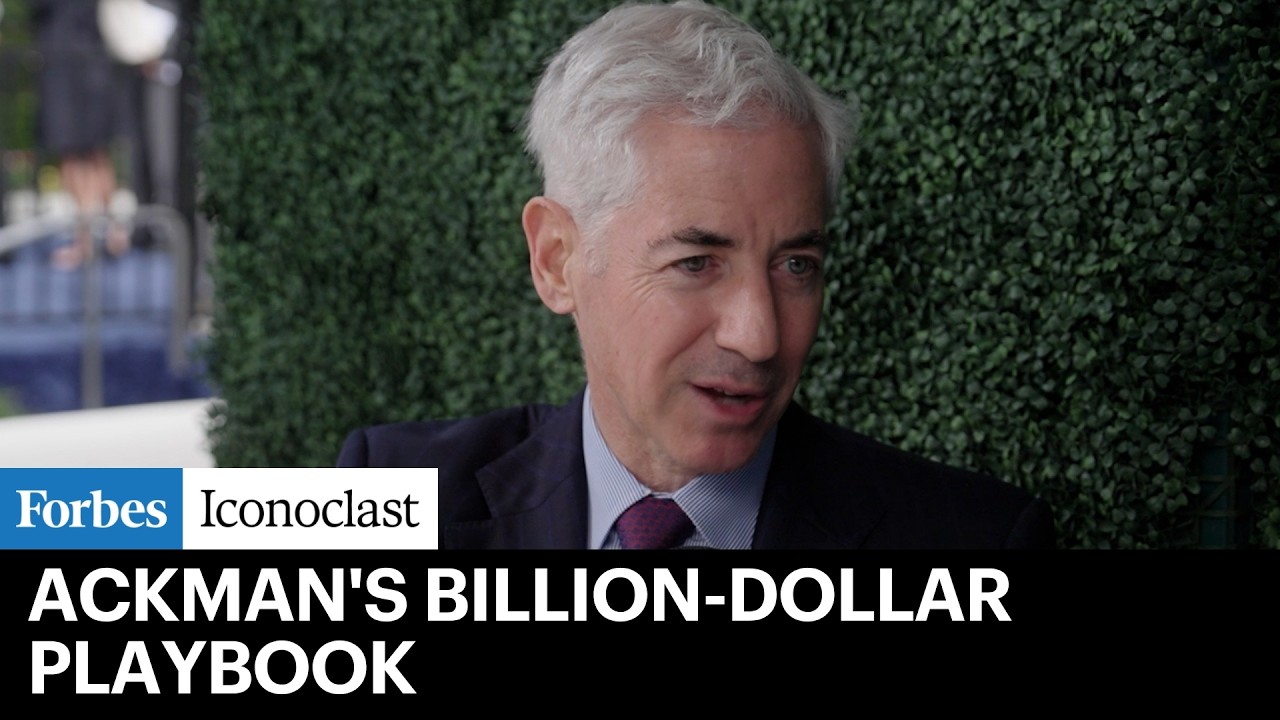
Forbes Exclusive Interview with Renowned Fund Manager Bill Ackman: 40% Position Bet on Alphabet, Amazon, Meta; Universal Music Group Stock Undervalued
TechFlow Selected TechFlow Selected
Forbes Exclusive Interview with Renowned Fund Manager Bill Ackman: 40% Position Bet on Alphabet, Amazon, Meta; Universal Music Group Stock Undervalued
He made a counterintuitive judgment: AI has caused explosive growth in music, but you need a record label more than ever to help you break through.
 Navigating Web3 tides with focused insights
Edited & Compiled: TechFlow
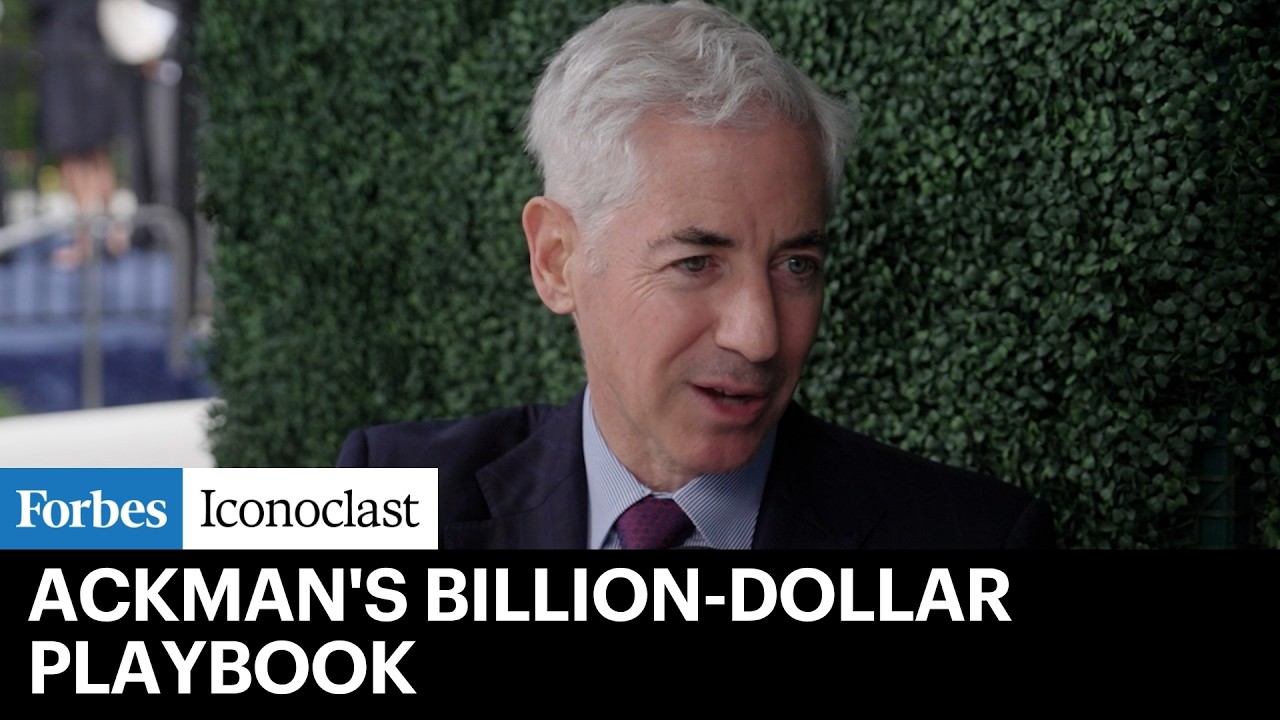
Guest: Bill Ackman, Pershing Square Capital Management CEO & Founder
Host: Maneet Ahuja, Forbes Editor at Large, Iconoclast Founder
Source: Forbes Iconoclast
Original Title: Billionaire Investor Bill Ackman Shares His Blueprint For The Next Decade of Wealth
Air Date: July 2, 2026
Key Takeaways
Bill Ackman revealed several specific cards in this interview: 38% of his position is bet on Alphabet, Amazon, and Meta—the market fears these companies' tens of billions in capital expenditures, but he sees a buying window of declining valuations and accelerating growth. He is transforming Howard Hughes Holdings from a real estate company into a "Mini Berkshire," completing the acquisition of insurance company Vantage next month, using float to follow Buffett's path from 60 years ago. On Universal Music Group, he gave a specific price judgment: the current stock price of around 17 Euros, through his proposal (moving back to NYSE, canceling 17% of shares, restructuring the board, monetizing Spotify stake), could become 30+ Euros. There is also a counter-intuitive judgment: AI causes explosive growth in music, but this makes record labels more important than ever because breaking through has become harder.
Highlights Summary
IPO and Retail Allocation
- "I want to give every retail investor full allocation because I want to favor those who are on the rise."
- "Retail investors are used to applying for more shares than they actually want—someone applies for 10,000 shares but actually wants 1,000. I gave them 10,000 shares."
- "You can buy cash at a discount, and then I help you compound it. The trading performance in the first few days after an IPO is never a predictor of long-term success."
"Mini Berkshire" Transformation
- "The cost of capital for real estate development and land holding companies is too high—for the stock price to rise, you have to earn returns exceeding the cost of capital."
- "I read a complete financial history of Berkshire Hathaway... It makes it very clear how asymmetric insurance is to value creation."
- "Berkshire Hathaway started as a textile mill, not even a very good one. But it generated a lot of cash, and Buffett reallocated that cash to higher-return businesses. We started as a real estate company, which essentially liquidates itself."
Big Tech and AI Capital Expenditures
- "The market reacted very negatively to these companies' tens of billions in capital expenditures; investors worry about whether they can earn enough returns—we are not worried at all."
- "The valuations of these companies have dropped significantly, while growth is accelerating—this is where the real opportunity lies."
- "Uncertain which frontier model will win, but one thing is clear: all these companies need massive computing power, and the cloud is the most scalable and secure place to access computing power."
AI and the Music Industry
- "AI allows everyone to write songs; you will see explosive growth in creativity and new music. But in a world where music proliferates massively, breaking through has become harder."
- "More than ever, if you are a top artist and want to become a global artist, you need a record label to help you break through."
- "Even some AI artists are signing with record labels—without the endorsement of a record label, you cannot open for Taylor Swift."
Geopolitics and the Market
- "No one likes being in a war. The Iran situation, the impact on energy prices and inflation, the impact on the Fed—all these are tied to the outcome of this war."
- "Our internal judgment is that this war is not a matter of lasting months—perhaps it can be resolved in four to six weeks."
- "Once the uncertainty of the war dissipates, the powerful forces driving the economy and ultimately the stock market will receive more attention."
Investment Conviction and Permanent Capital
- "You do a lot of research, place a bet, and then facts start to contradict your original thesis—you have to rethink."
- "Having capital that won't leave is a huge investment advantage—you can act aggressively when the market crashes, without needing to focus on fund flows, just focus on the investment itself."
- "The best 8 years in our 22-year history were after having a permanent capital base—we should have done this sooner."
IPO Reversal—Retail Gets Full Allocation, But Trades at 14% Discount Short-Term
Maneet Ahuja: You rang the bell four days ago, your IPO listed. The next day you added to your position. Can you talk about this experience?
The celebration ceremony at the NYSE was interesting. But this is just the beginning of a very long-term story—it took us 22 years to list the company. This offering is essentially an IPO of the management company, the general partner, similar to the business model of Blackstone or Apollo. At the same time, this is our first investment company listed in the US—you can buy a share for $43, invest along with us, and get the best terms we give investors. We look forward to potentially having millions of shareholders in the future.
Maneet Ahuja: I know you are a person of conviction. You doubled down the next day. How was the investor feedback?
We are the largest investors ourselves—the management team has about $500 million invested in this new entity. Our goal is to grow at a decent pace over the long term. Most investors recruited for the IPO intend to hold long-term.
Maneet Ahuja: What did you learn during the IPO process?
My goal is for every ordinary person to have a good outcome. So we did something almost opposite to a conventional IPO—usually large institutions get the best allocation, retail investors might only get 10% of what they applied for. I said, I want to give every retail investor full allocation because I want to favor those who are on the rise.
As a result, retail investors got much more stock than expected. They are used to applying for more shares than they actually want—someone applies for 10,000 shares but actually wants 1,000. I gave them 10,000 shares. So Wednesday afternoon they found themselves holding ten times the expected position, the closed-end fund's trading in recent days has not been ideal—currently trading at about a 14% discount.
But this is exactly the opportunity for people entering today—you can buy cash at a discount, and then I help you compound it. The trading in the first few days after an IPO is never a predictor of long-term success.
There is something different about this IPO: cornerstone investors already have an advantage because we gave them equity in the management company for free—equivalent to a "free gift." Today the entire portfolio is a few percentage points lower than the IPO price, but I still believe this is a very good long-term investment.
"Mini Berkshire" Blueprint—Howard Hughes + Vantage Insurance
Maneet Ahuja: We called you "Baby Buffett" on the Forbes cover. Buffett's evolution has always been your blueprint. Now you have Pershing Square Inc. trading on the NYSE, and Howard Hughes is being transformed into a modern version of Berkshire through Vantage. Both compounding engines are yours, how do they work together?
Pershing Square's core strategy has always been to buy minority stakes in large companies and help them become more successful—this is what Pershing Square USA and the offshore fund Pershing Square Holdings do. Pershing Square Inc. is the company that collects management fees.
Howard Hughes is truly following the model from that Forbes cover article back then—the subtitle was probably "Howard Hughes Will Become Our Version of Mini Berkshire." We have finally put the Forbes idea into practice.
Howard Hughes is an interesting company—owning these small cities, such as The Woodlands, Summerlin (Las Vegas), we hold all residential land, most commercial land, and many revenue-generating assets. There is also the condominium business on Hawaii beaches. It is more like a family business, not like a public company, Wall Street has not paid much attention.
Now we want to build according to Buffett's model. Real estate companies essentially liquidate themselves—selling land to developers every year generates hundreds of millions in cash flow, real estate revenue-generating assets also have cash flow, plus condominium sales—currently there are about $4 billion in signed condominiums to be sold in the coming years. We are not reinvesting this cash back into real estate, but rather buying an insurance company—Vantage. The transaction will be completed approximately next month.
We will manage Vantage like Buffett manages insurance businesses—he writes insurance cautiously, allocates float basically to Treasury bonds, and then invests the insurance company's surplus into common stocks. We want to follow the same path. The goal is to build a compounding vehicle—put it for 50 years, it will become a very large and valuable company. Howard Hughes will buy companies, invest in insurance, but as a controlling shareholder, on a smaller scale. Pershing Square funds buy minority stakes in large companies.
Maneet Ahuja: Vantage is a $2 billion specialty insurance platform with real float and underwriting. When did insurance "click" for you?
I have always followed Buffett, carefully reading Berkshire annual reports. But we have been discussing the way out for Howard Hughes—continue as pure real estate? Go private? Its biggest problem as a public company is: The cost of capital for real estate development and land holding companies is too high. For the stock price to rise, you have to earn returns exceeding the cost of capital, but the cost of capital is too high.
Either go private or transform. I read a book—the complete financial history of Berkshire Hathaway, the kind only Buffett fans read. But it tells the Berkshire story very clearly, letting you truly understand how asymmetric insurance is to value creation. We thought, let's follow the same path. Berkshire Hathaway started as a textile mill, not even very good. But it generated a lot of cash, and Buffett reallocated the cash to higher-return businesses. We started as a real estate company, which essentially liquidates itself—no need to reinvest all cash into real estate, there will be excess cash, invest this capital into insurance.
Big Tech is the Safest AI Track
Maneet Ahuja: You are one of the most prominent activist investors of our generation, but currently 38% of your position is in Alphabet, Amazon, and Meta. Why do you think these Magnificent 7 traditional giants are the safest, most undervalued plays in the AI revolution?
We have always admired these companies, but they were never cheap enough before—or we missed their cheap window. The market reacted very negatively to these companies' tens of billions in capital expenditures, investors worry about whether they can earn enough returns. We are not worried at all. The valuations of these companies have dropped significantly, while growth is accelerating—this is where the real opportunity lies. We have confidence in the management team, they say they are earning very, very attractive returns on these investments, which seems reasonable to us.
Uncertain which frontier model will win—OpenAI was leading before, then Google and Anthropic caught up. But one thing is clear: All these companies need massive computing power, and the cloud is the most scalable and secure place to access computing power. This explains the Amazon and Google story.
Maneet Ahuja: I want to ask a side question—what AI do you personally use? OpenAI? Claude? Gemini?
I am a user of Claude and Grok. Grok partly because I am a small investor in xAI, and also a user of X—Grok is very convenient, training data largely comes from X, information is very real-time. I also use Claude, the company has an enterprise version, has most models, but I tend to default to using Claude or Grok.
Maneet Ahuja: Do you feel it helps you? Daily use or also for investment?
Both. For example, when I want to understand a topic.
UMG Proposal—AI Makes Record Labels More Important
Maneet Ahuja: Another big topic—Universal Music Group, one of your largest positions, owns the world's most valuable music catalog from Taylor Swift to Beatles. You recently proposed a proposal that would increase Pershing Square's stake, move the company back to the US, change board members. At a time when AI is reshaping every creative industry, why is UMG the right bet?
AI allows everyone to write songs—you will see explosive growth in creativity and new music. But in a world where music proliferates massively, breaking through has become harder. As long as intellectual property is protected, we have great confidence in Universal's management team. More than ever, if you are a top artist and want to become a global artist, you need a record label to help you break through. Even some AI artists are signing with record labels—without the endorsement of a record label, you cannot open for Taylor Swift.
Maneet Ahuja: What does the market not fully understand about UMG's IP economics?
Universal is doing very well in growing revenue and cash flow—maintaining a strong market position, signing the world's best artists. This is the core operating engine of a music company, they do it very well. But where they are not doing well enough is: being a public company. Maintaining a reasonable balance sheet structure, capital allocation that gives shareholders confidence, communication methods that let the market truly understand this business—these are not good enough. The company is also listed on the wrong exchange—should be on NYSE, not in Amsterdam.
What this proposal does: move Universal Music from Amsterdam to the New York Stock Exchange; use the low price as part of the deal, while canceling 17% of the shares; restructure the board, with Michael Ovitz as chairman—he is very knowledgeable in this industry, and also has a long-term relationship with Lucian (UMG CEO Lucian Grainge); monetize something the market gives no valuation to at all—Spotify stake. Then establish future balance sheet and capital allocation strategies, maximize capital returns, while not creating any financial risk for shareholders.
These steps can turn a stock in the high teens Euros, into what we see as a stock in the thirties Euros.
Maneet Ahuja: Have you had constructive dialogue with management? Did they accept it?
The current status is the board is running a process, recently hired advisors, and is evaluating our proposal. We expect to receive a response from the company, but it took them a few weeks to set up the team.
Geopolitics and the Next Decade
Maneet Ahuja: Everyone is trying to interpret the next 12 months—interest rates, geopolitics, AI, capital expenditures. What do you see as the biggest price versus reality disconnect in the market today?
No one likes being in a war. The Iran situation, the impact on energy prices and inflation, the impact on the Fed—all these are tied to the outcome of this war. Our internal judgment is that this war is not a matter of lasting months—perhaps it can be resolved in four to six weeks. Once the war is resolved, people will focus more on the fundamental drivers of the economy.
Maneet Ahuja: So are you generally optimistic about current market sentiment?
Yes. Once uncertainty dissipates, the powerful forces driving the economy and ultimately the stock market will receive more attention, companies are also reporting very good earnings—we are still in the middle of earnings season.
Maneet Ahuja: If you had to put all your capital into one asset class, excluding your own funds, what would you choose for the next decade?
Stocks. Liquidity, long-term growth—I would probably choose an index fund. I would not buy bonds.
Investment Conviction and the Power of Permanent Capital
Maneet Ahuja: You have led many activist investment actions, some very successful, some not so successful. Regarding conviction, what is the hardest lesson you have learned?
I try to base conviction on facts. One key thing: if you do a lot of research, place a bet, and then facts start to contradict your original thesis—you have to rethink.
Maneet Ahuja: You did not set a performance fee in this IPO, which is a fundamental change for the industry over decades. You said the goal is to let people with $50 come in, not just institutions. What signal does this send to the industry?
To be honest, it is difficult for other companies to launch such a vehicle. We can do it because the capital base is permanent—if someone sets up a new fund without incentive fees, everyone will leave their funds with incentive fees. Our structure is more stable, so we can do it. I am not sure this is the beginning of an industry trend.
But I do believe a closed-end investment vehicle is an excellent corporate structure—it just has not been fully utilized. We intend to fully utilize it. We have investors who wrote $500 million checks, and also investors who bought just one share—we are happy to represent everyone.
Maneet Ahuja: I will add one more question. If you were to recreate Pershing Square today, what is one thing you would do differently and one thing exactly the same?
Pershing Square is my second act in the hedge fund industry, I have the opportunity to redo many things. One thing I would do differently: return external capital sooner, and focus only on managing the permanent capital structure. Having capital that won't leave is a huge investment advantage—you can act aggressively when the market crashes, without needing to focus on fund flows, just focus on the investment itself. The best 8 years in our 22-year history were after having a permanent capital base—we should have done this sooner.
Join TechFlow official community to stay tuned
Telegram:https://t.me/TechFlowDaily
X (Twitter):https://x.com/TechFlowPost
X (Twitter) EN:https://x.com/BlockFlow_News
 深潮TechFlow