Interview with Morgan Stanley’s Head of Digital Strategy: Bitcoin Reaching $1 Million Is Not Impossible—but I Hope It Happens More Gradually
TechFlow Selected TechFlow Selected
Interview with Morgan Stanley’s Head of Digital Strategy: Bitcoin Reaching $1 Million Is Not Impossible—but I Hope It Happens More Gradually
“We have extensively explored numerous emerging markets and deeply understand that people there have compelling reasons to embrace decentralization.”
 Navigating Web3 tides with focused insights
Compiled & Translated by TechFlow

Guest: Amy Oldenburg, Head of Digital Assets Strategy, Morgan Stanley
Host: Natalie Brunell
Podcast Source: Natalie Brunell
Original Title: When Will Bitcoin Hit a New ATH? Wall Street Insider Explains
Air Date: June 10, 2026
Key Takeaways
Morgan Stanley, managing trillions of dollars in assets, is now bringing Bitcoin to its clients. In this episode, Amy Oldenburg—Morgan Stanley’s Head of Digital Assets Strategy—reveals a striking paradox: MSBT set the firm’s record for first-day ETF issuance, yet most financial advisors remain reluctant to recommend it to clients, as Bitcoin’s price has barely budged since the recommendation was issued. She does not believe the next major rally will stem from any new product or policy tailwind, but rather may require a truly system-shattering event as catalyst—and while she wouldn’t be surprised if Bitcoin surpasses $1 million within five years, she hopes that ascent unfolds more gradually.
Highlights of Key Insights
Technological Roots: From the 1999 Tech Bubble to Emerging Markets
- "Every stage of my upbringing coincided with some technology shift that, at the time, seemed obscure—even widely ridiculed—yet only today do I fully grasp how all those historical pieces fit together."
- "The veteran traders and 'old hands' who traded against me daily in the markets stuck with me all the way through the 2008 global financial crisis. We weathered that financial tsunami together—and many of those core, battle-tested professionals later became among the earliest hardcore Bitcoin adopters."
- "Bitcoin’s earliest evangelists and heaviest users didn’t come solely from Silicon Valley’s tech circles—they came in large numbers from cross-border and international financial markets: professionals on the front lines, desperately seeking alternatives to traditional centralized banking systems."
Why Bitcoin Made Sense Early On
- "In underdeveloped markets, physical banking infrastructure lags severely—most of the population never opens a bank account their entire lives, forcing them to rely entirely—and enthusiastically—on mobile money."
- "You’re standing in a remote village with no 24-hour electricity and dirt roads—but there’s a Vodafone kiosk, no bigger than a child’s lemonade stand, boldly labeled M-Pesa—the place where you load cash onto your phone."
- "Having worked extensively across emerging markets, we know firsthand why decentralization resonates so powerfully there: traditional financial infrastructure is profoundly unreliable, devoid of contract enforcement, and riddled with systemic corruption—realities we witnessed directly on trading desks."
Why Institutional Investors Haven’t Fully Embraced Bitcoin
- "Our entire corporate group is legally structured as a bank holding company. That means we must comply with far stricter capital adequacy and risk controls—rules dictated squarely by the Federal Reserve."
Record Demand for MSBT
- "Of course you cheer for your own product—but until it launches, you truly don’t know what will happen. The outcome surprised many."
- "Combining GSIB-grade issuance with GSIB-grade custody was both our first market objective—and a deliberate probe into what the broader ecosystem still needs to mature."
Will Morgan Stanley Launch Digital Credit?
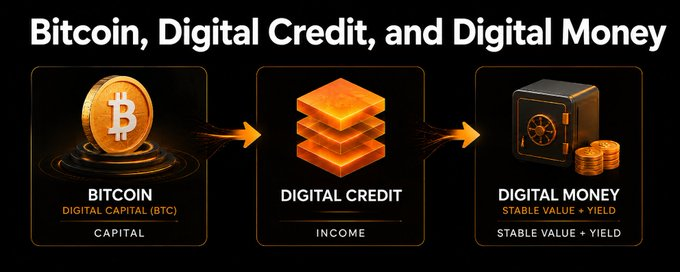
- "I know something compelling exists within digital credit—but most people haven’t even grasped Bitcoin yet, let alone its more advanced derivatives."
- "Education is the bottleneck limiting community access—and financial advisors’ ability to engage with these products."
- "Some product elements are highly attractive—but something always feels incomplete, like BlackBerry’s early story."
The Advisor Gap: Why Not Everyone Recommends Bitcoin
- "If we’d recommended at $10,000 or $15,000 and it surged to $100,000, momentum would carry us forward—but interestingly, since our recommendation, price has largely ranged sideways."
- "Financial advisors bear fiduciary duties—they must select appropriate assets for each client. Not every client is a growth-oriented investor."
What’s Slowing Bitcoin’s Progress?
- "We’re stuck in binary debates: Will Bitcoin succeed or fail? But we live in a complex world where competing narratives blur focus and dilute allocation."
- "Global mainstream capital’s attention—and liquidity—is brutally fragmented across asset classes."
- "I hesitate to say it—but perhaps a crisis really is needed: one that shatters the existing system, leaving Bitcoin intact as the sole survivor."
Corporate Balance Sheets
- "Banks don’t hold Bitcoin because they dislike it—they simply have more capital-efficient alternatives. Without regulatory improvement, we’ll allocate energy toward higher-return assets."
- "If no real demand emerges for tokenized equities, there’s little reason to invest heavily. The same logic applies to Bitcoin."
Bitcoin’s Future
- "I don’t expect a magical J-curve or sudden takeoff by 2027. More likely: continued gradual ascent, as more participants enter, get educated, and slowly internalize its value."
- "Bitcoin reaching $1 million? That’s perfectly plausible—I see no impossibility. Having witnessed everything in my lifetime, I believe anything is possible."
Winner-Takes-All Tech vs. Redundant Finance: The Industry’s Future
- "That ‘winner-takes-all’ culture permeates tech—and many tech-adjacent fields—but is utterly alien to financial services, whose essence lies in redundancy and multiplicity of participants."
- "When we issue RFPs, we start with over a dozen vendors, narrow down to three finalists—and hope all three meet our hard requirements. In tech, often only one—or at most two—can truly satisfy those non-negotiable needs."
Responding to Skepticism Toward Major Banks
- "In emerging markets, public distrust of official financial systems isn’t textbook theory—it’s daily, bleeding reality."
- "From a die-hard Bitcoin purist’s perspective, extracting spot Bitcoin and placing it into a traditional financial institution’s ETP is heresy—but it’s happening at a scale I never anticipated."
- "Holding ETP shares ≠ holding Bitcoin—you gain only price exposure. This distinction demands constant education."
Technological Roots: From the 1999 Tech Bubble to Emerging Markets
Host Natalie Brunell: Our guest today is Amy Oldenburg, Head of Digital Assets Strategy at Morgan Stanley. Amy, I’m especially eager to hear your origin story with Bitcoin—and your extraordinary 20+ year journey at Morgan Stanley.
Amy Oldenburg:
I’ve been at Morgan Stanley for 26 years—though that wasn’t the plan. I grew up in a Midwestern town in Ohio. Interestingly—as you asked before the show—"How did you end up here? How did you land on this wild ride with digital assets and Bitcoin?"
I’m deeply Gen X, and your experience resonates strongly. Sometimes scrolling online memes about how kids in the ’80s and ’90s grew up—you realize technology reshaped us earlier than we ever knew. At seven or eight, my cousins and I spent hours in the basement playing Atari, then went wild over Nintendo’s NES and Super Mario Bros. It felt like every pivotal life moment aligned with a disruptive tech wave.
One Christmas, my dad bought us a Tandy computer—we tinkered with early PC games, which felt miraculous. Then tech accelerated further. In high school, we learned typing in computer labs; by college, tech had woven deeply into daily life.
I remember a marketing professor secured early BlackBerry access—and our whole class became beta testers. Sitting in lecture halls, we couldn’t imagine its use: no apps, just hardware. We joked, “What’s the difference between this and a high-school pager? Sure, it sends letters and numbers—but none of our friends have one. Who’s it for?” Later, the iconic full-keyboard version exploded—everyone owned one—then vanished overnight. Truth.
My academic path added irony: I studied accounting—but exchange programs were barred for accounting majors. Desperate to escape Ohio, I’d gladly accept exile overseas. Since abroad wasn’t allowed, I settled for a domestic exchange—in San Francisco. So in 1999, I packed up and moved to San Francisco—only to land squarely amid the peak of the dot-com bubble.
Young and naive, I had no idea how extreme things were. In Silicon Valley, I joined an internet startup the next day—helping Fortune 500 firms build websites. After a paid two-month internship, I dropped accounting—no major, no regrets. The sheer force of that technological transformation screamed: This will reshape everything.
We attended industry conferences everywhere. Google was then a tiny startup—so small they handed out paper slips at events saying: “Interested? Apply via Craigslist.” We raised eyebrows: “Google? What kind of name is that? No business model—no one will search anything. It’ll fail.”
So yes—every phase of my growth coincided with a technology shift that felt obscure, even widely mocked at the time—yet only today do I clearly see how history’s puzzle pieces interlock.
As for entering digital assets and Bitcoin—I joined Morgan Stanley after the dot-com bust. I stayed at the SF startup post-bust, then got transferred to NY headquarters full-time. But everyone knew the environment had collapsed—we withdrew our S-1 filing, never went public, and endured two brutal rounds of layoffs. I urgently needed Plan B—rent was due, and I refused—absolutely refused—to return to Ohio.
That’s when fate intervened. A close friend worked in Morgan Stanley’s HR department. She approached me: “I know you’re disillusioned with traditional finance and obsessed with tech—but I’ve got tons of open roles. If you know anyone job-hunting—or want to interview yourself—send them my way.” I thought: Why not try? At least keep options open.
And just like that, I crossed over into Morgan Stanley’s Emerging Markets team. Asia’s 1997 financial crisis hadn’t fully subsided; Mexico’s 1994 Tequila Crisis was still fresh—the emerging markets landscape was bleak. My team cycled through leadership multiple times in just a few years. Simultaneously, the tech-bubble collapse battered financial assets—around 2000–2001. And then—exactly nine months after I joined—the 9/11 attacks hit. Crisis followed crisis—while foundational tech advances surged ahead.
At Morgan Stanley, I spent years on trading desks—specializing in programmatic and emerging-market FX trading. The veteran traders and ‘old hands’ who traded against me daily stuck with me through the 2008 global financial crisis. We endured that financial tsunami together—and many of those core, battle-tested professionals later became among the earliest hardcore Bitcoin adopters.
Bitcoin’s earliest evangelists and heaviest users didn’t come solely from Silicon Valley’s tech circles—they came in large numbers from cross-border and international financial markets: professionals on the front lines, desperately seeking alternatives to traditional centralized banking systems.
Having worked extensively across emerging markets, we know firsthand why decentralization resonates so powerfully there: traditional financial infrastructure is profoundly unreliable, devoid of contract enforcement, and riddled with systemic corruption—realities we witnessed directly on trading desks.
It was precisely this frontline financial experience—combined with early tech connections (some friends built P2P music-sharing software)—that gave me unusually early, acute exposure to Bitcoin. And those digital-trading and risk-resilience skills transitioned seamlessly into digital assets.
Why Bitcoin Made Sense Early On
Host Natalie Brunell: Since you entered this space so early—did you jump in personally, or wait until traditional institutions formally entered and compliance frameworks solidified before building positions?
Amy Oldenburg:
Not at all. Funny story: My brother visited last week—we reminisced how, around 2012, he excitedly told me he wanted to buy mining rigs. I laughed, saying our house lacked hardware powerful enough.
You must understand: Back then, crypto was dangerous—nothing like today’s elegant Coinbase app where you click safely in-browser. Honestly, buying Bitcoin meant dealing with Mt. Gox—a fly-by-night operation. Working at Morgan Stanley, I worried: Touch this, and I’d be fired tomorrow. Compliance risk and operational overhead were simply too high. So while I watched closely—and spent immense time observing evolution—I was never that early coder mining at my desk.
Host Natalie Brunell: Let’s zoom out: Looking back at your emerging markets investing experience—was there a core insight that maps directly onto Bitcoin’s rise? Was there a single, hard-won lesson from emerging markets that made you think: “Ah! That’s why Bitcoin makes sense!”?
Amy Oldenburg:
Yes—and that intuition was visceral. Back in 2007, just before the global financial crisis, today’s fintech observers know M-Pesa—Kenya’s mobile wallet pioneer—and how mobile payments exploded across Africa and other emerging markets. Few know Morgan Stanley’s team deeply participated in—and invested in—the IPO of its parent company, Safaricom, around 2006–2007.
On East African frontlines, we watched digital currency and mobile payment infrastructure sweep the region at mind-bending speed—a true paradigm shift. Yet Westerners in the U.S. couldn’t relate: Our card systems were mature; Americans lacked those pain points. Even more astonishing: Africans ran this entire digital finance stack on ancient flip phones—not smartphones.
In underdeveloped markets, physical banking infrastructure lags severely—most of the population never opens a bank account their entire lives, forcing them to rely entirely—and enthusiastically—on mobile money.
I spent time in Tanzania. Walking through remote villages—unpaved roads, no 24-hour electricity—you’d suddenly spot a Vodafone micro-kiosk. Crude as a child’s lemonade stand, it bore four bold letters: M-Pesa.
That’s where villagers loaded cash into digital assets on their phones. Standing there, witnessing how deeply decentralized digital infrastructure penetrated society—and how marginalized communities treated it as their sole path to upward mobility, and the tangible security it delivered—that emotional impact defies words.
Try empathizing: African women selling vegetables, bread, or street goods daily. Pre-mobile money, returning home at night meant carrying heavy cash—like walking with a ticking bomb in unstable neighborhoods.
With mobile digital currency, they deposit cash instantly at roadside kiosks—converting it to encrypted digits on phones or cards. Walking home empty-handed at night eliminates the threat of violent robbery—replacing it with a technical security no traditional financial system ever offered.
You see? This foundational link between finance, assets, and personal safety exists on a completely different plane than the sterile offices of Chicago or New York investors—or Wall Street bankers. And that’s Bitcoin’s hardest-core early value proposition.
Morgan Stanley’s Spot Bitcoin ETF
Host Natalie Brunell: So what catalyzed Morgan Stanley stepping into the spotlight—not just endorsing Bitcoin publicly, but launching spot Bitcoin products (e.g., ETP/ETF access and distribution)?
Amy Oldenburg:
It’s fundamentally client-driven. At Morgan Stanley, client-centricity is the highest operating principle—our entire business runs on it. Clients kept demanding it; as service providers, we responded.
Naturally, industry-specific compliance constraints limit what we can do at any given stage. But as regulation evolved—look at our E*TRADE business—I should first quickly map Morgan Stanley’s vast business architecture.
We operate several divisions: Institutional Securities—what most call investment banking, sales & trading, and research; then Wealth Management—including financial advisors, discussed later. We’ve executed major acquisitions—including E*TRADE, a self-directed online platform that introduced us to a wholly new customer base. And Asset Management—our product factory, serving pensions, sovereign wealth funds, mutual funds, and ETFs.
These products distribute not only on our own wealth platform—but also via intermediaries and banks globally. This diversified structure—mobilizing multiple divisions—is thrilling.
For Bitcoin exposure, we offer Bitcoin ETPs—produced by Asset Management. For spot trading, we’re rolling it out on E*TRADE—you can now buy spot Bitcoin directly there.
Why Institutional Investors Haven’t Fully Embraced Bitcoin
Host Natalie Brunell: I understand launching these products at Morgan Stanley’s scale involves countless hurdles—compliance, legal. Can you reveal what’s behind the delays? Optimists say: “Just 16 years—and Bitcoin’s inside mainstream banks like Morgan Stanley? Miraculous!” But Bitcoin maximalists ask: “If the tide’s turned, why won’t mainstream institutions bet everything?”
Amy Oldenburg:
Multiple factors. First, outsiders vastly underestimate the crushing weight of systemic regulatory constraints. Here’s a key distinction: Morgan Stanley’s underlying structure differs fundamentally from BlackRock’s.
BlackRock is a pure, independent asset manager. Morgan Stanley does run massive asset management—but our entire group is legally structured as a bank holding company. That means we must follow banking-sector capital adequacy and risk controls—enforced by the Federal Reserve.
This explains why we couldn’t launch crypto products as flexibly as independent asset managers. Picture us watching peers sprint ahead—while we sat frozen, frustrated, silently screaming: Why can’t we do this?
Another twist: We’d drafted plans years ago to launch spot crypto on E*TRADE. But tragically, many vendors shortlisted in 2020–2021 no longer exist. So in 2024, we restarted from scratch—discarding prior work.
MSBT Demand Sets Records
Host Natalie Brunell: MSBT’s launch set Morgan Stanley’s record for best first-day ETF issuance. What’s the actual demand like?
Amy Oldenburg:
As product builders, we hype pre-launch—but truthfully, until code goes live and the bell rings, nothing’s certain.
We heard mixed Wall Street voices: “You must enter this space,” versus “Why bother? Twenty Bitcoin ETPs already exist—what’s yours?” We differentiated hard—bringing institutional-grade architecture. We launched at 14 bps—aggressively optimizing total expense ratio. On custody, we partnered with both Coinbase and BNY—first ETP to custody with BNY.
So combining GSIB-grade issuance with GSIB-grade custody was both our first market goal—and a probe into what the ecosystem still needs to mature. Because advancing to higher-tier products requires infrastructure upgrades—by BNY, ourselves, or other GSIBs—to sustain true 24/7 operations and drive further adoption.
Will Morgan Stanley Launch Digital Credit?
Host Natalie Brunell: Will Morgan Stanley launch innovative products like Strategy’s digital credit?
Amy Oldenburg:
Great question. I’ve met their team recently at events—we’ve collaborated closely. We’re actually a primary participant in STRK’s digital credit issuance, so we deeply understand its mechanics.
Returning to my earlier point—I find it hard for people to see where it fits in the broader puzzle. Talking to advisors, some grasp it—but many still don’t understand Bitcoin, let alone advanced derivatives. Education remains massive. These products defy traditional categories—lack familiar ratings, behave differently. How do we help people understand?
I asked a colleague who managed every ETP launch: “What limits community and advisor engagement—with ETPs, STRK, or others?” Her answer: “100% education.”
Some product elements are compelling—but something always feels incomplete, like BlackBerry’s early story. I know something valuable exists—but perfect alignment hasn’t arrived. Still, I believe it will—just takes time.
The Advisor Gap: Why Not Everyone Recommends Bitcoin
Host Natalie Brunell: You mentioned advisors. To my knowledge, Morgan Stanley officially permits 2–4% tactical Bitcoin allocations. Yet, as you noted, advisor adoption lags far behind client enthusiasm.
Amy Oldenburg:
It’s a great question—we’re studying the psychology behind it, equally vital as financial factors. Our recommendation targets moderately aggressive portfolios—not all clients, only those matching risk profiles.
Macro data shows Bitcoin declining despite rising global inflation. Its market behavior still tracks equities and other high-risk assets. Honestly, from my asset-management instinct, I wish it behaved more like gold—truly cross-cycle, inflation-resistant hard assets. This gap between “digital gold” theory and “high-risk asset” reality confuses countless clients and advisors.
Still, Morgan Stanley’s official approval is black-and-white: Some balanced portfolios allow 0–2%; more aggressive public-growth portfolios permit 2–4%. Subtly, though, since launching these allocations, Bitcoin has largely ranged sideways.
If Morgan Stanley recommended at Bitcoin’s $10,000–$15,000 lows—and it soared to $100,000—the profit surge and momentum would propel all advisors forward. But intriguingly, since our recommendation, price has hovered in a range—making its trajectory uncertain and the psychological battle tough.
Add other asset classes: Private credit surged recently; AI valuations bewildered everyone. Advisors manage these relationships—and remember: Not every client is a growth investor. Advisors bear fiduciary duty—they must match assets to clients’ needs. Many wealthy clients love innovation and demand it; others prefer reliable assets—stable returns and capital preservation.
What’s Slowing Bitcoin’s Progress?
Host Natalie Brunell: I’ve heard, “Bitcoin’s basically retraced since its 2021 highs.” I get it. Yes, you need longer timeframes—but what’s holding Bitcoin back? It’s 2026—countless institutions and banks are in—Strategy buys mechanically every Monday—why haven’t we broken $200,000?
Amy Oldenburg:
No single factor explains it. We default to binary debates: Will Bitcoin succeed or fail? Is it digital gold or a bubble? But reality is a complex博弈 world. Recent bull runs and mainstream financial product launches expanded global distribution massively. Yet last year, traditional markets saw a gold-and-silver supercycle—commodities trading red-hot. A peer bluntly told me: “We’ve shifted attention from crypto—entire investment banks are now doing commodities intraday trading.” See? Global mainstream capital’s attention—and liquidity—is brutally fragmented.
Host Natalie Brunell: What catalyst could reignite Bitcoin—and align it more closely with Bitcoiners’ vision: a neutral reserve asset?
Amy Oldenburg:
Time is essential. I hesitate to say it—but having lived through the global financial crisis, tech crashes, 9/11, and COVID, I know crises reshape thinking permanently. I won’t declare it needs a crisis—but perhaps a “slow-roll crisis”: less dramatic than COVID or 2008, yet transformative. Maybe it truly requires: We break the existing system—and Bitcoin remains the sole intact piece.
Digital asset evolution fascinates me too. My journey began with Bitcoin—I believe in decentralization, especially from emerging markets: Even during blackouts or national collapse, ecosystems persist, sustained globally. Now we build digital assets centrally. So maybe only when something breaks will decentralization re-enter discourse.
Last week, discussing “agentic” concepts, I realized proof-of-work’s value may resurface: When AI agents flood inboxes with indistinguishable spam and fraud, Bitcoin’s early design—solving email spam—could become vital again. We may circle back: “This is necessary.” My inbox is collapsing under agent-sent content—I can’t verify transactions. What validates them? We may return to Bitcoin’s origin story.
Corporate Balance Sheets
Host Natalie Brunell: Many projects claim decentralization but operate centrally—more speculative than functional. What conditions must change for U.S. banks to hold Bitcoin on balance sheets?
Amy Oldenburg:
Lighter capital treatment is essential. Banks aren’t avoiding Bitcoin out of dislike—they’re running businesses. If other assets offer better capital efficiency—regulatory or otherwise—we prioritize those. This isn’t anti-Bitcoin—it’s about creating an environment where collateral, trading, and ecosystem support make it viable.
Even beyond Bitcoin, we debate tokenization and tokenized equities. Tokenization buzz is hot—but if no real demand exists for tokenized stocks, investing heavily lacks incentive. We’ll prepare and support—but if traditional assets drive lending demand, we’ll offer traditional securities lending and client services. Demand drives action—for tokenized assets, too.
Same logic for Bitcoin. If we use it identically—collateral, zero balance-sheet drag—we’ll commit more resources.
Bitcoin’s Future
Host Natalie Brunell: Predicting five and ten years ahead—how do you envision Bitcoin ecosystem adoption evolving?
Amy Oldenburg:
I expect steady growth. By 2030, adoption will continue—gradually, modestly. No magical J-curve or 2027 explosion. More likely: continuous influx of participants—education, understanding, price appreciation—and slow, steady ascent.
I may be overly realistic—avoiding wild forecasts. Bitcoin hitting $1 million? Perfectly plausible—I see no impossibility. Having witnessed everything in my life, I believe anything is possible. Yet extreme outcomes require time—because such extremes usually accompany other extreme events.
So a gentle upward trend is ideal—we want stability. Bitcoin’s criticized for volatility, so I hope it stabilizes—remaining volatile, but in tighter ranges.
What More People Should Understand About Bitcoin
Host Natalie Brunell: Returning to the education gap—you want more people—including Morgan Stanley clients—to understand what about Bitcoin? What do they misunderstand?
Amy Oldenburg:
I said it in Vegas: The biggest misconception is that when crypto assets launch—Bitcoin, Ethereum, Solana, XRP—people lump them as ‘crypto assets, all the same.’ They’re not. They’re radically different. Each has unique traits. We should spend far more time dissecting differences—but narratives now converge on “they’re just crypto assets,” especially as centralized platforms proliferate. You rightly focus on Bitcoin—but yes, we need deeper differentiation.
Winner-Takes-All Tech vs. Redundant Finance: The Industry’s Future
Host Natalie Brunell: I think the industry itself has issues—too much infighting.
Amy Oldenburg:
I constantly ask why things unfold as they do—from UX, brand psychology, and tech broadly. Returning to my tech roots, tech embodies ‘winner-takes-all’ thinking.
Think NVIDIA. I forget its founding date—but in emerging markets, we invested in NVIDIA as a gaming play, tracking Asian gaming themes. NVIDIA built GPUs—and that era was painful, yielding little for years. Now Jensen Huang recounts near-bankruptcies in speeches. Markets ignored them; as an early-listed public company, they endured a long, dark “cultivation period.”
That ‘winner-takes-all’ culture permeates tech—and many tech-adjacent fields—but clashes with financial services, whose essence is redundancy and multiplicity. Investment banking sees multiple banks compete on every IPO—yet collaborate on the same deal. Asset management has no firm exceeding 3% market share—extreme fragmentation. Even “too big to fail” giants enjoy scale effects—but the industry remains fiercely competitive.
In wealth management, we’re the largest U.S. firm—but #2 is 30% smaller. Globally, fragmentation intensifies: Europe is hyper-fragmented; Asia mirrors it—each country structures wealth management uniquely—via insurers, shaped by local savings incentives.
These cultures—multiplicity/redundancy versus winner-takes-all—clash. We constantly find only one tech vendor meets our needs. RFPs start with ~12 vendors, narrow to five, then three—and hope all three qualify. But tech rarely works that way—often only one—or at most two—meets hard, non-negotiable requirements.
Host Natalie Brunell: Why does this lack of “biodiversity” exist?
Amy Oldenburg:
It’s environmental. Financial services aren’t VC-funded—we survive on revenue. Tech often fights for survival with investor backing. I once dined with a serial San Francisco entrepreneur—about 20 years ago. He’d sold one company, built another successfully. Watching him, I wondered: What’s the revenue model? I asked, “What’s your revenue model?” He was stunned: “Revenue model? Don’t you understand? I’m building a network—this is about network effects, not revenue.”
Responding to Skepticism Toward Major Banks
Host Natalie Brunell: Some listeners instantly rebel when I mention institutions, ETFs, or financial products. Bitcoin embodies cypherpunk ethos—designed to disintermediate, eliminate counterparty risk, a people’s currency. As someone who’s spent 20+ years inside big banks—what would you tell skeptics who oppose institutional entry and doubt everything you do?
Amy Oldenburg:
I fully understand—and empathize deeply. Most of my career unfolded in emerging markets, where public distrust of official financial systems isn’t textbook theory—it’s daily, bleeding reality. This isn’t “Oh, that was twenty years ago—I vaguely recall.” Look at Russia, Ukraine—friends and colleagues we traded with overnight froze—lost all bank assets. To preserve lifelong savings and evacuate families, they devised desperate workarounds.
We watched friends’ companies collapse—assets vanish overnight. This isn’t 20 years ago—not Lehman—it’s happening now (2026), raw and real.
So internally, I inhabit two opposing worlds. On one hand, I’m devastated by recent industry bad actors and collapses—centralized scams scaring away sovereignty-seeking users, hindering global consensus. Yet cypherpunk philosophy holds immense value.
We need tools to scale interaction—but those tools haven’t arrived. What emerged are highly centralized, user-friendly tools mirroring consumer habits. I’m not criticizing—but UX remains poor (improving, but insufficient).
A revelation: Launching ETPs—and SEC approval last September to move spot Bitcoin into ETPs. From a die-hard Bitcoin purist’s view, extracting spot Bitcoin and placing it in a traditional institution’s ETP is heresy—but it’s occurring at unprecedented scale.
Why? Because people need more services. Many built wealth and still believe—but life demands managing loans, real estate, remittances, inheritance. Some built successful solutions—not saying nothing exists—but sometimes centralization is simpler. Security scares me; inheritance management scares me.
Now we offer capital-market services: Move Bitcoin into Bitcoin ETP, place it on our wealth platform. You become a wealth client—possibly HNW based on size. We lend up to 50% of ETP value—providing liquidity for other needs. Clients explore this—we deliver life-transaction services. Estate planning is easier on wealth platforms than self-custody.
Yet it remains an ETP. Some say, “I have Bitcoin exposure—if something happens, I have Bitcoin.” I reply: “No—you hold ETP shares, granting price exposure only.” So education layers: First, what is Bitcoin? Second, do you know the difference between spot Bitcoin and ETP? Third, do you know self-custody vs. centralized platforms? Anyone exposed at FTX—holding assets on centralized exchanges—lived those weeks, unsure which platforms were implicated. If assets aren’t self-custodied, you might rush to self-custody—just to avoid failing platforms.
Host Natalie Brunell: You’re absolutely right—traditional tools unlock liquidity: paying deposits, borrowing against Bitcoin for life milestones. But what fascinates me is optionality: Bitcoin is the first bearer instrument you can self-custody—or memorize—enabling escape in worst-case scenarios. Senator Cynthia Lummis stated this in the Senate: It grants freedom and human rights—nothing else offers this. Yet you can accept counterparty risk via traditional holding.
Amy Oldenburg:
This answers the cypherpunk-era question: Their philosophy is sound—they should continue. I hope they do—and that part endures. At Las Vegas Bitcoin 2026, the deep self-sovereignty dialogue felt less prominent than Miami Wynwood 2021. Maybe conferences evolve—or more centralized platforms emerged—or people like me from Morgan Stanley appeared. But I don’t want to lose that spirit—it’s vital to the ecosystem.
Host Natalie Brunell: Bitcoiners will appreciate suits advocating self-custody and sovereignty. So maybe we achieve both. Amy, any final thoughts—or anything unmentioned you’d add?
Amy Oldenburg:
We’re still early. Debating quantum computing’s threat to Bitcoin—and arguing over passive products—feels disappointing. But I truly believe this is a long journey. Bitcoin credit—and advanced products—await. New tech—agentic AI, evolving agents—may give each of us personal agents, micropayments—all shaping future environments. So digital assets is a long road—and I’m thrilled to dedicate my next career chapter here, because this journey will span decades.
Join TechFlow official community to stay tuned
Telegram:https://t.me/TechFlowDaily
X (Twitter):https://x.com/TechFlowPost
X (Twitter) EN:https://x.com/BlockFlow_News
 深潮TechFlow