Interview with Bitget Wallet COO: Will Crypto Wallets Become the Next "Global Alipay"?
TechFlow Selected TechFlow Selected
Interview with Bitget Wallet COO: Will Crypto Wallets Become the Next "Global Alipay"?
What is Bitget Wallet? A global everyday finance wallet.
 Navigating Web3 tides with focused insights
Author: Star@Day1Global Podcast
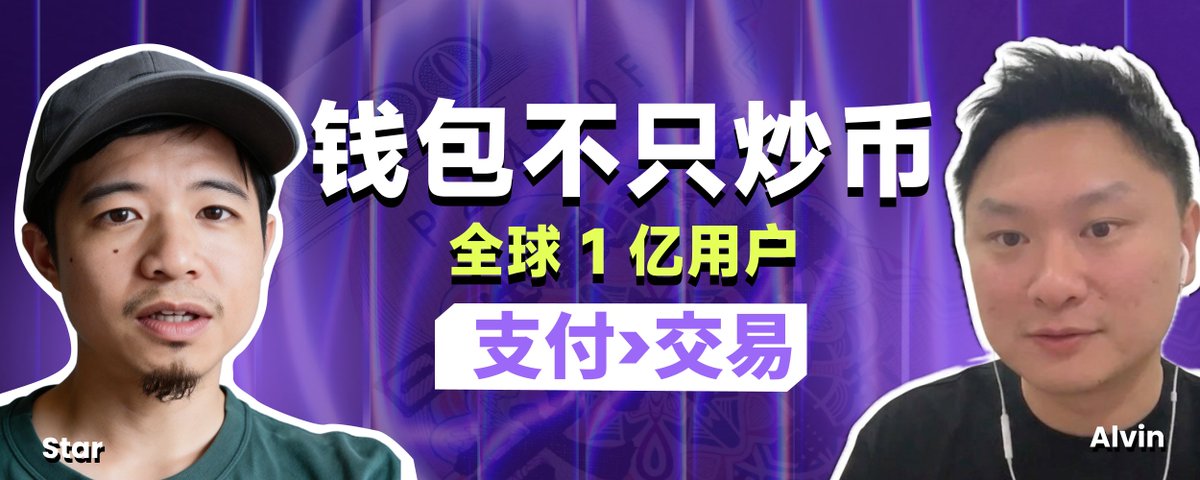
When mentioning crypto wallets, most people still think of storing crypto, transfers, and trading. But if a wallet's payment volume surpasses trading, with global users exceeding 100 million, and more and more people start using it to swipe cards, scan QR codes, make cross-border transfers, manage wealth, and even invest in global assets, the positioning of the crypto wallet is no longer just a "crypto tool". It may be becoming a financial application that ordinary people truly open in their daily lives.
In this episode, Day1Global invites @BitgetWallet COO @alvin_kan to discuss why Bitget Wallet is moving from a trading wallet to payments and everyday finance, why users in emerging markets often truly need not "Crypto products" but USD accounts, cross-border transfers, and low-cost payments; also discussing RWA, wealth management, PayFi, AI agent payments, and why on-chain payments might be a key step for Crypto moving from speculation to infrastructure.
Alvin's one-sentence definition of Bitget Wallet is: global everyday finance wallet. You can transfer to anyone in any country, use local payment channels in different countries, and buy any asset in the world that is already on-chain—all through one App, completed on-chain.
This article is the edited transcript of Episode 80 of the Day1Global Podcast, compiled based on the recording. For ease of reading, the content has been smoothed out for spoken language, restructured, and terminology unified without changing the original meaning; it is not a verbatim transcript.
1. What Is Bitget Wallet: A global everyday finance wallet
Star: Welcome everyone to Day1Global, I'm Star.
When mentioning crypto wallets, most people think of storing crypto and trading. But we found a very interesting number: Bitget Wallet, just celebrating its 8th anniversary, has surpassed 100 million global users, and payment volume has exceeded trading for the first time. More and more people are using it to swipe cards, scan QR codes, transfer, manage wealth, and even invest in global assets.
This means that crypto wallets may be transforming from a professional tool serving crypto users into a financial application that ordinary people truly use in their daily lives, even something like a "global Alipay". We are very curious about what happened behind this and what signals are worth attention for ordinary people. So in this episode, we invited Bitget Wallet COO Alvin Kan to talk with him about how Bitget Wallet is moving from a crypto wallet to everyday finance, and how to move towards the next 1 billion users.
Welcome Alvin.
Alvin: Hello everyone, I'm Alvin. I am the COO of Bitget Wallet, responsible for growth and operations related matters, very happy to be here.
Star: We often ask guests a question: If you had to explain Bitget Wallet to your mom and dad in one sentence, how would you say it?
Alvin: One sentence is actually very difficult because this is a new concept. My parents have asked me similar questions, I will explain it to them slightly longer: It is an international everyday finance product, which is a **global everyday finance wallet**.
How to understand this? If you want to transfer to anyone today, no matter which country they are in, you can do it. If you want to use local payment channels in any country, you can do it. If you want to buy any asset in the world, as long as it is already on-chain, you can buy it. All of this can be completed through one App on-chain.
This is not something traditional financial Apps can do now.
Star: So that means, if you want to transfer to anyone anywhere in the world, or have someone transfer money to you, a crypto wallet is actually a very convenient form.
Alvin: Yes.
---
2. Payments Surpass Trading for the First Time: Crypto's New Main Scenario Is Emerging
Star: We see a very interesting data point: Bitget Wallet users reached 100 million, and payment volume surpassed trading volume for the first time. Can you elaborate on what this volume looks like? For you, what does this mean for the crypto market?
Alvin: H1 this year, meaning the first 6 months, our payment-related transaction orders increased by about two times year-over-year. Card issuance also exceeded 120,000. We developed into the Latin American market and African market this year, and also issued cards in Pakistan. So we are now a more international company, and users continue to grow.
What does this mean? I think the significance is quite large.
Three years ago, if you asked me what the main scenario for the entire cryptocurrency was, I don't think anyone would deny it was trading. Besides trading, of course, you have also seen NFT, GameFi, or other narratives rise, but many of these scenarios later saw adoption drop.
Asking this question today, I think the payment scenario is slowly surpassing trading. Or more accurately, there may be two major directions on-chain now, one of which is payments. Future on-chain innovation, new projects, and infrastructure construction will increasingly revolve around payments.
Look at PayPal, Stripe, Visa, Mastercard, and many traditional financial and payment companies; they are all starting to put payments on-chain. Because on-chain payments are faster, more agile, and cheaper. So in the future, whether you are starting a business or joining a company, I think many opportunities will revolve around payments.
Payments are not just a disruption within Crypto; it will also affect the entire payment industry. This market is very large.
Star: So I understand, the payment industry was originally a very large market, and now it may have just reached a turning point: the entire market is beginning to realize that on-chain can bring great help to payments,既能 saving costs and improving payment speed.
Alvin: Yes. I went to a conference in New York at the beginning of the year called Digital Asset Summit. There I met many people from Stripe, traditional payment companies, and banks. Actually, everyone is moving in this direction, and many people from traditional payment companies are starting to look for opportunities in Web3. Everyone knows this big direction is here.
---
3. From Vietnam QR Scans to Cross-Border Transfers: Why Ordinary People Also Need International Wallets
Star: Just now we talked about payments from a macro level. Can you tell a more specific scenario: what payments have you made using Bitget Wallet recently yourself?
Alvin: Quite a lot. I basically use the Bitget Wallet card for my daily payments, I used it for dinner last night too.
Why use it? Because I have assets in Crypto myself, if I want to off-ramp first, I might have to pay 0.5% or other fees on certain platforms. So why not use it to pay directly? If the wallet side also has cashback,很多时候 it can also offset FX spread or other fees.
There is another scenario that impressed me deeply: I recently went to Vietnam. We have enabled QR code scanning payments in Vietnam. On one hand, it is indeed very convenient, but on the other hand, it made me realize that if I were not in the crypto industry today, I might not know at all that wallets can be used this way.
I traveled to Vietnam, if without a crypto wallet, actually there are not many ways to scan QR codes to pay. Many restaurants may not accept my bank card, maybe due to fees, or other reasons. If you want to scan QR codes, you need to download many local Apps, but you may not be able to easily load funds in or withdraw them.
But cryptocurrency itself is a permissionless global platform. You can very freely play around Vietnam, and scan QR codes to pay anywhere. Even someone like me from a relatively developed market can directly benefit from on-chain benefits. I think this is a good direction.
Star: Then if we go to Vietnam, or a Vietnamese local uses Bitget Wallet to scan QR codes to pay, why wouldn't they use a bank or local wallet?
Alvin: This needs to be divided into several situations.
Locals might use their own e-wallet or local wallet. But for someone like me traveling for a few days, or many expats, it is actually very difficult to use these local wallets. You won't download a bunch of local e-wallets just because you travel to a country for a few days, load money in, and then figure out how to get it back when you leave.
At this time, you need a more international platform.
Of course, locals will also have demands for international platforms. For example, if you want to freely transfer money to foreign friends; you are a small business with many employees in different countries; you are a platform with many freelancers, remote workers, and need to pay them. Doing these things in traditional ways is actually not that simple.
There is another very large scenario where many users in developing countries, their local currency is always depreciating. How to get a USD account is not easy for them. But Crypto is an international platform, you can relatively easily set up an account and get equivalent USD assets.
Star: I know that in places like Turkey, many users are already unwilling to hold local currency because inflation is too fast.
Alvin: Yes, many people convert directly to USD stablecoins as soon as they get their salary.
Star: Can you introduce what payment products Bitget Wallet specifically has? I know your products are not quite the same in every country.
Alvin: Because we are an international platform, the payment channels provided in different countries must match local demands. We do not define a payment business group first and then push products, but follow the market and user demands.
The first category is QR code scanning payments. Now Southeast Asia and Latin America use this more, so whether you are in Vietnam, Brazil, or Argentina, you can scan QR codes to pay.
The second category is cards. Card payments are more common in many European and American countries, we now have card issuance capabilities in about 50 countries globally. Visa and Mastercard coverage is very wide, as long as you can provide a card, users can pay very conveniently. For people holding cryptocurrency, this is also very natural: I have crypto assets, I don't want to off-ramp first then pay, because there are many layers of fees in between, so I just spend it directly.
The third category is bank transfer, which is crypto-to-bank transfer. You send Crypto from the wallet, and the recipient receives fiat currency. This scenario is very useful in some countries, such as certain African markets, merchants may not accept QR scans, nor cards, but prefer you to transfer directly to their bank account. You can input the bank account number in the wallet App and transfer Crypto directly to their fiat account.
There is another larger scenario which is remittance, cross-border transfers. It could be to employees, to friends, or to freelancers. Now we have started this business in several African markets, and will slowly expand to more countries later.
Star: So payment products are not quite the same in every region. For example, Southeast Asia and Latin America have more QR scans, cards can be issued in over 50 countries, and Africa also has bank transfers. Then after serving users in different regions, what differences do you see in user profiles and payment behaviors?
Alvin: The differences are very large.
For example, in Latin America,很多时候 what they want most is a USD account. This is also why you see many competitors saying "I am a USD account" "I provide USD interest". Because local currency depreciates, especially like Brazil, how to freely transfer between BRL and USD, how to let users easily manage wealth, how to let users store money in the wallet but automatically generate interest before payment, this whole set of infrastructure must be done well.
Arriving in South Asia, such as Pakistan, a large demand is cross-border transfers. Many people may work for American companies or overseas companies, or have income on social media platforms, income sources are in the US. How to receive remittance in the lowest cost, fastest, and safest way is a very specific demand.
Africa is similar, not just transfers between Africa and outside Africa, there are also inter-country transfer demands between many countries within Africa.
Arriving in Vietnam, there may be many crypto users and expat users. These two types of users also have different demands. So we found that not only are payment preferences different in different countries, App design also needs to consider local scenarios, and economic situations are also different. If you want to develop in emerging markets, you definitely need local teams to understand local insights long-term.
There is another point I often tell the team: we started from a trading wallet. DeFi trading itself is very global, you make a DeFi marketplace, Earn marketplace, you don't need to do very heavy localization in every country. But payments are different. It is very difficult for payments to become an international brand because payment channels are different in every country, you must connect these channels together.
---
4. Emerging Markets: The Most Real Demand Is Not Crypto, But USD Accounts
Star: The examples you just gave, such as Southeast Asia, Latin America, Africa, are all emerging markets. Why did Bitget Wallet start from emerging markets?
Alvin: Because we feel the benefits brought by on-chain are most obvious in emerging markets. The core of on-chain is permissionless, it brings permissionless access.
In places with relatively perfect financial infrastructure like Singapore and the US, many people can easily get banking services, investment opportunities, cross-border transfer services, and even become accredited investors. But in many emerging markets, these things are not easy.
The second is currency depreciation. Economic situations in many countries lead to users very much needing USD accounts. But locally, buying USD may have quota limits, regulatory limits. Some places can only buy no more than a certain amount of USD per year, this will make users look for another way.
Star: After entering emerging markets, are there places with large gaps from expectations?
Alvin: Yes. Many people will say emerging markets have many unbanked users, no bank accounts, so they are all waiting to use crypto wallets. Actually, it is not like this. It is not a bunch of people waiting for you to come.
You must find specific scenarios, and then educate users through local channels long-term. For example, what are stablecoins? Where does the yield behind wealth management come from? If you only serve crypto users, then of course it is easier, but the number of crypto users is limited. We want to walk the everyday finance vision, we must bring Web2 users, or people who have heard of stablecoins but don't understand them well yet.
Their real demand may not be "I want to use Crypto", but "I really need a USD account". You need to educate them around this demand, this is a very long journey.
---
5. The Hardest Part of Serving Ordinary Users: On-ramp, Chain Abstraction, and Gas Abstraction
Star: In the process of serving these users, what do you feel is the hardest part?
Alvin: The first is on-ramp. This is not just a problem for Bitget Wallet or a certain wallet, but a problem for the entire industry. The success rate of global on-ramp is overall still relatively low, involving many factors such as local channels, fees, etc.
The second is abstraction. You cannot let an ordinary user come up and understand: this card only accepts BNB Chain, which chain is my money on after it comes in? This is not a problem of "how to help users cross-chain", but that users do not know which chain their money is on at all when on-ramping.
So the entire experience must be very simple, there must be no feeling of chains. If you have to educate users on what is a chain, what is Ethereum at the beginning, I think you may have failed.
Star: I noticed there are many account abstraction designs inside Bitget Wallet, including cross-chain, Gas, etc., users do not necessarily need to have Gas Token themselves.
Alvin: Yes. In the past one or two years we did two things to make the experience simpler.
First, on many commonly used chains, such as Arbitrum, BNB Chain, the first few transactions for users every day, including transfers, purchases, trading, are Gas-free. Unless you are a heavy user, otherwise you don't need to worry about Gas problems.
Second, if you really need Gas, you can directly recharge with USDC or USDT, no need to hold the corresponding chain's Gas Token. You tell a Web2 user, BNB Chain needs BNB, Ethereum needs ETH, actually many people do not have this concept at all.
---
6. Is the Wallet Just a Wrapper? The Real Competitiveness Is the PayFi Loop
Star: This is a more challenging question. You do services in various countries, actually all need to cooperate with local service providers, such as cards, QR code, bank transfers. Will some people say the wallet is just a shell, a wrapper? Where is your core competitiveness?
Alvin: This is a good question. I think Bitget Wallet is an **on-chain aggregator**.
Taking cards as an example, two years ago there were very few on-chain cards, now there are many. QR code scanning is the same, we should be considered the first wallet to launch this type of service. At that time when we launched QR code scanning payments in Vietnam, Southeast Asia, it was still a relatively new way of playing. I told the team, we may only have a 3 to 6-month window, after that it will become more common. Facts are also like this, now many exchanges and wallets have QR code scanning.
So we will continuously look for new innovations. 6 months ago it might be QR code scanning, later it might be virtual accounts, letting everyone directly have a USD account inside the wallet.
But where is the most important competitive advantage? I think it is the entire **PayFi loop**.
A user comes in from on-ramp, to chain-less perception, to assets automatically generating interest; when they need to pay, just open the App, they can pay very easily. This loop needs to be done well, there are two parts inside: infrastructure and experience.
Infrastructure aspect, do you have the best on-ramp channels locally? Do you have the lowest fees? Are there good suppliers for local QR code scanning payments? From the wallet out, to the merchant finally receiving fiat, there are many layers in between. We need to try to find more upstream partners, because the further downstream, the more fees.
And in emerging markets, many on-ramp and off-ramp are completed through exchange P2P. So you not only have to compare with OTC fees, but also compare with P2P fees. Otherwise users will feel: if using wallet payment is more expensive than P2P out then using fiat to pay, then why don't I use P2P? These local nuances need to be understood.
Experience aspect, for example, what we recently said internally "on-chain cashier", externally can be understood as **pay with any token**. No matter what tokens users hold, meme coin, stablecoin, ETH, BTC, or other tokens, they can all pay directly.
We will do aggregation on-chain, converting the currencies users hold into the currencies merchants need to receive. Users do not need to perceive what coin, what chain they are using, we abstract away this layer of trouble.
Star: So on one hand infrastructure itself is not easy, involving a lot of BD and integration work; on the other hand product experience also needs to be polished until users use it very smoothly.
Alvin: Yes, sounds simple, very difficult to do. Different countries also have different preferences. Some users want to know everything, see everything; some users don't want to manage anything. How to achieve balance in between requires a lot of discussion and verification.
---
7. Why Bet on Payments Starting in 2024: Real Demand Brought by Stablecoins
Star: I am very curious, Bitget Wallet started layout payments relatively early. Why did you think of this point at that time? Why change positioning from trading tool to everyday finance now?
Alvin: Around mid-2024. Actually, early 2024 we started discussing, every week there would be very in-depth discussions, and did a lot of research.
At that time it should still be a bull market, trading volume was very large, but we also saw traditional financial companies like Visa, Mastercard starting to enter, initially maybe around stablecoins. We also saw some companies starting to do payments. We felt the benefits brought by this payment scenario are real, not a fad, not gone after a wave of heat passes.
We discussed every day: will it just be a trend? But we saw the benefits it brings are real, it can indeed produce disruption to the entire financial industry. This feeling is a bit like what I saw when I joined LinkedIn back then: its benefit is very real. So we gradually believed, this thing is possible.
Another reason is, although it was still a bull market at that time, trading narratives changed very quickly. For example, Telegram related ecosystems were hot for a few months, then came down quickly; meme coin supercycle came up, then went down quickly. Trading trends are difficult to grasp.
And after meme coin crash, we did not see too many Web2 users coming in. If Crypto really wants to mature, bring more people in, trading is still relatively difficult. But payments are different, we indeed see people who don't understand Crypto starting to use stablecoins.
So we paid more and more attention to payments, around mid-2024 to end of year, officially established the PayFi team.
Star: Can you elaborate on what your ideal everyday finance is?
Alvin: It should be a very simple product, but very difficult to do behind the scenes.
Returning to the beginning question: I want to transfer money to anyone in any country, no problem. I want to buy assets in any country, whether US stocks, Korean stocks, US Treasury bonds, or other country bonds, as long as it is tokenized, I can buy.
This is something many developing country users cannot do today. On-chain can permissionlessly let more people participate in the financial world, returning financial and asset rights to asset owners. This is the macro vision.
But when users open the App, it must be a very simple experience.
---
8. RWA: On-chain Solves Distribution, Does Not Automatically Solve Liquidity
Star: Just talking about users can buy real world assets RWA inside the wallet, such as US stocks, even some pre-IPO products. I see your RWA cumulative trading volume is growing very fast, increased over 10 times compared to the beginning of the year. I am very curious, from your perspective, what are users actually buying on-chain?
Alvin: RWA trading volume has grown about 10 times from the beginning of the year to now, but more important is the number of users holding RWA, growth may be higher, about 16, 17 times.
What are users actually buying? First not just talking about RWA, talking about all assets, including Crypto. Obviously, one year ago many people were speculating on meme coins, later started to decline. End of last year to beginning of this year, many people were speculating on contracts, now contract volume is still relatively large. Now RWA is up again, because everyone is speculating on US stocks.
Many of my non-Crypto friends, every day are also discussing US stocks, such as SpaceX, AI narratives, space related stocks. You will find, what users speculate on, narratives actually no longer distinguish Web2 or Web3. What is discussed in the news, on X, is also traded on-chain.
I recently had dinner with a friend, he said he bought SK Hynix, this is a Korean storage chip company stock. In Singapore, if you want to buy this stock, actually very difficult. You may need to email the broker, communicate back and forth, finally the broker helps you buy; if you want to sell, also need to email again.
But if it is already tokenized, you can trade very easily inside the wallet. Now although tokenized stock may not yet cover every asset, you can already trade SK Hynix USDC contracts inside Bitget Wallet. I opened it to show him, he was very surprised.
This is the on-chain benefit many people have not yet realized: you can access many assets difficult to get in traditional finance without barriers. After tokenization, many unexpected assets can be owned more easily.
Star: And it is 7×24 hours, can buy on weekends too.
Alvin: Yes, no time limits. So traditional financial practitioners will also be a bit afraid, future work may not be that easy.
Star: Then how do you view the ceiling of this RWA line? How big will this market be?
Alvin: This market is very large, but I think it is steady growth. Many people will think will RWA suddenly have a wave of people rushing in to buy, but our data has not seen a sudden explosion, but always steady growth, no stop, nor obvious drop.
I think this market is still quite large, especially now US stocks are very hot. Some countries are starting to set limits on buying foreign stocks. Once there are limits, users will look for other ways to buy stocks. RWA inside Crypto wallets may be an alternative.
But RWA has a very important misconception. Many people feel real estate, various real world assets can all go on-chain, afterwards will grow very fast. I don't completely see it this way.
My own viewpoint is: RWA or asset tokenization solves **distribution**, which is letting more people access assets. But it does not necessarily solve **liquidity**.
If an asset offline originally has very low liquidity, you put it on-chain, it may not necessarily become more liquid. This is a very important point. So when we choose which assets to support, we will prioritize looking at those assets with originally higher liquidity. This success rate will be higher.
---
9. Why Wealth Management Is Infrastructure for USD Accounts
Star: Let's talk about wealth management. I found wealth management is also a very large part inside Bitget Wallet, previously also did many activities, such as USDT deposited in for a period had very high yield. Why does the wallet want to do a wealth management module?
Alvin: For me, wealth management is not another business. If we understand Bitget Wallet as a USD account in emerging markets, it is actually a kind of infrastructure, not an extra investment category.
Whether Alipay, WeChat Pay, or different neobanks, many have Yu'e Bao, automatic interest generation or simple wealth management. Your USD comes in, should be able to generate interest. Because now many Web2 neobanks already have this service, so it is a necessary infrastructure.
Star: So wealth management yield will come from different places?
Alvin: Yes, many come from DeFi, such as US Treasury bond yield, this is the relatively stable part. We are also talking with several partners, can we return most of the US Treasury bond yield to users. As long as we can bring users, users can directly get the underlying yield.
Star: So it is an infrastructure: user's money is already here, not just lying there, can also generate yield, like placed inside Web2 neobank.
Alvin: Yes, this is actually returning yield to users.
Many times, money placed in banks, banks earn a lot of money, because banks lend your money out, this is their way of making money. But we are a non-custodial wallet, cannot casually lend your money. Your money is your money. Instead, we will return the US Treasury bond yield behind stablecoin, as much as possible to users.
Here is a very important concept: before your money did not belong to you, your money's profit all went to others. Now you store a USD stablecoin in a self-custody wallet, looks like storing anywhere is the same, but the underlying is different. Underlying yield can return to you here.
Star: Then why don't users directly go to DeFi protocols to get yield, but want to get it inside the wallet?
Alvin: Convenience and safety.
Many of my friends first time using DeFi encountered phishing links, input wrong webpage problems. Will you bear this kind of risk for a few thousandths, few ten-thousandths of extra yield? I think for ordinary people it is very difficult.
Second, many DeFi protocol experiences are very unfriendly, many are web-end, not App-end. You need to sign this, sign that, also need to understand signature parsing, Gas, Gas Token. This experience itself is not something ordinary people should adapt to.
Inside the App, you directly click a product we have already reviewed, can operate. You won't input wrong webpage, also don't need to buy Gas Token yourself. Wealth management matter is also not something to operate every day, many people will prefer convenience and safety.
Additionally, the App itself is also a natural firewall. Compared to Chrome extension, App has Face ID and other security measures. So now most of my operations will also use App.
---
10. Competitive Landscape: Comparing Crypto Wallets and Web2 Neobanks
Star: Returning to Bitget Wallet overall. Now many wallets are also doing payments and RWA, such as OKX Wallet, Binance Wallet, Phantom, MetaMask, etc. What do you feel is your most core difference or advantage?
Alvin: Can be divided into two parts to look: one is competing with wallets in the Crypto industry, two is competing with Web2 neobanks.
First talk about Crypto wallets. For example MetaMask, Phantom, they很多时候 will be very strong in certain markets, but payment is not something you do once and it is globally universal. DeFi is global, you make a product, global users can all access. But payments need to be very localized.
We want to build not a Vietnam App, or an Indonesia App, but an international USD account, a global App similar to PayPal. No matter where I travel to live, who I want to transfer money to, where to pay, can all be completed very smoothly.
This means your competitive advantage must come from all local channels connected. You ask me today who does best, I have confidence in Bitget Wallet. As a global platform, we did a lot of integration in different countries, different chains, different payment channels. Maybe certain countries we still have weaknesses, but if looking at global platform, this is the advantage we want to build.
Then talk about Web2 neobanks, such as Revolut, Wise. These companies have licenses in certain countries, can fight very deep, certain fees may even be better than us. But due to compliance and system reasons, to integrate a new innovation, cycle will be very long. To break into a new market, may not be one or two months, but one or two years.
For example you want to bring Korean stocks like SK Hynix into a neobank, process may take 6 months or more, even cannot pass.
But we as an on-chain aggregator, do not need to develop all ourselves. We can aggregate Hyperliquid, aggregate other DeFi protocols. As long as an innovation arrives on-chain, we can use fastest speed, maybe within a few weeks bring it in. This is something offline Apps cannot do.
So compared with Web2 neobanks, our biggest advantage is: as long as innovation is on-chain, we can aggregate.
Star: This makes a lot of sense. You actually want to make a global market, and this market will have network effects. Because users inside may be digital nomads, not just local use, will also transfer to people in other countries, or change a country to continue using for a period.
Alvin: Yes. I think this is an inevitable trend.
I recently took family to travel, told them, my first time出国 traveling was 18 years old family took me. But now my child how many years old already goes abroad. Going abroad, living abroad, cross-border life concepts are becoming more mature. Another 10 years, many people's time staying locally, may all be shorter than time abroad.
Additionally, more and more companies recruit in freelancer, gig worker, contractor ways. Now AI also lets one-person company become possible, a company may only have a few people, but team distributed globally.
So international financial platforms will become more and more important.
I previously also talked with a livestreaming platform, they have hundreds of contractors or livestreamers, distributed in forty or fifty countries. Now they pay income to these people, may only be 10% through stablecoins, 90% still fiat. But they want to increase stablecoin proportion, even become 100%. Why? Because paying money to so many countries people through fiat channels, cost may be 5 to 6 points. If using stablecoins, fast and cheap, may one or two points can complete.
And you do not need to have local bank accounts in every country. Stablecoin itself is an on-chain international platform, handling is simpler.
Star: Distance to everyday finance vision, how much do you feel is completed now? At what stage?
Alvin: Still at the beginning. Emerging markets are many, every country not only infrastructure different, user experience preference also different. For example someone told me, in South Asia, India these markets, users like richer colors, after transaction success may hope to see confetti. How to do Localization deep, is very knowledgeable.
Second, the entire industry also needs to grow together. On-ramp and off-ramp is still a big problem for the entire industry. Fortunately now many companies are solving this problem. We and the entire industry are all just getting started.
Star: What kind of moat do you want to build?
Alvin: Moat is connecting these infrastructures and experiences together. We are building a global App, not a certain local App. More and more people will view themselves as global citizens. What we want to do is connect the entire PayFi loop experience.
Star: Will you have any North Star Metric?
Alvin: First is real active users with underlying assets. We do not hope just users without assets come in to brush airdrops, but hope users store assets here, use financial scenarios.
Second is payment transactions, which is how many users are doing payments every day. This includes QR code scanning payments, card payments, bank transfers, cross-border transfers, etc.
---
11. Future Milestones: Virtual USD Accounts, Freelancers, and AI Agent Payments
Star: Future 1 to 2 years, what will be your relatively large milestones?
Alvin: There are many, cannot talk all, but one of them is virtual accounts. This is also the beginning of cross-border transfers and many financial services.
Many emerging market users want a USD account. For example you are a freelancer, cannot tell employer: "I give you an EVM address, you send money over." Your more natural way is to say: "This is my USD account, you send in."
Virtual account means, the other party sends USD into your USD account, what you receive is actually on-chain USDC. But externally you indeed have a USD bank account. This is very useful in traditional finance: whether offline payments, or collecting payments from employers, all need a USD bank account.
This also means, no matter which country I am in, can use my own bank account to send money to my USD account, then directly on-ramp to wallet. Especially larger amount on-ramps, or freelancers, remote workers receiving salary every month, this way will be very useful. For countries with serious currency depreciation, user income can immediately convert to USD stablecoins at the beginning.
Star: This equals everyone can own a USD account. Before in many countries opening bank accounts already troublesome, opening USD accounts even harder.
Alvin: Yes, hard upon hard. You may need US identity, or in certain countries need to prove you have certain assets, banks willing to open USD account for you, because this itself has costs.
Payments also have another direction, which is AI agents.
In the future everyone's work will use AI agents. The problem is, if AI agents truly want to help you work, it must be able to pay.
Give a simple example: you are a journalist, want to write articles, need to gather different news sources, may need to call many APIs. APIs need payment. You cannot every time let AI agent come ask you: "Can I pay this?" You of course hope to give it a wallet, within controllable range, let it directly help you complete payments.
Traditional payment methods have a problem: Visa, Mastercard this kind of payments payment processing fee minimum may be 30 cents. But if you directly pay on-chain, for example using x402 or similar ways, may just be Gas fee, very cheap, few cents or even less than one cent.
Here appears a new problem: how do you configure wallet for agent? How to set parameters? For example each transaction cannot exceed how much money, one day cannot exceed how much money. Can these permission controls be done at the wallet layer? These we are still discussing.
Payment vision is very large, directions we look at are also very wide. Whether every direction has clear conclusions? Not yet, but we will continuously discuss.
Star: Just talking about AI, I also want to know how Bitget Wallet and AI will combine. Many people say, from 100 million users to 1 billion users, finally may mostly be agent users. How do you view this?
Alvin: This vision is still relatively far. Later到底 agent more or people more, I don't know. Now real AI agent payments still at trial stage, distance from mass adoption still has distance.
Because many problems not yet solved. For example chargeback. If payments have problems, who bears responsibility? How to refund? These traditional payment finance used 20, 30 years to solve, but on-chain not yet completely solved, needs time.
But I feel relatively certain is: everyone will have AI agents, and AI agents must pay. So between users and AI agent payments needs a policy layer, set permissions and parameters. Wallets used by Agents, and how to configure permissions, is a problem needing thought.
Additionally, we also launched Bitget Wallet Skill. Now inside TG bots, users can complete some things able to do inside wallet through AI agent forms, such as trading, transfers, etc. This is also within our B2B business scope.
Star: I feel AI payments now still early, but expansion may be very fast. Later more and more people use vibe coding, or themselves make some small tools, need to call APIs, payment will become a problem. Using bank card payments high cost, slow speed. x402 this kind of protocols naturally suitable for AI agent use, opportunities inside very large.
Alvin: Yes, and AI agent payments will bring many **micropayments**.
For example you as a journalist, before when calling APIs may think: these five APIs inside I can only choose one, because each needs payment. But if x402 these all connected, you don't need to limit yourself this way. Each API, each source, you only need a little bit of information, can do fractional payments.
This will bring completely different payment ways.
Star: There is another problem. Doing trading profit margins very high, but doing payments has many hard and tiring jobs, profit margins may not be that high. How do you view payment income?
Alvin: Payments of course also have income, now main income sources are payments and trading. Trading proportion higher, margin also higher.
But now we do payments, not with income as maximum objective, also no pressure in this aspect. We still with growth as main goal.
If looking long term, will trading bring mass adoption? I feel as main scenario may not. Now trading tools already very mature, but did it bring many Web2 users? Not necessarily.
If you really want to bring 1 billion users in, largest scenario will be more populist demands: I want cross-border transfers, I want a USD account. These all related to payments. So we will walk along PayFi and payments route, with growth to prioritize.
Star: This is still a very big bet. Not income priority, but hope more and more users come in.
Alvin: Yes. But as long as users are here, stickiness will be relatively high. As long as there are users, later finding income ways still has many opportunities.
Wallet itself stickiness actually very strong. Before everyone said fat protocol, fat app, later may be fat wallet. Many people once habituated to using a wallet, will continue to use. But you rarely will say yourself habituated to using a certain DeFi protocol, because you will follow opportunities, where APY high, fees low go where. Arriving at frontend, whether exchange or wallet, users after habituating will all have stickiness.
---
12. The Wallet in Five Years: No Chain, No Gas, No Crypto Feel
Star: Assume 5 years later, a user opens Bitget Wallet, how will his usage way be different from now?
Alvin: If we did right, future should be truly chain-less perception.
Now we achieved to a certain degree, but很多时候 users still at least need to know what Ethereum is. Some time ago I also said with product research team, some places will put chain icons, but some chain icons even I may not necessarily fully recognize. You let a Web2 user know what Polygon icon looks like? Impossible.
So future truly good experience, should be completely chain-less perception, completely no Gas perception. Users do not need to know behind the scenes process.
Like everyone uses Visa cards, but no one needs to know Visa's processing flow how done. Users only need to know, I tap card once, can pay.
Wallet should also be like this. No matter what coins you hold, want to convert to what coins or fiat, want to go to which account, which country, you only need to click. You do not need to understand behind the scenes path.
It should be a very silky, very simple experience. But behind not simple: first is product design, second is all channels all need to find lowest fees, most friendly merchants. This needs long term accumulate, will also become moat.
Star: So Bitget Wallet doing payments ultimate goal, is to let users completely not perceive behind what coins, what chains.
Alvin: Yes. And the entire loop also very important.
For example I on-ramp in, my USD stablecoins can generate interest. Assume now war relatively chaotic, I want to buy gold, should be able very easily directly buy gold. Gold can also generate interest. Because many people holding gold is long term investment, may hold few years, is to counter currency depreciation.
Then can I inside the same wallet, take gold as collateral, get more yield, or as credit to borrow money? I feel credit is also future wallet very large trend.
We can first not say cryptocurrency or stablecoins, just say "money" itself. Money can do what? Can savings, can payments, can investments, future can also lending. Wallet and other Apps different, your money in wallet, problem is how to let it most productive.
If you want to disperse money to different Apps: Wallet A storage, Wallet B trading, Wallet C lending, your money gets dispersed. You cannot use Wallet A assets to collateral, do Wallet C things.
So for wallets, assets all in one Wallet, one App, is most productive. We want to move towards this direction, give users maximum value. This is also why connecting experiences very important, because inside a loop can produce maximum value.
Star: So now payments actually is entrance. Core is hope users can store money here, spend here, also here wealth management and invest. Daily just think spend money, store money, wealth management, can all return to Bitget Wallet.
Alvin: Yes, this is very large vision. Later whether do lending, credit, AI agents, these fields now many wallets have not yet started doing, we are all researching.
---
13. Industry Judgment: Crypto Returns to Financial Essence, On-chain Democratizes Asset Flow
Star: You approximately 2020 entered the circle?
Alvin: Approximately.
Star: Then you feel now entire crypto industry walked to what stage?
Alvin: Now many people say Crypto grew, I feel first is it returned to essence, direction clearer.
Why did I join this industry at that time? Because DeFi, especially DeFi summer that time, DeFi attributes very strong. Later GameFi, NFT and other narratives came up, everyone started saying all things need to be decentralized. I feel at that time炒 many different narratives.
Now returned to essence again: Crypto's biggest thing, still to disrupt entire traditional finance. Direction instead clearer. You look at Bitcoin whitepaper, inside talks about electronic cash, essence also financial. Now returning to financial essence, I feel every builder all clearer, more focus. This is good thing.
Star: You feel now inside entire industry most underestimated one thing is what?
Alvin: I feel still **onchain** this concept.
Many people may say Hyperliquid very strong, certain protocol very strong. But I feel on-chain itself is biggest disruption.
I previously was Internet background, at LinkedIn time, I feel Internet democratized information flow. Before you want to obtain certain knowledge, may need spend long time, or find right people. Internet democratized information flow.
Now onchain is new online. Onchain wants to do, is democratize asset flow and asset ownership.
No matter which country you are in, how to transfer money, how to pay, want what assets, on-chain all makes these things more open. You do not need to be accredited investor, do not need to have certain bank account, because on-chain itself is permissionless international platform.
Crypto actually two things. First, it is an asset class, like stocks. Second, it is also on-chain technology. This technology brought disruption, I feel underestimated. It is not incremental innovation, not just a small function becomes good, but truly will like Internet disrupt information flow, disrupt asset flow.
Second underestimated is **onchain payments**.
Many people say on-chain payments very fast, very cheap, but I feel its biggest difference lies in: traditional credit card payment process very complex, because two things flowing—one is information flow, another is fund flow. Information flows first, fund flow afterwards follows.
On-chain biggest difference is, information flow and asset flow can happen at same time. This will bring more convenient, faster, cheaper payment ways. No T+1, payment is immediately completed.
So truly underestimated is: information flow and fund flow can happen simultaneously.
Star: So Crypto not just assets, it is also a global financial market. And from scale look, it already is very large market. Second, its behind payment technology actually more advanced than many traditional financial technologies, so we see Stripe, PayPal these traditional payment companies all coming in, hope combine with stablecoins, on-chain payments, optimize their own products.
Alvin: Yes. So I very optimistic about this scenario. And not just crypto industry people optimistic, Internet companies, traditional financial companies, payment companies all optimistic about this vision. You just know it definitely has very large scenarios.
Star: This also gave many crypto industry people confidence.
Alvin: Yes. Went around a big circle back, finally returned to essence. And financial this essence itself vision particularly large, do not need to go do others anymore.
---
14. Quick Fire Questions: Bitget Wallet and Exchange Relationship, Book List and Ending
Star: There is a question many people will ask: what is the relationship between Bitget Wallet and Bitget Exchange?
Alvin: We are independently operated. Company entity, team operations, App are all isolated, completely independent. Many people may think is same App, sometimes customer service also will encounter users downloaded wrong App.
Here can clarify: whether company entity, App, or team operations, including CEO, COO, CTO, are all completely independent.
Star: So this and other exchanges and wallet relationships still not quite same.
Alvin: Yes. I at that time joined, also said I would not want to go to exchange company operations, because I very like on-chain innovations. So I came to Bitget Wallet, also because saw its operations are independent, no exchange side pressure.
Star: Is there a book, had relatively large impact on you, want to recommend to listeners?
Alvin: I recommend an English book, called *When Breath Becomes Air*. This is two years ago I read, until now impression still very deep. It explores life meaning, how to utilize own time. I usually will try every month read one or two different books.
Star: You reading speed still quite fast.
Alvin: Okay. I am that kind once start reading a book, will try finish same day person, will not put down.
Star: We here basically no other questions, you still have anything want to supplement?
Alvin: I feel entire industry now growing, also more focusing on one field. Of course this field itself particularly large.
For Bitget Wallet, these three years inside, team and vision all changed very much, also more mature. I hope 3 to 5 years later, when people talk about Crypto, talk about on-chain, will not one think is Bitcoin or speculating coins, but view it as a technology friendly to everyone.
From speculation to underlying technology innovation, this is entire industry hopes in 3 years, 5 years inside do one thing.
Star: We all hope. Thank you Alvin today visiting Day1Global, and sharing with us Bitget Wallet from a crypto wallet growing to everyday financial application story.
If listeners interested, can also go experience Bitget Wallet. Inside has cards, QR code scanning payments, bank transfers, RWA, including US stocks, Korean stocks these global assets. Thank everyone listening, we see you next episode.
Alvin: Thank everyone.
---
Disclaimer: This article is only podcast content compilation, does not constitute any investment advice. Cryptocurrency, stablecoins and on-chain assets all have risks, please be sure to DYOR.
Join TechFlow official community to stay tuned
Telegram:https://t.me/TechFlowDaily
X (Twitter):https://x.com/TechFlowPost
X (Twitter) EN:https://x.com/BlockFlow_News
 @BitgetWallet