Crypto Morning Brief: SpaceX’s IPO has attracted over $70 billion in retail orders; Japan plans to incorporate crypto assets into its securities regulatory framework
TechFlow Selected TechFlow Selected
Crypto Morning Brief: SpaceX’s IPO has attracted over $70 billion in retail orders; Japan plans to incorporate crypto assets into its securities regulatory framework
OpenAI is considering a significant reduction in token pricing to compete for Anthropic’s users.
 Navigating Web3 tides with focused insights
Author: TechFlow
Yesterday’s Market Highlights
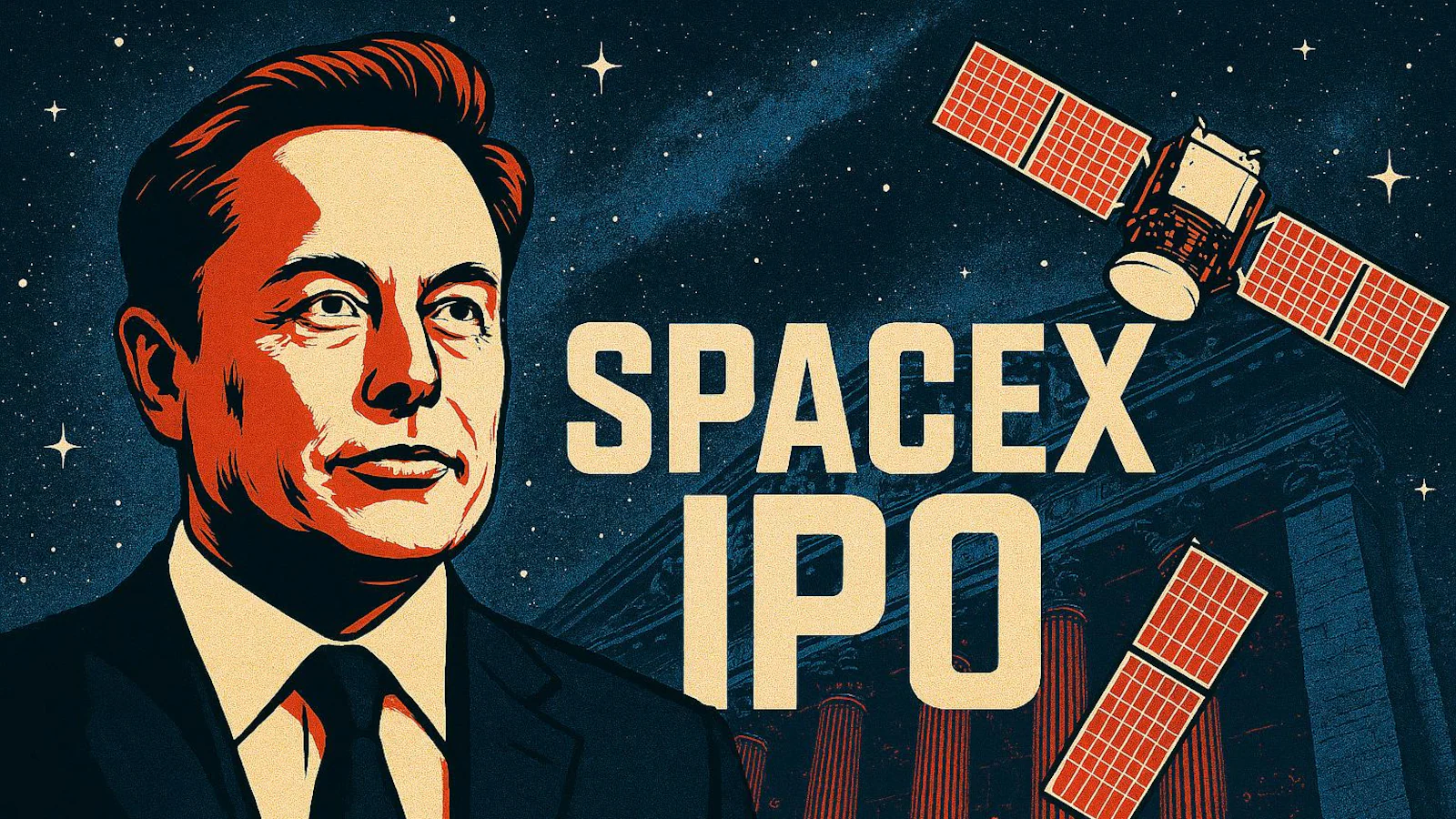
SpaceX IPO Attracts Over $7 Billion in Retail Orders
According to reports, SpaceX’s IPO has attracted over $7 billion in retail orders. SpaceX will allocate at least 20% of its IPO shares to retail investors and less than 10% to international orders.
Japan Plans to Regulate Crypto Assets Under Same Framework as Stocks, Effective Next Year
The Japanese Diet is advancing legislation to bring crypto assets under the same regulatory framework as equities. The bill passed the lower house on Thursday and proposes classifying crypto assets as financial instruments—subjecting them to lower tax rates and stricter trading rules—and paving the way for new products such as crypto ETFs. The bill still requires approval by the upper house and is expected to take effect next year.
Financial Secretary Paul Chan: Exploring Broader Applications of Compliant Stablecoins in Digital Finance
According to Securities Times, Paul Chan, Hong Kong’s Financial Secretary and Secretary for Financial Services and the Treasury, stated that two licensed stablecoin issuers are participating in projects led by the Hong Kong Monetary Authority (HKMA) on central bank digital currency (CBDC) and tokenized deposits. Their partners include local telecom, payment, and digital asset firms. The HKMA will continue monitoring progress, urging institutions to implement real-world use cases and further explore applications of compliant stablecoins in digital finance to generate value for the real economy and financial activities.
In addition, the HKMA has established the Ensemble Project Architecture Working Group to accelerate development of a local unified standard enabling interoperability among CBDCs, tokenized deposits, and tokenized assets—facilitating seamless flow of funds and assets within the tokenization ecosystem and clarifying the industry’s development direction.
OpenAI Considering Significant Token Price Reduction to Compete for Anthropic Users
According to the Wall Street Journal, OpenAI is considering a substantial reduction in its token-based pricing to attract users from rival Anthropic. Sources indicate OpenAI is evaluating a significant price cut for its AI products billed per token, anticipating Anthropic may follow with similar reductions. Discussions remain ongoing, and no final decision has been made.
Digital Asset, Developer of Canton Network, Raises $355 Million in Funding Led by a16z
According to CoinDesk, Digital Asset—the developer behind the Canton Network blockchain—has completed a $355 million funding round led by a16z crypto, with participation from global institutions including ABN Amro, Apollo Funds, BNP Paribas, Citadel Securities, HSBC, SBI Group, and a subsidiary of the Abu Dhabi Investment Authority. The round exceeded its $300 million target and values the company at $2 billion.
Canton Network is designed specifically for large financial institutions, supporting issuance and trading of tokenized real-world assets—such as bonds, loans, and funds—on shared ledgers while ensuring privacy and regulatory compliance. In addition to financial support, a16z crypto will provide expertise in development, policy, and research.
Figure to Acquire Kiavi for $717 Million, Integrating Its Loan Portfolio into Blockchain-Native Capital Markets
Figure Technology Solutions—a blockchain capital markets firm—has signed a definitive agreement to acquire Kiavi, an AI-driven real estate investment lending platform, for a total transaction value of $717 million. Concurrently, Figure will form a joint venture with Sixth Street to acquire Kiavi’s loan assets on its balance sheet.
Upon completion, Kiavi is expected to add over $7 billion annually in first-lien loans to Figure Connect and deliver more than $100 million monthly in liquidity to Democratized Prime—the decentralized lending market on-chain. Figure states that Kiavi’s assets will also serve as the first agent-to-agent integration use case for its AI product Adaptor.
Raydium’s Legacy AMM V3 Program Exploited; ~$1.34 Million in Assets Drained
According to an official announcement, Raydium confirmed that its legacy AMM V3 program—deactivated since 2021—was exploited, resulting in unauthorized removal of approximately 150,177 RAY tokens, 5,603 SOL tokens, and 893,700 USDC—valued at roughly $1.34 million. Compensation will be covered by Raydium’s treasury.
The incident impacted five liquidity pools: Sollet USDT–RAY, Sollet ETH–RAY, SRM–RAY, USDC–RAY, and RAY–SOL. Raydium clarified that current users and the live mainnet program remain unaffected. The root cause was insufficient validation of LP mint addresses—not private key leakage or permission-level vulnerabilities.
Binance Stocks to Launch Limit-Order Trading for SpaceX (SPCX) Stock on June 12
Per an official announcement, Binance will enable limit-order trading for whole-share SpaceX (SPCX) stock on Binance Stocks starting at 17:05 UTC+8 on June 12, 2026.
Per the announcement, due to IPO price discovery, SPCX is not expected to open at the regular market time of 21:30 UTC+8; pre-market orders will queue but not execute. The first trading day will conclude at 04:00 UTC+8 on June 13, with regular trading resuming at 21:30 UTC+8 on June 15. Fractional orders and amount-based orders will be disabled during the first five minutes after opening on both Day 1 and June 15. Pre-market, after-hours, and overnight trading will be suspended on Day 1.
Bitcoin Spot ETFs Saw $213.84 Million Net Outflow Yesterday
According to Trader T (@thepfund), bitcoin spot ETFs recorded a net outflow of $213.84 million yesterday—marking the 18th consecutive day of net outflows. BlackRock ($IBIT) saw a single-day net outflow of $148.47 million; Fidelity ($FBTC) posted a net inflow of $4.04 million, WisdomTree ($BTCW) a net inflow of $0.98 million, and Grayscale Mini ($BTC) a net inflow of $17.52 million. Bitwise ($BITB), Ark ($ARKB), Invesco ($BTCO), Franklin ($EZBC), Valkyrie ($BRRR), VanEck ($HODL), and Morgan Stanley ($MSBT) reported zero net flows, while Grayscale ($GBTC) registered a net outflow of $87.91 million.
Arc Launches Optional Privacy Execution Solution for On-Chain Financial Processes
According to an official announcement, Arc Privacy—Arc’s confidential smart contract engine—will offer optional private transactions and private smart contracts, enabling enterprises and developers to process sensitive on-chain workflows—including payroll distribution, fund management, trading, and asset issuance—while preserving controlled access for authorized parties.
Arc notes the solution supports auditability, regulatory compliance, and governance requirements and allows building composable private applications in familiar EVM environments. Target use cases include payroll administration, financial operations, tokenized asset management, trading processes, and lending. The announcement cautions that features remain in the proposal stage, and scope, functionality, and timelines may change.Market Data
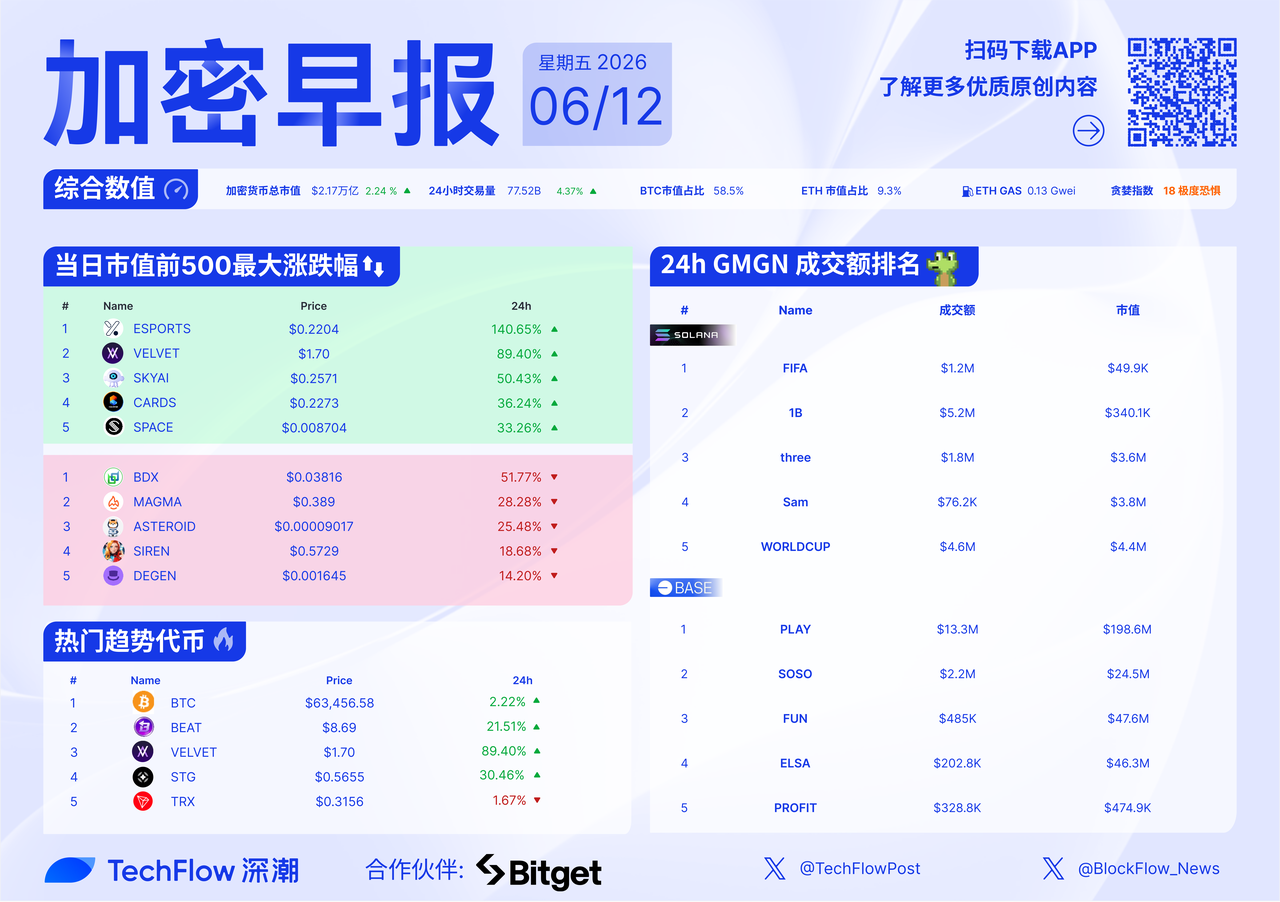
Recommended Reading
Interview with Instagram Co-Founder: Anthropic’s Fable 5 Launch Marks the End of the Hand-Coded Era
https://www.techflowpost.com/article/32008
Mike Krieger, co-founder of Instagram, helped build one of the most influential consumer applications of the past two decades. Today, he stands at the forefront of “AI-native” product development as head of Anthropic Labs, leading a team tackling a fundamental question: When the world’s most advanced AI models are placed directly into the hands of real developers, how far can technical capability truly extend?
Five months before Fable’s official launch, Krieger received internal early access to the model—and the experience left him stunned. “Well, I guess I’m a complete beginner again,” he joked to his team. He realized instantly that decades of accumulated expertise—on productivity optimization, engineering strategy, even time management—had suddenly become obsolete. The model’s pace of evolution had completely outstripped his existing workflow.
In this episode, the host engages Krieger in an in-depth conversation exploring what it truly feels like to co-develop software alongside a groundbreaking model like Fable. In this new human-AI symbiosis, what novel development rhythms emerge? What formidable challenges arise? And what imaginative possibilities lie ahead?
Even the Shovel Sellers Are Borrowing to Buy Shovels: U.S. AI Sector Loses Over $1 Trillion in One Week as Markets Begin Pricing AI’s “Bill”
https://www.techflowpost.com/article/32004
Last week, the U.S. AI sector shed over $1 trillion in market value—but investor concern has shifted beyond whether demand for AI exists, to who will foot the bill for its explosive expansion. From Alphabet raising over $84 billion in financing, to Oracle posting negative free cash flow yet planning further debt issuance, to Broadcom partnering with private equity giants to create a financing platform for AI data centers, ever more capital is being channeled—through increasingly complex mechanisms—into the AI infrastructure race. Yet this funding chain ultimately feeds just a handful of unprofitable AI labs, including OpenAI and Anthropic. When shovel sellers themselves borrow to buy shovels—and record revenues coincide with record capital expenditures and debt commitments—markets are recalculating the true cost of the AI story. AI growth hasn’t disappeared—but investors are no longer focused solely on revenue curves. They’re asking: Who ultimately pays this ever-growing bill?
Where’s the Crypto IPO Boom? Only One Listing So Far—Down 70%
https://www.techflowpost.com/article/32003
The much-anticipated “crypto IPO boom” fizzled in the first half of 2026. While SpaceX prepares for history’s largest IPO at a $1.75 trillion valuation, the crypto industry’s public listing narrative has stalled. BitGo—the only crypto firm to complete an IPO this year—is down over 69% from its offering price. Kraken’s valuation has shrunk by roughly one-third from last year’s peak; Consensys has delayed its listing to fall; and Bitpanda is likely to miss its original timeline. Liquidity has been siphoned away by the AI sector and mega-IPOs, Bitcoin has fallen below $60,000, and risk appetite has cooled—leaving crypto firms collectively missing their optimal window for capital market entry. With just five months remaining until the U.S. midterm elections, the industry’s hoped-for “IPO boom” now looks more like a postponed wave of listings.
Chasing SpaceX? Data Shows 30 Top U.S. IPOs Typically Halve in Year One
https://www.techflowpost.com/article/31997
Thinking of chasing SpaceX? Historical data shows star IPOs rarely deliver immediate wins. Analysis of 30 prominent tech IPOs over the past 14 years reveals median returns at six and twelve months were both -9%, with median maximum drawdowns in the first year reaching 54%—nearly universal across the cohort. Even eventual market leaders—including Meta, Palantir, Coinbase, and CoreWeave—endured steep, near-50% corrections. Now, with SpaceX entering the market at a ~$1.75 trillion valuation and a price-to-sales ratio exceeding 90x—while some institutions estimate fair value closer to $78 billion—history may not repeat, but for investors chasing mega-IPOs, the greatest risk isn’t missing out—it’s overestimating what the market is willing to pay in the short term.
2026 Anxiety for AI Investors: When Models Eat Everything, What’s Left of Startups’ Moats?
https://www.techflowpost.com/article/32002
While everyone debates how much further model capabilities can advance, Silicon Valley investors are grappling with another question: If large models ultimately automate most standardized tasks, where do startups’ competitive moats reside?
This article argues that true value lies not in the models themselves—but in domains beyond benchmark measurement: proprietary enterprise data, domain-specific workflows, organizational transformation, user trust, regulatory approvals, and deep, hard-won domain expertise. Models will relentlessly consume quantifiable, trainable tasks—but critical decisions in healthcare, law, and finance rely on private data, real-world validation, and long-established relationship networks—none of which vanish simply because models grow smarter. For AI entrepreneurs, future competition shifts from who owns the strongest model to who best embeds AI into authentic business processes—becoming the indispensable “translation layer” connecting models to reality. Put simply: AI makes intelligence cheaper—but trust, data, and context remain the most expensive assets.
Join TechFlow official community to stay tuned
Telegram:https://t.me/TechFlowDaily
X (Twitter):https://x.com/TechFlowPost
X (Twitter) EN:https://x.com/BlockFlow_News
 深潮TechFlow