US Stock Market Trend: A Single Post Triggers a 930-Point Rebound; Tonight, It’s SpaceX’s Turn
TechFlow Selected TechFlow Selected
US Stock Market Trend: A Single Post Triggers a 930-Point Rebound; Tonight, It’s SpaceX’s Turn
Tonight’s SPCX opening price will be the most honest gauge of market risk appetite.
 Navigating Web3 tides with focused insights
Author: TideFlow Research

On Thursday (June 11, Eastern Time), Wall Street staged a textbook V-shaped reversal. Funds that had fled the previous day—spooked by inflation and war—collectively reversed course within 24 hours.
The Dow Jones Industrial Average surged 929.97 points (+1.86%) to close at 50,848.75, reclaiming the 50,000 threshold; the Nasdaq Composite jumped 2.54% to 25,809.66; the S&P 500 rose 1.75% to 7,394.30. The Russell 2000 Index gained 3.02%, outperforming all major indices. The VIX Fear Index fell nearly 12%, dropping back below 20.
What made this rally particularly striking was that it occurred despite the release of the hottest inflation data of the year.
Hottest PPI, Coldest Market Reaction
At 8:30 a.m. ET, May’s Producer Price Index (PPI) showed a 6.5% year-on-year surge—the highest since November 2022—and a 1.1% month-on-month increase, far exceeding the consensus expectation of 0.7%. The breakdown is even more alarming: goods prices rose 2.8% MoM—the largest single-month gain since the series began in 2009—with roughly 80% of that driven by energy. Wholesale gasoline prices spiked 23.4% in one month. First-tier intermediate demand prices—closer to the upstream pipeline—rose 3.2% MoM, also a record high.
On any ordinary trading day, such data would be enough to slam the Nasdaq down by 2%. Yet the market focused on just one question: Is the war ending?
In the afternoon, Trump announced the cancellation of the planned U.S. strike against Iran that evening, stating that Iran’s top leadership had approved a draft multilateral agreement and that allies—including Israel—had “principally agreed.” Oil prices plunged immediately: WTI crude dropped over 4% to around $86; Brent fell below $89. Since oil is the engine driving this round of inflation, its sharp decline effectively disarmed the PPI’s ammunition. Trump’s own comment on inflation was blunt: “I love it, I love this inflation,” adding that oil prices would “fall like a rock” once the war ends.
The capital’s logic chain thus closed: draft agreement → oil price plunge → peak-inflation expectations → buy everything. Tech, industrials, and materials—the sectors hardest hit the prior day—led the rally, while defensive sectors that hit record highs on Wednesday (consumer staples, real estate, and energy) were dumped. In two trading days, the same pool of funds completed a full long-to-short flip.
Chip Stocks’ Revenge Rally, Software Stocks’ No-Man’s-Land
The rebound’s firepower concentrated squarely on AI hardware. Micron soared nearly 12%, erasing its entire weekly loss in a single session; SanDisk jumped 14%; Intel rose ~10% after Bank of America upgraded its rating, citing surging CPU orders; AMD gained 8%. The Philadelphia Semiconductor Index completed its emotional recovery in just four trading days—counting from its June 5 collapse.
Software stocks inhabited another universe. Oracle plunged 9.56%, closing near $184. Strong earnings meant little—the market fixated on cloud revenue missing expectations, -$23.7 billion in free cash flow, and a new $40 billion financing plan. After-hours, Adobe delivered the textbook “beat-and-raise”: Q2 revenue of $6.62 billion (+13% YoY); full-year EPS guidance raised to $24.35–$24.45; AI-related recurring revenue tripled year-on-year. Yet its stock fell over 5% post-earnings. The trigger? CFO Dan Durn announced he would leave next Monday to join Marvell—a chip company—marking Adobe’s second key executive departure in three months, following CEO Shantanu Narayen’s March announcement of stepping down. Year-to-date, the stock has fallen 38%. A company whose AI revenue has tripled is now priced as an AI victim.
Same AI narrative, divergent fates: hardware bought aggressively, software abandoned. The market’s subtext is brutal: “Compute money is visible; software moats are not.” Executives’ foot-voting direction coincides perfectly with share price movement—CFO Durn’s destination, Marvell, is itself a chipmaker.
Tonight: History’s Largest IPO Opens
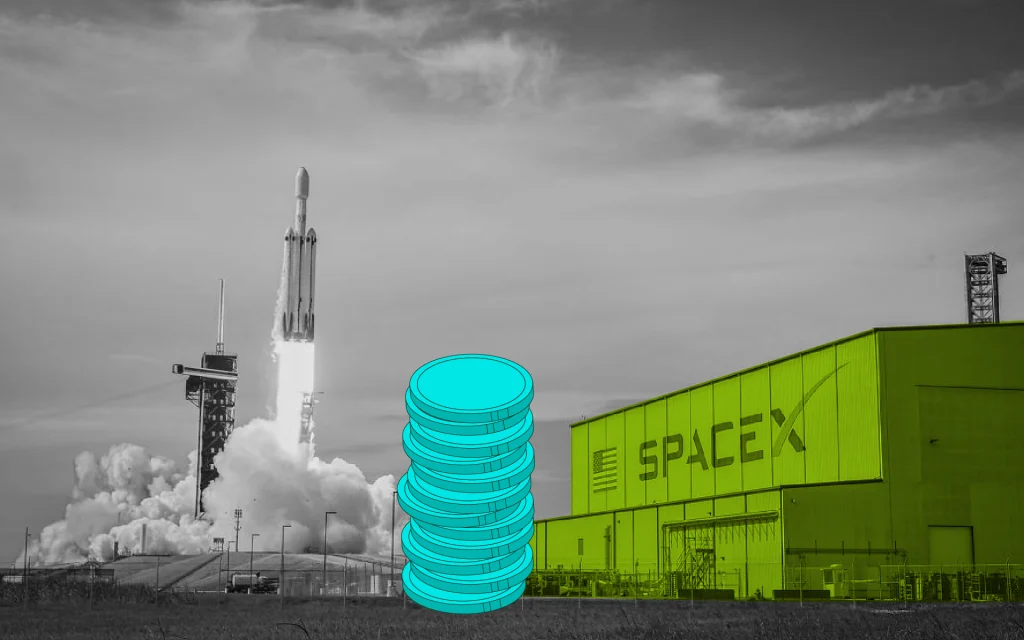
Another driver behind Thursday’s late-day buying lurked in Friday: SpaceX priced its shares at $135 each and officially lists on Nasdaq tonight under ticker SPCX.
This deal breaks all records: base offering proceeds ~$75 billion—nearly triple Saudi Aramco’s prior record ($25.6 billion); implied valuation ~$1.75 trillion—making it the seventh-largest U.S. company by market cap upon listing, ahead of its sibling Tesla (~$1.6 trillion). Reportedly, subscription demand exceeded $250 billion—3.5x to 4x the target raise. Roughly 30% of shares are allocated to retail investors—triple the industry norm. Elon Musk retains over 82% voting power post-offering.
What traders must mark on their calendars next: per rules, SpaceX will be added to the Nasdaq-100 Index 15 days after listing, forcing global QQQ-tracking index funds to mechanically buy ~$22–27 billion worth of shares.
Risks are equally transparent. Senator Elizabeth Warren wrote to the SEC urging a delay, questioning the valuation’s disconnect from fundamentals (annual revenue ~$20 billion implies an ~88x price-to-sales ratio) and the dual-class share structure; Morningstar labeled it “significantly overvalued.” A more immediate concern: the $75 billion raise will drain liquidity from secondary markets within a week—part of this week’s extreme volatility in memory and CPU stocks stemmed directly from portfolio rebalancing to fund the IPO.
TideFlow Observation
The quality of this rally warrants skepticism.
Wednesday’s 953-point plunge and Thursday’s 930-point surge were both driven by a single person’s social media feed. The draft agreement remains unsigned; Iran’s confirmation comes only via unofficial channels—and historically, this conflict has seen multiple “near-agreement” reversals. If a single tweet pulled the index back from the cliff’s edge, another tweet could push it over.
The inflation threat remains unmitigated. The record MoM rise in PPI intermediate demand reflects water already flowing through the pipeline: even if oil prices peak immediately, this will continue feeding into CPI for the next two to three months. The December Fed rate hike (25 bps) pricing remained unchanged post-data; the ECB hiked first on Thursday to 2.25%; next week brings simultaneous decisions from the Fed, BOJ, and BoE. Markets are betting on a perfect trifecta: “war ends → oil crashes → hikes canceled”—all three links must hold.
The counterargument is equally clear: core PPI MoM came in 0.4% below expectations; underlying inflation momentum—excluding energy—is indeed slowing; Intel’s CPU orders and Micron’s demand reflect real contracts, not sentiment; and should peace materialize, the inflation trajectory implied by $86 oil looks entirely different from this week’s panic pricing. Bulls don’t need perfection—only that oil prices stop making new highs.
SPCX’s opening price tonight will deliver the most honest reading yet of market risk appetite. $75 billion in new shares, an 88x price-to-sales ratio, and 4x oversubscription mean greed and doubt will meet head-on in a single candlestick.
Join TechFlow official community to stay tuned
Telegram:https://t.me/TechFlowDaily
X (Twitter):https://x.com/TechFlowPost
X (Twitter) EN:https://x.com/BlockFlow_News
 @BlockFlow_News