From $399 to $599: Your PS5 Is Paying Taxes for AI and War
TechFlow Selected TechFlow Selected
From $399 to $599: Your PS5 Is Paying Taxes for AI and War
The PS5 price has increased by $200—we’re all paying for what’s happened in the world over the past six years.
 Navigating Web3 tides with focused insights
Author: David, TechFlow
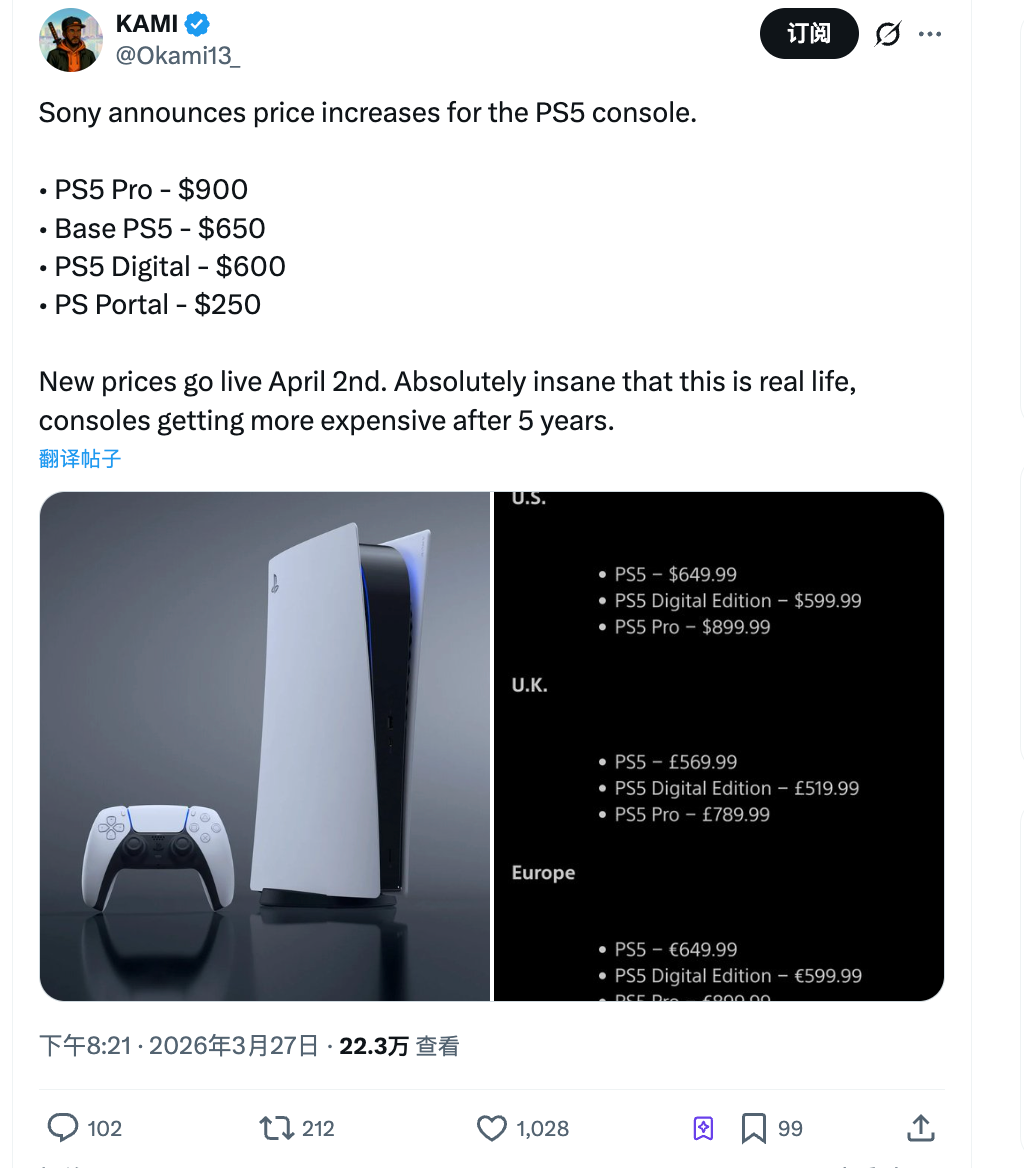
On March 27, Sony announced a price hike across its entire PS5 lineup, effective April 2.
In the U.S. market, the PS5 with disc drive rose from $549 to $649; the digital edition jumped from $499 to $599; and the PS5 Pro surged from $749 to $899.
This marks the second price increase within a year. The previous one occurred in August last year, when Sony raised prices by only $50 in the U.S.—a move deliberately designed to shield its largest market. This time, hikes start at $100, with the PS5 Pro up $150—and the adjustment is global, with no market exempted.
The pressure to raise prices has grown so intense that Sony is no longer willing to absorb it internally.
Gamers know well an ironclad rule of the console industry: consoles only get cheaper over time. Component costs decline with time, and manufacturers recoup their upfront R&D investments through improved margins later in the product lifecycle.
The PS5 is the first console in history to break this rule. Launched in 2020, its digital edition debuted at $399. Six years later, the same hardware sells for $599.
Sony’s official explanation? Six words: “Global economic pressures.”
The AI Tax
Sony offered little elaboration—but multiple research firms point to the same culprit: memory chips.
The PS5 houses both RAM and a custom SSD, both requiring DRAM and NAND flash memory chips. Starting mid-2025, these components began surging in price—not due to anything in the gaming industry, but because global AI data center construction has consumed memory production capacity, squeezing the share left for consumer electronics.
Your game console and AI systems draw memory from the same production lines. AI can afford higher prices; you cannot.
Piers Harding-Rolls, Research Director at Ampere Analysis, told CNBC that Sony likely signed price-protection agreements with suppliers, locking in procurement costs for a period. But once those agreements expired, memory prices showed no sign of easing—leaving Sony no choice but to pass the cost onto consumers.
According to Fox Business, Sony acknowledged during its February earnings call that it is contending with rising memory costs and plans to offset hardware losses through revenue from software and online services.
In plain terms: hardware is no longer profitable—even running at a loss—and Sony intends to make it up via game sales and subscription services.
This is the first cut. The extra money you pay isn’t because your console got better—it’s because AI seized your memory supply.
Missile Strikes and Aluminum Price Spikes
The memory price surge was painful enough—then came the missiles.
On March 28—the day after Sony’s price announcement—Iran’s Islamic Revolutionary Guard Corps (IRGC) launched several missiles at aluminum plants in the UAE and Bahrain.
Emirates Global Aluminium (EGA), the Middle East’s largest aluminum producer, states on its website that one tonne out of every 25 tonnes of aluminum produced globally comes from its facilities. Aluminium Bahrain (Alba) has an annual capacity of 1.62 million tonnes. Together, they account for 6% of global aluminum output.
Per EGA’s website, its products serve over 400 customers across more than 60 countries, spanning diverse industries.
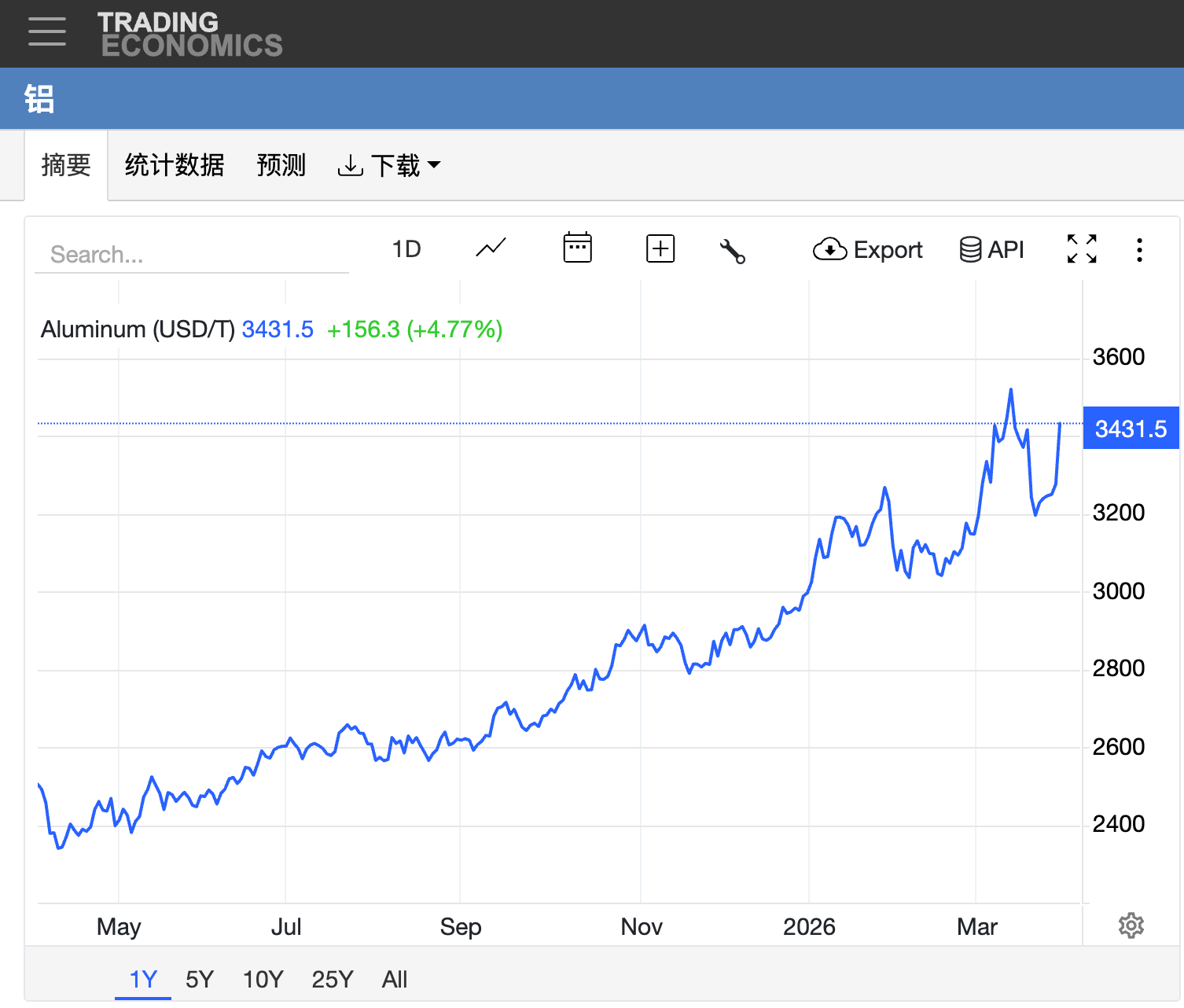
Within hours of the missile strikes, aluminum prices spiked on the London Metal Exchange. According to Securities Times, overseas aluminum spot premiums soared to their highest level in 19 years. Alba immediately declared force majeure and suspended deliveries to certain customers.
Citigroup analysts forecast that if supply disruptions persist, aluminum prices could climb from the current ~$3,300 per tonne to $4,000.
PS5 heat sinks, chassis structural components, and electromagnetic shielding layers all rely on aluminum alloys. Memory already delivered the first blow—aluminum dealt the second.
And the targeting of these two aluminum plants was no accident.
In its statement, the IRGC claimed both facilities “have ties to U.S. military and aerospace industries.” Last May, RTX—a U.S. aerospace and defense giant behind Patriot missiles and F-35 radar systems—signed a memorandum of understanding with EGA to develop gallium extraction capabilities for military radar core materials at its Abu Dhabi plant.
As stated in RTX’s official press release, Paolo Dal Cin, Senior Vice President of Operations and Supply Chain, said at the signing ceremony that the agreement aims to secure critical mineral supplies for the aerospace and defense industries.
Iran targeted U.S. defense industrial supply chains.
But bombing a military base imposes losses borne solely by a nation’s Ministry of Defense. Bombing an aluminum plant spreads the bill across the globe—from aircraft and automobiles to smartphones and your PS5.
The IRGC’s statement also included this warning: future retaliation will no longer be limited to symmetrical military responses, but will deliver “more lethal blows” against the enemy’s economic system.
According to Sina Finance, last month Saudi Arabia’s largest chemical company, SABIC, declared force majeure on its styrene and methanol production.
From aluminum to chemical feedstocks, “force majeure” is spreading across the Middle East.
Paying for a Changing World
The PS5’s $200 price increase actually conceals a third cut—one that was already delivered last year.
In August 2025, Sony raised U.S. prices by $50 for the first time. That hike followed U.S. tariffs imposed on global trading partners, increasing import costs for electronics. Designed in Japan and assembled across multiple Asian countries using parts sourced regionally, every step of the PS5’s supply chain was hit by tariff levies.
Tariffs. AI grabbing memory capacity. Missiles striking aluminum plants.
Three separate bills—each originating from a completely different source: one from Washington, one from Silicon Valley, and one from the Middle East. From $399 to $599—none of these increases reflect improvements to the console itself.
You just wanted to buy a game console. Yet your price tag now includes a portion covering U.S. trade policy, another portion funding AI companies’ arms race, and yet another portion footing the bill for Middle Eastern conflict.
And perhaps the PS5 is the most honest of them all.
Sony issued an official notice, clearly stating how much prices rose. But aluminum isn’t used only in game consoles—and memory chips aren’t installed solely in PS5s. Your smartphone, your laptop, and even your e-bike rely on the same aluminum and the same chips.
Traditionally, how is war funded? Through government taxation—or printing money. During WWII, the U.S. sold war bonds; during the Korean War, Truman raised taxes. You knew you were paying—and you knew where your money went.
The next time these products quietly raise prices, no announcement may follow.
In 2020, you paid $399 for a PS5—you bought a game console. In 2026, you pay $599 for the same PS5—the extra $200 isn’t compensation for better performance.
In the end, we all pay for what has transpired in our world over the past six years.
Join TechFlow official community to stay tuned
Telegram:https://t.me/TechFlowDaily
X (Twitter):https://x.com/TechFlowPost
X (Twitter) EN:https://x.com/BlockFlow_News
 深潮TechFlow