Bankless Interview: Private Market Insider Reveals Anthropic’s Primary Market Trading Secrets
TechFlow Selected TechFlow Selected
Bankless Interview: Private Market Insider Reveals Anthropic’s Primary Market Trading Secrets
“What’s more common than outright fraud is someone claiming to have allocations when they actually don’t—collecting payment first and then scrambling to source the tokens, often unsuccessfully.”
 Navigating Web3 tides with focused insights
Compiled & Translated by TechFlow
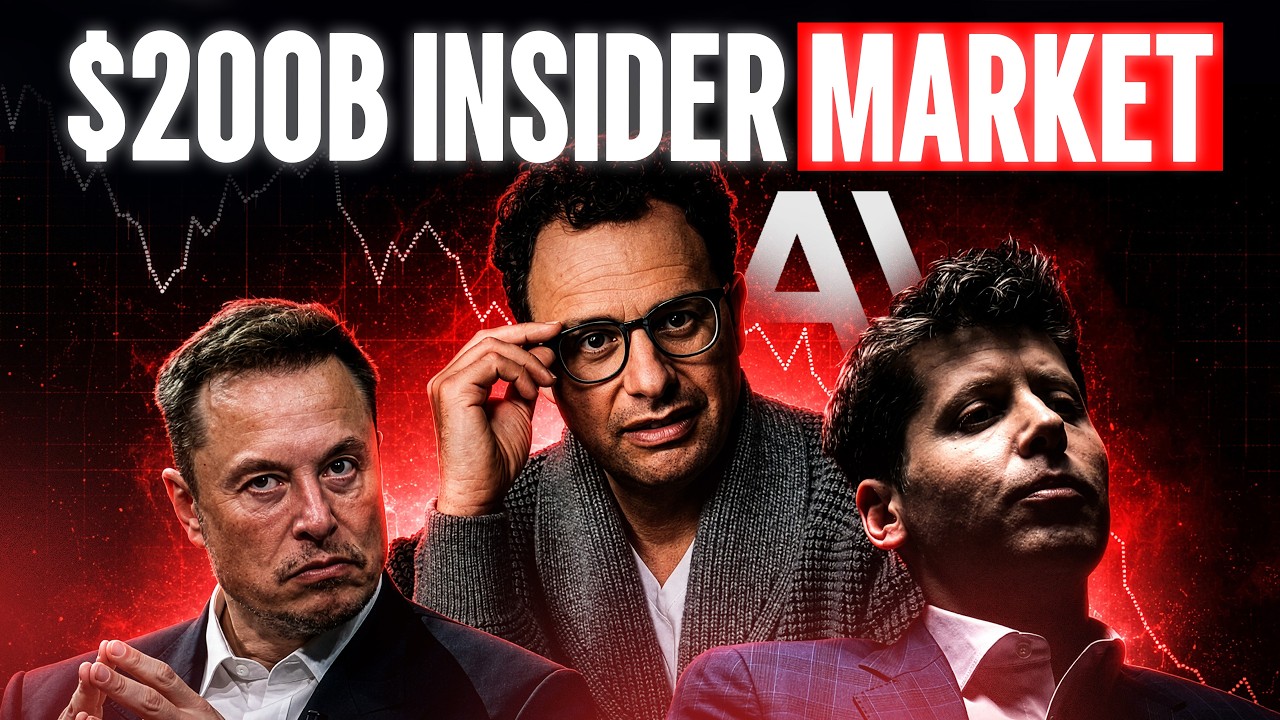
Guest: Dio Casares, Founder of Patagon
Original Title: The Shadow Market Behind Anthropic's Stock
Podcast Source: Bankless
Air Date: May 14, 2026
Editor’s Note
In this episode, Dio Casares, founder of Patagon—a firm specializing in digital asset investment and private secondary market matching—pulls back the curtain on the opaque secondary-market trading surrounding star companies like Anthropic. Casares reveals that secondary transactions tied to Anthropic alone involve hundreds of billions of dollars; single-trade fees can reach as high as 10%; and an estimated 10–20% of executed trades involve fraud or forged equity claims. Even fund professionals are now earning more from such secondary trades than from their core investment activities.
More alarmingly, nested SPVs (Special Purpose Vehicles), “forward contracts” for employee equity, and “tokenized” private equity introduce serious legal and operational risks. Should Anthropic go public, delays in DTCC system distribution across multiple SPV layers, GP-level decisions on whether to hold or distribute shares, and potential cancellation of certain equity stakes at the company level could trigger a multi-year wave of litigation.
Key Quotes
Market Structure & Arbitrage Opportunities
- “You can’t just walk up to Anthropic and say, ‘I’d like to buy $1 million worth of stock in this round.’ This is a relationship-driven market.”
- “Some people sell shares; others sell buyer access. A few do both. That’s the market’s structure.”
- “Even professionals inside funds earn more from these secondary trades than from their primary investment business—so a massive influx of talent is shifting into this space.”
Market Size & Fees
- “Private-market fundraising has exceeded IPO proceeds for several years running. Recorded secondary transactions plus financing rounds total over $200 billion.”
- “We frequently see Anthropic deals with upfront 10% fees plus long-term revenue sharing. If $10 billion flows through such channels in one round, fees alone amount to $1 billion.”
Company-Sanctioned vs. Unauthorized Secondary Trading
- “Anthropic broadly supports direct transfers—officially recognized, recorded on the shareholder register, and distributed jointly via partner funds.”
- “The company strongly dislikes platforms like Hive and Forge. When they spot a large block, they blast emails to hundreds of thousands of un-KYC’d users saying, ‘I have discounted shares!’—directly undermining Anthropic’s current fundraising round.”
- “Both OpenAI and Anthropic recently launched employee tender offers, allowing staff to sell up to $30 million directly at the current round’s valuation. This is effectively the company ‘cutting off’ sellers who would otherwise pursue gray-market secondary sales.”
Fraud & Bad Debt
- “Roughly 10–20% of the deals we review involve fraud—forged share certificates, outright scams.”
- “More common than pure fraud is sellers claiming to hold shares they don’t actually own—collecting payment first, then scrambling (and often failing) to source the shares.”
- “Under U.S. law, you’re presumed innocent until proven guilty. So if a position balloons from $1 million to $50 million, suing to recover it may cost $10 million—and the counterparty might simply default, pocketing $40 million net.”
Nested SPVs & Post-IPO Settlement Chaos
- “Why two- or three-layer SPVs? Because buyers and sellers rarely match perfectly. An $8-million seller may be matched with three buyers pooling capital.”
- “Anthropic has explicitly called out Sidecar, criticizing its due diligence as insufficient—essentially approving deals after glancing at documents and declaring them ‘seem fine.’”
- “The real post-IPO mess arises when Layer 1 SPVs receive shares within days—or up to two weeks—then ask LPs whether they want cash or stock, passing that decision down to Layer 2, then Layer 3… If any GP along the chain chooses to hold and lock positions instead of distributing, downstream participants get stuck.”
- “Post-IPO, the company essentially stops chasing problematic shares—it won’t conduct further private rounds, so its incentive to police market order vanishes.”
Advice for Small Buyers
- “If you’re a small buyer—investing $100,000 to $1 million in some ‘tokenized Anthropic’ vehicle or similar structure—you’ll almost never lift the lid to see the underlying assets. At best, you’ll see only the immediate vehicle your money entered—typically Layer 2 or Layer 3.”
- “I trust my gut. If something feels deeply wrong about a position, walk away.”
How Anthropic’s Secondary Market Really Works
Host: There’s widespread confusion around Anthropic’s secondary market—and private markets more broadly. Before diving in, could you introduce yourself and explain why you bring a unique vantage point on Anthropic’s secondary market?
Dio Casares: Patagon operates two core businesses: proprietary investing and client-facing services. We’ve executed secondary trades ourselves—and also offer secondary trading as a service, helping clients source share allocations.
Host: So as a client service, you source hot secondary allocations in the market and package them for sale.
Dio Casares: Exactly.
Host: That puts you front-row center in observing this market. Right now, the hottest pool of capital is the secondary market—especially for Anthropic, SpaceX, and OpenAI. Could you walk listeners through what’s happening here? Most people have zero frame of reference.
Dio Casares: Broadly speaking, secondaries fall into two categories. First is “primary-like secondary”—a somewhat contradictory term meaning that rather than deploying capital directly through a fund, the market constructs SPVs (Special Purpose Vehicles), sometimes layering SPVs atop SPVs, and routes capital through them. Crucially, this delivers new money to the company—it’s real fundraising.
Employee stock sales also fall into this category, since they’re company-approved. The company captures value from issuing equity to employees, and now facilitates monetization.
The second type is true secondary: buying shares from someone who previously purchased them directly from the company. Historically, this has been messy. Conventional VC wisdom held that exits required IPOs or M&A—but today’s funding rounds routinely hit hundreds of billions, dwarfing the $10 billion IPOs of yesteryear. Liquidity timelines have fundamentally shifted. When FTX collapsed, a large block of Anthropic shares was forced onto the market under bankruptcy proceedings.
Hence, a secondary market had to emerge—but it’s viewed skeptically by many management teams, who fear competition with their own fundraising efforts.
Host: So beyond Anthropic’s intrinsic appeal, two structural forces drive this phenomenon: first, the sheer scale of the market and volume of capital; second, these companies staying private longer—giving the secondary market time to mature and attract more participants.
Dio Casares: Yes, I agree.
Host: Let’s start with the normal case. Anthropic knows this secondary market exists—and some activity is sanctioned. How does a company-sanctioned secondary transaction actually happen?
Dio Casares: More accurately, call it the SPV market. Some buyers simply want Anthropic exposure—they’re not part of a fund, have no particular loyalty to the company, and are purely profit-motivated. Anthropic broadly supports direct transfers: official recognition, registration on the shareholder ledger, and joint distribution via partner funds, which earn fees by helping the company raise capital.
Anthropic is currently working with several major PE firms on its latest round using exactly this model. These institutions operate quietly but actively syndicate allocations to numerous parties. They’re absent from Anthropic’s published list of “unauthorized entities,” confirming their de facto approval.
The other category is deeply resented by management—and often met with cease-and-desist letters. Platforms like Hive and Forge operate by spotting large blocks, then blasting emails to hundreds of thousands of KYC-free users: “I have discounted shares!” This directly interferes with Anthropic’s current fundraising. Their business model is arbitrage: hunting for shares priced below the current secondary market or round valuation.
The result? Family offices and major clients approach Anthropic saying: “Hive and Forge tell me I can get a 20% discount—why should I invest directly?” This makes fundraising harder. Worse is the psychological impact: visible price gaps between bid and ask signal illiquidity—a red flag the company must suppress.
OpenAI and Anthropic recently launched employee tender offers, permitting staff to sell up to $30 million directly at the current round’s valuation. This is the company “intercepting” sellers who’d otherwise go gray-market—many who planned to sell have already done so, eliminating demand for private “I’ll buy your shares a year from now” contracts.
Host: So Anthropic-sanctioned trades fall into two buckets: non-competitive ones where capital flows directly to the company, and those improving future market structure—letting employees or ecosystem participants sell pre-IPO, releasing supply pressure. These are positive-sum, aligned with Anthropic’s interests. The harmful ones involve middlemen extracting fees while delivering zero benefit—and making the company look bad.
Dio Casares: Correct. In the U.S., there’s a six-month holding period for unregistered securities. So some “tokenized private equity” theoretically violates this rule every time it’s traded—unless sophisticated workarounds exist behind the scenes. Historically, U.S. regulators assert jurisdiction over any asset with U.S. nexus. Another thing Anthropic dreads is regulatory accusations of “willful blindness.”
Host: So legally, Anthropic can’t feign ignorance—if they know these markets exist, they must act.
Dio Casares: Exactly.
Host: How big is this market? Is it truly hundreds of billions just for Anthropic? What fraction is unhealthy dark-market activity—and what fraction represents the entire market?
Dio Casares: This is essentially the full private-market landscape. Private markets take many forms: family offices co-investing directly, brokers raising capital and charging fees, or firms like ours doing the same—all structurally distinct. Brokers themselves stratify: Tier 1 brokers know dozens of buyers—and also know another broker who actually holds shares. The structure is complex, and the capital volume enormous.
An interesting data point: private fundraising has surpassed IPO proceeds for several consecutive years. Recorded secondary transactions plus financing rounds exceed $200 billion. Given fee structures—not basis points, but the 10% upfront plus long-term revenue sharing we see on Anthropic deals—if $10 billion flows through such channels in one round, fees alone total $1 billion.
Host: I recently saw two social media posts reflecting the market’s frenzy. One: a San Francisco man lists in his Hinge bio, “I know people at Anthropic—dates free of commission,” using Anthropic share allocations as dating bait. Two: a woman tweets, “Just brokering one Anthropic secondary deal earned me more than my entire twenties’ salary—this is insane.” This captures how San Francisco’s social elite are jockeying for Anthropic allocations in their social lives. How did this happen?
Dio Casares: I’ve actually spoken with the tweeter. From a buyer’s perspective: You want Anthropic shares, but the company’s charter and agreements aren’t public—and hard to obtain. You can’t just walk up and say, “I’d like to buy $1 million in this round, thanks.” It’s a relationship-built market: some sell shares, some sell buyer access, and a few do both. That’s the structure.
Even fund professionals earn more from these secondary trades than from their core investment work—so mass migration into this space is underway.
Host: So everyone sees Anthropic equity as a gold mine—and a flood of people are selling picks and shovels.
Dio Casares: Yes—and competition has intensified significantly, which is healthy. Just months ago, real competition was scarce; most intermediaries merely passed deals along without direct seller contact. Now, more players connect both sides end-to-end, handling full execution professionally. Simultaneously, fees are compressing.
Another risk many overlook: sometimes you can’t source shares directly from investors—so you buy employee forward contracts instead. This recently blew up: a prominent firm sold xAI employee forward contracts, only for that employee to be named in xAI’s lawsuit against OpenAI alleging corporate espionage—resulting in full forfeiture of all shares. Outcome: money paid, fees collected, chaos ensues. All buyer brokers were left stranded; the firm’s stance: “If you paid fees, that’s your problem—not ours. We’ll refund only principal.” I expect more such “fake SPVs” to emerge—future success will hinge on reputation: who can build bulletproof investment vehicles?
10–20% of Trades Feature Fake Share Certificates
Host: Let’s discuss how an investment vehicle collapses. My understanding is that these are matryoshka-style SPVs—two, three, four layers deep—each layer extracting fees, with growing uncertainty at each tier about whether underlying equity even exists.
Dio Casares: Multi-layer SPVs exist because buyer/seller intent rarely aligns. An $8-million seller seldom finds one $8-million buyer—more likely, three buyers combine. Most participants here aren’t licensed brokers and can’t charge fees mid-transaction. But if you form a fund, you can charge upfront management fees—collected at the SPV level.
Host: Does Anthropic prefer these funds—or oppose them outright?
Dio Casares: Better than nothing—you at least get tax reporting, assuming proper administration. Anthropic publicly names approved fund administrators. Notably, they singled out Sidecar—an interesting choice, since Sidecar is solely a fund administrator (not a fund or SPV broker). Anthropic criticized Sidecar’s due diligence as superficial—approving deals after scanning documents and declaring them “look fine.”
Returning to risk: First, equity may be entirely fictitious—share certificates forged outright. That’s pure fraud. We’ve verified at least ten such cases via share transfer records—but options are limited beyond whistleblowing. Sometimes it’s unclear whether the perpetrator created the fake themselves or merely resold it. Fraud exists, but isn’t as pervasive as rumored—roughly 10–20% of executed trades are fraudulent. More common is sellers claiming shares they lack—taking payment first, then failing to source them.
Host: Are there cases of “inadvertent fraud”—where actors try in good faith but fail to deliver promised assets due to market conditions? Is there such a gray zone?
Dio Casares: That’s “gross negligence.” Gray zones are narrow. Resources like PitchBook, shareholder ledgers, and other due diligence tools exist precisely for direct seller engagement. Skipping due diligence on your buyers or clients is negligent—and unacceptable. If you bought from a reputable seller with ledger access, reviewed documentation thoroughly, yet they still acted unethically—that’s different. Reputation matters: unreliable actors quickly gain notoriety in this circle.
Post-IPO Litigation & Locked-Share Disputes
Host: Post-Anthropic IPO, how does this speculative market “collapse”—not destructively, but via settlement, share distribution, and cash exchange?
Dio Casares: Two things matter most: DTCC (Depository Trust & Clearing Corporation) brokerage account and AML (anti-money laundering) procedures—and each fund’s distribution terms. Some funds grant GPs full discretion on timing; others mandate immediate physical or cash distribution upon IPO and share liquidity.
Imagine a three-layer SPV: Layer 1 receives shares in days—or up to two weeks—then asks LPs for cash or stock. If all Layer 2 LPs request stock, it passes upward—subject to DTCC timing (normal: days; banks: up to two weeks). Then Layer 2 asks its LPs, transmitting to Layer 3—another 3 days to two weeks.
If any layer’s distribution rules permit GP discretion—for example, if Anthropic’s stock surges post-launch and Layer 1 GP says, “I earn carry—I’ll let it run higher”—or conversely, if shares crash and the GP delays delivery—the entire downstream chain gets blocked. Some may hedge long positions in public markets—a technically gray area. You expected delivery in six months, but wait another month—sparking lawsuits.
Host: Sounds like Anthropic itself doesn’t care much—once shares are issued, it’s up to upper-layer SPVs to sort out.
Dio Casares: Correct. Post-IPO, the company abandons private transfer agents—using DTCC exclusively after initial issuance. It largely steps aside. Yet many brokers and banks may scrutinize trades: “Anthropic declared this invalid—we must verify before facilitating your sale.” That could get messy.
But strategically, post-IPO, the company won’t reclaim problematic shares—it won’t conduct further private rounds, so its incentive to enforce market order evaporates.
Host: How big could this get? How many lawsuits? How many dollars involved? How long to resolve?
Dio Casares: Lawsuits will span years—some cases will drag on indefinitely. Total dollar figures? Uncertain—nobody knows for sure. But this will be the market’s “awakening moment.”
I spoke recently with a European family office—deeply unsettling. I believe they invested in the troubled transaction referenced earlier—and ultimately got their money back. But I suspect the GP didn’t inform LPs, instead reinvesting the returned capital to chase Anthropic’s upside. This is common: recycling refunded capital as principal to gamble on appreciation. Unless returns hit 500%, the gap remains unfilled—I’m pessimistic about that outcome. That fund bears the loss.
Host: Your concern is that well-intentioned actors make mistakes—like buying fake equity—but why do client funds remain exposed post-failure?
Dio Casares: Yes—or gross negligence. My instinct is that fee structures on large blocks are punitive: GPs pocket fees, leaving nothing to return to LPs—or deem refunds impossible. But finance doesn’t operate this way: when things go wrong, someone must say, “I’m deeply sorry this failed—here’s your money back.”
Host: So the failure path looks like this: You raise money from friends/family, set up an SPV, and deposit capital. You receive an oral commitment from someone to deliver shares. You face two choices: leave funds untouched in the SPV, awaiting delivery—or prematurely spend (“I just made a fortune—buy a house, a Porsche”), only to discover, on delivery day, shares never materialized—and funds are gone.
Dio Casares: Exactly.
Host: Zooming out: The private market is massive; companies delay IPOs; capital shifts hands privately—evolving into an internal market that’s the antithesis of public markets. Yet today’s coolest companies dwell here longest. How will this market evolve?
Dio Casares: Calling it “unregulated” is unfair—regulation exists, but enforcement is lax unless clear fraud surfaces. Regulators prioritize obvious illegal fundraising over minor filing omissions—even if the same actors commit both. Markets repeat patterns. This mirrors crypto’s low-circulation, high-FDV phase: constrained supply fuels irrational exuberance, easing fundraising. Underlying tech here is real—I use Claude daily, and their revenue is already substantial.
Interestingly, incumbent institutions—banks with or partnering on secondary desks—are too cautious to keep pace. New entrants rush to fill the void. Large funds also deploy SPVs—but structure them differently, serving only their own LPs. The trend is capital shifting from “funds managing money collectively” to “directly managed capital.” This will persist until the cycle ends. Some will buy “locked-token” equivalents and lose heavily—then concede, “Fine, I’ll return funds to VC funds.” Hot money will migrate elsewhere—but U.S. secondary markets will grow more professional.
Patagon’s Strategy & Philosophy
Host: Returning to your work at Patagon: Based on your secondary-market experience and insights, describe Patagon’s strategy and philosophy.
Dio Casares: We began solely with proprietary trading. Later, a friend paid me a fee—I asked why. He explained another broker charged two to three times more; his payment to me represented the savings. That sparked realization: I grew up in the Bay Area, know whom to call, how to verify backgrounds—while many friends have international roots and less local network density. I started moonlighting, then realized this could scale—especially with branding and process discipline.
Compare platforms like Forge and Hive: they verify neither equity authenticity nor buyer credentials, collect no KYC (for marketplace operations—though their proprietary investments differ), yet charge 3.5%. They provide only introductions and a fake order book—you still negotiate via email—and they skim 3.5% on top. We found that absurd.
We source deals ourselves, create investment vehicles ourselves, conduct full due diligence ourselves—ensuring equity is authentic and structures compliant. Clients invest directly on our platform—no price negotiation, no document chasing, no signing loops, no wire coordination. Everything happens in one place—and we even enable clients to use positions for credit financing. Our value proposition extends far beyond “get you in, then abandon you.”
We’ve handled complex deals—e.g., a crypto firm with exclusively employee forward contracts. During due diligence, we vetted each employee individually: checking gambling history, soliciting negative references from peers. We identified one problematic employee—and excluded them. All others cleared, and the deal closed smoothly.
Host: This builds credibility: when sourcing Anthropic secondaries or other allocations, you can credibly state, “Our client base is quality-vetted.”
Dio Casares: Precisely. We can also say, “We handle tough deals.” That transaction had no alternative authorized channel—we got clients into deals others couldn’t access. Clients appreciate that—and naturally return for future opportunities.
Legal Risks of Tokenized Equity & Pre-IPO Perpetual Contracts
Host: For listeners who’ve already bought Anthropic secondaries—or other companies’—but know nothing about underlying authenticity, what advice or actions would you recommend?
Dio Casares: Hard to generalize—the market’s structure varies wildly. Some hold perpetual contracts. While I don’t recommend them, ironically, perps fall under derivatives regulation—a distinct legal bucket—making risks less overt. Funding rates may be aggressive, but that’s the price paid to align with IPO opening prices.
If you’re a small buyer—$100,000 to $1 million invested in some “tokenized Anthropic” or similar vehicle—you’ll almost never lift the lid to see the full underlying stack. At best, you’ll see only the immediate vehicle your money entered—typically Layer 2 or Layer 3. I advise against adding more capital; if your gut feeling about the position is deeply negative—and I trust my gut—I’d exit.
Host: Regarding tokenized perpetual contracts: Do they confer genuine claims on underlying equity—or are they merely predictions or subjective mappings?
Dio Casares: Many institutions are building these—mechanisms vary, but the concept is similar: once live, pre-IPO perpetuals feature extreme funding rates. Unlike standard perps, market makers hedge using actual underlying trades—albeit via structures distinct from U.S. equities—but ultimately converge on real shares, enabling arbitrage. As IPO approaches, perpetual prices and funding rates gravitate toward “normal” levels.
Host: Anything else we haven’t covered?
Dio Casares: I think we’ve covered it comprehensively.
Join TechFlow official community to stay tuned
Telegram:https://t.me/TechFlowDaily
X (Twitter):https://x.com/TechFlowPost
X (Twitter) EN:https://x.com/BlockFlow_News
 深潮TechFlow