The Demise of Petro: A Microcosm of Venezuela's Failure
TechFlow Selected TechFlow Selected
The Demise of Petro: A Microcosm of Venezuela's Failure
The Petro did not perish due to Washington's ban, but rather died from its own decay.
 Navigating Web3 tides with focused insights
Written by: TechFlow
On January 3, 2026, the U.S. military launched a "large-scale" strike against Venezuela, and Venezuelan President Maduro was swiftly arrested and transferred.
Some commented, "One who issued a Memecoin arrested the one who issued an RWA Token."
Indeed, that was the case.
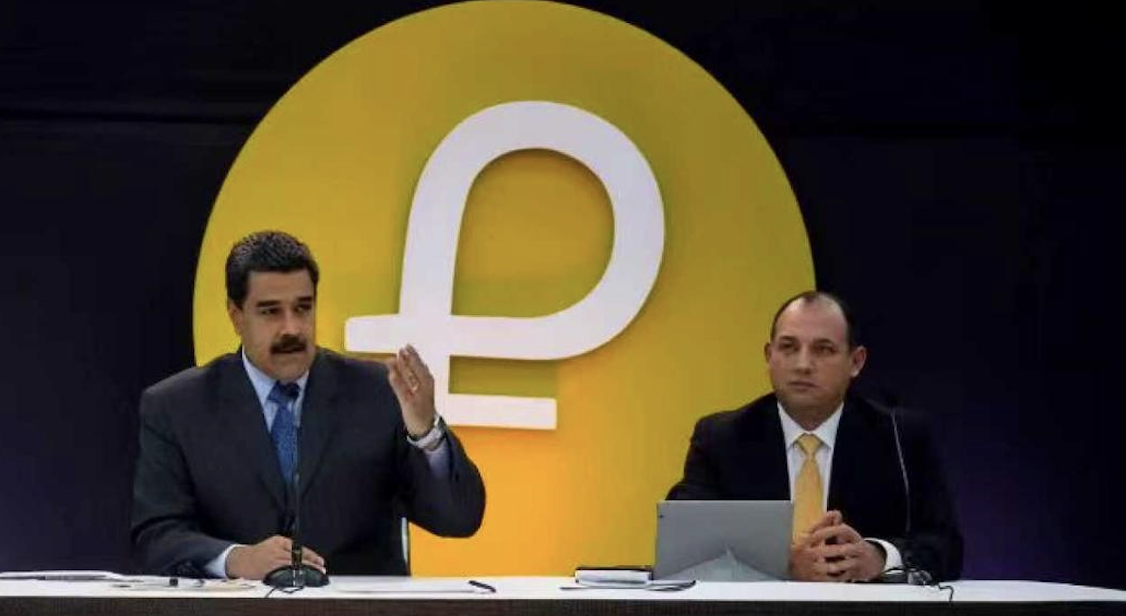
On February 20, 2018, Venezuelan President Maduro announced in a televised address the issuance of the world's first digital currency backed by a sovereign state, the Petro.
At that time, Venezuela was deeply mired in its worst economic crisis in history, with inflation soaring to nearly 1,000,000% (you read that correctly), the national currency, the Bolivar, depreciating like waste paper, and severe U.S. sanctions further exacerbating the plight of this South American oil giant.
Maduro pinned his hopes on this digital currency as the last straw to save the country.
However, in early 2024, when the Venezuelan government quietly terminated the operation of the Petro, the world did not even cast many surprised glances.
This digital token, once hailed as the "world's first sovereign cryptocurrency," had almost never truly "lived" during its brief existence. Its end, like the silent curtain fall of a noisy drama, marked the conclusion of a magical realist story revolving around encryption technology, national sovereignty, and economic collapse.
The fate of the Petro reflects the comprehensive collapse of a nation's governance system.
Born from the Ruins: The Emergence of the Petro
To understand the Petro, one must first understand Venezuela before its birth.
It was a nation scorched by hyperinflation, where the value of the old currency, the "Bolivar," evaporated by the hour, and people's life savings vanished overnight. Simultaneously, severe financial sanctions from the United States, like an invisible noose, tightened around Venezuela's economic lifeline, isolating it almost entirely from the global financial system.
It was upon this economic ruin that the Petro emerged, bearing an almost impossible "national salvation" mission.
Its blueprint was grand and enticing.
First, the Petro would bypass the dollar-dominated international financial system via blockchain, opening a new channel for financing and payments. Second, it claimed that each Petro was backed by a barrel of real oil reserves, with 100 million Petros representing a total value of $60 billion.
In August 2018, Venezuela officially established the Petro as its second official currency, circulating alongside the already battered Bolivar.
The Maduro government's promotion of the Petro was unprecedented in its intensity.
Pensions for retired seniors were switched to Petro payments; Christmas bonuses for civil servants and military personnel were also converted into this digital currency. Maduro even conducted a televised "airdrop" of 0.5 Petro to all national retirees as a Christmas gift at the end of 2019.
Beyond forced domestic promotion, Venezuela also attempted to enlist more countries to use the Petro.
Time magazine once reported that the Petro received Putin's personal approval, with Russia sending two advisors to participate in the project design. Russia promised to invest in the Petro and considered using this digital currency for bilateral trade settlements to jointly counter dollar hegemony.
Venezuela also attempted to promote the Petro to OPEC member countries, hoping to create a de-dollarized oil trade system. Oil Minister Quevedo publicly stated: "The Petro will become a settlement method accepted by all OPEC member countries."
To encourage more people to use the Petro, the Maduro government transformed into a crypto project team, establishing complete infrastructure. The official website provided detailed purchase tutorials, and they even developed four ecosystem apps, authorizing six exchanges, including Cave Blockchain and Bancar, to publicly sell the Petro.
But reality soon dealt the Maduro government a severe blow.
Public Apathy and Skepticism
The Maduro government's fervent promotion met with collective public apathy.
Under Maduro's Facebook post announcing the Petro issuance, the most-liked comment read: "It's unbelievable that people still support this terrible government... they are destroying the entire country." Another popular comment said: "The government is already accustomed to letting every foolish thing end in failure and then blaming other countries."
Venezuelan media personality Gonzalo offered a sharper critique on Twitter: "The Petro is the anesthetic of this failed state."
Disastrous user experience further deepened public distrust. Petro registration reviews were extremely strict, requiring uploads of ID card front/back photos, detailed addresses, phone numbers, etc., but applications were often inexplicably rejected. Even if one managed to register successfully, the "Patria Wallet" system was plagued with frequent issues and often unusable.
Worse was the payment experience. Many merchants reported Petro payment failures, forcing the government to acknowledge system defects and provide compensation.
One Venezuelan woman stated: "Here, we don't feel the existence of the Petro."
Externally, the U.S. government also launched precise strikes against the Petro.
In March 2018, just one month after the Petro's launch, Trump signed an executive order completely prohibiting U.S. citizens from purchasing, holding, or trading the Petro. The Treasury Department explicitly stated in its declaration, any transaction involving the Petro would be considered a violation of sanctions against Venezuela.
The scope of sanctions quickly expanded. In 2019, the U.S. placed the Moscow-headquartered Evrofinance Mosnarbank bank on its sanctions list, citing its provision of financing services for the Petro. The U.S. Treasury bluntly called the Petro "a failed project attempting to help Venezuela evade U.S. economic sanctions."
A Shitcoin Cloaked in Oil
The most fatal problem with the Petro was that it was untenable both technically and economically.
The soul of a true cryptocurrency lies in the trust derived from decentralization. The Petro, however, was a centralized database completely controlled by the government.
For an ordinary Venezuelan, this meant the value of the Petro in their digital wallet was not determined by the market but could be arbitrarily changed by a presidential decree.
The Venezuelan government claimed each Petro was backed by a barrel of oil from the Ayacucho region's Atapirire town, with reserves of 5.3 billion barrels. However, Reuters journalists visiting the site found dilapidated roads, rusted oil well equipment, and the entire area overgrown with weeds, showing no signs of large-scale oil extraction.
Rafael Ramírez, the former Venezuelan oil minister in exile, estimated that extracting the promised 5.3 billion barrels would require at least $20 billion in investment—a fantasy for a Venezuelan government that even needed to import basic foodstuffs.
Ramírez bluntly pointed out: "The Petro was set with an arbitrary value; it only exists in the government's imagination."
More absurdly, the Venezuelan government later quietly modified the Petro's backing assets, changing from 100% oil backing to a mix of oil, gold, iron, and diamonds in proportions of 50%, 20%, 20%, and 10%.
Such arbitrary "whitepaper" modifications are considered egregious even within the crypto space.
Technical issues were equally severe. The Petro claimed to be based on blockchain technology, but its block explorer displayed highly abnormal data. The whitepaper stated the Petro should generate a block per minute like Dash, but the actual block interval was 15 minutes, with almost zero on-chain transaction records.
Unlike the price volatility of truly decentralized digital currencies like Bitcoin, the Petro's price was entirely government-controlled. The exchange rate was arbitrarily adjusted from an initial 1 Petro = 3,600 Bolivars to 6,000, and later to 9,000.
Although the government announced the Petro's official price as $60, on the black market in the capital Caracas, people could only exchange it for goods or dollar cash worth less than $10—if they were lucky enough to find someone willing to accept it.
The Petro was essentially a control tool cloaked in blockchain.
The Final Blow: Internal Corruption
If the Petro's life was slowly withering away, the final straw that broke it was a staggering internal corruption scandal.
On March 20, 2023, an "earthquake" shook Venezuelan politics.
Tareck El Aissami, a core member of the Maduro government and the Oil Minister, suddenly announced his resignation.
A few days prior, Venezuelan anti-corruption police arrested his close aide, Joselit Ramírez Camacho, the head of the National Digital Currency Regulatory Agency (SUNACRIP)—the core department responsible for Petro oversight and operation.
As investigations deepened, a massive fraud scheme involving billions of dollars surfaced.
Attorney General Tarek William Saab disclosed that some senior officials used the cryptocurrency regulatory agency operating parallel to the state oil company to sign oil loading contracts with "no administrative control or guarantees." The corresponding payments from oil sales were not paid to the state oil company but were transferred to private pockets via cryptocurrency.
Investigations revealed this corruption network involved amounts between $3 billion and $20 billion, with these embezzled funds used to purchase real estate, digital currencies, and cryptocurrency mining farms.
In April 2024, Oil Minister El Aissami was arrested, facing multiple charges including treason, money laundering, and criminal conspiracy. Over 54 people were prosecuted for alleged involvement in this corruption scheme.
This corruption scandal dealt a devastating blow to Venezuela's cryptocurrency industry. SUNACRIP was forced to suspend operations, and the government subsequently launched a nationwide anti-mining campaign, confiscating over 11,000 ASIC miners and disconnecting all cryptocurrency mining farms from the national power grid.
By 2024, the government halted Petro transactions, demanded a nationwide cessation of cryptocurrency mining, and closed all authorized cryptocurrency exchanges. An industry once vigorously promoted by the government completely collapsed under the impact of the corruption scandal.
The Petro experiment's complete failure did not die from Washington's bans but from its own internal rot.
A tool designed to counter external sanctions ultimately became a tool for corrupt officials to launder money.
A Microcosm of National Failure
The Petro's failure trajectory almost replicates the failure logic of Venezuela's national governance.
It was a "treating the foot for a headache" type of policy. Facing deep-seated economic structural problems, the government chose to create a flashy gimmick, attempting to mask real economic decay with a digital illusion. It was like painting a bright coat of paint on the exterior of a building tilting due to a collapsing foundation.
The Maduro government's attempt to solve institutional problems through technological means was itself a flawed approach. The value foundation of a digital currency remains the credit of its issuing entity. In a country with inflation reaching millions of percent, where basic living supplies cannot be guaranteed, what credibility does the government have left? If the populace doesn't even trust the government-issued traditional currency, how could they accept an entirely new digital currency concept?
The Petro, instead, exhausted the last remnants of government credibility.
Imagine this scene: a retired teacher, her life savings already devoured by inflation, now receives her monthly pension forcibly converted into Petro. She walks into store after store with her phone, only to be told, "We don't accept this," or "The system is down."
The root of Venezuela's economic problems lies in fundamental defects in its economic structure. Venezuela suffers from a classic case of "Dutch disease," where over-reliance on oil exports led to manufacturing decline and an extremely singular economic structure. When oil prices fell, the entire national economy collapsed. The Petro, attempting to be pegged to oil, precisely exacerbated the economy's dependence on oil without addressing the structural issues.
In practice, the Venezuelan government lacked the basic technical and operational capacity to implement a blockchain project. The project was riddled with flaws from the start. From abnormal block data to payment system failures, to the arbitrariness of the price mechanism, every detail exposed an amateurish level of execution, even inferior to a Shenzhen outsourcing studio.
Today, the Petro has completely vanished into the dust of history. Maduro's "national salvation experiment" ended in a disastrous failure. Venezuela remains deeply mired, its people continuing to suffer in the fires of inflation.
The real way out for this country clearly does not lie in finding the next "Petro"-style digital shortcut, but in whether it can muster the courage to face reality, return to common sense, and initiate that long-overdue yet immensely difficult genuine transformation.
Join TechFlow official community to stay tuned
Telegram:https://t.me/TechFlowDaily
X (Twitter):https://x.com/TechFlowPost
X (Twitter) EN:https://x.com/BlockFlow_News
 深潮TechFlow