Where Is Google's Gemini 3 Pro Strong That Even Altman Has Liked It?
TechFlow Selected TechFlow Selected
Where Is Google's Gemini 3 Pro Strong That Even Altman Has Liked It?
Google slept for eight months, then suddenly dropped a bombshell with Gemini 3 Pro.
 Navigating Web3 tides with focused insights
Author: Miao Zheng
After 8 months of silence, Google suddenly dropped a bombshell with Gemini 3 Pro.
Google has finally released Gemini 3 Pro—suddenly and rather "quietly."
Although Google had previously launched the image editing model Nano Banana, briefly boosting its visibility, it had been far too quiet on the foundational model front.
For the past several months, everyone has been buzzing about OpenAI's latest moves or marveling at Claude's dominance in coding, while nobody mentioned Gemini, which hadn't seen a version update in eight months.
No matter how impressive Google’s cloud business and financial reports are, within the core AI developer community, Google’s presence has gradually faded.
The good news is that after testing it firsthand, I found Gemini 3 Pro did not disappoint.
But it's still too early to draw conclusions. The AI race has long moved beyond just boasting parameter counts—now it's all about applications, real-world deployment, and cost efficiency.
Whether Google can adapt to this new version and environment remains an open question.

01
I asked Gemini 3 Pro to describe itself in one sentence, and this was its response:
"No longer eager to prove how smart I am to the world, but starting to think about how to become more useful." ——Gemini 3 Pro
On the LMArena leaderboard, Gemini 3 Pro topped the chart with an Elo score of 1501, setting a new record for comprehensive AI capability assessment—an outstanding result that even earned congratulations from Sam Altman on Twitter.

In math benchmarks, the model achieved 100% accuracy on AIME2025 (American Invitational Mathematics Examination) under code execution mode. On GPQADiamond, a scientific knowledge test, Gemini 3 Pro scored 91.9% accuracy.
Results from MathArenaApex math competition tests show Gemini 3 Pro scoring 23.4%, while other mainstream models generally scored below 2%. Additionally, in a benchmark called Humanity's Last Exam, the model achieved a 37.5% score without using external tools.
Google introduced a new code generation feature called "vibecoding" in this update. This function allows users to describe requirements in natural language, after which the system generates corresponding code and applications.
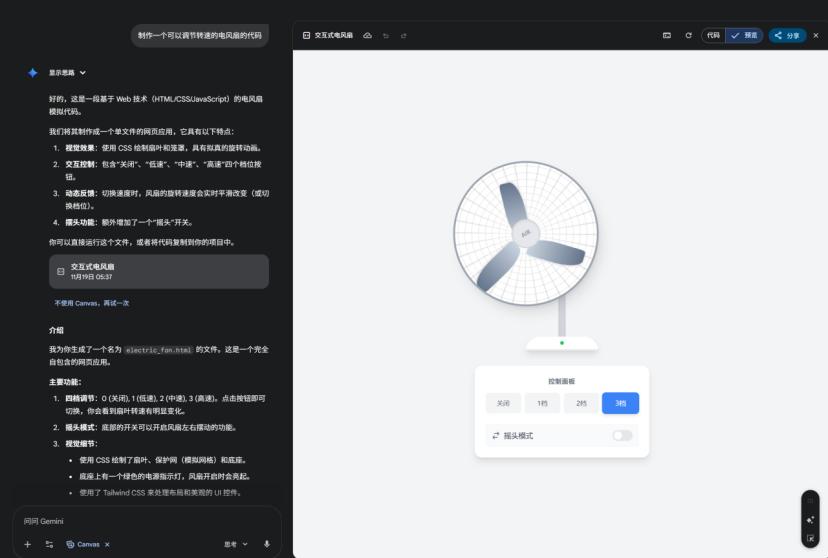
In Canvas programming environment tests, when users described “create an electric fan with adjustable rotation speed,” the system generated complete code—including rotating animation, speed control slider, and power button—within about 30 seconds.
Official demos also include visual simulations of nuclear fusion processes.
In terms of interaction, Gemini 3 Pro adds a "Generative UI" (Generative Interface) feature. Unlike traditional AI assistants that return only text responses, this system can automatically generate customized interface layouts based on query content.
For example, when users ask questions about quantum computing, the system might generate an interactive interface containing concept explanations, dynamic charts, and links to relevant papers.
For different audiences asking the same question, the system generates different interface designs. For instance, explaining the same concept to children versus adults results in different presentations—cuter visuals for kids, cleaner and clearer ones for adults.
The Visual Layout experimental feature available in Google Labs demonstrates such interface applications, allowing users to obtain magazine-style views with images, modules, and adjustable UI elements.
This release also includes a new agent system named Gemini Agent, currently in experimental phase. It can perform multi-step tasks and connect to Google services such as Gmail, Google Calendar, and Reminders.
In inbox management scenarios, the system can automatically filter emails, prioritize them, and draft replies. Travel planning is another use case: users need only provide destination and approximate dates, and the system checks calendars, searches flights and hotels, and schedules trips. However, this feature is currently only available to Google AI Ultra subscribers in the United States.
In multimodal processing, Gemini 3 Pro is built on a sparse mixture-of-experts architecture, supporting text, image, audio, and video inputs. The model features a context window of 1 million tokens, enabling it to process long documents or video content.
Testing by Mark Humphries, a history professor at Wilfrid Laurier University in Canada, showed the model achieving a character error rate of 0.56% in recognizing 18th-century handwritten manuscripts—a 50% to 70% improvement over previous versions.
Google stated that training data includes public web documents, code, images, audio, and video content, with reinforcement learning techniques used in post-training phases.
Google also launched an optimized version called Gemini 3 Deep Think, specifically designed for complex reasoning tasks. This mode is currently undergoing safety evaluation and is scheduled to be rolled out to Google AI Ultra subscribers in the coming weeks.
In Google Search’s AI mode, users can click the "thinking" tab to view the model’s reasoning process. Compared to standard mode, Deep Think performs more analytical steps before generating answers.
Besides official materials, I also compared Gemini 3 Pro with ChatGPT-5.1.
The first comparison was image generation.
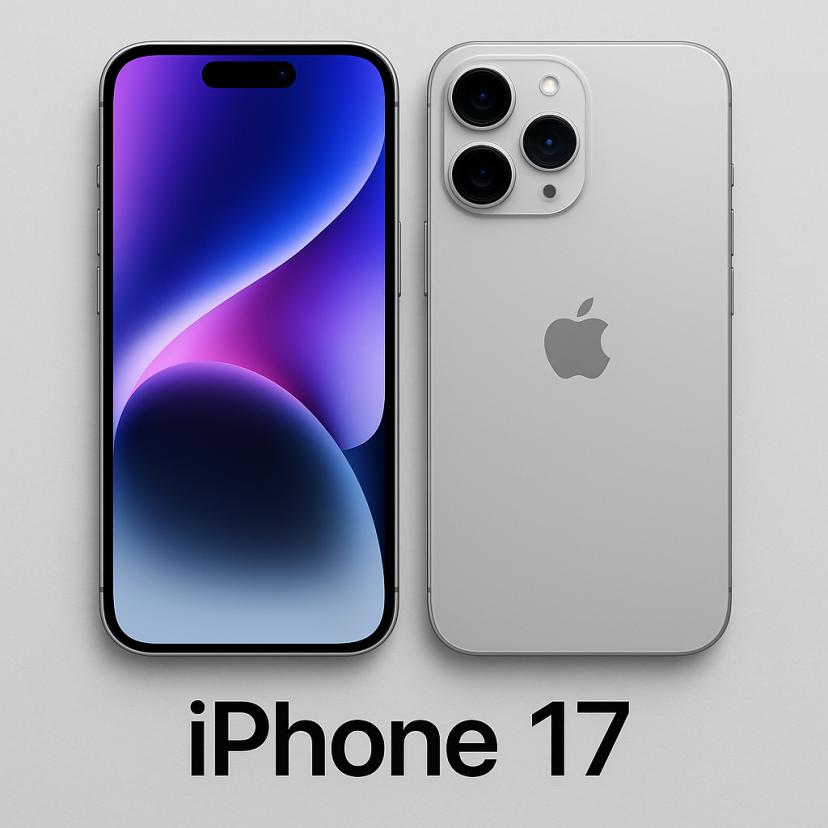
Prompt: Generate an image of iPhone17
ChatGPT-5.1
Gemini 3 Pro

Subjectively speaking, ChatGPT-5.1 better met my needs, so this round goes to ChatGPT-5.1.
The second comparison focused on their agent capabilities.
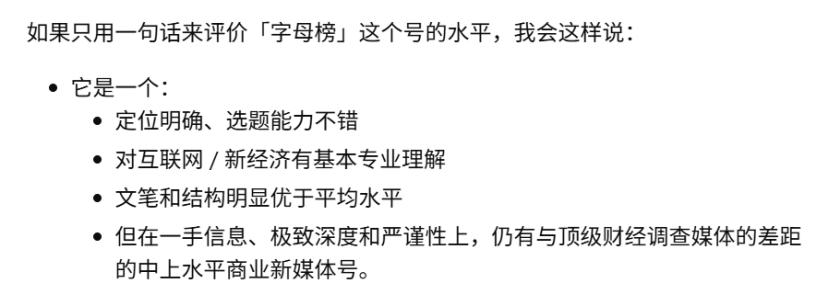
Prompt: Go research the WeChat public account "Zimubang," then comment on its quality
GPT-5.1
Gemini 3 Pro

While subjectively I prefer Gemini 3 Pro’s interpretation, it was overly flattering. GPT-5.1 identified shortcomings in Zimubang, offering a more objective and realistic assessment.
Finally, coding ability—the area most large models focus on today.
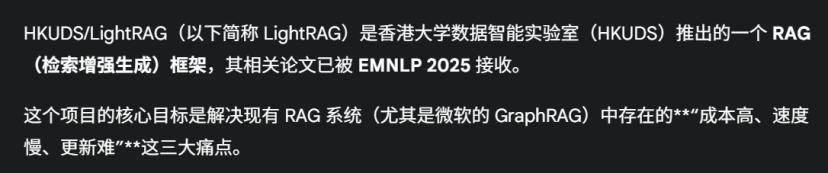
I picked a recently trending GitHub project called LightRAG, which enhances context awareness and enables efficient information retrieval by integrating graph structures, thereby improving retrieval-augmented generation with higher accuracy and faster response times. Project link: https://github.com/HKUDS/LightRAG
Prompt: Tell me about this project
GPT-5.1

Gemini 3 Pro
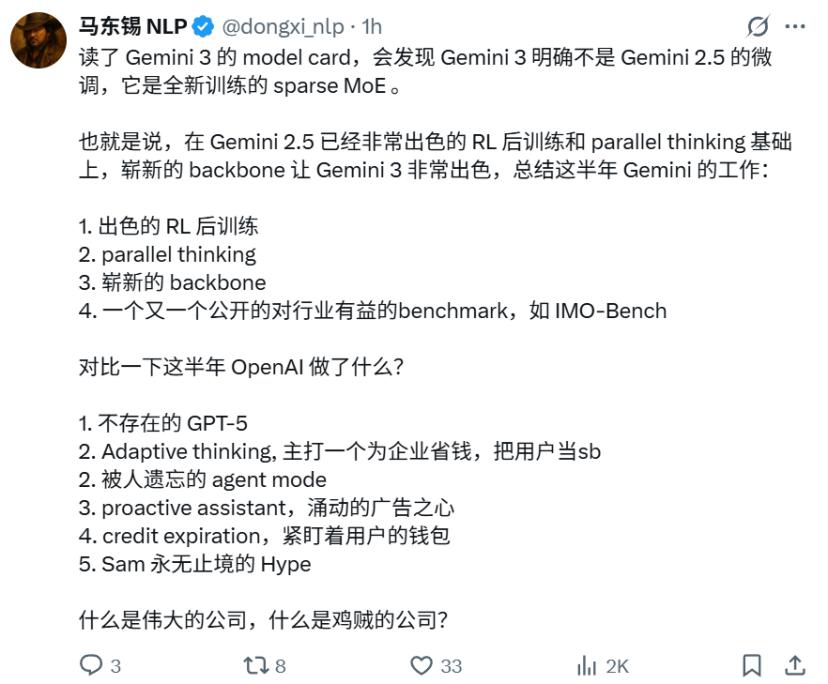
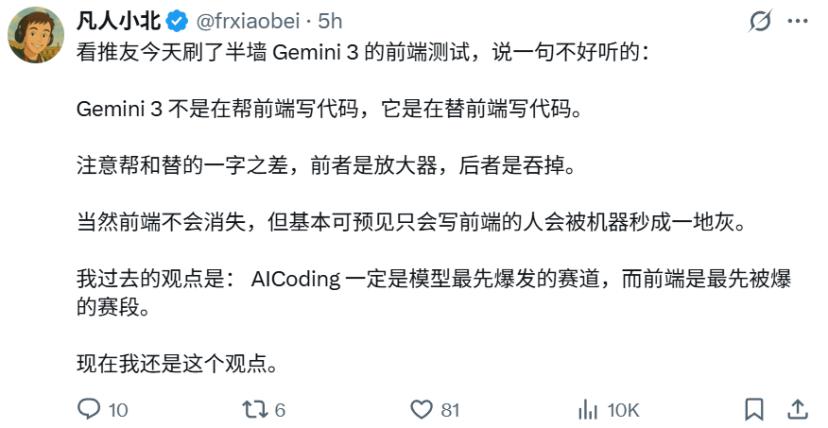
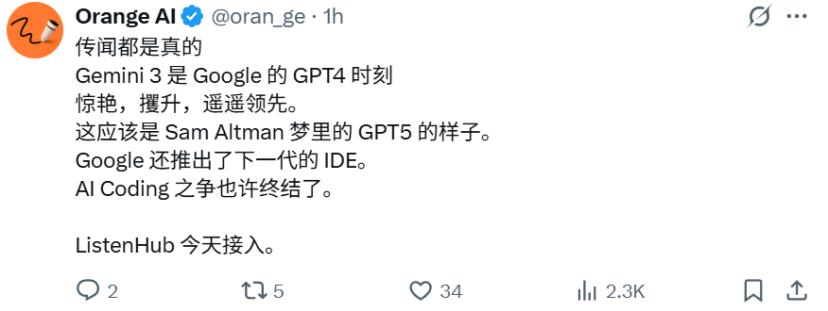
Meanwhile, Gemini 3 Pro has also received high praise from industry insiders.
02
Although the launch of Gemini 3 Pro was low-key, Google had actually been building up anticipation for it for quite some time.
During Google’s Q3 earnings call, CEO Sundar Pichai said: "Gemini 3 Pro will be released in 2025." No specific date, no further details—yet these words marked the beginning of a major marketing spectacle in the tech industry.
Google kept sending signals, keeping the entire AI community highly engaged, yet consistently refused to disclose any definite release schedule.
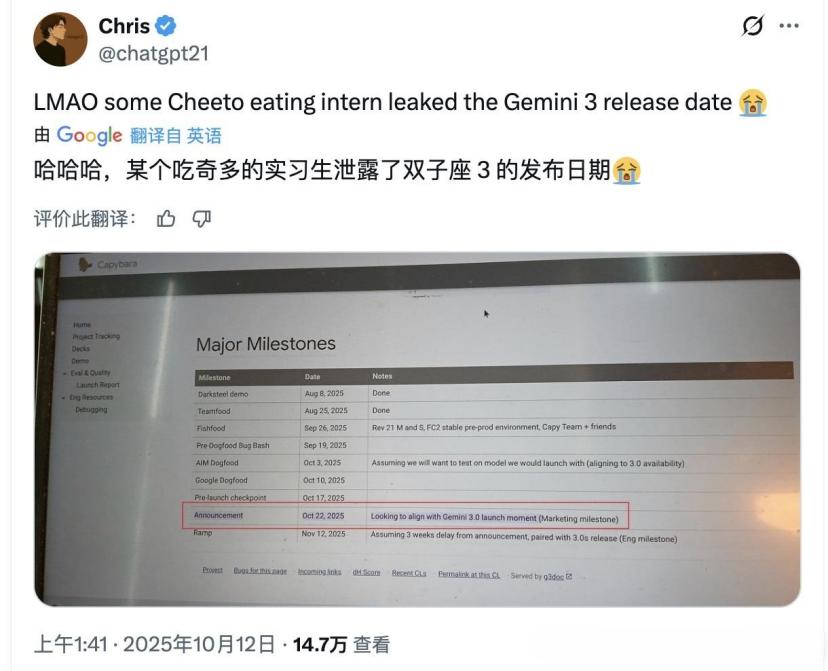
Starting in October, a series of "leaks" began emerging. On October 23, a calendar screenshot showing "Gemini 3 Pro Release" on November 12 went viral.
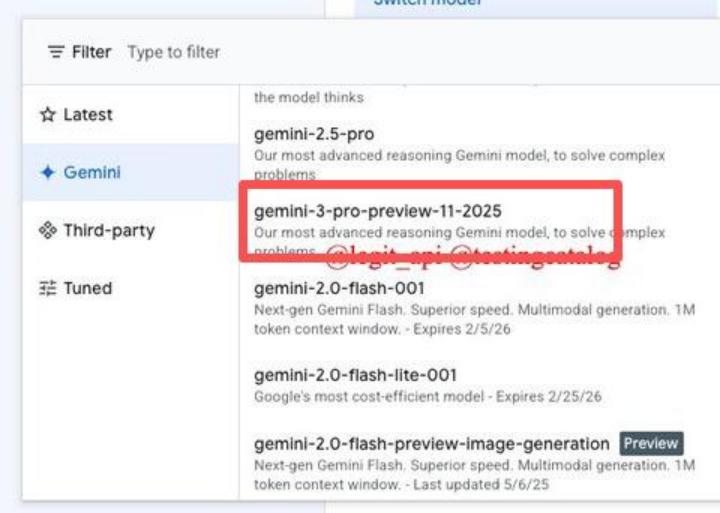
Sharp-eyed developers also spotted references to "gemini-3-pro-preview-11-2025" in Vertex AI's API documentation.
Then came various screenshots on Reddit and X. Some users claimed to have seen the new model in the Gemini Canvas tool; others discovered unusual model identifiers in certain mobile app versions.
Next, the following test data started circulating on social media.
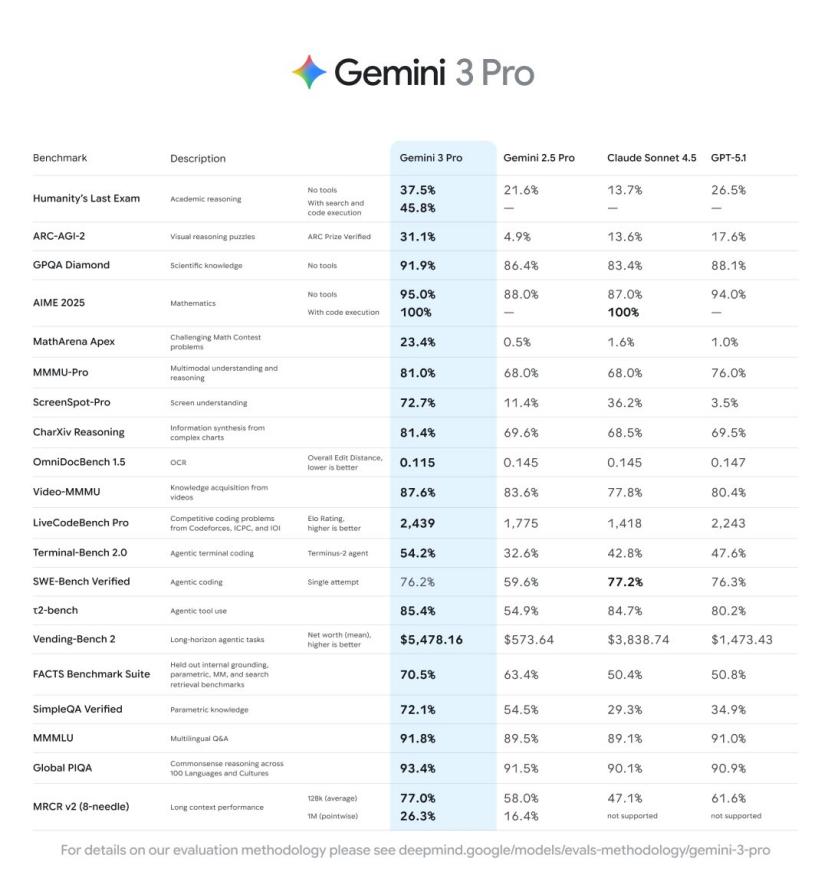
These "leaks," seemingly accidental, were in fact part of a carefully orchestrated pre-launch campaign.
Each leak perfectly highlighted a key capability of Gemini 3 Pro, and each discussion pushed expectations higher. Meanwhile, Google’s official accounts maintained a curious stance—sharing community discussions, using phrases like "coming soon" to tease audiences, and even having senior leaders from Google AI Lab reply with two "thinking" emojis under tweets predicting the release date—yet never confirming an exact date.
After nearly a month of buildup, Google finally served up the fresh Gemini 3 Pro. While its performance is strong, Google’s update frequency still leaves something to be desired.
As early as March this year, Google released a preview version of Gemini 2.5 Pro, followed by other preview variants like Gemini 2.5 Flash. Until the arrival of Gemini 3 Pro, there were no version number upgrades in the Gemini series during this period.
But Google’s competitors didn’t wait.
OpenAI launched GPT-5 on August 7 and upgraded it to GPT-5.1 on November 12. During this time, OpenAI also launched its own AI browser Atlas, directly targeting Google’s core territory.
Anthropic’s iteration pace was even denser: releasing Claude 3.7 Sonnet (the first hybrid reasoning model) on February 24, Claude Opus 4 and Sonnet 4 on May 22, Claude Opus 4.1 on August 5, Claude Sonnet 4.5 on September 29, and Claude Haiku 4.5 on October 15.
This series of aggressive moves caught Google somewhat off guard—but for now, Google appears to have held its ground.
03
The biggest reason Google took eight months to update to Gemini 3 Pro may lie in personnel changes.
Around July to August 2025, Microsoft launched a fierce talent offensive against Google, successfully recruiting over 20 core experts and executives from DeepMind.
Among them were Dave Citron, Senior Director of Product at DeepMind, responsible for launching core AI products, and Amar Subramanya, VP of Engineering for Gemini, one of the key engineering leads behind Google’s flagship model Gemini.
On the other hand, the Google Nano Banana team revealed that after launching Gemini 2.5 Pro, Google spent a long time focusing on AI image generation, slowing down updates to foundational models.
Google believed that only after overcoming three major challenges in image generation—character consistency, in-context editing, and text rendering—could the foundational model deliver better overall performance.
The Nano Banana team emphasized that the goal wasn't just for the model to "draw well," but more importantly to "understand human language" and "be controllable by humans," thus enabling AI image generation to truly enter commercial application stages.
Looking back at Gemini 3 Pro now, it’s a solid achievement—but in today’s fast-moving AI battlefield, merely passing isn’t enough anymore.
By choosing to release now, Google must be ready to face the harshest graders—users and developers whose expectations have already been raised by competing products. The coming months won’t be about comparing model parameters, but a brutal fight over ecosystem integration. Google, the elephant, must not only learn to dance—it must dance faster than anyone else.
Join TechFlow official community to stay tuned
Telegram:https://t.me/TechFlowDaily
X (Twitter):https://x.com/TechFlowPost
X (Twitter) EN:https://x.com/BlockFlow_News