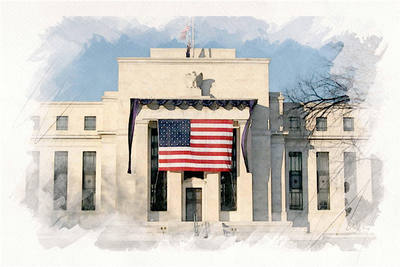
Federal Reserve governor says: The floor for December rate cuts is 25 basis points, but 50 basis points would be most "appropriate"
TechFlow Selected TechFlow Selected
Federal Reserve governor says: The floor for December rate cuts is 25 basis points, but 50 basis points would be most "appropriate"
This consistently dissenting official warned that formulating policies based solely on current data would lead to a "short-sighted" dilemma.
 Navigating Web3 tides with focused insights
Author: Jinshi Data
Federal Reserve Governor Stephen Miran advocated on Monday for further interest rate cuts to guard against a potential economic slowdown in the future.
The central banker maintained in a CNBC interview that the Fed should move faster than the traditional 25-basis-point pace when cutting rates. As he did during the previous two Federal Open Market Committee (FOMC) meetings, he again pushed for a 50-basis-point cut, though he said at minimum a 25-basis-point easing should be implemented.
"Nothing is certain. We could get new data that changes my view between now and the meeting," Miran said. "But if no new information causes me to revise my outlook, from a timing perspective, I think 50 basis points is appropriate—as I've consistently argued—but at the very least, it should be 25 basis points."
Despite Miran's continued push for stronger action, the FOMC opted for 25-basis-point cuts in both September and October. Miran dissented on both decisions, but failed to gain support from other committee members. Kansas City Fed President Jeffrey Schmid dissented in October, but because he wanted to hold rates steady.
Although the October rate cut passed with only two dissenting votes, public statements from several officials reveal significant divisions among policymakers.
Chair Jerome Powell referenced these disagreements in his most recent press conference, suggesting another cut in December is not a foregone conclusion. Some policymakers remain hesitant to cut due to inflation still running well above the Fed's 2% target, while those favoring cuts express concern that the labor market may deteriorate further.
Miran noted that persistently holding off on easing would be short-sighted. "If you make policy solely based on current data, you're looking backward—because it takes 12 to 18 months for policy to affect the economy. So you must set policy today based on your forecast for the economy over the next year to year-and-a-half."
During the government shutdown, policymakers faced challenges due to the lack of official economic data. Miran said existing indicators already show softness in both inflation and the labor market, which alone should prompt the Fed to adopt a more accommodative stance than its September projection, which implied three rate cuts this year.
According to CME Group's FedWatch tool, markets are currently pricing in about a 63% chance of a third rate cut in December, a probability that has gradually declined since the October Fed meeting.
Join TechFlow official community to stay tuned
Telegram:https://t.me/TechFlowDaily
X (Twitter):https://x.com/TechFlowPost
X (Twitter) EN:https://x.com/BlockFlow_News