








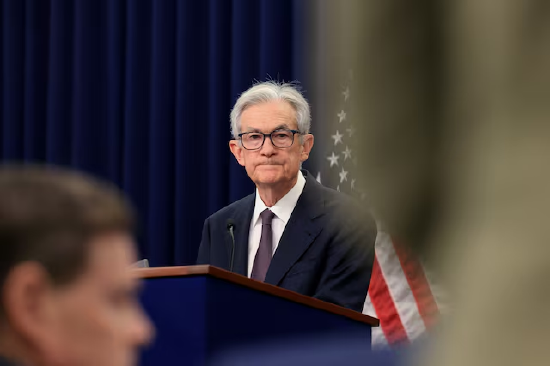
Powell: Another rate cut in December is not a given, the labor market continues to cool, and inflation faces short-term upward pressure
TechFlow Selected TechFlow Selected
Powell: Another rate cut in December is not a given, the labor market continues to cool, and inflation faces short-term upward pressure
Some FOMC members believe it's time to pause.
 Navigating Web3 tides with focused insights
By: Zhao Yuhe
Source: Wall Street Horizon
Key takeaways from Powell's October press conference:
1. Policy rate outlook: Another Fed rate cut in December is not a done deal. There was significant disagreement today. Some FOMC members believe it’s time to pause.
2. Balance sheet: No decision was made today on the composition of the balance sheet. Adjusting the portfolio will be a long-term, gradual process. The goal is to shift toward a shorter-duration balance sheet.
3. Labor market: The labor market continues to cool due to restrictive policy. We have not seen worsening weakness in employment; job openings indicate stability over the past four weeks. A dramatic decline in labor supply has affected the job market. The Fed closely monitors layoffs.
4. Inflation: September CPI was milder than expected. Service inflation excluding housing has shown a one-way trend. Core PCE excluding tariffs may be around 2.3% or 2.4%. So far, non-tariff inflation remains close to the 2% target. The baseline forecast is that additional tariff-driven inflation will occur in the U.S.
5. Government shutdown: Private-sector data cannot replace official government statistics (e.g., BLS). It’s conceivable that a Trump-era government shutdown could affect the December FOMC monetary policy meeting.
On Wednesday, Eastern Time, the Federal Reserve announced a reduction in the target range for the federal funds rate from 4.00%–4.25% to 3.75%–4.00%. The Fed also decided to end quantitative tightening (QT) starting December 1, marking the first time in a year that the central bank has cut rates at two consecutive FOMC meetings. Fed Chair Powell stated at the post-meeting press conference that another rate cut in December is not guaranteed.
In his opening remarks, Powell said that although some key federal data releases were delayed due to the U.S. government shutdown, the available public and private sector data still suggest that since the September meeting, the outlook for employment and inflation has not changed significantly.
Labor market conditions appear to be gradually cooling, while inflation remains slightly elevated.
Powell noted that current indicators show economic activity expanding at a moderate pace. GDP grew 1.6% in the first half of this year, down from 2.4% last year.
Data released before the shutdown suggested economic growth might be slightly stronger than expected, mainly reflecting stronger consumer spending.
Business investment in equipment and intangible assets continues to grow, while housing market activity remains weak. The government shutdown will weigh on economic activity during its duration, but these effects should reverse once operations resume.
Regarding the labor market, Powell said unemployment remained relatively low as of August. Job growth has clearly slowed since the beginning of the year—partly due to declining labor force growth driven by reduced immigration and lower labor force participation—though demand for workers has also weakened.
Although the official September jobs report was delayed, existing evidence shows layoffs and hiring remain low. Households’ perception of job opportunities and firms’ sense of hiring difficulty continue to decline.
In this less dynamic and somewhat softening labor market, downside risks to employment have risen in recent months.
Tariffs are pushing up prices in some goods; another December rate cut is not a given
On inflation, Powell said it has declined significantly from mid-2022 highs but remains slightly above the Fed’s long-term 2% target. Based on CPI estimates, overall PCE prices rose 2.8% over the past 12 months through September; core PCE prices excluding food and energy also rose 2.8%.
These readings are higher than earlier this year, primarily due to a rebound in goods inflation. In contrast, service sector inflation appears to continue declining. Short-term inflation expectations have risen this year due to tariff developments, reflected in both market and survey measures.
However, most long-term inflation expectations over the next one to two years remain aligned with our 2% target.
Powell said higher tariffs are driving price increases in certain categories of goods, contributing to higher overall inflation.
The reasonable baseline judgment is that these inflationary effects will be relatively short-lived—a one-time level shift in prices. But there is a risk they could prove more persistent, which we must assess and manage.
He noted that near-term inflation risks are skewed upward and employment risks downward—an especially challenging situation. As downside risks to employment have increased recently, the risk balance has shifted.
With today’s rate decision, we are in a favorable position to respond promptly to potential economic shifts. We will continue to determine the appropriate stance of monetary policy based on incoming data, evolving economic outlooks, and shifting risk balances. We still face two-sided risks.
Powell revealed that during this meeting, there was clear disagreement among officials about how to proceed in December.
Another rate cut at the December meeting is far from certain. There is no preset policy path.
End QT starting December 1
FOMC also decided to end QT effective December 1. Powell explained that the Fed’s long-standing plan has been to stop QT when reserve levels are slightly above what the Fed considers “ample reserves.” There are now clear signs we have reached that threshold.
Powell noted that repo rates have risen relative to the Fed’s administered rates, showing particular stress on certain dates, alongside increased use of the Standing Repo Facility (SRF).
Moreover, the effective federal funds rate has begun rising relative to the interest rate on excess reserves. These developments match our prior expectations for what would happen as the balance sheet shrinks, supporting today’s decision to halt QT.
Over the past three and a half years of QT, the Fed’s securities holdings have decreased by $2.2 trillion. As a share of nominal GDP, the balance sheet has declined from 35% to about 21%.
Starting in December, the Fed will enter the next phase of normalization—maintaining a stable balance sheet size for a period. Meanwhile, as other non-reserve liabilities (like currency in circulation) continue to grow, reserve balances will keep declining gradually.
The Fed will continue allowing agency securities (e.g., MBS) to mature and reinvesting those proceeds into short-term Treasury bills, further shifting the portfolio toward Treasuries and shortening duration. This reinvestment strategy will also bring the portfolio’s weighted average maturity closer to that of the outstanding Treasury market, advancing balance sheet normalization.
Below is the transcript of Powell’s Q&A session:
Q1: Markets now almost treat another rate cut at your next meeting as a certainty. Are you uncomfortable with this market pricing? You and some colleagues described your decision-making framework last month—and again today—as “risk management.” How do you judge whether you’ve “bought enough insurance”? Do you need to see improvement in the outlook before pausing? Or will it be like last year, with small adjustments over a longer period—data dependent?
Powell: As I just said, another rate cut in December is not a given. I think markets need to factor that in.
I want to emphasize: the Committee has 19 participants, all working very hard. During periods when the two mandates conflict, strong disagreements naturally emerge. As I mentioned, there were clearly different views expressed today. Bottom line: we haven’t decided on December. We’ll base decisions on data, implications for the outlook, and risk balance. That’s all I can say now.
Here’s my thinking: For a long time, risks were clearly skewed toward high inflation. But things changed—especially after the July meeting, when we saw downward revisions in job growth and a shift in the labor market picture, revealing greater downside risks than previously thought. That means policy—which we had kept at what I’d call a “slightly” restrictive level (others might say “moderately” restrictive)—needs to move gradually toward neutral.
If risks to both goals are roughly balanced—one calling for hikes, the other for cuts—policy should be roughly neutral to balance them. In that sense, this reflects risk management. Today’s decision follows similar logic. The future may look different.
Q2: You emphasized that discussions and conclusions about December aren’t settled. What views were expressed during the meeting? For example, did you discuss the surge in AI-related investment and its impact on stock valuations and household wealth? Regarding QT, how much of the current pressure in funding markets stems from the U.S. Treasury’s recent heavy issuance of short-term debt?
Powell: I wouldn’t say these factors played a major role in everyone’s assessment of the economic outlook, nor were they primary considerations for any individual.
Let me explain: currently, inflation risks are tilted upward, while employment risks are tilted downward. We only have one tool (interest rates), so we can’t precisely address both opposing risks simultaneously. You simply can’t solve both at once.
Additionally, members differ in their outlooks—some expect faster or slower improvement in inflation or employment—and in risk tolerance. Some worry more about inflation overshooting; others about labor market weakness. Combined, this leads to divergence.
You can see this diversity in the latest Summary of Economic Projections (SEP) and public speeches between meetings—all evident in today’s differing opinions, which I referenced.
This is why I stress: we haven’t decided on December. I’ve long said the Fed doesn’t make decisions in advance. Now I add: markets shouldn’t assume a December rate cut is certain—it absolutely isn’t.
On QT, we observed rising repo and federal funds rates—exactly the signals we expected near the “ample reserves” threshold. We’ve long said we’d stop QT when reserves are slightly above ample. After that, as non-reserve liabilities grow (e.g., cash), reserve balances will keep falling.
Money market conditions have gradually tightened. Especially in the past three weeks, pressures intensified, leading us to conclude it’s time to stop QT.
Also, the current pace of QT is already very slow. Our balance sheet has shrunk by about half. Continuing further has diminishing returns, especially as reserves will keep declining organically.
Thus, the Committee supports announcing today that QT will end December 1. That date gives markets time to adjust.
Q3: One main reason you’re cutting now is concern about downside risks to the labor market. But if those risks don’t materialize—if the labor market stays stable or even rebounds slightly—would you reassess how low rates need to go? Would you then shift focus to worrying about inflation and second-round effects from tariffs? And if the government shutdown lasts longer, leaving key data missing, would lack of data make it harder to judge the labor market and affect your December decision?
Powell: In principle, yes—if data show the labor market strengthening or stabilizing, that would certainly influence our future policy judgment.
We still receive some data, like state-level initial jobless claims, which continue to reflect the current state. We also monitor job openings, various surveys, and the Beige Book.
So far, we haven’t seen rising initial claims or sharp drops in job openings, suggesting the labor market may continue cooling very gradually—but no more than that. That gives us some confidence.
(Despite the shutdown), we still get some labor market, inflation, and activity data, plus the Beige Book. While details may be insufficient, if the economy shifts significantly, I believe we’d detect it.
How this affects December is hard to judge now—six weeks out. High uncertainty itself might justify more caution. But we’ll have to see how things unfold.
Q4: Was this decision a "narrowly passed" one? Or was there intense tug-of-war over direction?
Powell: The “tug-of-war” I mentioned refers to the outlook for December, not this decision itself. Today’s vote included two dissents: one wanted a 50-basis-point cut, another wanted no cut. The 25-basis-point cut had strong support.
The “clear divergence” is over the future path: what comes next. Some members noted recent strength in economic activity, with many forecasters upgrading growth projections for this year and next—some significantly.
Meanwhile, the labor market—while not fully stable—is not clearly deteriorating, possibly continuing to cool slowly. Different members have varying outlooks and risk preferences. You can sense internal disagreement from recent speeches, which is why I stress: we haven’t decided on December.
Q5: Since you're now stopping QT, will you have to start buying assets again next year? Otherwise, the balance sheet as a share of GDP will keep shrinking, effectively tightening policy further?
Powell: You’re correct. Starting December 1, we’ll freeze the balance sheet size. As agency MBS mature, we’ll reinvest proceeds into short-term T-bills, increasing the share of Treasuries and shortening duration.
While freezing size, non-reserve liabilities (e.g., cash) will naturally grow, so reserve balances will keep declining. Reserves are what we need to maintain at “ample” levels. This decline will continue for a while, but not indefinitely.
Eventually, at some point, we’ll need to let reserves grow again gradually to match expansion in the banking system and economy. So at some stage, we’ll increase reserves again.
Also, though we didn’t decide today, we discussed balance sheet structure. Currently, our asset duration is significantly longer than the average Treasury duration. We aim to gradually shorten it, aligning our portfolio’s duration distribution with that of the Treasury market. This process will be very slow and prolonged, avoiding market disruption, but it’s the intended direction.
Q6: How are officials interpreting the latest CPI report? Some components came in below expectations, but core inflation remains around 3%. What new insights do you have on inflation drivers from current data? Also, where do you think the Fed is more likely to err—inflation or employment? What tools do you have to tackle stubborn service sector inflation, especially if labor supply remains constrained?
Powell: We haven’t received the subsequent PPI data, which is important for projecting PCE inflation—the metric we care about most. Still, we can roughly gauge the direction; PPI may lead to minor revisions.
Overall, inflation data were slightly softer than expected. We typically break inflation into three parts:
First, goods prices are rising—mainly driven by tariffs. Unlike the mild deflation in goods historically, tariff-induced price hikes are now pushing up total inflation.
Second, housing services inflation is falling and expected to keep declining. Recall that a year or two ago, people expected it to fall but it didn’t—now it has been dropping for a while, and we expect it to continue.
Third, services inflation excluding housing (“core services”) has been broadly flat over recent months. A significant portion of this consists of “non-market services,” whose price changes don’t well reflect economic tightness, so their signal value is limited.
In sum:
First, excluding tariff effects, current inflation is actually not far from our 2% target. Estimates vary, but if core PCE is 2.8%, excluding tariffs it’s roughly 2.3%–2.4%—not far off target.
Second, in the baseline case, tariff-driven inflation should be one-time, though it may keep pushing inflation up temporarily. But we’re highly focused this year on ensuring it doesn’t become persistent, carefully assessing channels through which a “one-time” shock could turn “sticky.”
One possibility is an extremely tight labor market—we don’t see that now. Another is rising inflation expectations—we don’t see that either. So we remain highly vigilant, not taking for granted that tariff inflation will be temporary. We fully understand this is a risk needing close monitoring and active management.
Within services inflation, the part not falling as hoped is mainly “non-housing core services,” particularly “non-market services.” We expect this to gradually ease. Much of it reflects mark-to-market (rather than actual payment) income in financial services, linked to stock market gains.
Also, I believe current policy remains “modestly restrictive,” which should gradually cool the economy and partly explains the very slow cooling in the labor market. This modest restrictiveness helps bring down services inflation over time.
I emphasize: we are fully committed to returning inflation to 2%. You can see from long-term inflation expectations and market pricing that this commitment remains highly credible. There should be no doubt externally that we will achieve our goal.
Q7: AI infrastructure is undergoing a massive construction boom nationwide. Does this investment surge imply rates aren’t that restrictive after all? If you cut further now, could that boost investment and even fuel asset bubbles? How does the Fed view this? You mentioned that despite missing government data, you still have alternative ways to track inflation and growth trends. On employment, we have clarity. But without official data, what metrics do you rely on for inflation?
Powell: You’re right—there’s massive data center construction and related investment happening across the U.S. and globally. Major U.S. companies are investing heavily to study how AI impacts their business, and AI will run on these data centers—so it’s very significant.
But I don’t think such investments are especially rate-sensitive. They’re based more on long-term conviction—that this area will see huge investment and productivity gains. We don’t know the final outcome, but compared to other sectors, I believe their sensitivity to rates is relatively low.
(On economic data), we look at many sources, but must stress: none substitute for official government data. Just a few examples: online price data from PriceStats, Adobe; payroll data from ADP; on spending—I know you’ll ask—we also have alternative measures.
Plus, the Beige Book provides information and will be published as usual this cycle. These won’t replace official data, but help us stay informed. If the economy shifts materially, I believe we’d detect it. But without official data, we can’t make the granular, high-resolution judgments we normally do.
Q8: Could you elaborate on your earlier point: missing data from the shutdown makes December actions harder and could push you toward greater caution? If you must rely more on lower-quality private data or your own surveys and Beige Book, do you worry about ending up making policy based on anecdotal fragments?
Powell: This is a temporary situation. Our job is to collect all available data and information as thoroughly as possible and assess them seriously. That’s exactly what we’ll do—it’s our duty.
Will the shutdown affect December decisions? I’m not saying it definitely will, but it certainly could. Put differently: if you’re driving in thick fog, you slow down. Whether that happens, I can’t judge now—but it’s entirely possible.
If data resume publication, great. But if they remain missing, taking a more cautious approach could be reasonable. I’m not making a commitment, just saying: there’s a real possibility that when visibility is poor, you choose to “go slower.”
Q9: We’ve recently seen big firms like Amazon announce layoffs. Did these signs enter your discussion today? The tension between the labor market and economic growth seems to be tilting against employment. Second, are concerns about a “K-shaped economy”—for example, sharply rising healthcare costs for low-income households—being factored into policy?
Powell: We are watching these developments very closely.
On layoffs, you’re right—many companies are announcing hiring freezes or layoffs. Many cite AI and related changes. We’re highly attentive because this could indeed affect job growth. However, we haven’t yet seen this clearly reflected in initial jobless claims—not surprising, as data often lag. But we’re monitoring closely.
On the “K-shaped economy,” it’s similar. Listen to corporate earnings calls, especially consumer-facing giants—many describe the same pattern: the economy is splitting, with low-income groups under pressure, cutting spending, switching to cheaper goods; while high-income, high-wealth consumers remain strong spenders. We gather extensive anecdotal reports on this.
We believe this phenomenon is real.
Q10: You said “another December rate cut isn’t certain, not even close.” If the reason not to cut in December isn’t missing data, what else might make you reluctant? In other words, if it’s not data absence, what are the concerns? Since you said the committee’s division centers on future rate paths, does this stem more from inflation worries, employment worries, or deeper policy philosophy splits?
Powell: From the committee’s perspective, we’ve already cumulatively cut 150 basis points this year. The current rate range is 3%–4%, and many estimates of the neutral rate fall within 3%–4%. Rates are now roughly near neutral, and above the median committee member’s estimate.
Of course, some members believe the neutral rate is higher—these views are debatable, since the neutral rate can’t be directly observed.
For some committee members, now may be the time to pause and observe—see whether downside employment risks are real, and whether the recent uptick in growth momentum is genuine and sustainable.
Usually, the labor market better reflects underlying economic momentum than spending data. But this time, signs of labor slowdown complicate interpretation. We’ve already cut an extra 50 basis points over the past two meetings. Some members feel we should “pause first”; others want to keep cutting. That’s the source of the “clear divergence” I mentioned.
Every member is committed to doing what’s right to achieve our policy goals. Divergence stems partly from different economic forecasts, but largely from different risk tolerances—this is normal across Fed eras.
Different individuals have different risk appetites, naturally leading to different views. You can already sense this from recent public statements.
The current situation is that we’ve cut twice consecutively, moving another 150 basis points closer to “neutral.” Now, growing voices suggest we might “wait a cycle to see”—observe before deciding. It’s that simple and transparent.
You’ve already seen this divergence in the September SEP and members’ speeches. I can tell you these views will appear in the meeting minutes. What I’m saying reflects what truly happened today.
Q11: How would you explain the weakening in the current labor market? What effect will this rate cut have on improving employment prospects?
Powell: I see two main reasons for labor market weakness.
First, a large drop in labor supply—driven by two factors: declining labor force participation (with cyclical elements) and reduced immigration—a major policy shift started under the previous administration and accelerated under the current one. So a big part stems from the supply side. Additionally, labor demand has also fallen.
A falling unemployment rate means labor demand declined slightly more than supply. Overall, most of the change is supply-driven—a judgment I and many others share.
What can the Fed’s tools do? They primarily affect demand.
Currently, adjusting for potential overstatement in job gains, net new jobs are nearly zero. Sustaining zero job growth long-term isn’t “maximum sustainable employment”—it’s an unhealthy “balance.”
Therefore, many of us on the committee believed cutting rates at the past two meetings was appropriate to support demand. We’ve done so. Rates are now clearly less restrictive (though I wouldn’t say accommodative), which should help prevent further labor market deterioration. But the situation remains complex.
Some argue the problem is mainly supply-side, so monetary policy has limited impact. Others—including myself—believe demand-side tools still matter, so when risks emerge, we should use policy to support employment.
Q12: You mentioned tariffs caused a “one-time price increase.” Will U.S. consumers continue feeling tariff-driven price hikes this year?
Powell: Our baseline expectation is that tariffs will continue pushing up inflation for a while, as they take time to transmit through production chains to consumers.
Tariffs implemented over the past few months are now showing through. New tariffs took effect in February, March, April, and May—effects will persist, possibly into next spring.
The magnitude is modest—adding about 0.1 to 0.3 percentage points to inflation. Once all tariffs are fully implemented, they won’t keep adding to inflation but will result in a one-time price level shift. Afterward, inflation should revert to the pre-tariff level, which is already not far from 2%.
But consumers don’t care about technical explanations—they just see prices are much higher than before. What truly upset the public about inflation was the big jumps in 2021, 2022, and 2023. Even with slower increases now, prices remain far above three-year-ago levels, so people still feel pressure. Real incomes will eventually improve the situation, but it takes time.
Q13: Are you concerned that stock valuations are currently too high? You surely know rate cuts boost asset prices. How do you balance “cutting to support employment” versus “stimulating AI investment and possibly causing more layoffs”? Thousands of AI-related layoffs have been announced in recent weeks.
Powell: We don’t look at specific asset prices and say “that’s unjustified.” That’s not the Fed’s role. We focus on whether the financial system as a whole is resilient and able to withstand shocks.
Banks are well-capitalized. Though low-income households are under strain, overall household balance sheets remain relatively healthy, with manageable debt. Lower-end consumption has slowed, but the overall picture isn’t particularly alarming.
Again, asset prices are set by markets, not the Fed.
I don’t think interest rates are the key driver of data center investment. Companies build data centers because they believe these investments offer excellent economic returns, high discounted cash flows. That’s not something a 25-basis-point move decides.
The Fed’s job is to use its tools to support employment and price stability. Rate cuts marginally support demand, thus supporting jobs—that’s why we do it.
Of course, a 25- or 50-basis-point cut won’t have an immediate decisive impact, but lower rates over time support demand and hiring. At the same time, we proceed cautiously—we’re fully aware inflation remains uncertain—so our cutting path has consistently been “small steps, slow progress.”
Q14: On AI, a significant part of current growth seems driven by AI investment. If tech investment suddenly contracts, do you worry about broader economic consequences? Can other sectors absorb the shock? Specifically, do you think lessons from the 1990s (dot-com bubble era) apply to today’s situation?
Powell: This time is different. Today’s high-valuation tech firms are genuinely profitable, with proven business models and profits. Looking back at the 1990s dot-com bubble, many were just concepts, not mature companies—that was a clear bubble. (I won’t name names.) But today’s firms are profitable, with mature models—completely different in nature.
Current investment in equipment and in data centers and AI is one important engine of economic growth.
At the same time, consumer spending dwarfs AI investment and has been stronger than many pessimistic forecasts this year. Consumers are still spending—albeit more from high-income groups—but spending remains robust, and its weight in the economy far exceeds AI-related investment.
In terms of growth contribution, AI matters, but consumer spending drives more.
The main reason for the labor market slowdown is a sharp drop in labor supply—mainly due to reduced immigration and lower labor force participation. This means less need for new jobs, as insufficient new workers enter the market.
In other words, fewer new job seekers are emerging.
Additionally, labor demand is also falling. The drop in labor force participation this time better reflects weak demand, not just trend factors. So we do see a weakening labor market.
Economic growth is also slowing. Last year’s pace was 2.4%; we project 1.6% this year. Without the shutdown, it might have been a few basis points higher. There will be a rebound post-shutdown, but overall, growth remains moderate.
Q15: Could you elaborate on how you think about monetary policy when data are missing? Does this “data drought” make you more inclined to stick to your prior path, or more cautious due to uncertainty?
Powell: We won’t know exactly how we’d respond until we face it—if we do. Interpretations could go two ways.
As I’ve mentioned before, if we truly lack sufficient information and clarity, and the economy appears stable and unchanged, someone might argue: when visibility is poor, slow down. I don’t know how persuasive that view would be then, but someone would certainly make it.
Of course, others might argue the opposite: if it looks unchanged, proceed as planned. But the problem is—you might not really know if it’s unchanged.
I don’t know if we’ll ultimately face this. I hope not, and hope data return by the December meeting. But regardless, we must do our job.
Q16: Years ago you said the financial system’s overall capital level was roughly appropriate. Now the Fed is advancing revisions, including proposals on G-SIB surcharges. Has that changed your view on capital levels? Do you plan to significantly reduce system-wide capital?
Powell: Regulators are currently discussing these issues. I don’t want to preempt the outcome. I still believe, as I said in 2020, that capital levels were roughly adequate then. Since then, capital has risen further through multiple mechanisms.
I look forward to these discussions continuing. They’re still early, no full proposal exists, so I have little more to add now.
Q17: Is labor market weakness accelerating? If rate cuts fail to prevent further employment slowdown, which groups face the greatest risks? When deciding on cuts, do you prioritize low-income groups or those potentially displaced by automation? Is there a particular group you especially focus on?
Powell: We currently don’t see the kind of “accelerating labor market weakness” you described. Granted, we lack the September nonfarm payrolls report, but we monitor initial jobless claims, which remain stable. You can check the data—no deterioration over the past four weeks. Look at Indeed’s job postings—also stable, showing no clear worsening in labor or economic conditions.
But as I noted, you see major firms announcing layoffs or stating they won’t expand headcount in coming years. They may restructure, but don’t need larger staff.
This isn’t yet visible in aggregate data, but job gains are very low, and the share of unemployed finding work is low. Yet unemployment remains low—4.3% is still quite low.
Our tools can’t target specific groups or income tiers. But I do believe that when the labor market is strong, ordinary people benefit most.
We saw this in the long recovery after the global financial crisis. With a strong labor market, low-income groups gain most. Over the past few years, they saw the biggest income gains, with positive demographic and employment trends.
We’re not in that phase now. A stronger labor market is the most important thing we can do for the public. That’s half our mandate. Price stability is the other half. Inflation especially hurts fixed-income groups, so we must balance both.
Q18: The terms of 12 regional Fed presidents expire by late February next year. Can you share the timeline for Board review of reappointments? Will all be reappointed, or could there be changes? Recently, three consecutive FOMC meetings featured dissenting votes in opposite directions. Do you feel pressure chairing these meetings? What does this divergence mean to you?
Powell: The process will follow legal requirements. By law, regional Fed presidents undergo reappointment reviews every five years. This process is underway and will be completed timely. That’s all I can say now.
(On opposing dissenting votes), I don’t view it that way, nor does it create pressure. We must confront reality, which is very challenging: unemployment at 4.3%, growth near 2%—not terrible overall. But from a policy standpoint, we face upside inflation risks and downside employment risks.
For the Fed, this is tough—because one risk calls for cuts, the other for hikes, and we can’t satisfy both. We must find balance.
In such an environment, you naturally see differing views among members—on what action to take and at what pace. This is understandable. Members are deeply serious, hardworking, and want to make the best decisions for the American people, even if they differ on “what’s right.”
It’s an honor to work with such dedicated individuals. I don’t find it unfair or frustrating. It’s simply a period where we must make difficult real-time adjustments. I believe our actions this year have been correct and prudent. We can’t ignore inflation, nor pretend it’s gone.
At the same time, the risk of “persistently high inflation” since April has clearly diminished. If cutting again becomes appropriate, we will.
In the end, we hope to conclude this cycle with a solid labor market and inflation down to 3% and moving toward 2%. We’re doing our best in a very complex environment.
Q19: Both regional and large banks are seeing loan losses and delinquencies. As Jamie Dimon said, “If you see one cockroach, there are probably more.” How do you view these loan losses? Do they pose economic risks? Is this a warning sign?
Powell: We’re closely monitoring credit conditions. You’re right—we’ve seen rising subprime defaults for a while. Recently, some subprime auto lenders suffered large losses, some reflected on bank balance sheets. We’re watching this closely.
But currently, I don’t see this as a broad debt risk issue. It doesn’t seem to be spreading widely across financial institutions. But we’ll keep monitoring closely to ensure that remains true.
Q20: The economy shows “bifurcation”: high-asset groups keep spending, while low-income groups pull back. To what extent does current spending resilience depend on strong stock performance? Is the stock market propping up the economy to some degree?
Powell: The stock market does play a role, but remember: the wealthier you are, the less each additional dollar of wealth boosts consumption. Marginal propensity to consume declines sharply at high wealth levels.
So while stock declines do affect spending, unless the drop is very sharp, it won’t cause a sudden collapse in consumption.
Low-income, low-asset groups have a much higher marginal propensity to consume—extra income or wealth translates directly into spending—but they hold little stock wealth.
So yes, the stock market is one factor supporting current spending. If it adjusts sharply, you’d see some weakening in spending, but you shouldn’t assume every dollar lost in stocks reduces spending by a dollar—it doesn’t work that way.
Join TechFlow official community to stay tuned
Telegram:https://t.me/TechFlowDaily
X (Twitter):https://x.com/TechFlowPost
X (Twitter) EN:https://x.com/BlockFlow_News






