How did Trump's company earn $1 billion from the cryptocurrency market?
TechFlow Selected TechFlow Selected
How did Trump's company earn $1 billion from the cryptocurrency market?
Policy and business converge, with presidential power leveraging the crypto market.
 Navigating Web3 tides with focused insights
Author: Financial Times
Translation: TechFlow
At the height of legal disputes last year, Donald Trump claimed he was running out of money. If a $500 million civil penalty wasn't reduced to around $100 million, the president stated in court filings that he would have to sell off his remaining real estate assets at a discount.
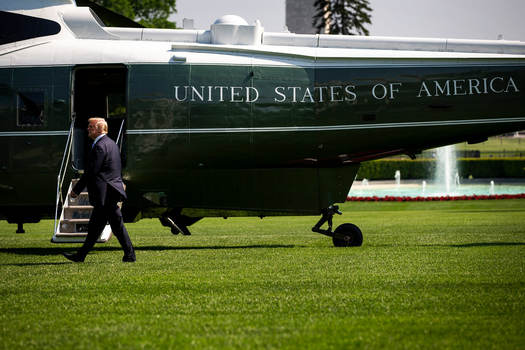
Just months later, the re-elected US president has experienced a dramatic reversal both politically and financially. While previous White House occupants made modest financial sacrifices for the presidency, Trump’s wealth has significantly increased since taking office. His family businesses have struck deals at home and abroad, showing little concern for conflicts of interest.
After earning millions selling branded Bibles, perfumes, sneakers, and signed guitars, the president has received tens of millions more in settlements from social media and news companies—settlements many legal experts believe were based on nearly baseless lawsuits. His wife Melania signed a $40 million documentary deal with Amazon, far exceeding industry norms.
Yet at the core of Trump's new wealth is a rapidly expanding cryptocurrency empire built by the president and his family. According to Financial Times investigations, this business has generated over $1 billion in pre-tax profits in the past year alone, fueled in part by a crypto boom driven by his own administration’s industry-friendly policies.
The revenue calculations for these crypto projects include only realized profits. Trump’s cryptocurrency ventures have also added billions to his paper net worth. For instance, his stake in Trump Media & Technology Group—the parent company of Truth Social and a bitcoin reserve business—is now valued at $1.9 billion.
When asked whether the Financial Times’ estimates of his family’s profits were roughly accurate, Eric Trump said the actual figure might be “even higher.”
This crypto empire rests on a vast, opaque network encompassing digital trading cards, Memes, stablecoins, tokens, and so-called decentralized finance platforms—all claiming close ties to the presidential family within this largely unregulated industry.
These projects have drawn substantial funds from billionaire foreign investors, institutions linked to state entities, and at least one individual previously investigated by US authorities.
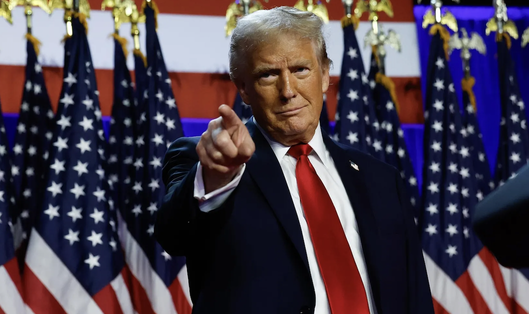
All of this unfolded as Trump fulfilled his promise to become the “first crypto president.” He has called for the creation of a national Bitcoin reserve and appointed pro-crypto leaders to major US regulatory agencies. Under this new leadership, the Securities and Exchange Commission (SEC) has halted investigations into large cryptocurrency firms.
In the past nine months, Bitcoin prices have repeatedly hit record highs; companies that fled the US during Joe Biden’s administration are now returning strongly; and crypto executives have been warmly welcomed at Trump’s White House.
“We’re going to go further, faster than people even think,” Trump said this summer about the crypto industry. “It’s a very hot industry.”
The White House says Trump was the only president to lose money during his first term in office.
“The fact is, President Trump built a business empire before entering politics—he was the wealthiest presidential candidate in history,” said White House spokesman Kush Desai. “His only motivation for giving up a luxurious life to run for president was to save our country and its people.”
However, many observers believe the president’s high-profit embrace of cryptocurrency—part of a broader fusion of his business and political interests—is unprecedented in modern American history.
“Every president since the Civil War has avoided significant financial conflicts with their official duties,” said Richard Painter, former White House ethics lawyer under President George W. Bush, who believes Trump should divest all financial interests that could conflict with his official responsibilities.
Painter noted Jimmy Carter placed his peanut farm into a blind trust, and George W. Bush sold his shares in the Texas Rangers before becoming president. “Even Nixon didn’t have known financial interests conflicting with his official duties.”
Trump was not an early advocate of cryptocurrency. In the years before the 2024 presidential campaign, he called crypto “something made out of thin air” and Bitcoin a “scam.” He also portrayed cryptocurrencies as contrary to US interests because they could compete with the dollar.
But starting during last year’s campaign, Trump’s stance shifted abruptly. At the time, he launched fierce attacks against Wall Street banks, claiming his businesses had been de-banked for political reasons. The Trump family said this was one reason they turned to the crypto industry.
“We’ve been targeted and forced to seek alternatives to traditional finance,” Eric Trump told the Financial Times in June this year.
During last year’s campaign, Trump pledged to end Biden’s “anti-crypto crusade,” fire Gary Gensler—the skeptical SEC chair—on “day one” of his administration, and establish a US Bitcoin reserve.
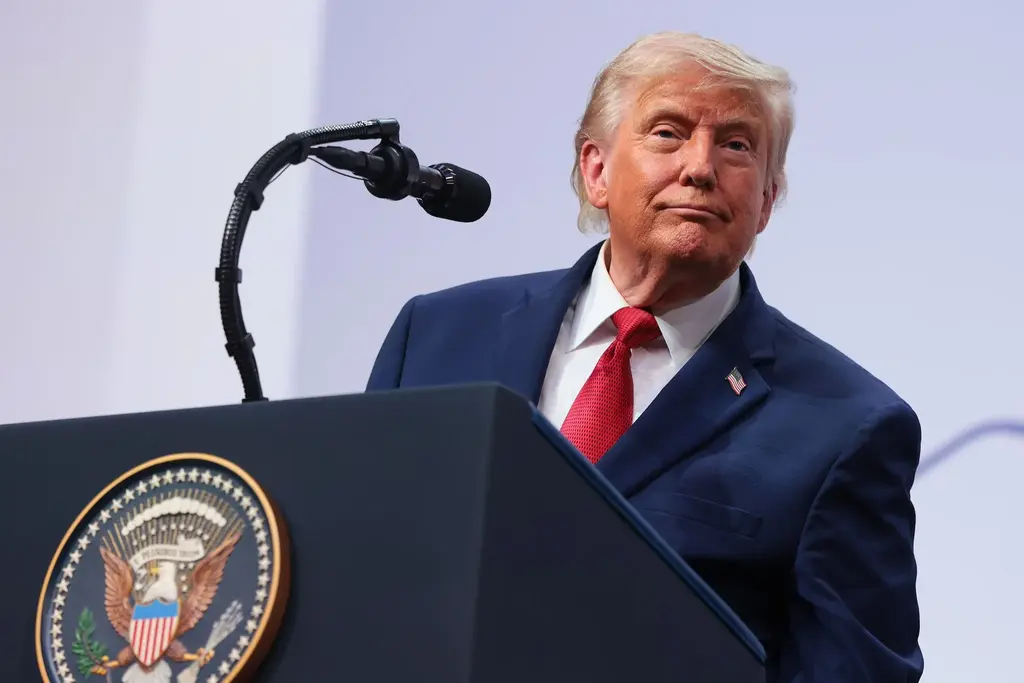
“The rules will be written by people who love your industry, not hate it,” he said at a cryptocurrency conference in Nashville in July 2024.
This strategy sharply contrasts with the Biden administration, which took a more cautious approach toward crypto, concerned about price volatility and potential fraud. During Biden’s tenure, some of the industry’s largest companies were sued or charged by US law enforcement, and FTX founder Sam Bankman-Fried was sentenced to prison for fraud and money laundering.
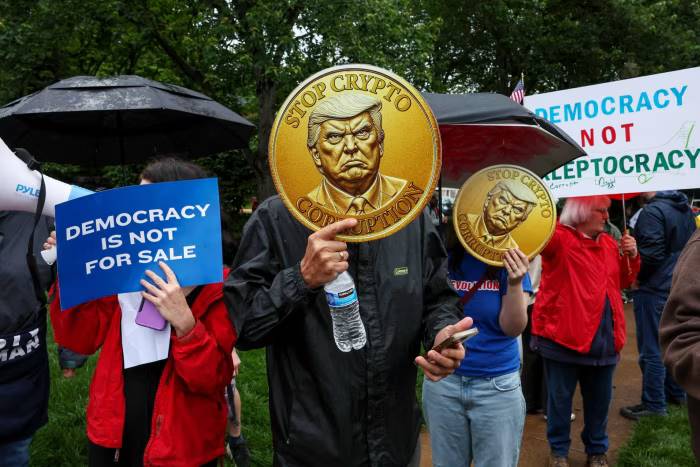
In May, protests erupted in Washington against Trump’s cryptocurrency dealings. Trump received millions in campaign funding and inauguration donations from crypto companies.
© Jemal Countess/Getty Images for Public Citizen
Trump’s embrace of cryptocurrency brought him millions in campaign support and later inauguration donations from US crypto firms including Coinbase, Ripple Labs, and Circle. In 2023, crypto investors formed a Super PAC called Fairshake, raising $260 million to back pro-crypto congressional candidates: it spent nearly twice as much supporting Republican candidates compared to Democrats.
Trump pushed cryptocurrency into the mainstream almost immediately upon returning to the White House.
On Trump’s inauguration day, Gary Gensler resigned. The president appointed crypto supporter Paul Atkins to replace him. Since then, the SEC has terminated or settled cases with several inauguration donors, including Coinbase, Ripple Labs, and Consensys.
Trump ordered the Justice Department to reduce investigations into crypto companies. In April, the DOJ announced it would “not bring charges for unintentional regulatory violations in cases involving digital assets,” citing a presidential executive order.
He also signed an order allowing Americans to invest part of their retirement savings in crypto—a major boost for the industry. Meanwhile, new legislation established a regulatory framework for stablecoins. Rules restricting mainstream banks from engaging in crypto were also repealed.
In addition, the president pardoned Ross Ulbricht, founder of Silk Road, and employees of the BitMEX crypto exchange—moves widely celebrated within the industry.
Investors cheered the new policies, sending Bitcoin and other lesser-known token prices soaring to record highs.
Meanwhile, the Trump family business purchased Bitcoin and other tokens and launched multiple investments to capitalize on rising prices.
Just days before Trump took office, he launched memecoins tied to himself and his wife Melania. Financial Times analysis shows these tokens served no purpose beyond speculation but generated approximately $427 million in sales and transaction fee revenues.
The exact profit distribution from these memecoin projects remains unclear. Official statements on the “Get Trump Memes” website regarding the $TRUMP token state that Trump-related companies “co-own” 80% of the project. On the $MELANIA site, the only company mentioned is MKT World, a Trump family enterprise.
Trump leveraged the aura of the presidency to promote his crypto projects. Earlier this year, when $TRUMP’s price dipped, Trump announced he would host a private dinner in May at his golf club for the top 220 holders of the memecoin—prompting the price to rebound.
Trump personally earned hundreds of millions from World Liberty Financial, a company founded by his son and the son of envoy Steve Witkoff. The firm operates two tokens—one tradable “governance” token called WLFI, whose holders can vote on parts of World Liberty Financial’s policy, and another USD1, a dollar-pegged stablecoin.
According to Financial Times calculations, the business has earned $550 million from WLFI token sales and $2.71 billion from USD1 stablecoin sales. David Wachsman, spokesperson for World Liberty Financial, declined to comment.
To maintain USD1’s value, the company must hold assets as reserves backing the tokens, so these sales do not immediately translate into profit. However, if the proceeds are invested in short-term US debt, World Liberty Financial has so far earned about $40 million in interest and fees from the assets supporting the USD1 stablecoin.
DT Marks DEFI LLC, a Trump family company, initially held 75% of World Liberty Financial but later reduced its stake to 38%. It is unclear who the Trump family sold portions of its stake to or at what price.
According to Trump’s latest financial disclosures, he received $57.3 million in personal income from World Liberty Financial in the 2024 calendar year.
Trump also earned millions selling digital cards depicting himself in superhero costumes or riding motorcycles.
Even previously crypto-untouched Trump companies profited from embracing the sector. Trump Media & Technology Group (TMTG) lost $401 million in 2024 but, after pivoting to crypto this year, raised billions of dollars to buy tokens and launched multiple Bitcoin funds. This shift generated over $3 billion in cash revenue, more than half of which belongs to Trump, who holds nearly 53% of the company’s shares.
Most of Trump’s cryptocurrency projects are managed through a revocable trust overseen by Donald Trump Jr. The White House claims this protects the president from any wrongdoing.
However, unlike most recent predecessors, Trump did not place his interests in a “blind trust” managed by an independent party. Instead, he is the sole beneficiary and can access the trust funds at any time after leaving office.
Many of the Trump family’s most notable crypto moves have occurred in plain sight, yet have not sparked widespread outrage beyond some Democratic lawmakers and ethics advocates.
A poll commissioned by the Financial Times and conducted by Public First US among Trump voters found that over half believed the president earned less than $100 million while in office, nearly a third thought he made no profit at all from the presidency, and over 40% said they had never heard of Trump’s memecoin or his family’s crypto platforms.

Three months after Chinese-born crypto billionaire Justin Sun invested $75 million in World Liberty Financial, the SEC suspended its fraud case against him.
© Ore Huiying/Bloomberg
Among Trump’s numerous intersections with the crypto world, one example drew little national attention. Justin Sun, a China-born crypto billionaire, had been under investigation by the SEC for fraud and market manipulation, but shortly after last year’s election, he invested $75 million in World Liberty Financial. Yet the event received minimal national news coverage.
Three months later, the SEC—now under Trump administration control—suspended its fraud case against Sun to “explore potential solutions.” Sun responded to the news with a series of handshake emojis.
Later, in May, he dined with President Trump at the president’s golf club in Virginia and became one of the most prominent promoters of the $TRUMP memecoin, pledging to buy another $100 million worth of tokens.
Sun said his interest in Trump-linked projects reflects optimism about the US government’s hands-off regulatory approach to crypto and the president’s cabinet members’ endorsement of the technology. Meanwhile, the Trump White House claims it is supporting an emerging technology unfairly maligned by Democrats, aiming to make the US the “global capital of crypto.”
Nonetheless, Trump family members actively promote the links between their projects and the president.
Eric Trump told the Financial Times in June that $TRUMP is “the most successful memecoin by far,” partly because the industry has “shown tremendous support for my father.”
How the Financial Times investigated the Trump memecoin controversy
© Daniel Garrahan production
Foreign governments and other state-linked investors have also joined Trump’s crypto projects. Earlier this year, Abu Dhabi–owned investment firm MGX bought $2 billion worth of Trump-backed stablecoins. Chinese company GD Culture Group announced it had raised $300 million to invest in Bitcoin and Trump’s memecoin $TRUMP.
In June, an Emirati fund calling itself Aqua 1 Foundation purchased $100 million in digital tokens issued by World Liberty Financial, becoming its largest known investor.
Meanwhile, Trump continues to gain political advantages from crypto donations. In the first half of 2025 alone, Trump’s Super PAC received at least $41 million in contributions from the crypto industry, helping build a war chest to support candidates loyal to his agenda in upcoming midterm elections.
World Liberty Financial itself is backing a new group called the Digital Freedom Fund PAC, aimed at “advancing President Trump’s crypto vision.” Crypto billionaires the Winklevoss twins said they donated $21 million in Bitcoin to the organization, while crypto exchange Kraken said it contributed $1 million.
Many cabinet members have also benefited from the crypto revival. Commerce Secretary Howard Lutnick’s brokerage Cantor Fitzgerald—now run by his son Brandon—holds a large Bitcoin position. More significantly, the firm serves as the primary custodian for tens of billions of dollars in US Treasuries held by Tether, the world’s largest stablecoin company.
The US Department of Commerce said: “The secretary has fully complied with divestment and recusal terms in the ethics agreement.”
According to government financial disclosure documents, Vice President JD Vance, who attended Bitcoin conferences, personally holds cryptocurrency, as does Federal Housing Administrator Bill Pulte.
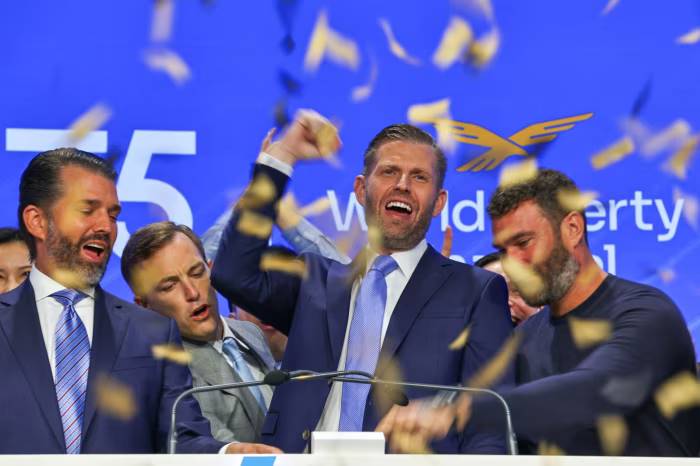
Donald Trump Jr, Zach Witkoff, Eric Trump, and Zak Folkman of World Liberty Financial rang the Nasdaq opening bell in New York in August to celebrate a financial partnership
©Getty Images
Trump’s longtime friend Steve Witkoff, appointed US Middle East envoy, along with his sons Zach and Alex, co-founded World Liberty Financial, which currently holds 3.75 billion WLFI tokens worth about $530 million. The Witkoff family and another company will receive 25% of the platform’s revenue.
White House Counsel David Warrington said Witkoff is working with ethics officials “to ensure full compliance, including taking all necessary legal steps to divest.”
Despite Eric Trump’s pledge last year that there would be a “very big firewall” between his family business and the US government, Trump’s sons have most publicly leveraged their father’s position. They have traveled to cities like Abu Dhabi, Hong Kong, and Singapore to attend conferences promoting the benefits of cryptocurrency and attracting investment for their projects.
Donald Trump Jr emphasized the personal stakes of the Trump administration in the crypto industry. At the Las Vegas Bitcoin Conference in May, he said those writing crypto laws now “are investing in crypto themselves,” adding: “That will be very beneficial for the entire community.”
That same month, Eric Trump assured crypto speculators that Washington would stockpile “massive amounts of Bitcoin” and later predicted that Bitcoin, currently worth about $110,000, could one day reach $1 billion in value.
“The level of acceptance my father has received from the Bitcoin community is unlike anything I’ve ever seen,” Eric Trump recently said in Hong Kong. “I hope this acceptance brings rich rewards.”
George Steer and Jill R Shah contributed reporting from New York.
Join TechFlow official community to stay tuned
Telegram:https://t.me/TechFlowDaily
X (Twitter):https://x.com/TechFlowPost
X (Twitter) EN:https://x.com/BlockFlow_News
 @FT
@FT